
Argentina. The Paris of Latin America.
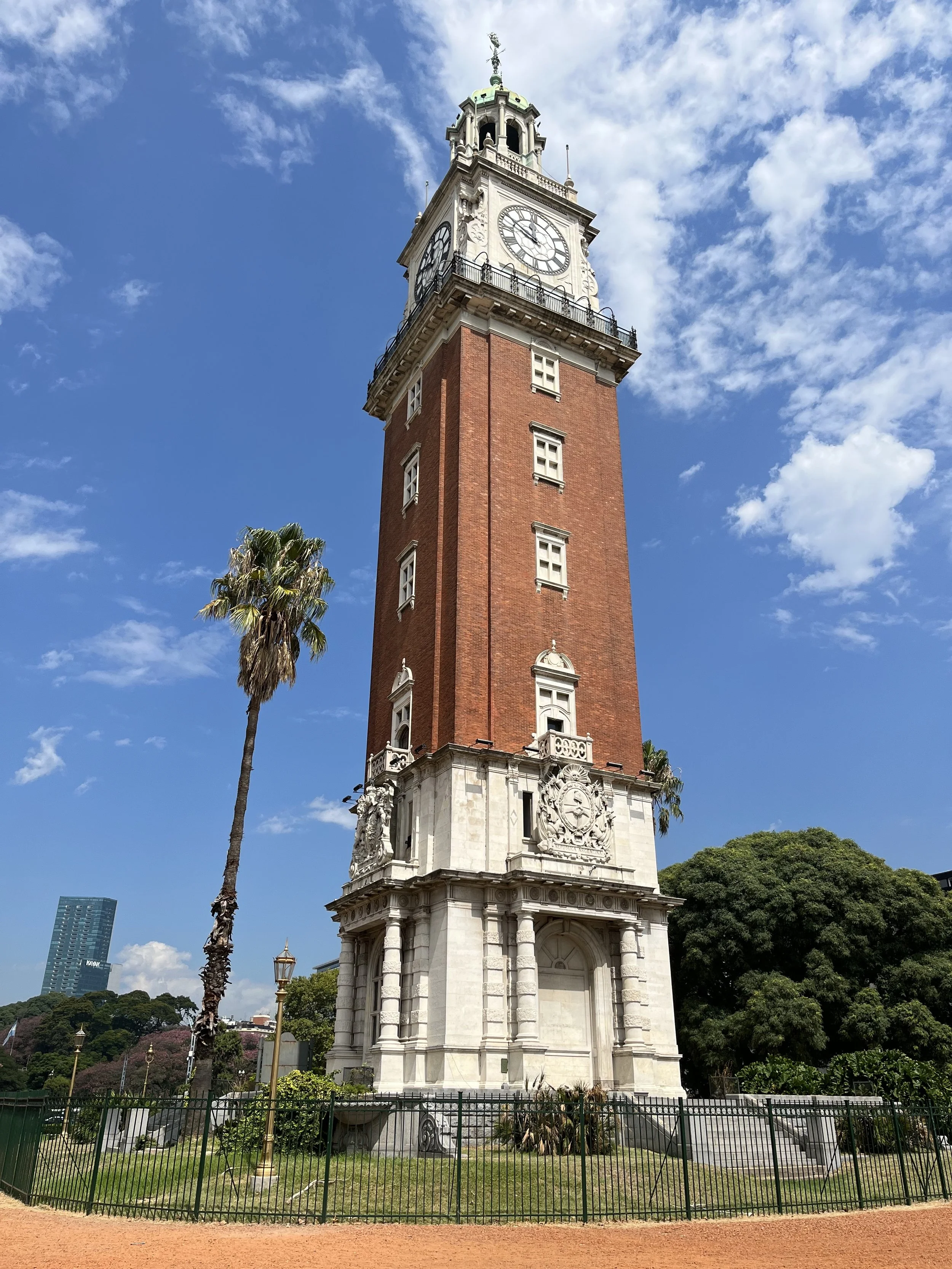
Located on the northern edge of a flat region called the Pampas, Buenos Aires is Argentina’s capital and largest city (3.1 million people). The city has wide, European-style boulevards and neighborhoods organized around their pulperia (a general store/bar). Known for its food and wine, eclectic architecture, and nightlife, Buenos Aires has been called the Paris of Latin America. It is a city of immigrants, particularly persons of Spanish and Italian origin but there are also Czechs, Ukrainians, Poles, Germans, Koreans, Chinese, and Middle Easterners. The city’s economy is centered around the export of agricultural products but also automobile manufacturing, textile production, and chemical processing. Buenos Aires was founded on two different occasions. An initial settlement established in 1536 by Spaniard Pedro de Mendoza was attacked by local indigenous people. Fearful for their lives, survivors traveled up the Paraguay River to establish the fortified city of Asunción (now the capital of Paraguay). Fifty years later Captain Juan de Garay led an expedition back to the site where he founded Ciudad de Trinidad. Our walking tour of the city led us past Torre Monumental, a 76-meter-tall tower built in San Martín Plaza that was a gift from the British in 1916. Leicester brick and Portland stone used in the tower’s construction were shipped from England. The Palladian style structure is topped by a copper cupola and decorated with symbols of the British Empire such as the Thistle of Scotland and the English Rose. Locally, it was called Torre de los Ingleses (Tower of the English) until the 1982 Falklands Island War between the United Kingdom and Argentina.
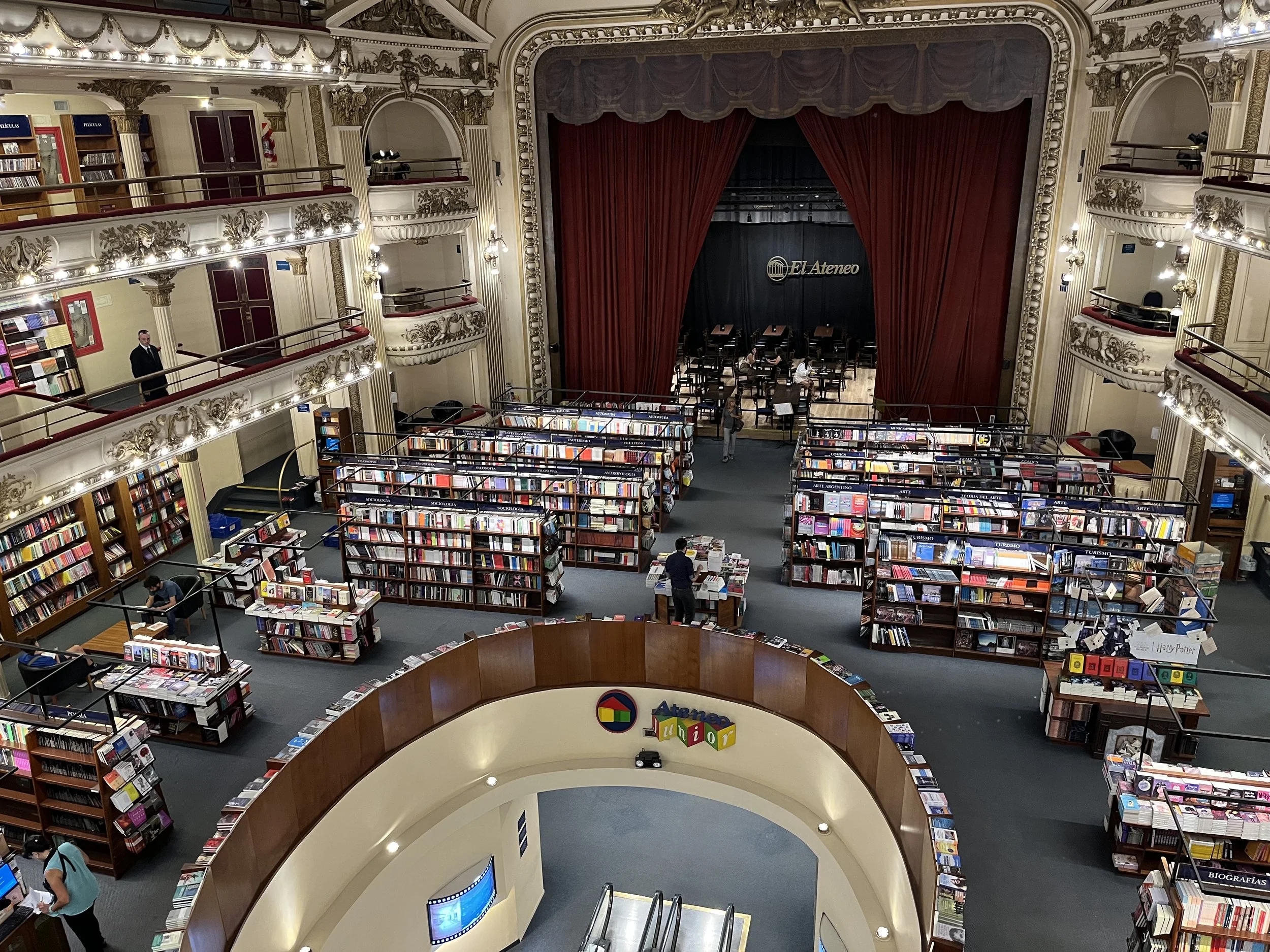
Positioned on Santa Fe Avenue in Barrio Norte, El Ateneo Grand Splendid is a large bookstore that occupies the former Teatro Gran Splendid. Constructed in the eclecticist style in 1919, the theater had a seating capacity of 1,050. It was purchased in 2000 and converted into a bookstore with a café added on the location of its former stage. Dubbed “the world’s most beautiful bookstore” by National Geographic Magazine in 2019, it is a must-see stop for walking tours of Buenos Aires.
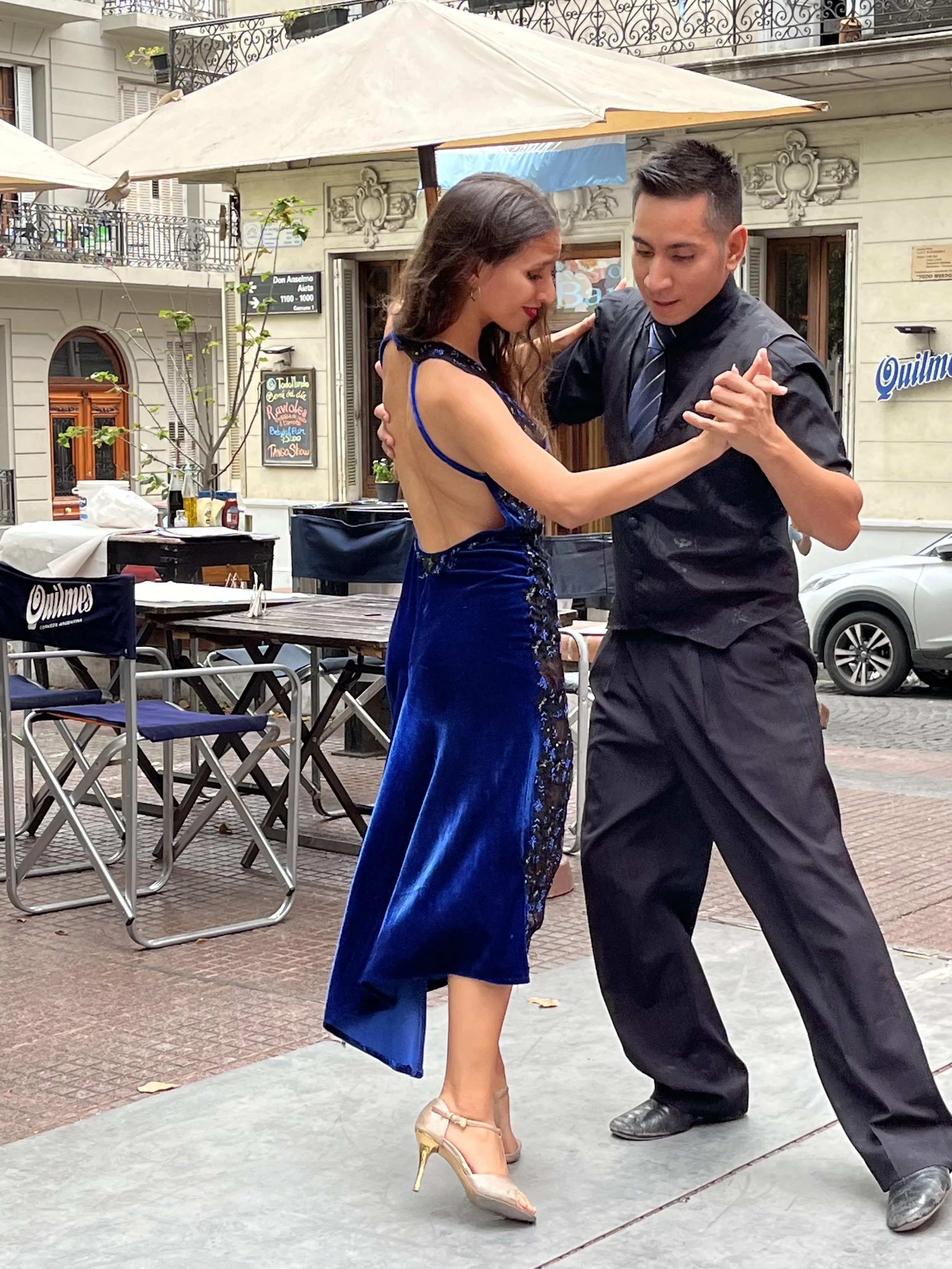
La Boca (the mouth) is a hodgepodge collection of buildings located near the mouth of the Riachuelo River. The neighborhood was created by local dockworkers who constructed their homes from shipbuilding scraps such as corrugated steel, wooden planks, and leftover paint. Since they often lacked sufficient paint to cover an entire house, the dockworkers created colorful patchworks. We walked past several second-floor windows featuring papier-mâché figures of people. Along with its many shops that sell souvenirs, the quaint neighborhood is known for the development of tango dancing. We stopped there for lunch at an outdoor café.

Influenced by the fusion of African and European cultures, tango originated in the 1880s along a border region between Argentina and Uruguay called Río de la Plata. The word “tango” comes from “tambo” meaning a gathering of slaves along the Río Plata. In Argentinian and Uruguayan tango, the body’s center moves first and there is often a close embrace with the dancers’ legs intertwined. The dance has a dramatic flair with sharp staccato (short and deliberate) movements. Initially performed in port bars and brothels, tango dancing has become popular around the world.
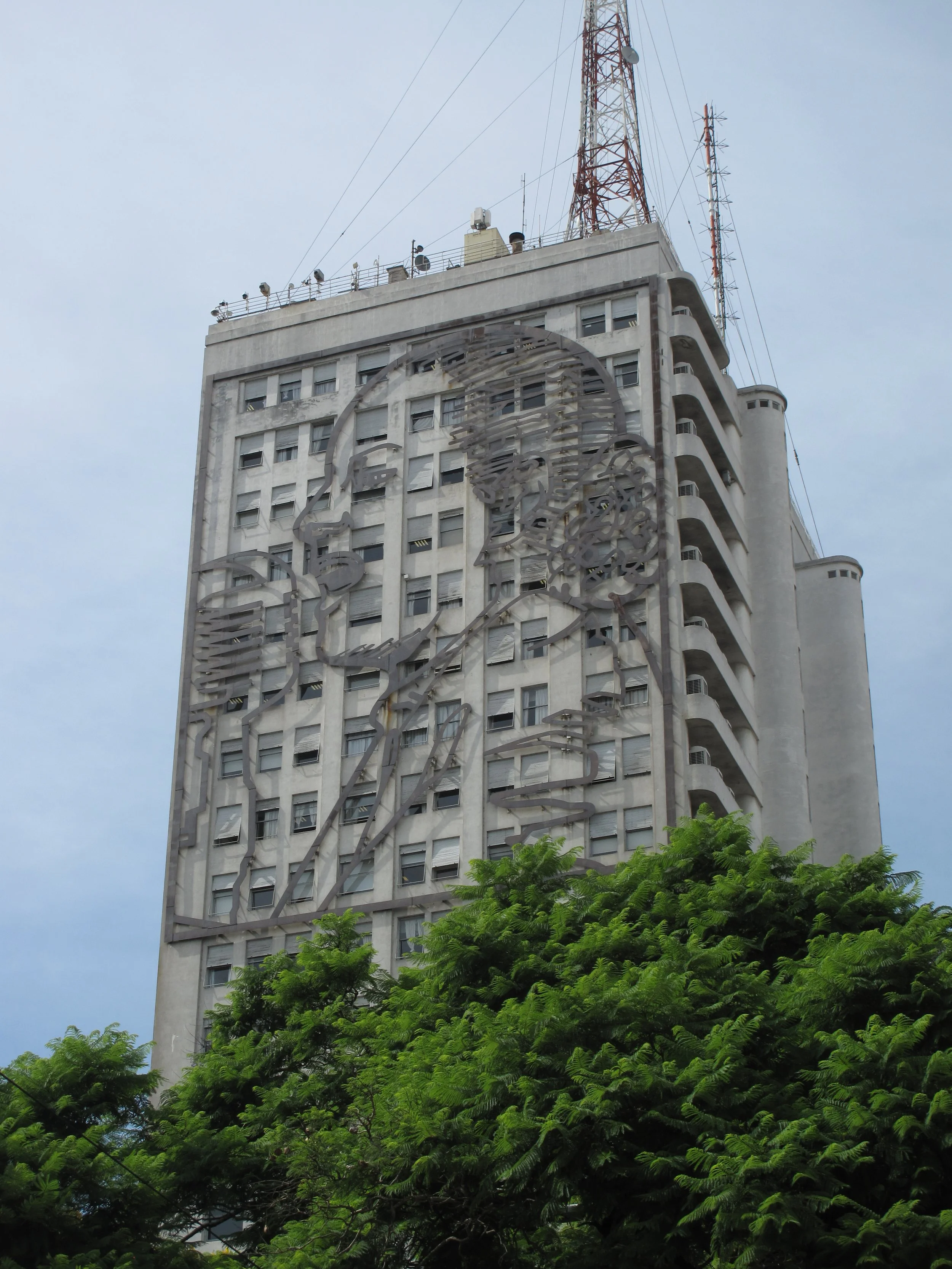
María Eva Duarte de Perón (aka Eva Perón or Evita) remains a popular figure within Argentinian history and culture. Having grown up in a poor village in the Pampas region, Evita married army colonel Juan Perón who became Argentina’s president in 1946. In her role as First Lady, Evita became a powerful force in Pro-Peronist trade unions and was revered in poor neighborhoods. She died July 1952 at the age of 33 and is buried in Buenos Aires’ La Recoleta Cemetery. We stopped to walk through the 200-year-old cemetery which includes more than 4,600 vaults and mausoleums designed in Art Deco, Baroque, Neo-Gothic, and Art Nouveau styles. The 5.5-hectare memorial park is located on the grounds of the former Recoleta Convent. Evita’s final resting place is behind a locked metal gate that protects the Duarte family mausoleum. Words written on her plaque in Spanish say, “Don’t cry for me.” Evita’s popularity can be seen elsewhere in the city. For example, her likeness has been painted on two sides of the Ministry of Public Works Building, located on 9 de Julio Avenue. On the building’s south wall is her official state portrait and on the north wall she is depicted giving a speech.
Palacio Barolo is a twenty-two-floor art nouveau/deco style building that was designed to symbolize paradise, purgatory, and hell. On entering the building, my travel companion and I decided to sign up for a guided tour. When it was completed in 1923, Palacio Barolo was the tallest building (100 meters) in South America. A lighthouse located at its top is equipped with a beacon that can be seen 204 kilometers away in Montevideo, Uruguay where the building’s twin (the Palacio Salvo) is located. From the lighthouse we could see the Congreso de la Nación Argentina (the National Congress building), completed in 1906 in the Neoclassic style. An 80-meter-high white and green dome is positioned at the top of the Congress building. We also had excellent views of Plaza Mariano Moreno that is bounded by Avenue Rivadavia and Avenue de Mayo. Another stop was Casa Rosada (aka the Pink House) which serves as the country’s presidential palace. Casa Rosada is located on the eastern end of Plaza Mayo and on the site of Fort of Juan Baltazar of Austria, constructed in 1594 on the orders of Captain Juan de Garay.
