New Mexico. Carlsbad Cavern’s Upside-Down Cathedrals
Humorist Will Rogers once remarked that Carlsbad Caverns has, “…all the cathedrals of the world in it, with half of 'em hanging upside down.” Carlsbad Caverns National Park is located in the Chihuahuan Desert and along the edge of southeastern New Mexico’s Guadalupe Mountains. The site became a national monument in 1923 and a national park in 1930. Although sometimes perceived as a single large cave, the park protects a network of 119 known underground passageways. About 60% of the park is federally designated wilderness. Visitors who want to tour the caverns can choose from entering through an elevator extending downward from the visitor center or by following a two-kilometer trail through a natural cave entrance that descends 229 meters. The pathway downward from the natural entrance has a series of 60 switchbacks that descend 79 stories. Today, about 400,000 people visit the park each year.
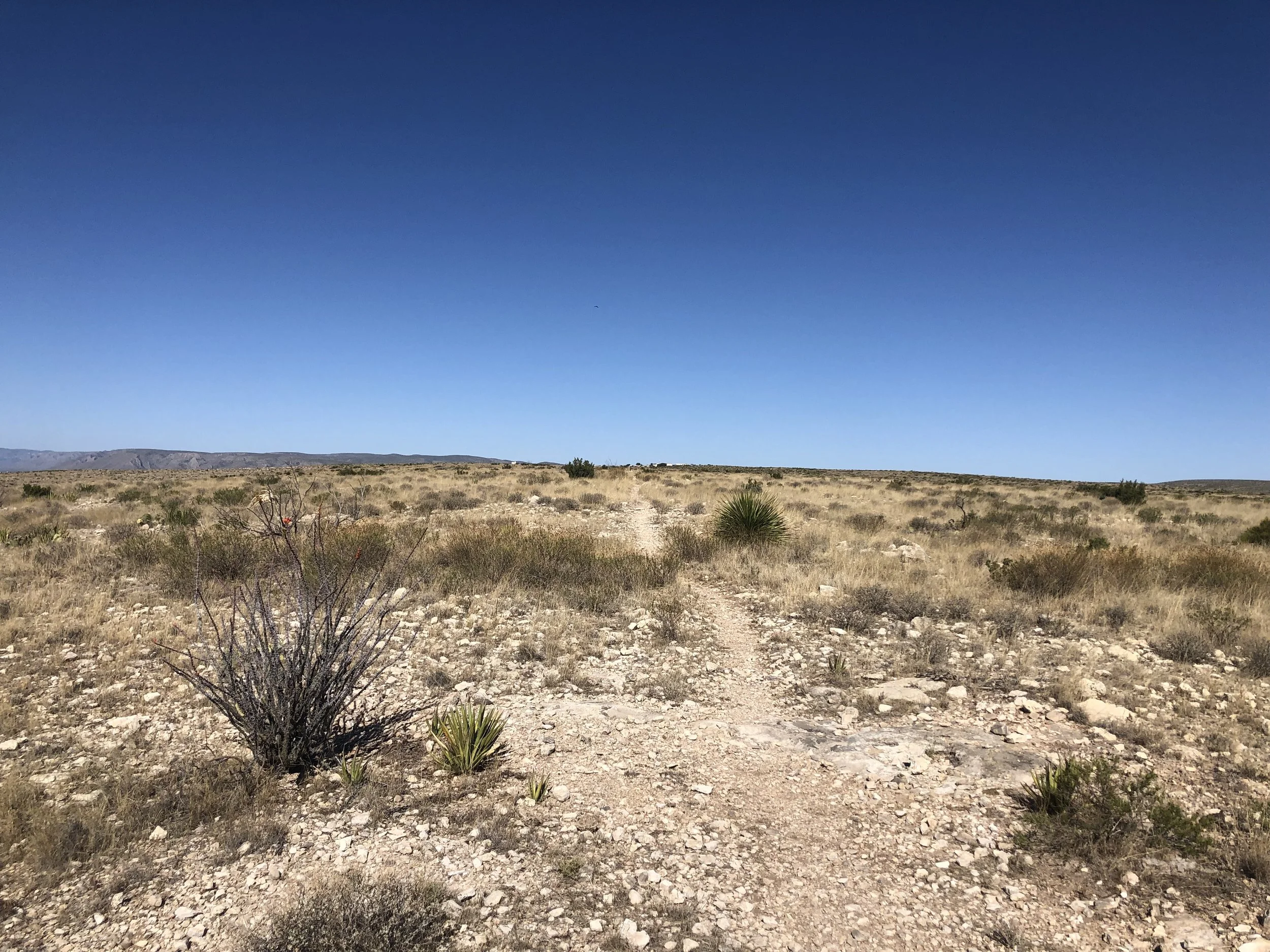
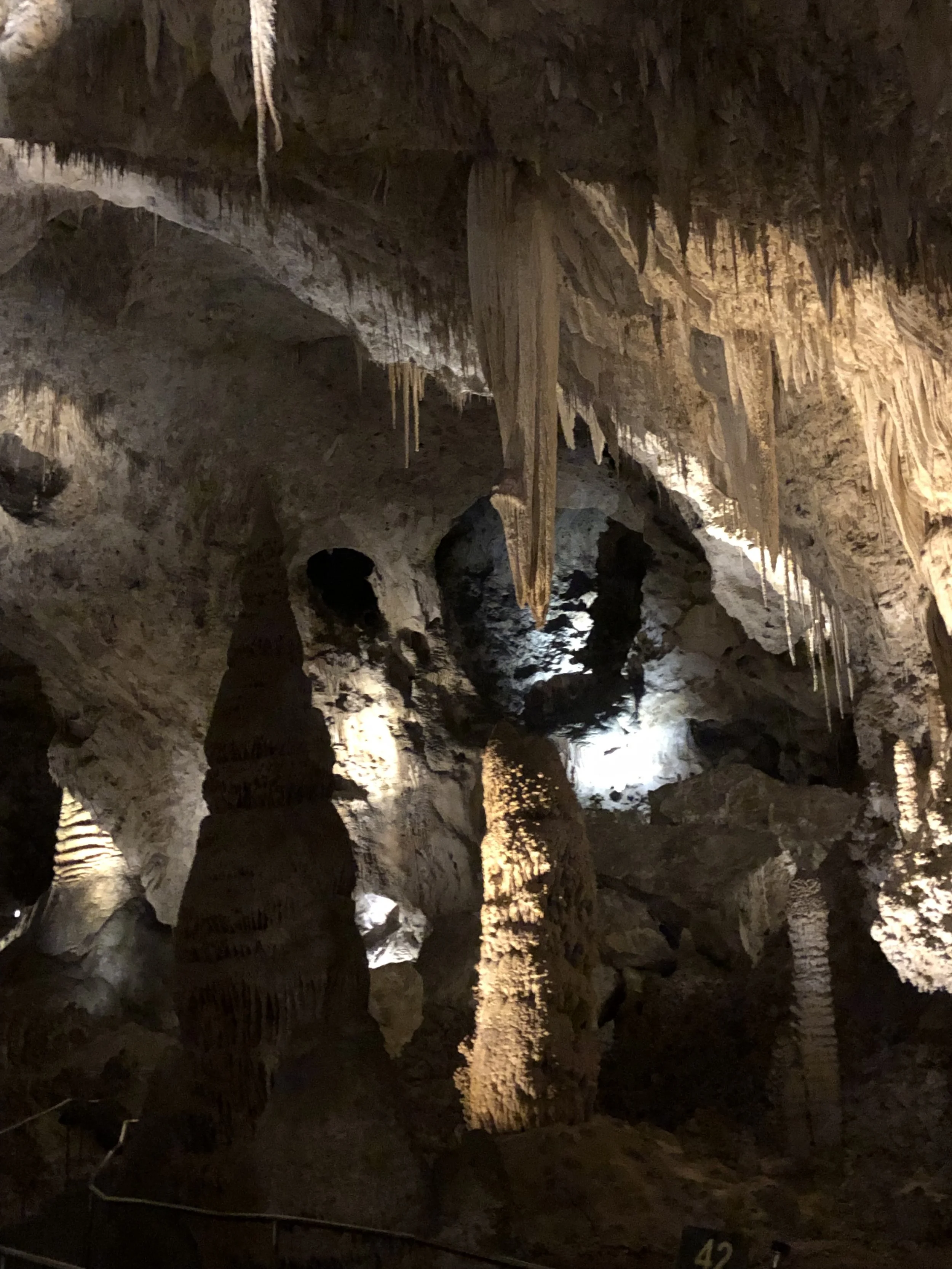
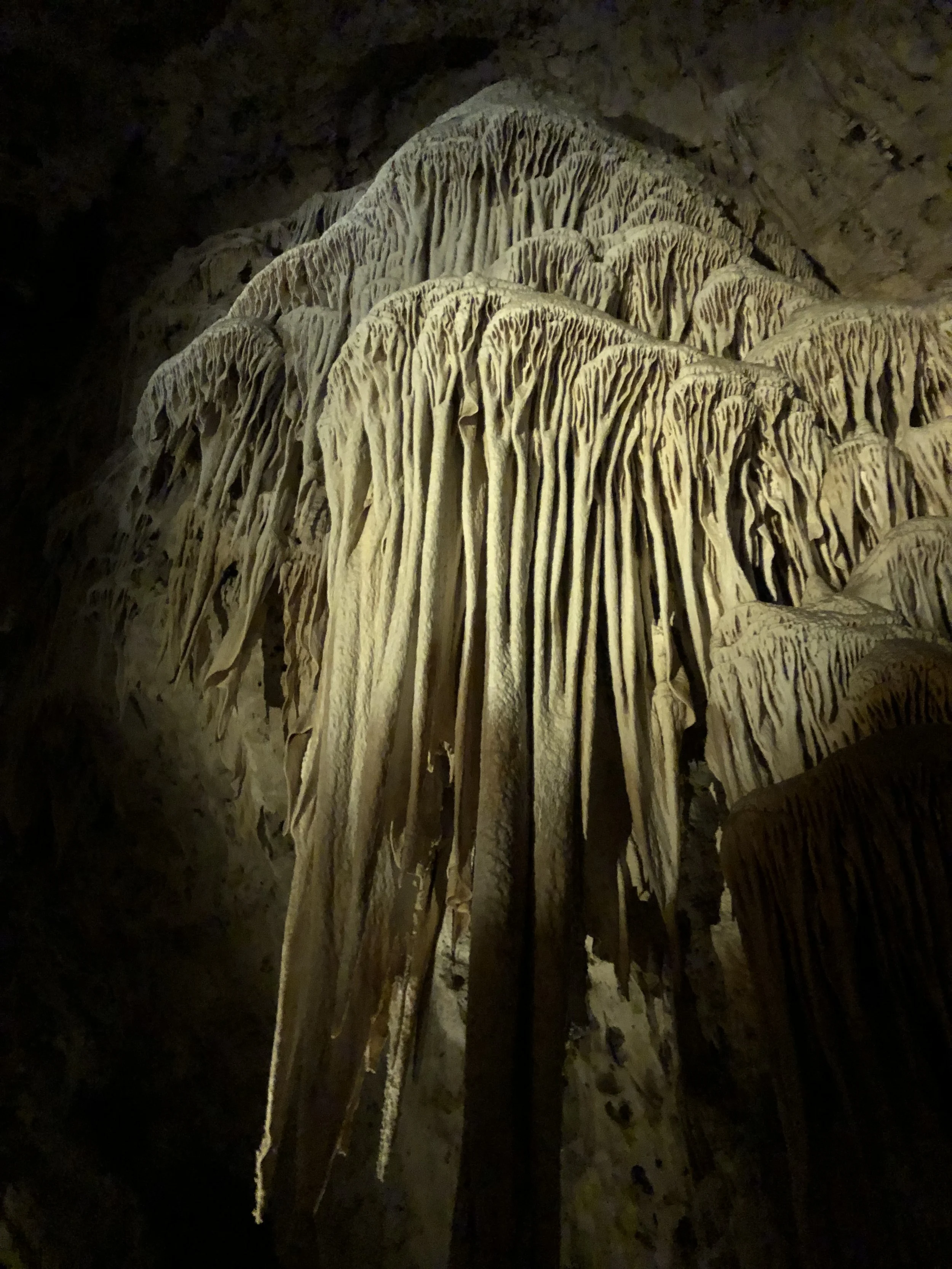
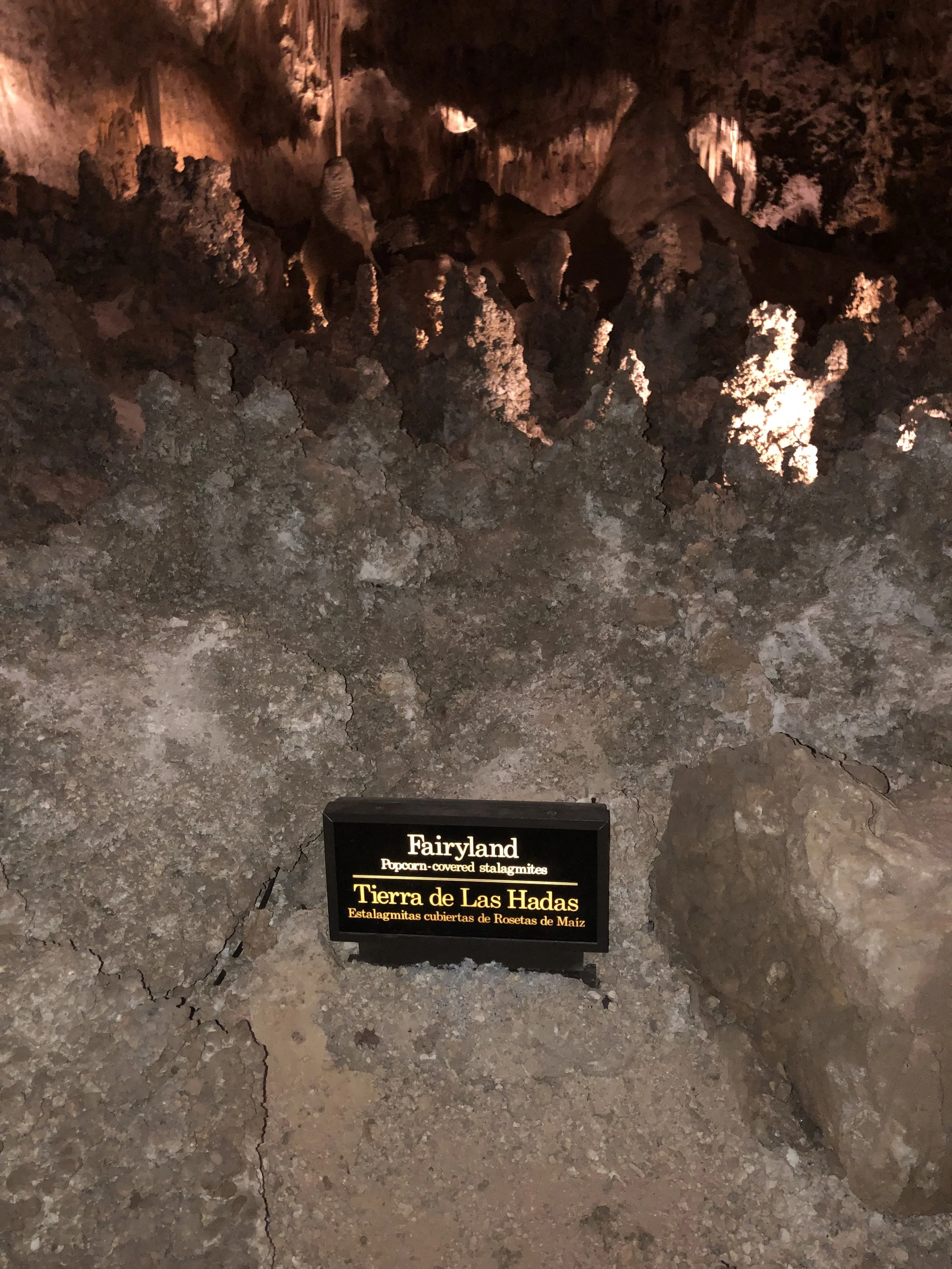
Geologically, the region around the caverns represents the coastline of a 250-million-year-old ocean reef that once supported a diversity of marine life. During the Cenozoic period the reef pushed upwards and today, the park’s surface is within an area of limestone perched above the water table. For a long period of time the cavern below was submerged within a groundwater zone. As the water table dropped, carbon dioxide within groundwater formed a weak acid that carved out passageways by dissolving rock. Later, water seepage from the cave’s ceiling created speleothems (cave features) where bits of calcium carbonate were left behind as water evaporated. Long, dagger-like speleothems called stalagmites formed on the cave’s ceiling while rounded mounds called stalagmites rose upwards in places where water dripped onto the cave floor. Other types of speleothems formed such as smooth draperies and thin soda straws. Elsewhere flowstone was created where calcium carbonate rich water slowly seeped down cave walls in a milky white sheet resembling a waterfall. Most unique is cave popcorn, formed where evaporating water left behind aragonite, a mineral that is chemically identical to calcite but has a needle-like crystal structure. The park also has a rich assemblage of flora and fauna with 750 species of plants and 67 species of mammals including black bears.
Native Americans first set foot in the caverns more than 1,000 years ago with some creating drawings near the cave’s natural entrance. The cave was rediscovered by locals in the 1800s and for several years the underground passageways were mined for bat guano used in making fertilizers and explosives.
I’ve been to Carlsbad Caverns several times, but my wife had never visited the park. We followed U.S. Highway 180 southwest from Hobbs, New Mexico. Our self-guided tour began at the park’s visitor center where we boarded an elevator for the 230-meter descent. The doors opened near a former underground lunchroom. Our walking route took us past Giant Dome and Temple of the Sun before we entered Big Room. With a ceiling 78 meters tall at its highest point, Big Room is 1,200 meters long and 191 meters wide. At 33,210 square meters, it is the largest natural underground chamber in the U.S. Inside Big Room is the Hall of Giants, a series of 18-meter-high domes.
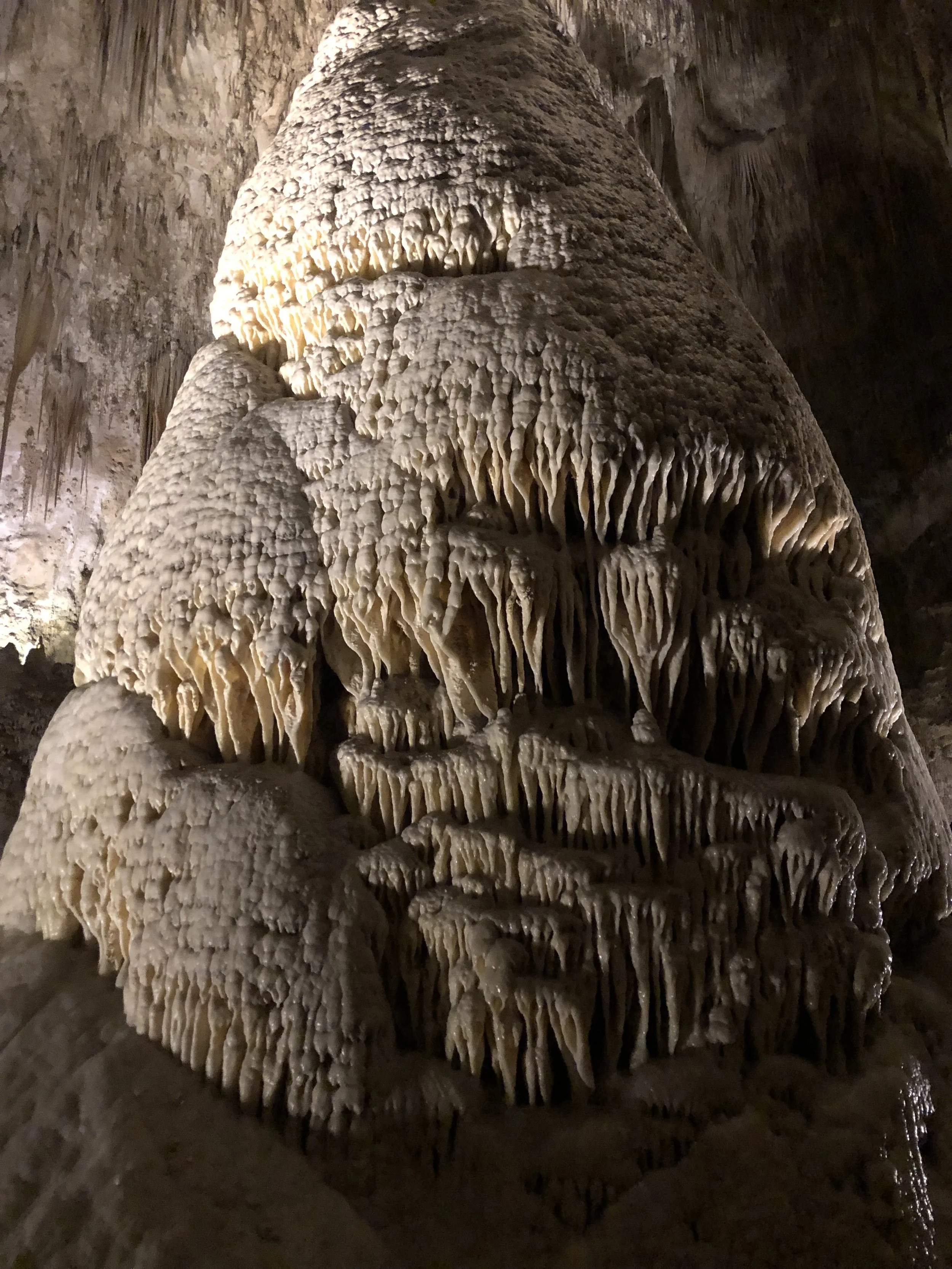
Long before Carlsbad became a national park it was explored by a teenager named Jim White who used a wire ladder for climbing and descending. Born in 1882, ten-year old White was working as a ranch-hand when he saw smoke he thought was coming from a brush fire or erupting volcano. The cloud turned out to be thousands of bats emerging from a hole in the ground. Along with Big Room, White explored Kings Palace, Queens Chamber, and many other areas now open to the public. In 1926 he was appointed chief ranger of the newly created Carlsbad Caverns National Monument. Continuing along the trail, we passed The Pits, Mirror Lake, and Bottomless Pit.
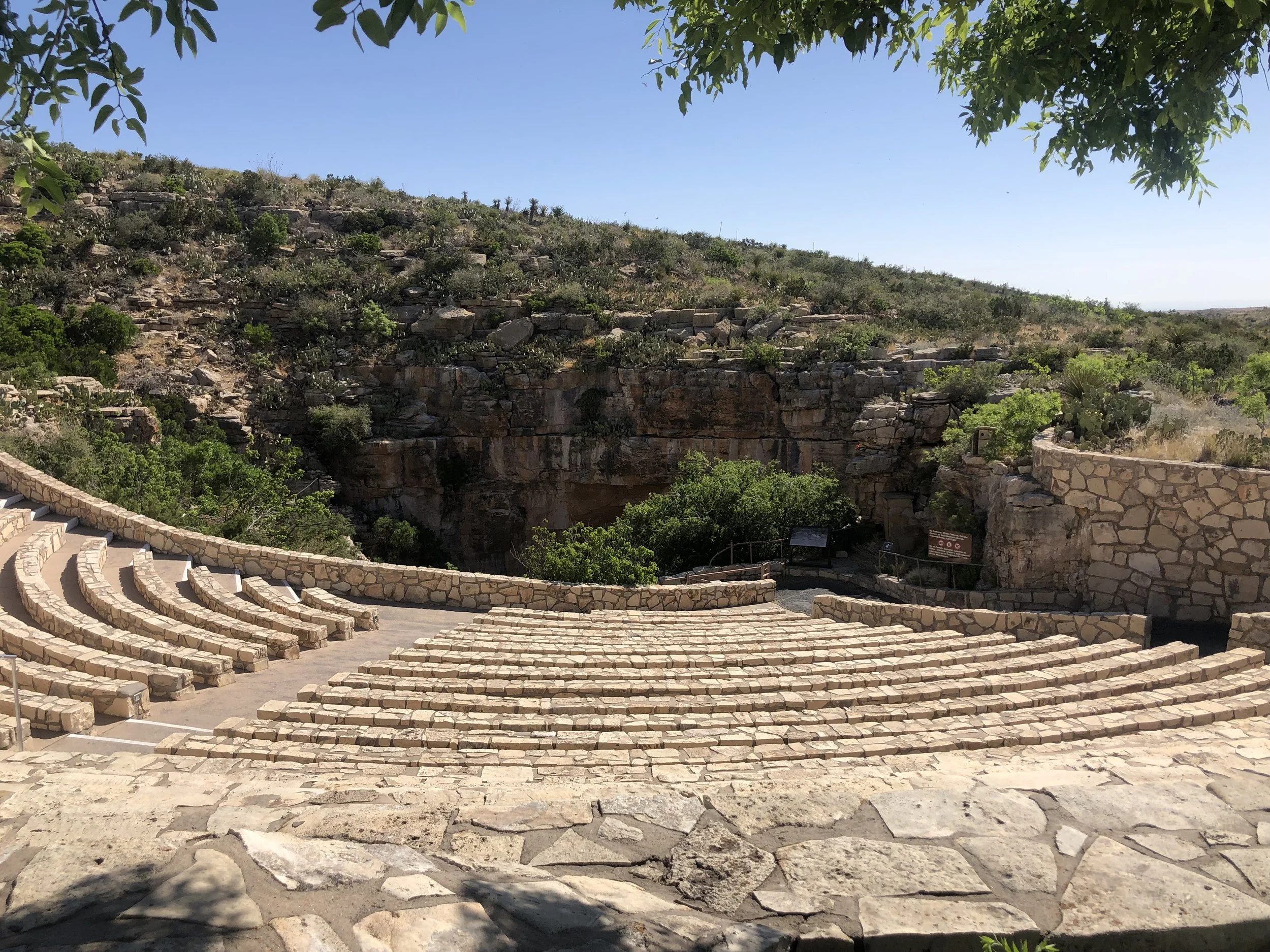
Outside, we took a short trail to the cavern’s natural entrance where visitors can see bats exiting during the early evening. Watching from Bat Flight Amphitheater, the stream of small flying mammals appears to spiral outward in a counterclockwise direction. The best months for viewing bats departing from the natural entrance are August and September. To protect the bats as they navigate by sound, rangers ask visitors to turn off electronic devices such as cameras and cell phones.