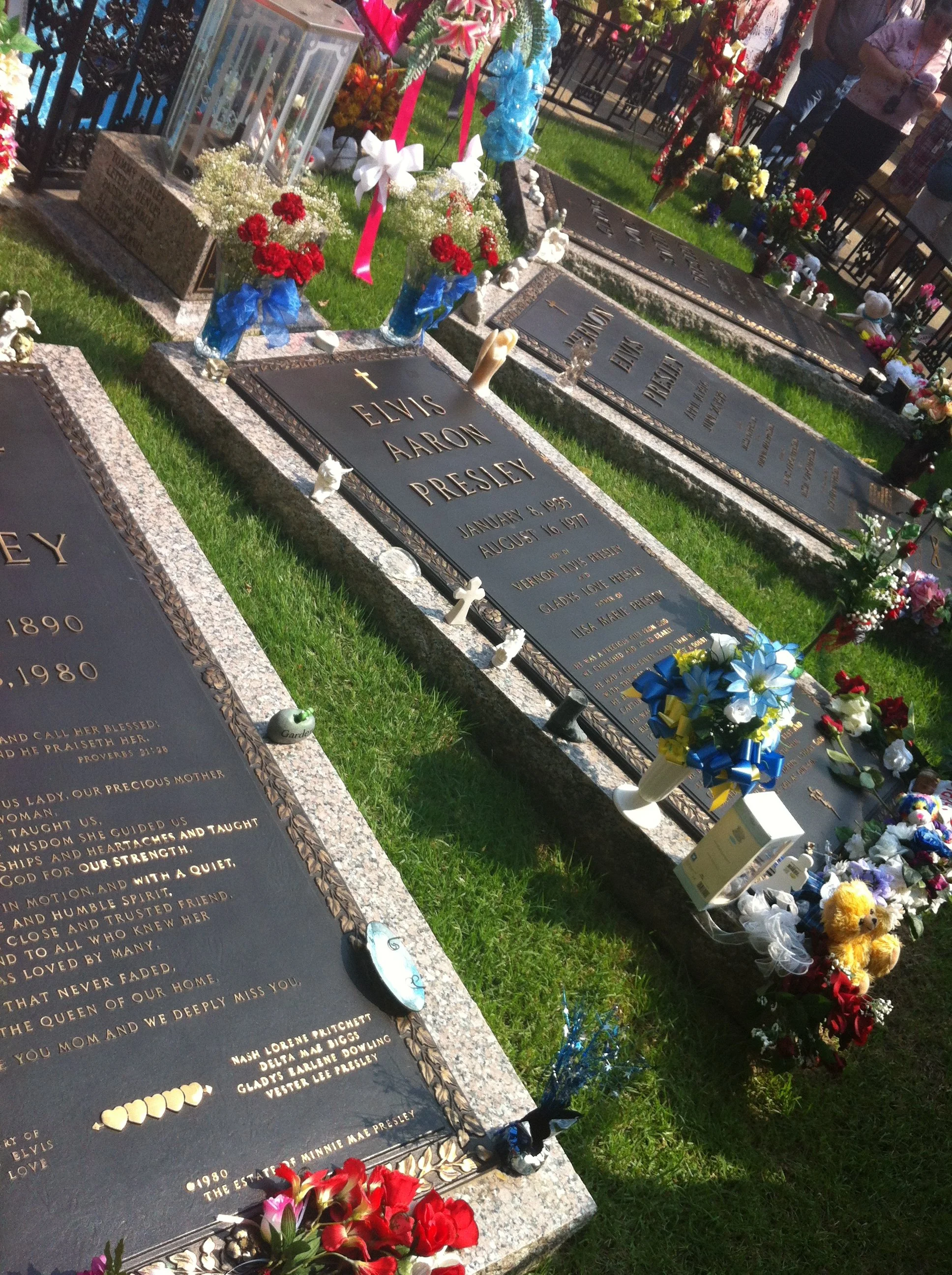
Tennessee. Downtown Memphis and the Beale Street Blues
The name “Memphis” may evoke images of dry-rub barbeque or Elvis Presley’s Graceland. For others it can bring memories of the improvised chords of a Blues song played at a Beale Street nightclub. Founded in 1819, Memphis thrived because of its status as a port along the Mississippi River. Indeed, the demand for cotton made the “Bluff City” one of the largest and most prosperous places in the Antebellum South. Humans have inhabited the banks of the Mississippi River near present-day Memphis since the first millennium AD. The area was occupied by Chickasaw peoples when the Spaniard Hernando de Soto passed through in the 16th century. The Spanish built a fort on a bluff over the river in 1795 and a year later the city was the westernmost point in the newly admitted U.S. state of Tennessee. Memphis was a Confederate stronghold during the U.S. Civil War. Five years after the war the city’s population of 70,000 was almost twice that of Atlanta, Georgia.
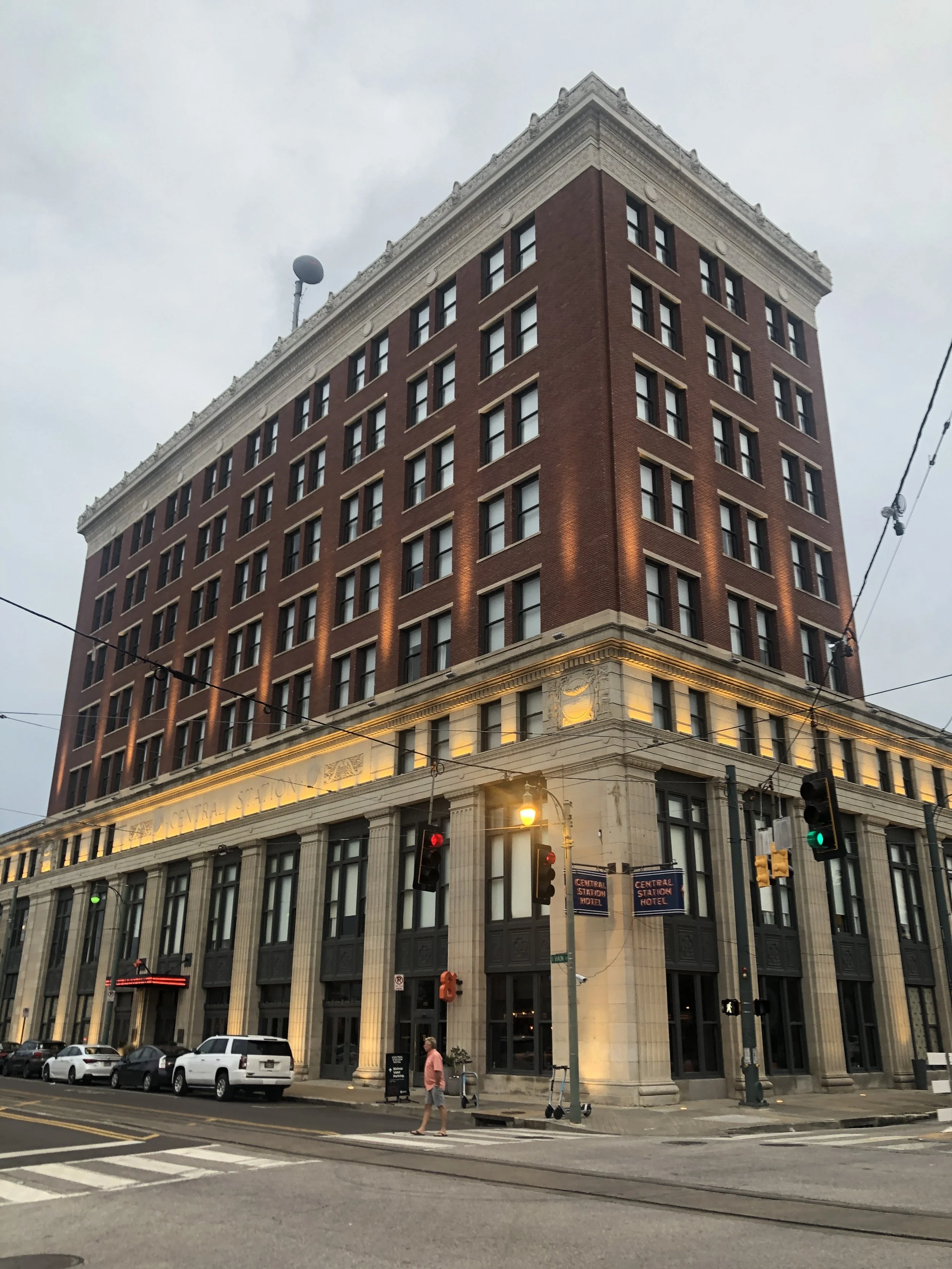
My wife and I made a reservation at Central Station, a renovated hotel that is part of the former Illinois Central Railroad’s Calhoun Street Station. The attractive eight-story building has a colonnade of Bedford stone trimmed with terracotta. Positioned on Main Street, Calhoun Street Station opened in 1914 and at its height, served 50 arriving or departing trains each day. By 1971 a decline in rail traffic left only Amtrak still operating on the line. In 1995 Memphis Area Transit spent $20 million renovating the building and station and today, the station supports passenger rail service between Memphis and New Orleans. Featuring large windows, the hotel has 123 guest rooms and a lobby that still looks like a train station waiting area. While unpacking in our room, we discovered a wall speaker playing a curated list of local music.
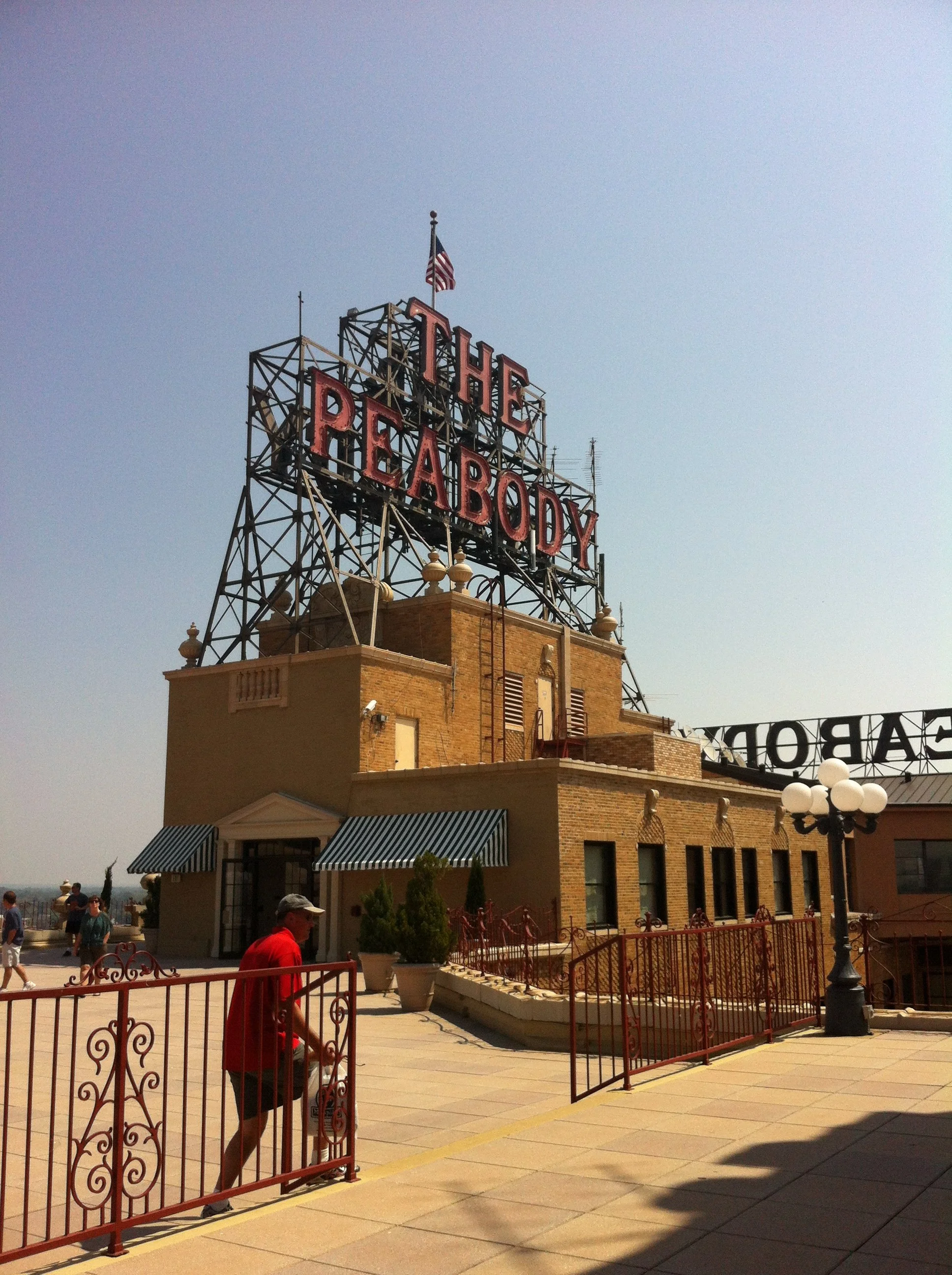
That evening we took a downtown stroll, passing the Peabody Memphis, a historic luxury hotel that opened in 1925. The Peabody may be best known for a tradition dating to the 1930s. Each day at 11:00am, ducks are escorted down from the building’s penthouse to swim in a large lobby fountain. A staff member known as “duckmaster” leads the entourage across a red carpet to the Italian travertine marble fountain. The Peabody is also known as the setting for several well-known movies including “The Firm” (1993) starring Tom Cruise and “Soul Men” (2008) starring Samuel L. Jackson.
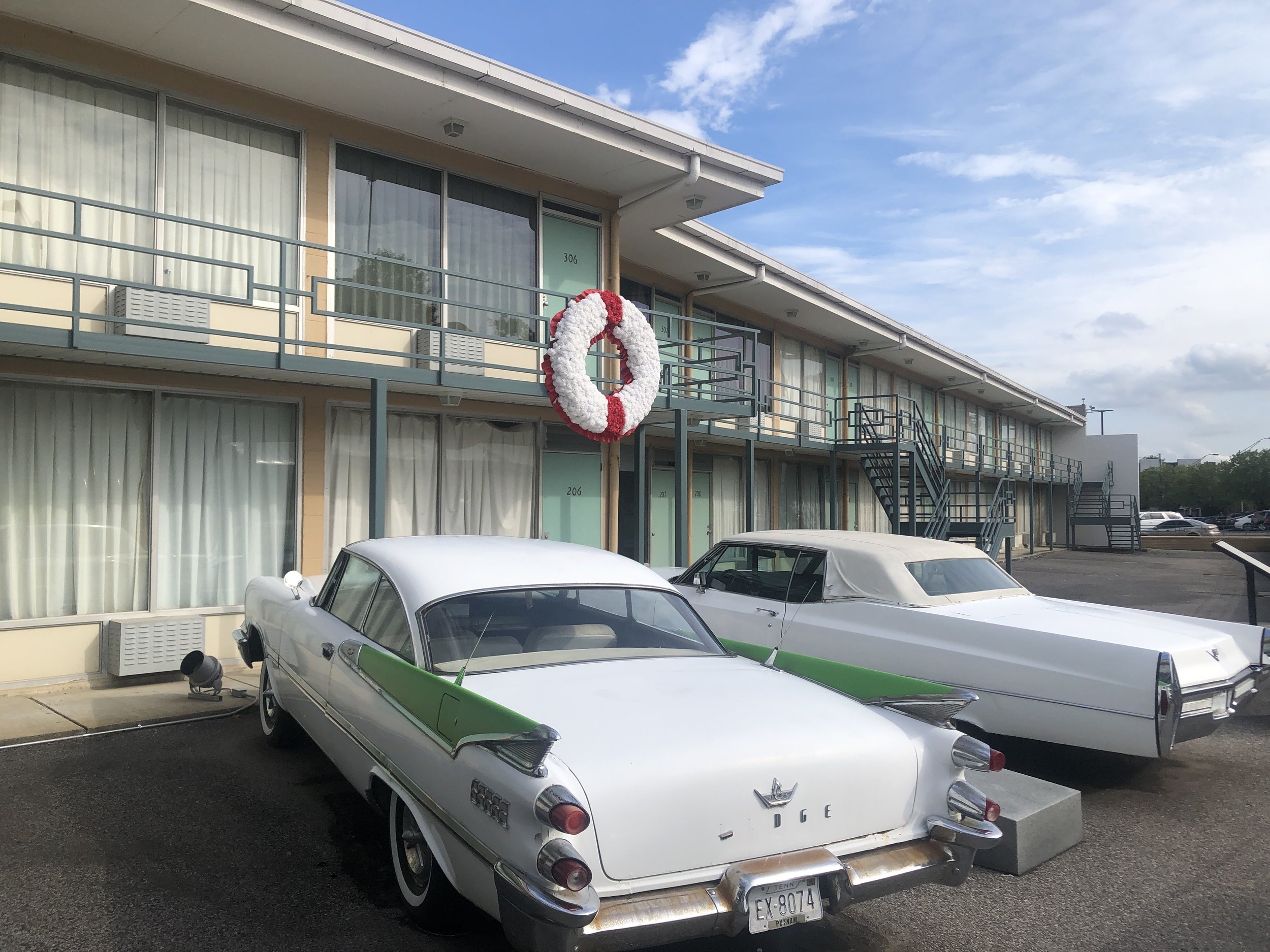
Now the National Civil Rights Museum, the Lorraine Motel is located on Mulberry Street and a short distance from the Peabody Hotel. The Lorraine opened in 1924 with 16 rooms and in 1945, it was purchased by Walter Bailey and his wife. The Baileys planned for the motel to serve black visitors who were barred from other city lodging during the segregation years. Some of the motel’s famous guests were Ray Charles and Aretha Franklin. Civil rights leader Martin Luther King stayed there in early April 1968 while participating in a sanitation workers’ strike. On April 4, 1968 King was gunned down as he stood on the motel’s balcony. Earlier that day Dr. King delivered his famous speech, “I’ve Been to the Mountaintop.” Today, a wreath hangs on the fence in front of King’s room (No. 306).
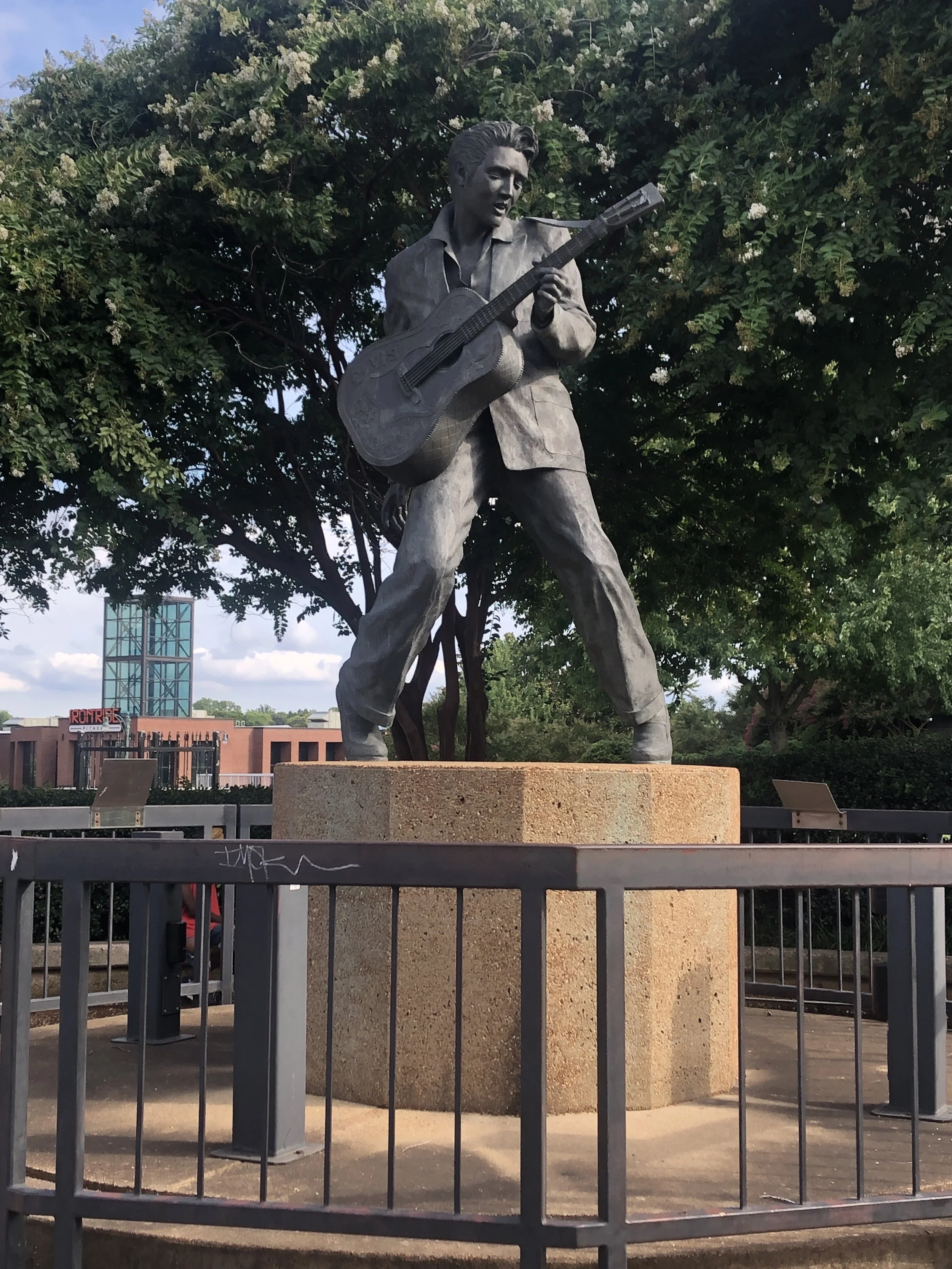
Our walking tour continued along Beale Street. Established in 1841, the street was named after Edward F. Beale, a hero of the Mexican American War. Shops on its western end were used by traders involved in transporting goods along the Mississippi River. During the 1920s, Beale Street’s bars and nightclubs hosted blues legends such as B.B. King, Rosco Gordon, and Louis Armstrong. Today, its establishments include Silky O’Sullivan’s, the Rum Boogie Café, and the B.B. King Blues Club. Another historical anchor is the Beale Street Baptist Church, Tennessee’s oldest surviving African American church. We stopped briefly at the Elvis Statue located on Elvis Presley Plaza. Created in 1997 by Andrea Lugar, the statue depicts Presley in 1955 when he performed at Lansky Brothers, a bar once located at 126 Beale Street.
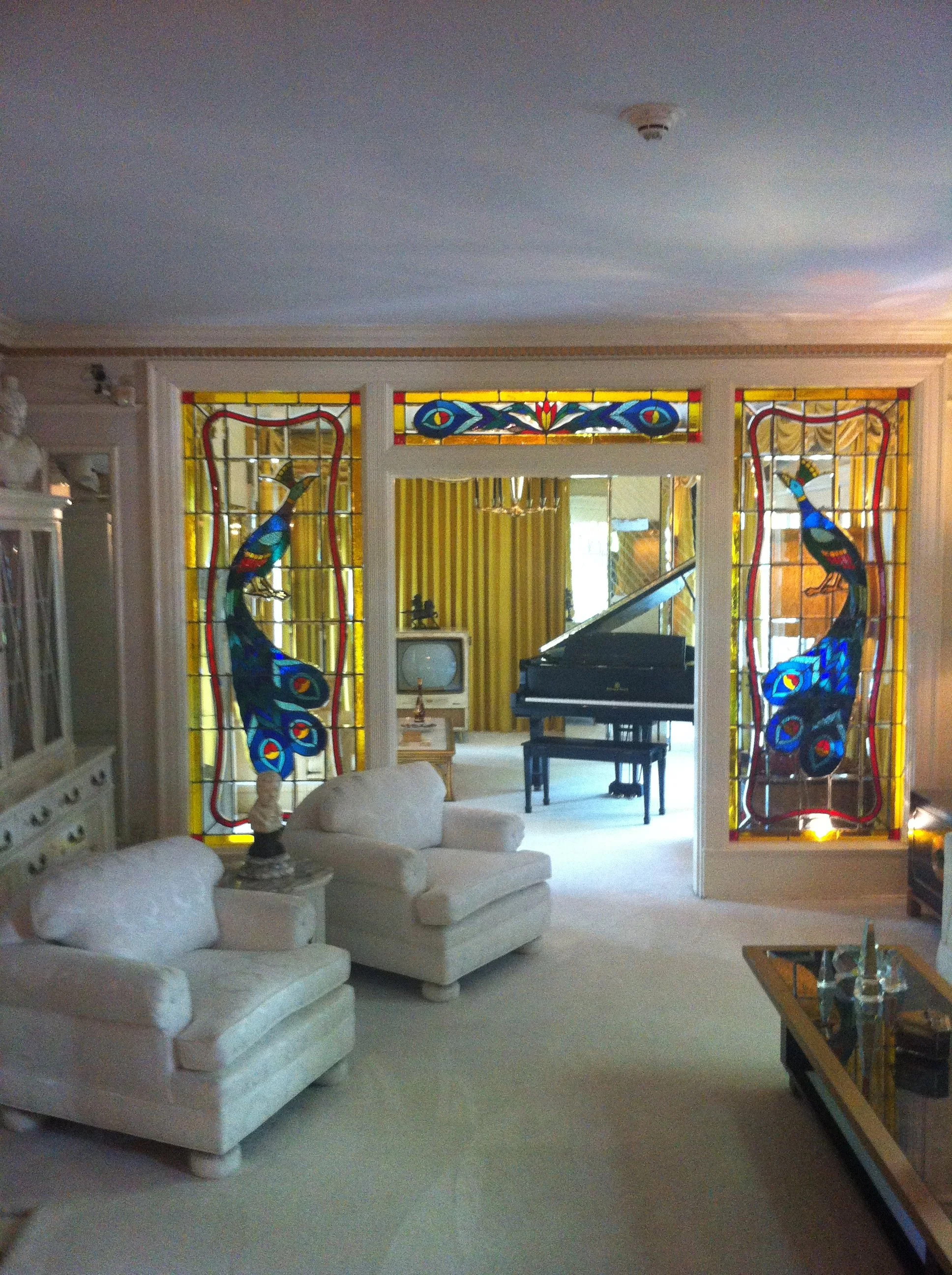
Departing south from the city’s downtown, it took 14 minutes by car to reach Graceland. Elvis Presley purchased the home in 1957 for $102,500 (equivalent to $1.2 million today) and lived there until his death in 1977. Six months after moving in, Presley spent $500,000 on renovations (equivalent to $5 million today). In the mid-1960s he expanded the north end to create a sunken den called the Jungle Room that featured an indoor waterfall. The two-story Colonial Revival-style house covers 1,630 square meters and has 23 separate rooms (including eight bedrooms and eight bathrooms). Graceland’s second floor is not open to the public and is largely untouched since Elvis’ death. The basement has an entertainment room where Presley could simultaneously watch three television sets. Our tour also included the kitchen, living room, a room used by Presley’s parents (Vernon and Gladys), and the pool room. Presley’s Convair 880 aircraft, named the Lisa Marie, is located outside the house. Opened to the public since 1982, the estate attracts about 500,000 tourists each year, making it the second most visited home in the U.S. after the Whitehouse.