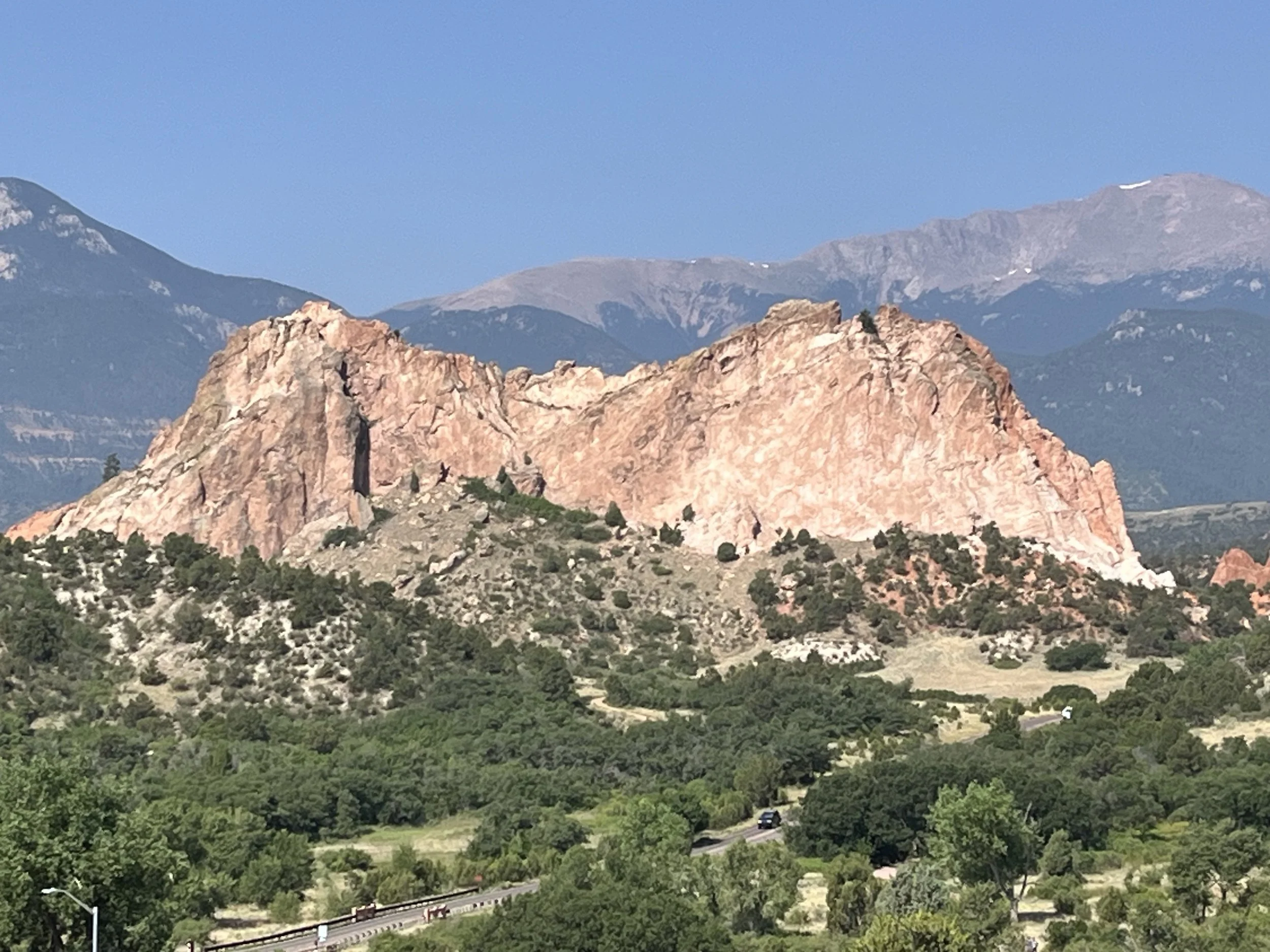
Colorado. A Godly Beer Garden in Colorado’s Front Range
Located on the northwest side of Colorado Springs is a place with dramatic sedimentary buttes and spires. Positioned in the Front Range of the Rocky Mountains, Garden of the Gods is a 550-hectare city park featuring ancient sandstone beds shaped by weathering and erosion. In nomination documents to become a natural landmark, the rugged park was described as representing “…the most striking contrast between plains and mountains in North America, with respect to biology, geology, climate, and scenery.”
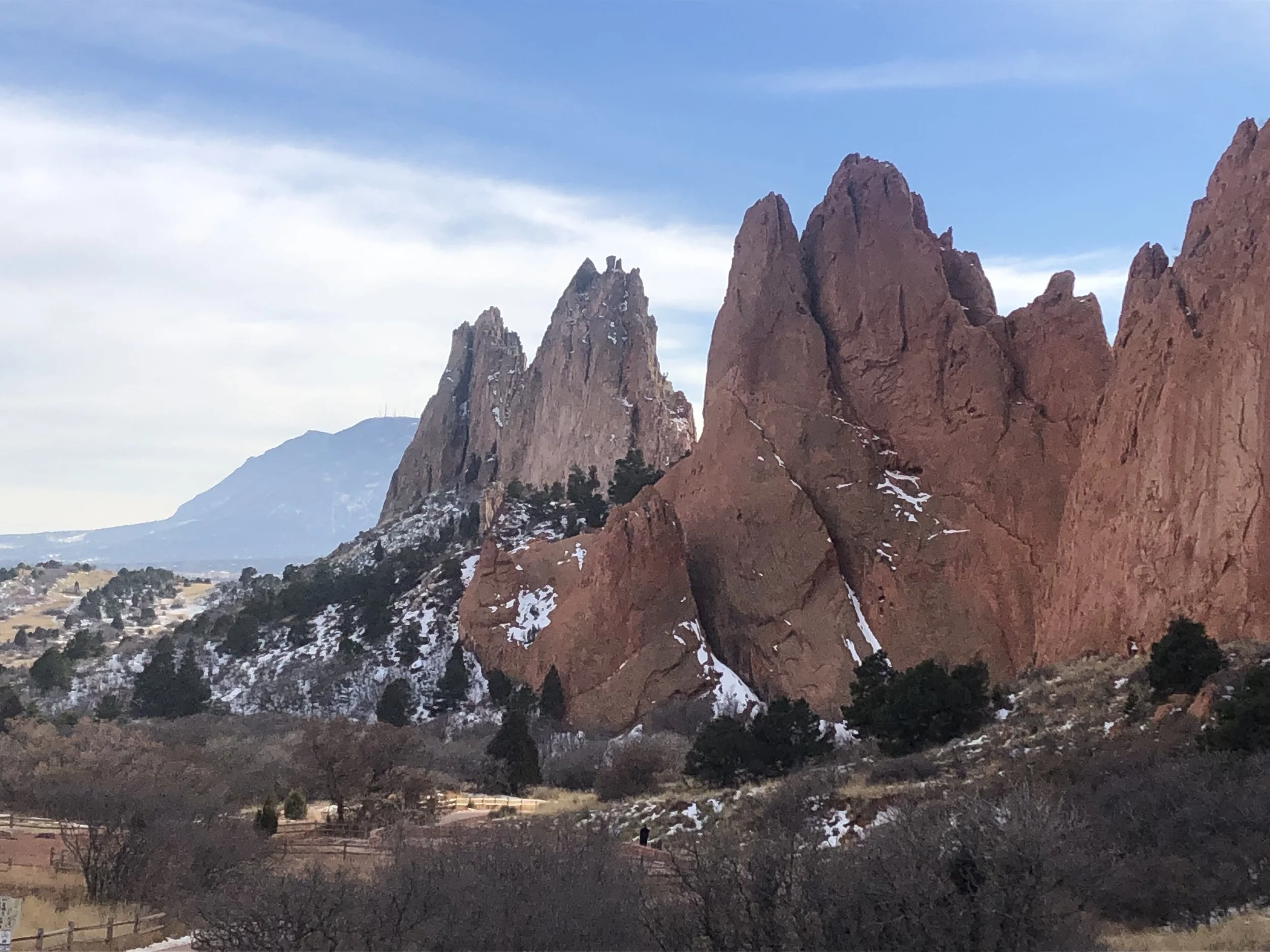
The region holding Garden of the Gods and the present-day city of Colorado Springs was occupied by Comanche, Kiowa, Apache, and Ute peoples. A legend says that the Ute people have always lived there. Indeed, the Ute wintered on the park site before their forced removal to reservations in northeastern Utah and southwestern Colorado. Later, prospectors and gold seekers carved their names on a sandstone boulder in the park called Signature Rock. The present-day park site was formally evaluated by two surveyors in 1859. After one remarked that the place might be suitable for a beer garden his companion exclaimed, “Beer Garden! Why it is a place for the gods to assemble. We will call it garden of the gods.”
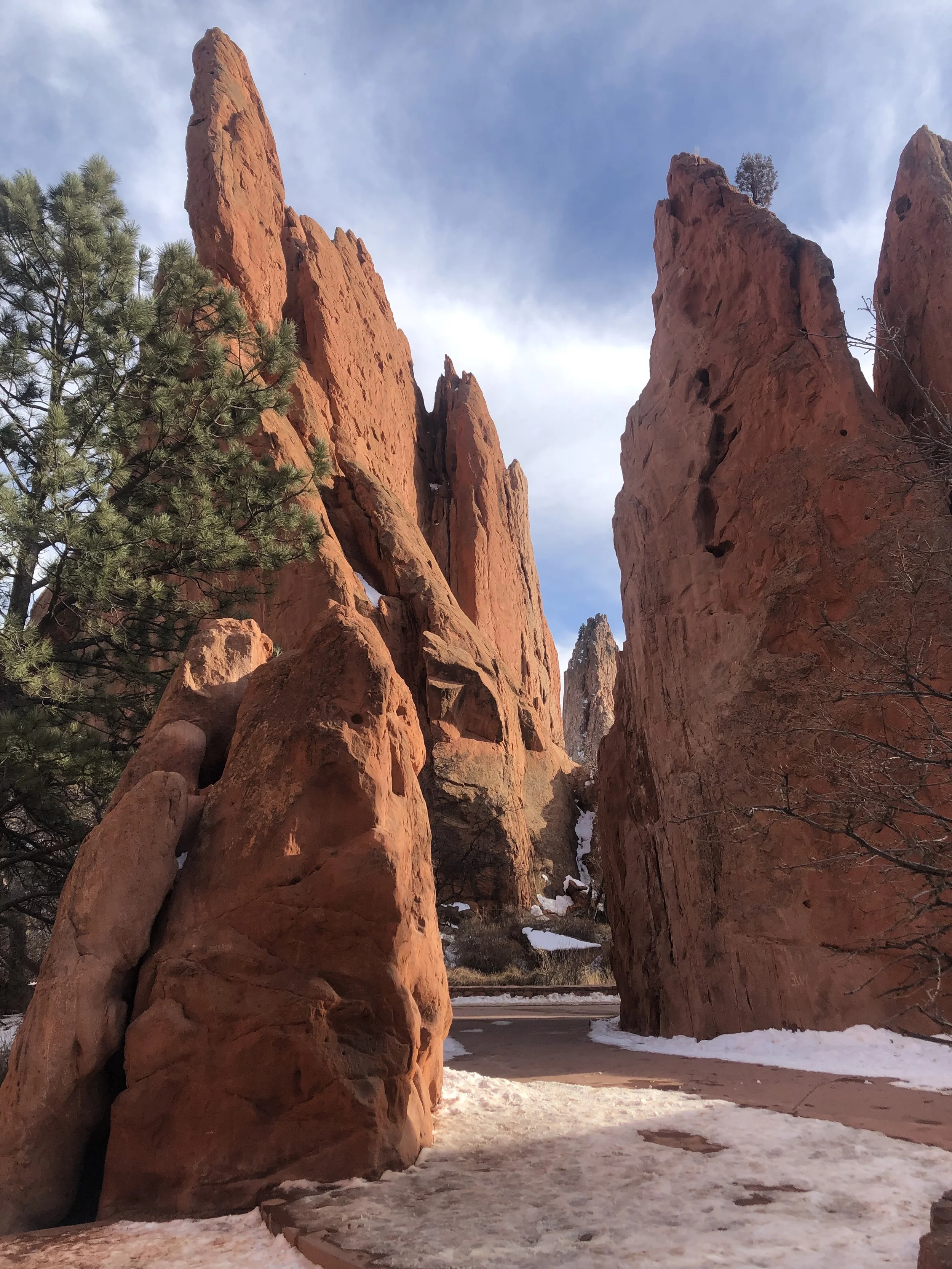
Long ago the larger geographic region was covered by a succession of landscapes including a tropical forest, inland sea, sandy dune, and swampy floodplain. Uplift associated with the Front Range (the Laramide Orogeny) took place 70-65 million years ago followed by late Tertiary lifting that created Pikes Peak. The park’s assemblage of fossils includes an herbaceous dinosaur called Theiophytalia, discovered in 1878 by a Colorado College student named James Kerr. The park’s rocks are formed by fine grained sediments from the ancestral Rocky Mountains that hardened into a conglomerate sandstone known as the Fountain Formation. Millions of years of weathering and erosion have left behind an odd assortment of landforms including mushroom shaped rocks, sandstone fins, and thin spires.
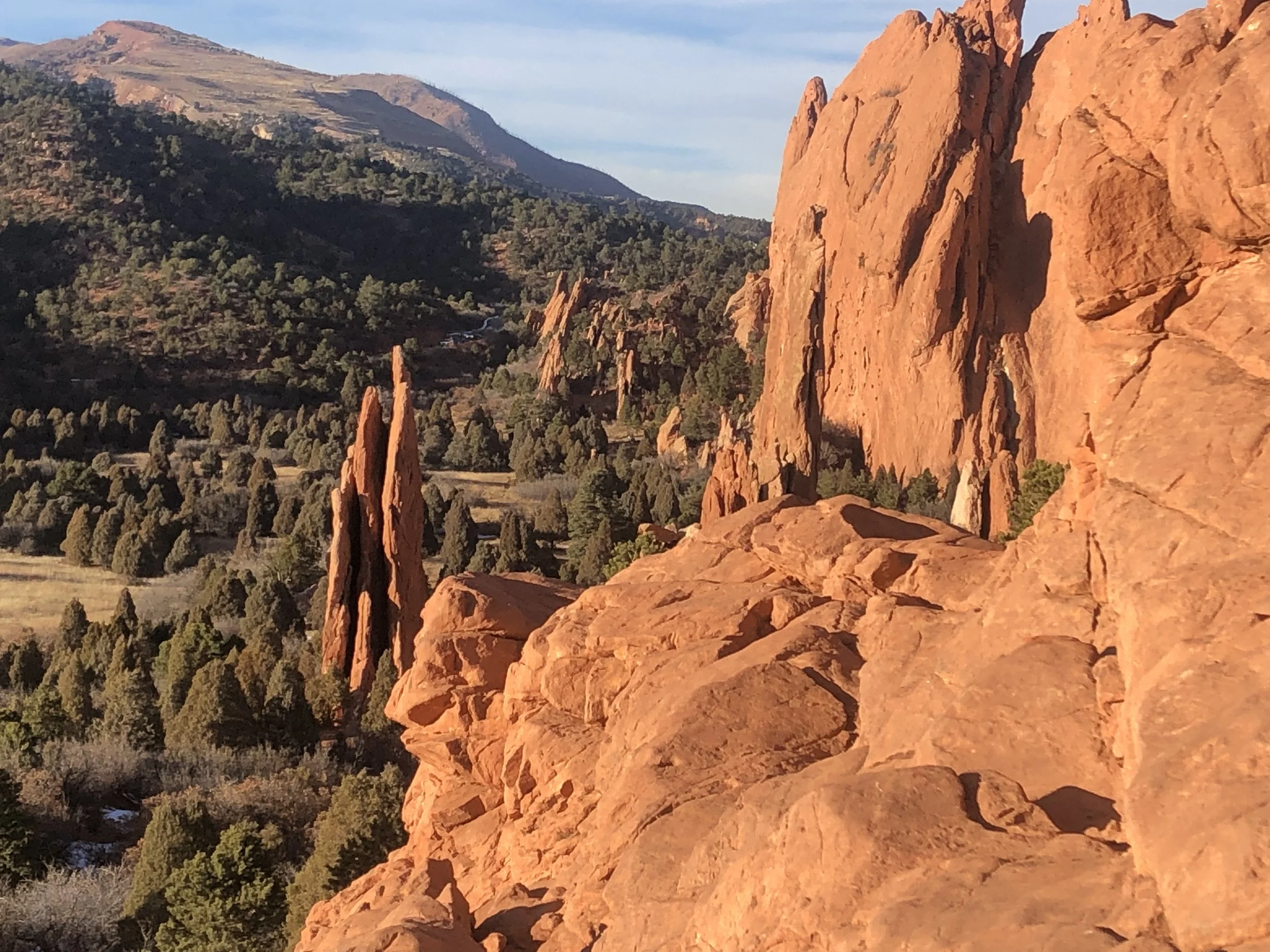
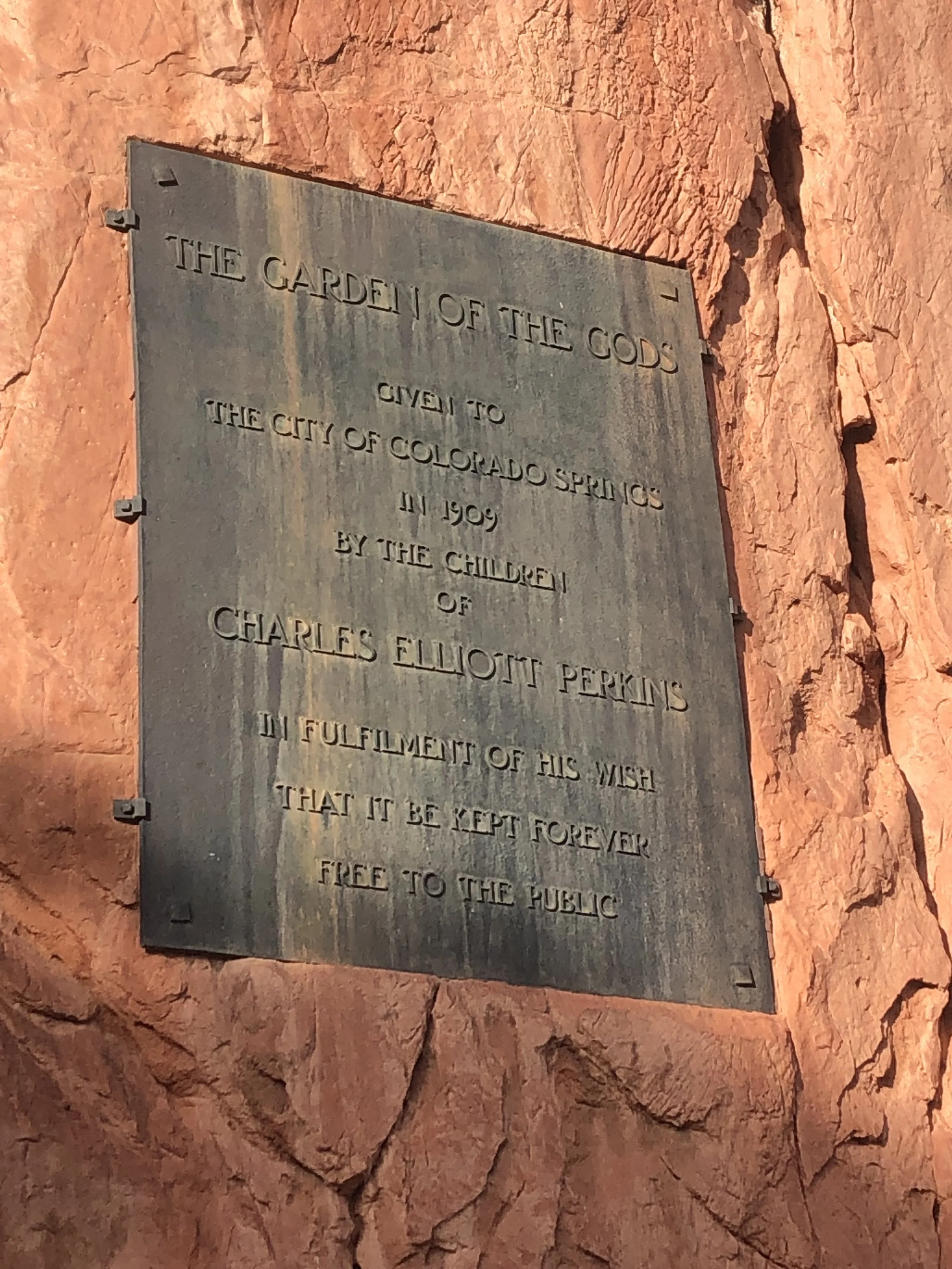
First known as the Fountain Colony, the City of Colorado Springs was founded in 1871 by William Palmer. In 1879 Palmer’s friend Charles Perkins bought 190 hectares of land that included much of the present-day park. Describing the Garden’s formation after passing through the area in the late 1800s, geologist Ferdinand V. Hayden noted, “…the ridges that give the most marked features to the picturesque scenery recline eighty to eighty-five degrees, and then immediately west are several low ridges dipping fifteen to twenty degrees.” Among famous visitors was western artist Thomas Moran who painted a watercolor of Pikes Peak as viewed from Garden of the Gods. In 1886 a bill was introduced in Congress to establish the park and a larger area that included Pikes Peak, as America’s second national park. The bill failed, in part because of the prohibitive cost of purchasing private land. When Perkins passed away in 1909 his family honored his wishes by donating the Garden to the City of Colorado Springs. A stipulation of the gift was that entrance to the park would always be free.
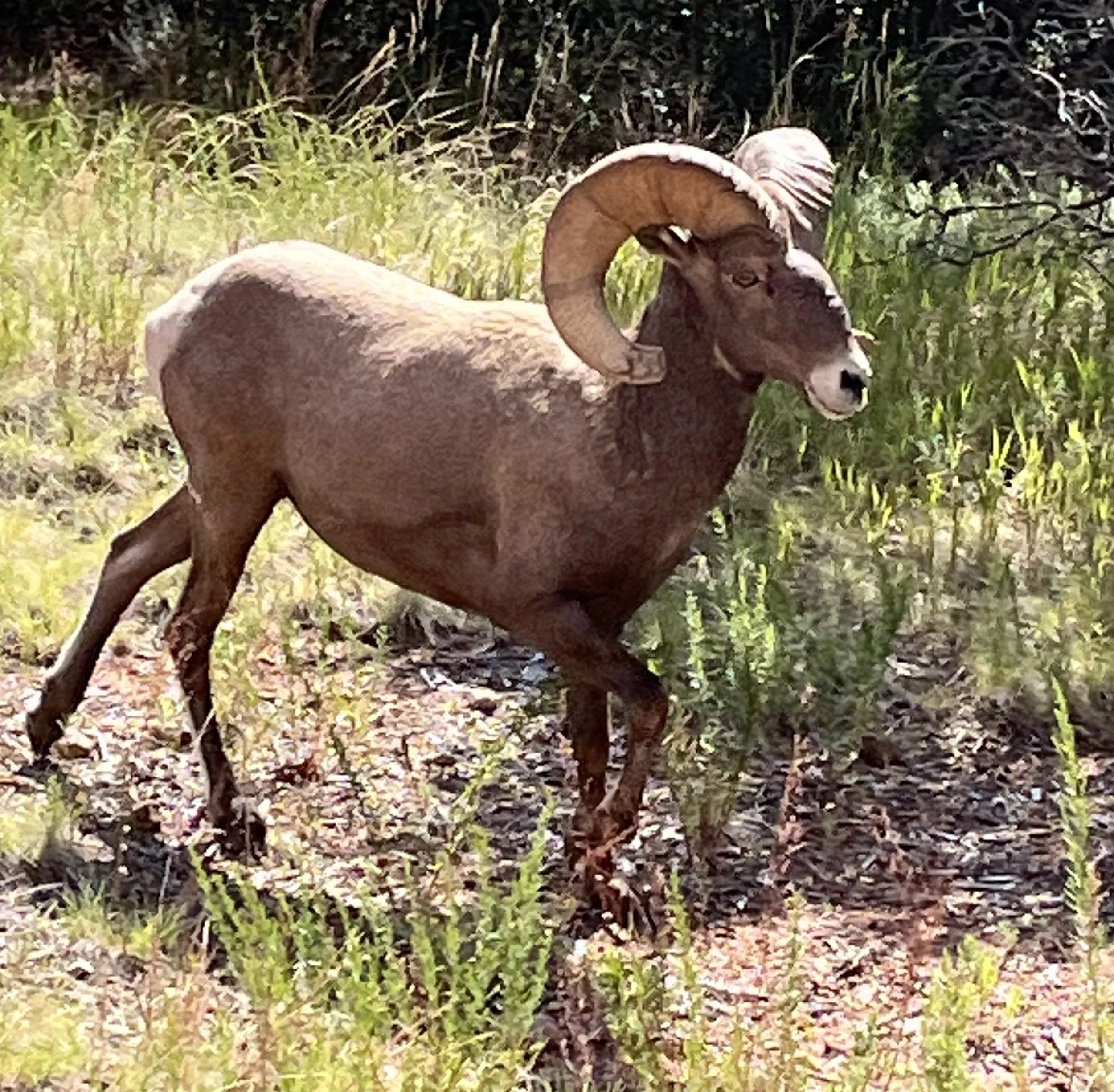
Garden of the Gods is positioned at a biological crossroads where plant and animal species associated with foothills, montane forest, and plains intermingle. Indeed, park trails pass through piñon-juniper woodlands, ponderosa pine forests, and grasslands. Local plants include the one-seed juniper, mountain mahogany, yucca, ponderosa pine, Gambel oak, and cottonwood. A few junipers found within the park are more than 1,000 years old. Park fauna includes the prairie falcon, Rocky Mountain bighorn sheep, red fox, black bear, mule deer, rattlesnake, and common raven. Along with mountain biking and horseback riding, the park is a popular destination for rock climbers. Garden of the Gods is a one-hour drive from Denver and a short distance from U.S. Interstate 25. Nearby are the U.S. Air Force Academy and Cheyenne Mountain (2,915m), home to an underground control facility used by the North American Aerospace Defense Command (NORAD).
Our first stop was the park’s visitor center. Subsequently, we walked the Gateway and Central Garden Trails and the Balanced Rock Trail. For ambitious hikers, the Outer Loop Trail is about 10 kilometers long. We passed rock formations with names such as Kissing Camels, Balanced Rock, the Siamese Twins, and the Tower of Babel. Elsewhere are formations with names such as Sleeping Giant, Steamboat Rock, and Three Graces. The only commercial facility inside the park is a trading post where we made a brief coffee stop. Before leaving we paused for a photo along Mesa Road at the Garden of the Gods Lookout. We reflected on our trip during a stop at nearby Red Leg Brewing Company where I enjoyed a West Coast IPA and a sandwich from Gunnar’s Deli.