California. “I Speak for the Trees” – Peculiar Flora of Joshua Tree National Park
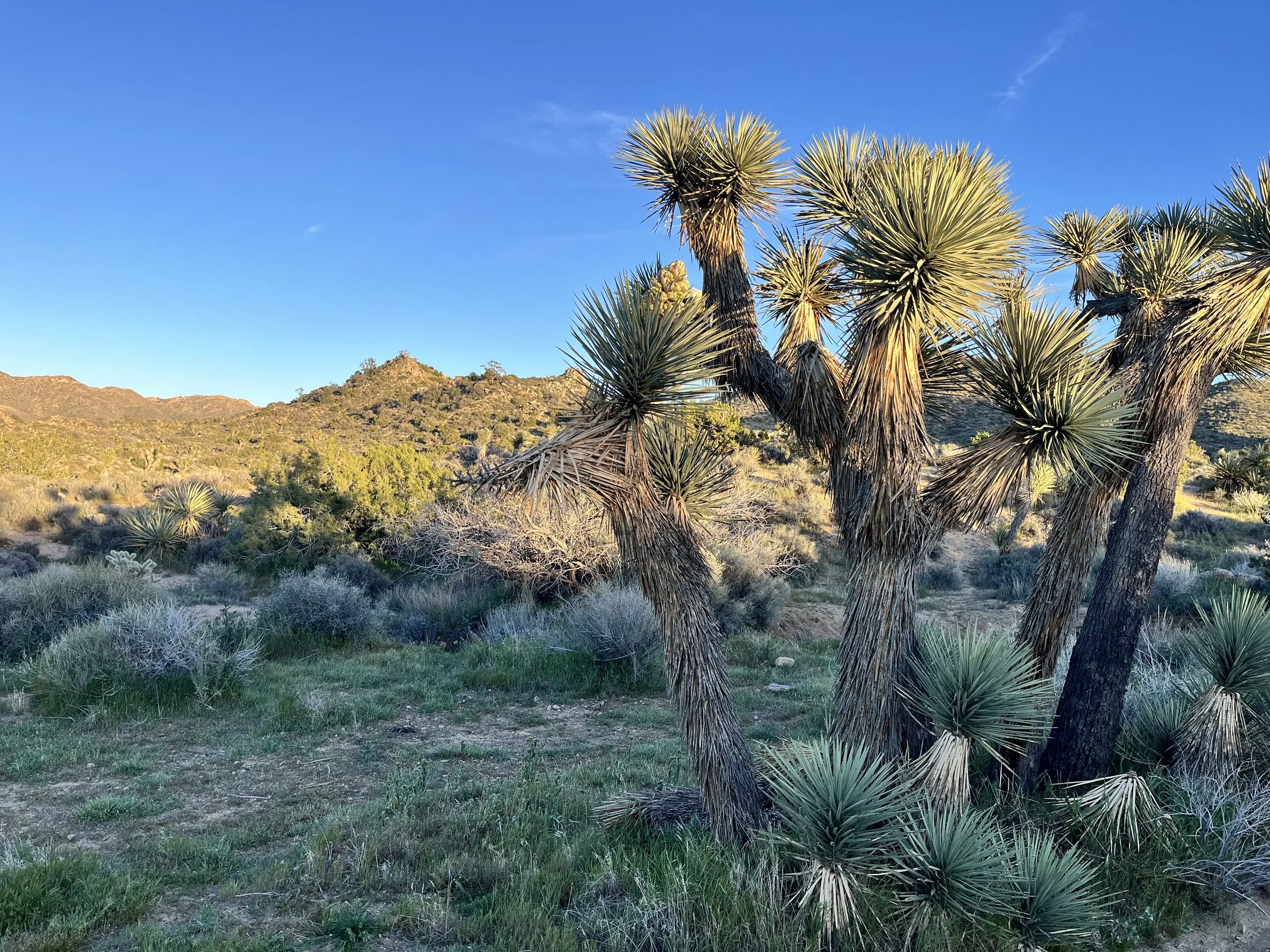
A national park named after a “tree” that isn’t actually a tree? With thick, fibrous branches, Joshua Trees are succulents and more closely related to orchids and grasses than trees. If you’ve been to California’s Mojave Desert there’s a good chance you’ve seen them scattered along hills and within low-lying areas. Some believe that the twisting yucca-like plants were the inspiration for spindly “Truffula Trees” described by Dr. Seuss in his children’s book, The Lorax (1971). Tasked with defending nature against unchecked industrial greed, the Lorax proclaimed, “I speak for the trees for they have no tongues.” The Lorax would have appreciated Joshua Tree National Park. Located near Palm Springs and about 211 kilometers east of Los Angeles, the area was designated a national monument in 1936 and a national park in 1994. Encompassing parts of two deserts, the Mojave and the Colorado, Joshua Tree’s 3,218 square kilometers cover an area slightly larger than the state of Rhode Island.
During the Pleistocene (2.58 million to 11,700 years ago), a larger region holding the present-day park was covered by rivers and lakes. Living there were camelops, giant sloths, saber-toothed cats, and elephant-like mastodons. Between 8,000 and 4,000 years ago the region was inhabited by an indigenous hunter-gatherer group called the Pinto and later by Cahuilla, Serrano, and Chemehuevi peoples. Spanish explorers passed through in the 1770s and sometime later the area was explored by trappers led by Jedediah Smith. Miners arrived in the 1960s and European-descended ranchers in the 1870s. Eventually, more than 300 pit mines were established within the present-day park’s boundaries including the Lost Horse Mine, responsible for silver and gold ore worth several million dollars.
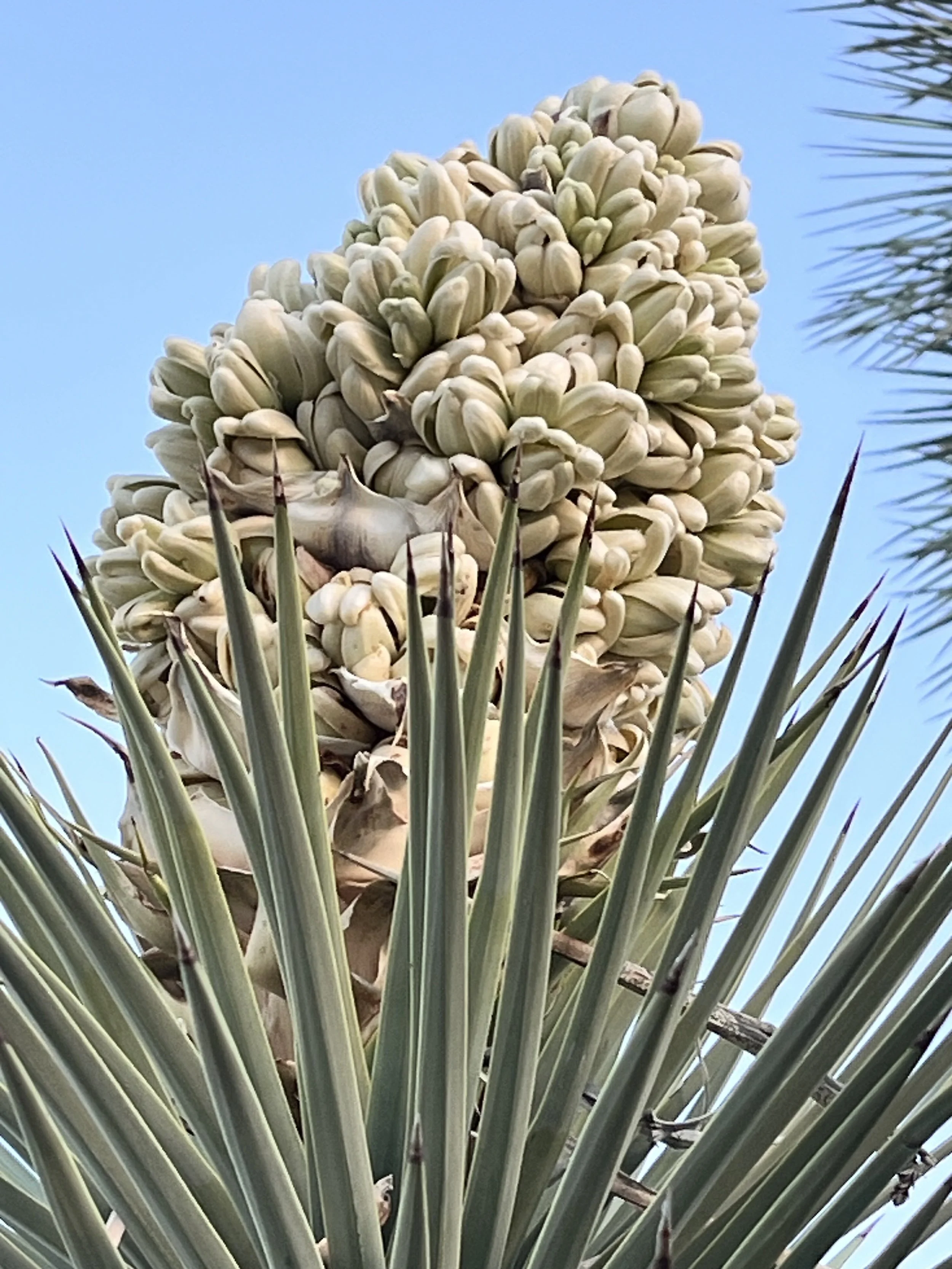
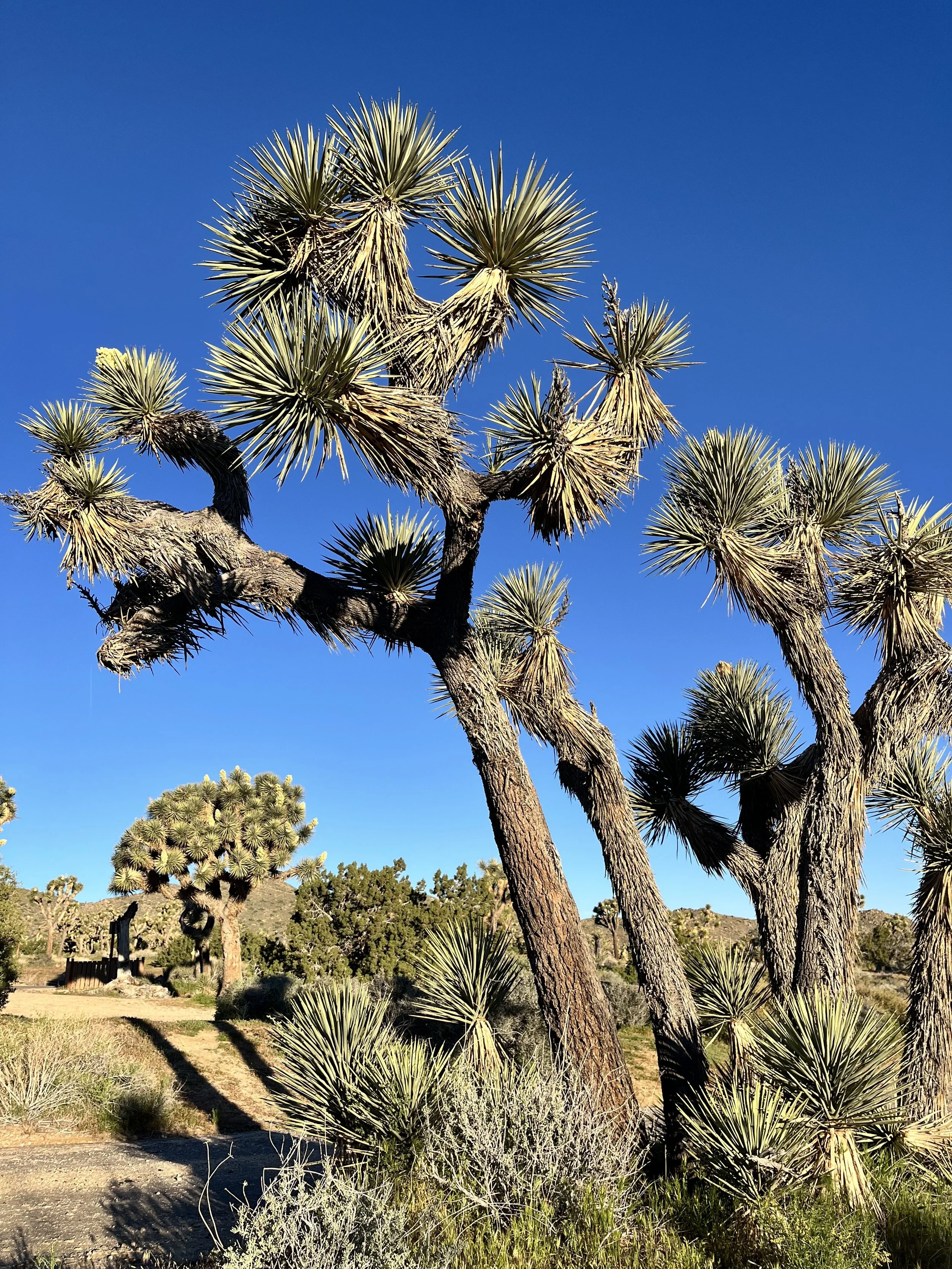
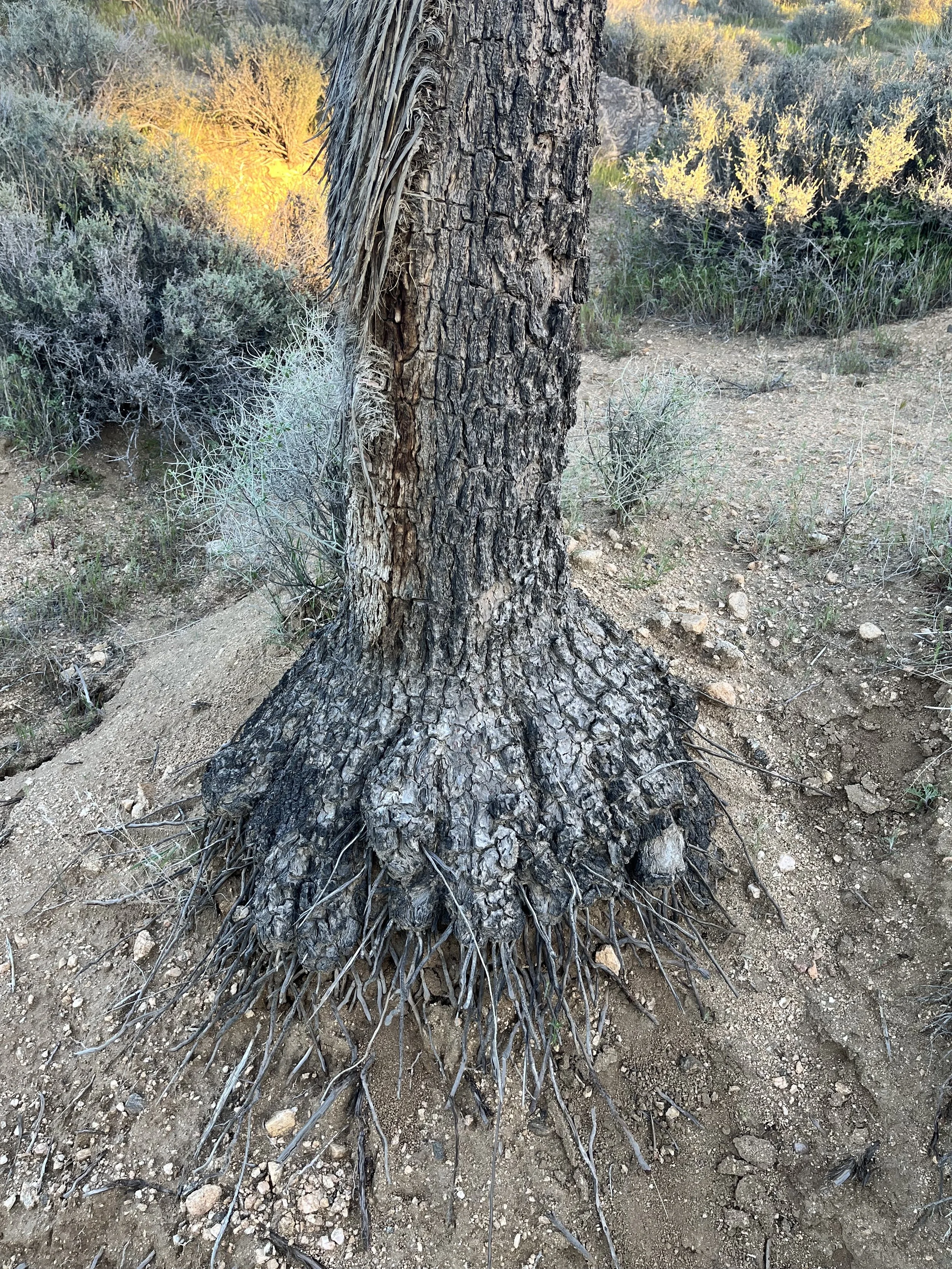
The Joshua Tree was known to the Spanish as izote de desierto (the “desert dagger”). It is believed that Mormons crossing the Mojave were responsible for the plant’s name. Ranchers and miners used the tree’s trunks and branches for fuel or as fenceposts. Joshua Trees grow at a rate of about 7.5 centimeters per year in their first ten years with the tallest trees reaching heights of up to 15 meters. To compensate for being top-heavy, the plants have a broad root system that extends up to ten meters horizontally from their trunks. It can be challenging to ascertain the age of a Joshua Tree because their trunks are without growth rings.
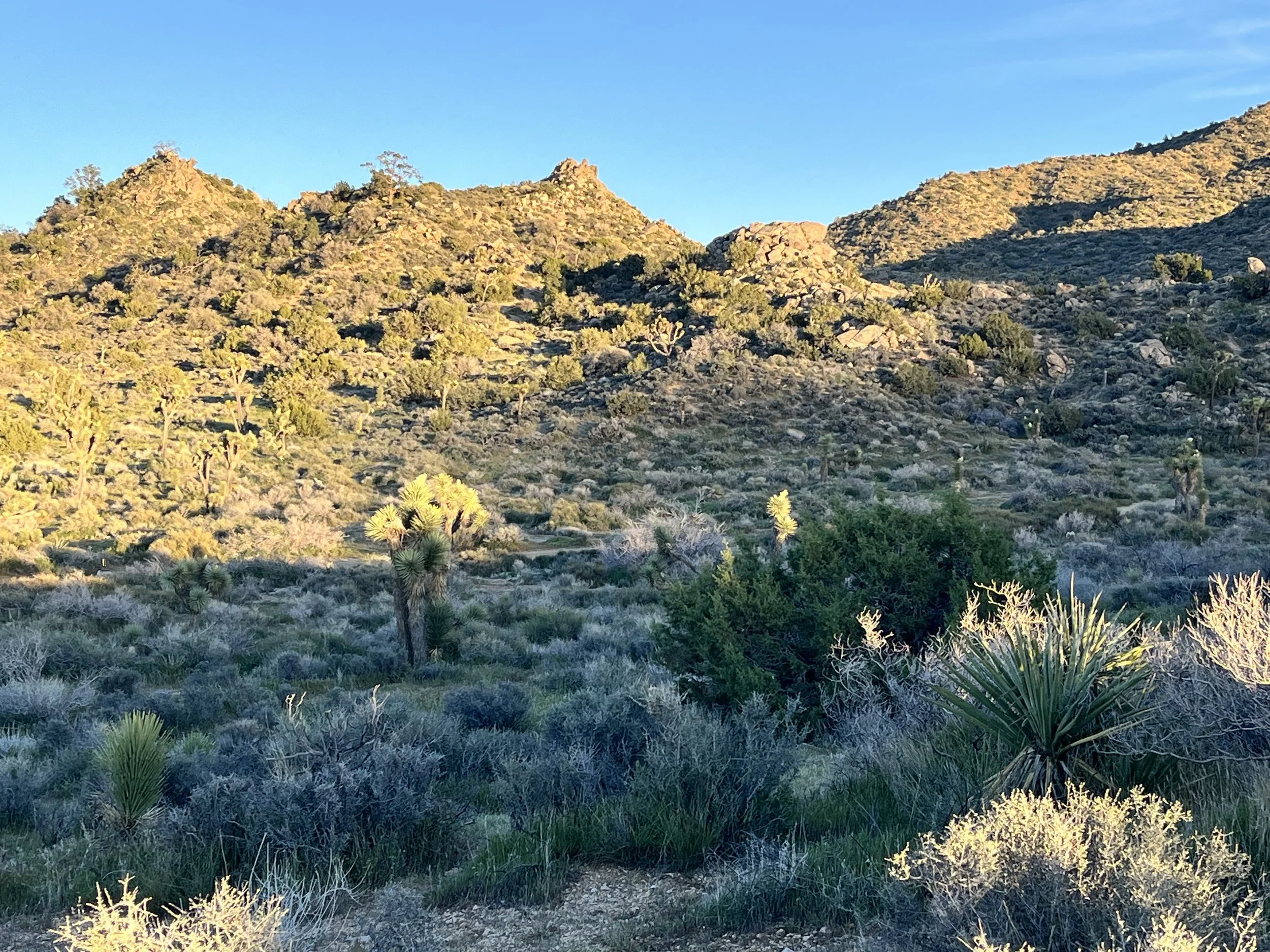
Joshua Tree National Park is a landscape of rugged ridges made from gneiss and massive boulders shaped by physical and chemical erosion. Spheroidal weathering is common and rocks are often covered with desert varnish. In places there are cryptobiotic soil crusts formed by communities of lichen, moss, bacteria, algae, and fungi. Geographically, Joshua Tree is on the eastern side of a broad mountain belt called the Transverse Range. The park’s western side is within a high desert of rocky hills and sandy plains while its eastern flank is mostly low desert with “gardens” of cholla cactus and spindly ocotillo. The park has more than 50 species of mammals, 40 species of reptiles, and several hundred species of plants. It is bounded by the Coxcomb Mountains to the east, the Eagle Mountains to the southeast, and the Little San Bernardino Mountains to the southwest. A group of rocky hills called the Hexie Mountains passes through the park’s central region. Precipitation is low (averaging 100mm/year) because of the park’s position within a rain shadow. Daytime highs can be more than 38°C while winter lows may drop below freezing. In part because of its isolation from large urban areas, Joshua Tree NP was named an International Dark Sky Park.
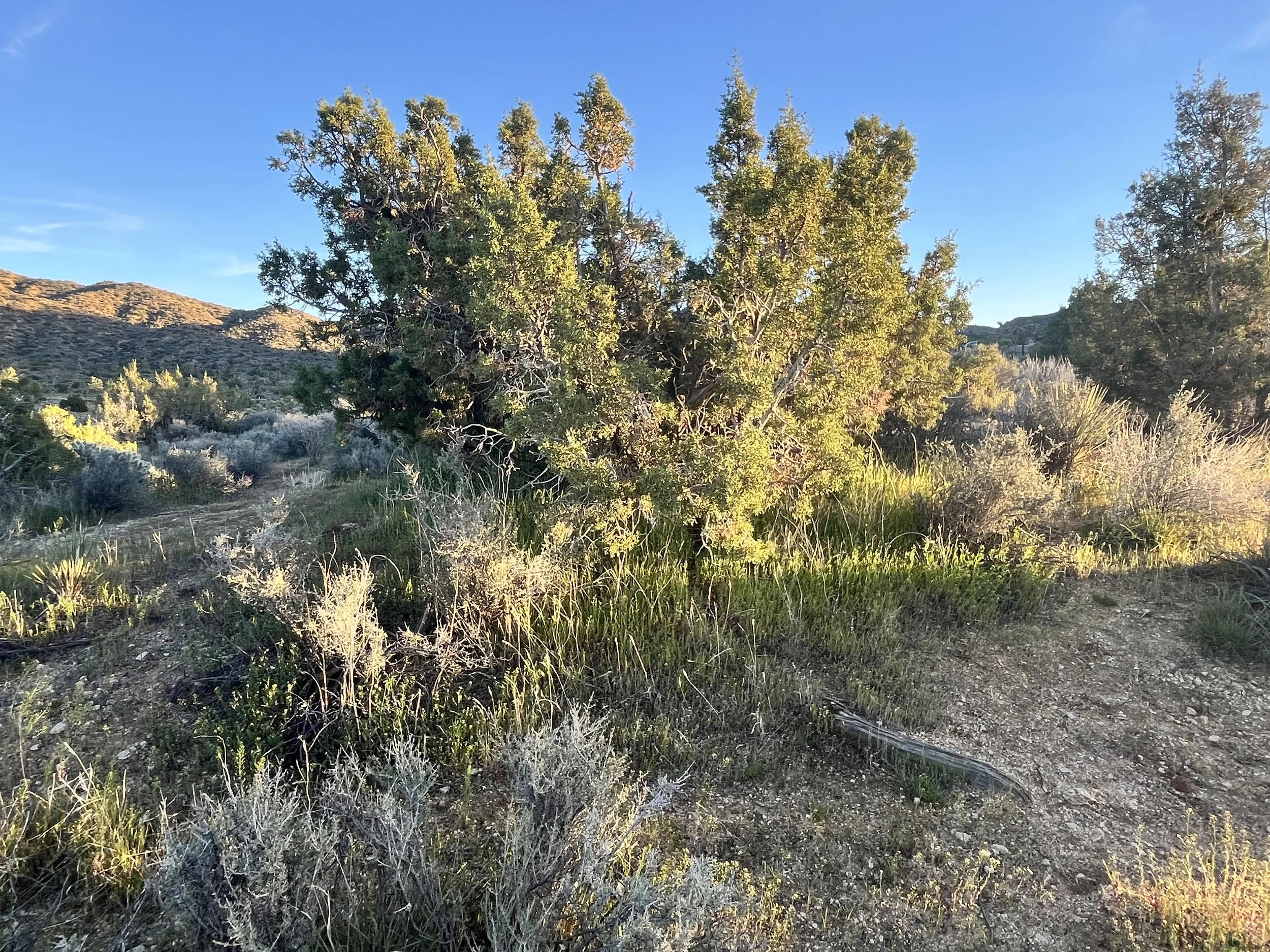
My wife and I reserved a site in the park’s Black Rock Campground. To reach our campsite we drove southeast through a residential subdivision of Yucca Valley. Our site offered a panoramic view of a rocky landscape covered by yucca, junipers, cholla cactus, and scattered Joshua Trees. There was also brittlebush, a shrub with fuzzy gray leaves that act like a blanket, protecting the plant against extreme temperatures.
With few exceptions, hikers do not have to remain on trails. Along with being a favorite place for photographers, the park is a popular destination for rock climbers. Guidebooks list a wide variety of climbing routes proper for beginners as well as seasoned climbers. For example, Illusion Dweller is a 30-meter climb along a crack that requires climbers to use jams and “linebacker moves.”