Oklahoma. Yanking and Banking in the U.S. Air Force’s White Rocket
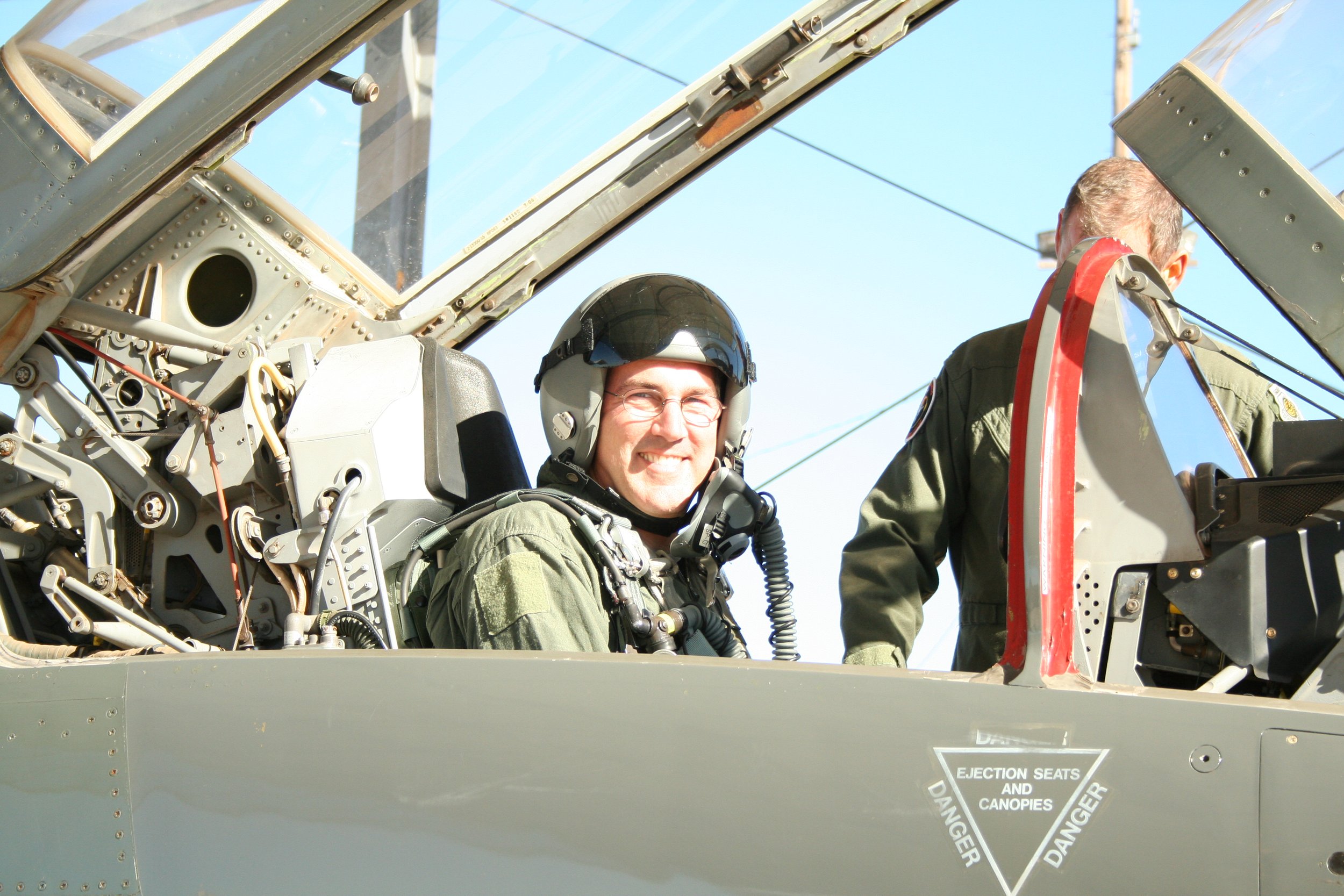
Working as a college administrator for nearly three decades, I was fortunate to know senior officers who commanded my university’s Air Force Reserve Officer Training Corps (ROTC) units. On several occasions, I was invited to participate in base tours and flights. The first of these involved an opportunity to ride in a Northrop T-38 Talon based at Vance Air Force Base (AFB). The T-38 is a sleek, twin-engine advanced trainer used by the USAF since 1961. Nicknamed the “White Rocket,” the supersonic T-38’s mission is to prepare pilots to fly faster and more advanced aircraft such as the F-15E Strike Eagle, F-16 Fighting Falcon, and F-22 Raptor. Located near Enid, Oklahoma, Vance AFB has been used for training pilots since WWII. On the day of my flight, I was asked to arrive early so I could complete several hours of preparation and instruction that included a lesson on how to safely eject from the aircraft in the event of a catastrophic emergency. After completing pre-flight briefings, I was fitted for an oxygen mask, helmet, and “G-suit” equipped with bladders around my legs and torso that inflate to prevent blood loss to the brain during high-speed maneuvers. Riding in the rear seat, my pilot and I took off for a 45-minute sortie that included high speed turns and one loop. I had been instructed to remove my oxygen mask if I felt the urge to vomit (presumably because the masks are expensive). At one point I was given an opportunity to take the control stick and throttle as we pulled into formation with another T-38. After landing, I felt fortunate to have completed the flight without becoming sick.
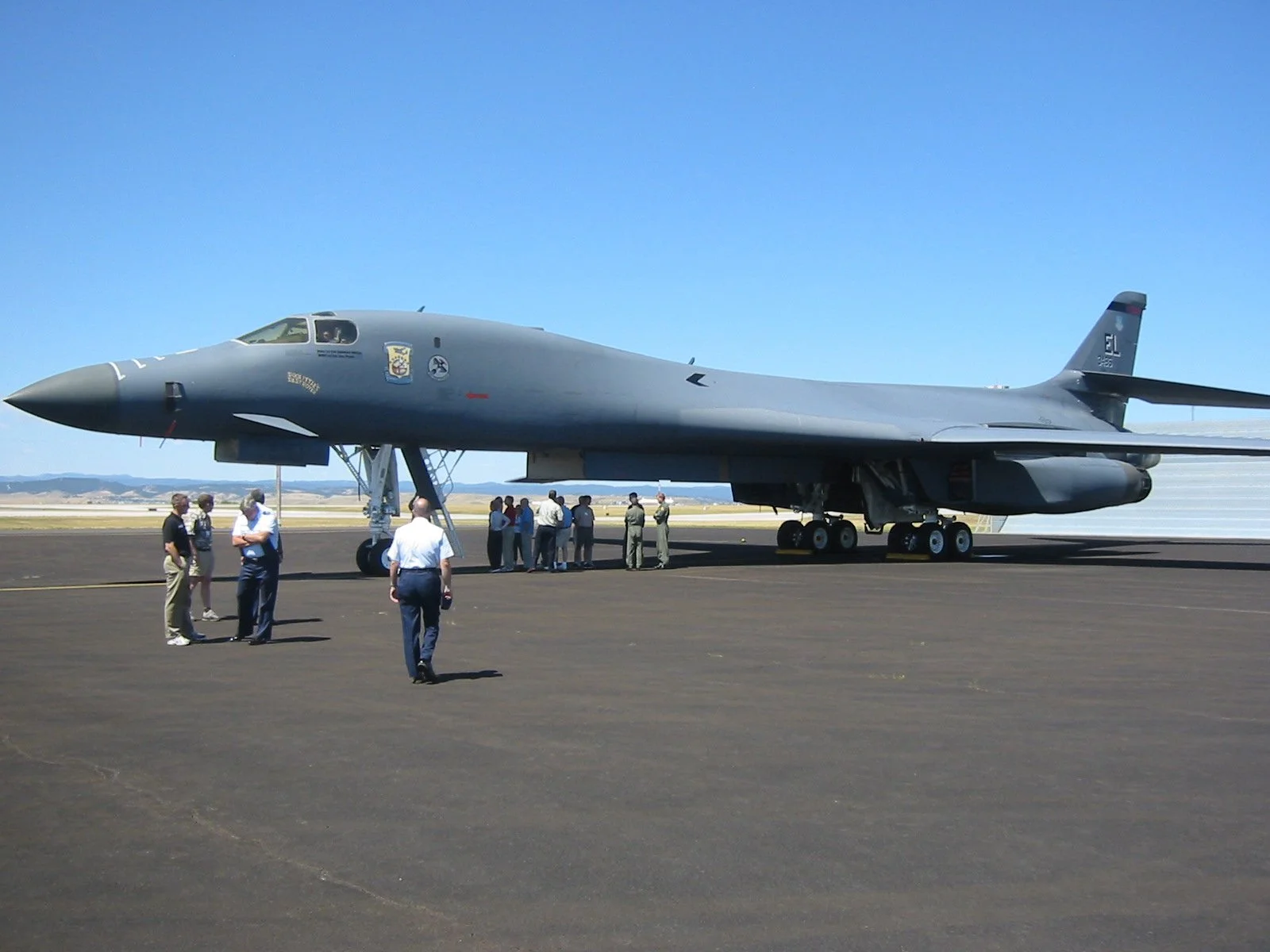
Another tour involved traveling to Ellsworth AFB in South Dakota. After observing ROTC exercises involving advanced cadets (typically college juniors), our small group of about a dozen university educators from across the U.S. visited the flight line to inspect a Rockwell B-1B Lancer. Featuring variable-sweep wings, the four engine B-1B bomber was designed for Strategic Air Command nuclear missions but has been used in recent years as a conventional bomber. With a top speed of Mach 1.25, a B-1B can carry 34,000 kilograms of bombs over a distance of more than 7,400 kilometers. After inspecting the plane from the ground, small groups of us were invited into the cockpit where a B1-B pilot described the aircraft’s flight characteristics and crew responsibilities. Among other assignments, B-1Bs were used over Iraq in 1998 and during NATO bombings of Yugoslavia in 1999.
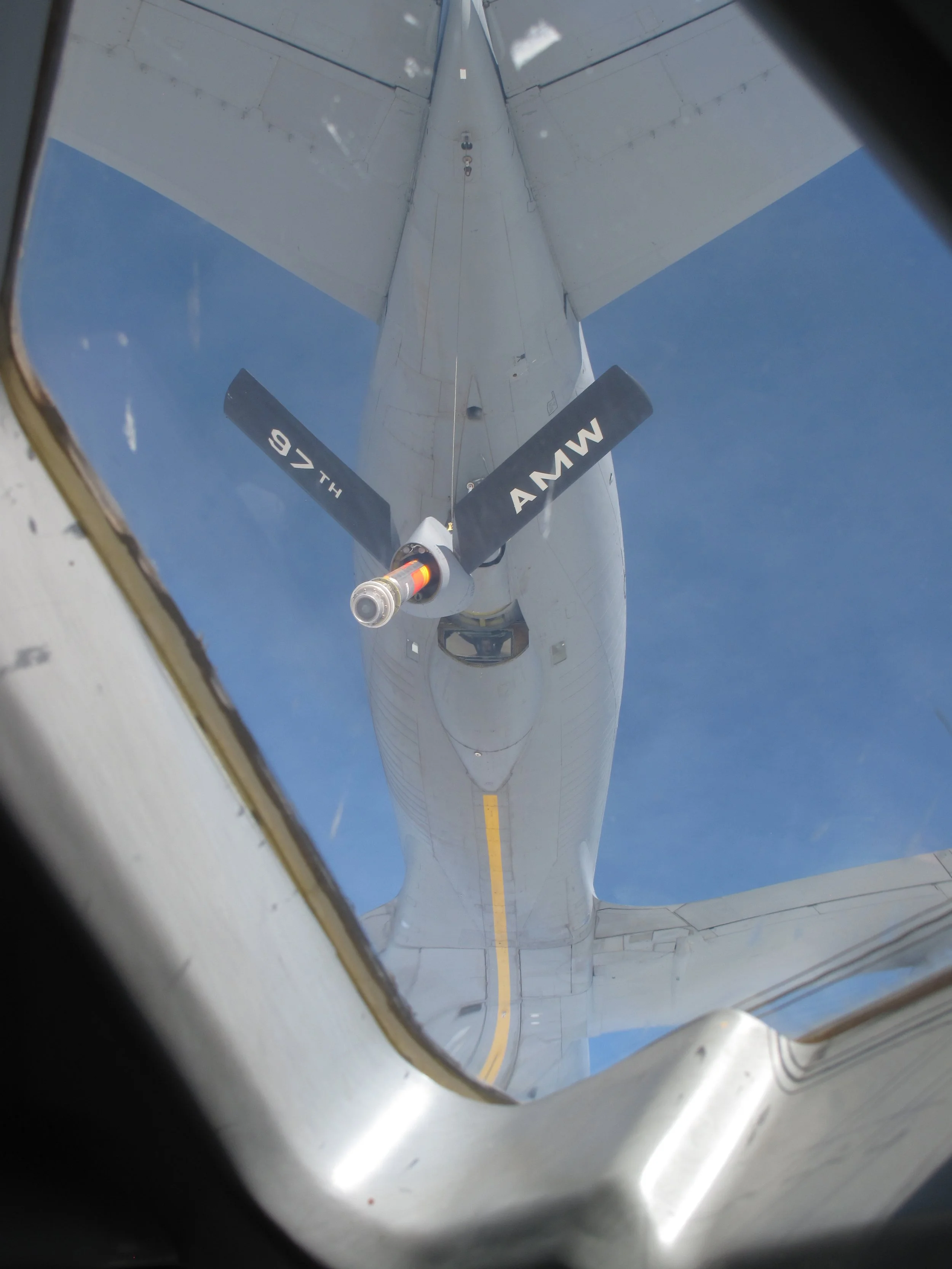
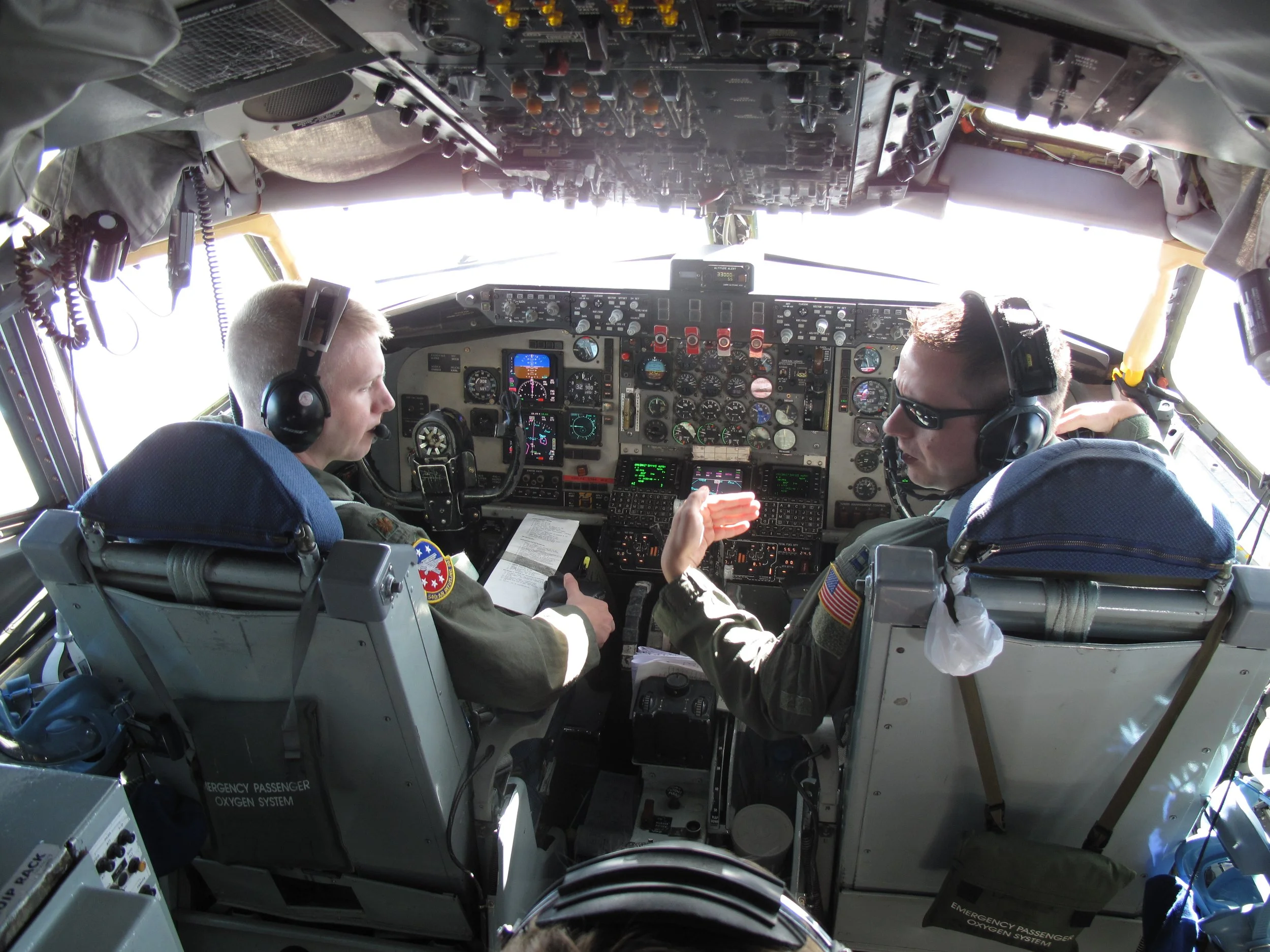
A few years after my Ellsworth visit, I participated in a public relations tour organized for Enid’s city leaders and boosters. The plan called for spending a night at Vance AFB before departing to Wright Patterson AFB in a Boeing KC-135 Stratotanker. Sharing its basic design with the Boeing 707 airliner, the four engine KC-135 was the world’s first jet powered refueling tanker. The KC-135 features a shuttlecock-shaped drogue controlled by a crew member known as the boom operator. Located in the aircraft’s tail section, the drogue is used to refuel aircraft flying below and behind the tanker. With a range of 18,000 kilometers, the KC-135 can carry passengers and cargo or 116,477 liters of transferable fuel. I was fortunate to be seated just behind the pilots during takeoff. Moving to other places inside the aircraft’s spacious interior, I was required to carry a mask and oxygen bottle in the event of rapid depressurization. Midway through the flight I was invited to crawl into a narrow space to observe the boom operator as he maneuvered the drogue to refuel a Boeing C-17 cargo plane. After landing at Wright Patterson AFB in Dayton, Ohio, I checked into my room before departing by bus to Huffman Prairie Flying Field. The Huffman Interpretive Center tells the story of Orville and Wilbur Wright’s early test flights. That evening our group was invited to dinner at the nearby National Museum of the Air Force.
The next morning, we departed Wright Patterson for Missouri’s Whiteman AFB. Located near Knob Noster, Missouri, Whiteman hosts the entire U.S. inventory of bat-shaped Northrop B-2 bombers. Known as the “Spirit,” the B-2 was designed as a stealth aircraft meaning that it can evade detection by enemy radar. In June 2025 seven B-2s carrying “bunker buster” bombs struck targets in Iran as part of Operation Midnight Hammer. We were permitted to observe and photograph the aircraft on the tarmac. However, we were not allowed inside the cockpit or to take pictures of the back end of any B-2.
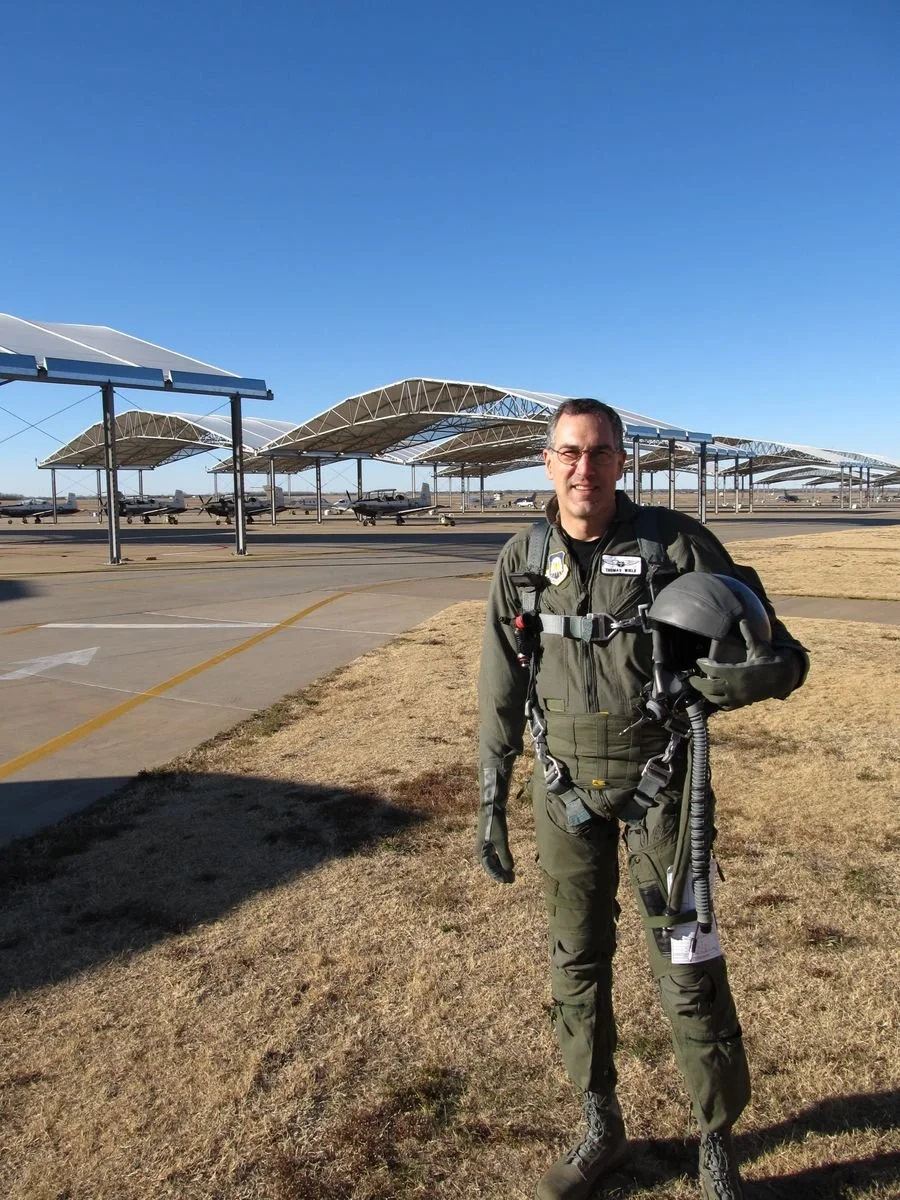
I returned to Vance a few years later for a backseat ride in a Beechcraft T-6 Texan II. Powered by a single turboprop engine, the T-6 replaced the Air Force’s Cessna T-37B Tweet and the Navy’s Beechcraft T-34 Mentor as a primary trainer for both military branches. Built by Textron Aviation, the T-6 was designed to mimic flying characteristics of jet aircraft with a cruising speed of 510 kilometers per hour. T-6 Texan IIs are used as a military trainer by 14 countries including Vietnam and Argentina. As a longtime civilian flight instructor, I thought I would be prepared for extreme “yanking and banking” such as rapid climbs and descents and 5-G turns. After the pilot executed a few aggressive maneuvers, I was invited to take the stick. Thoroughly nauseated, I managed to keep the plane flying straight and level and to complete some shallow turns before returning control to the front seat.
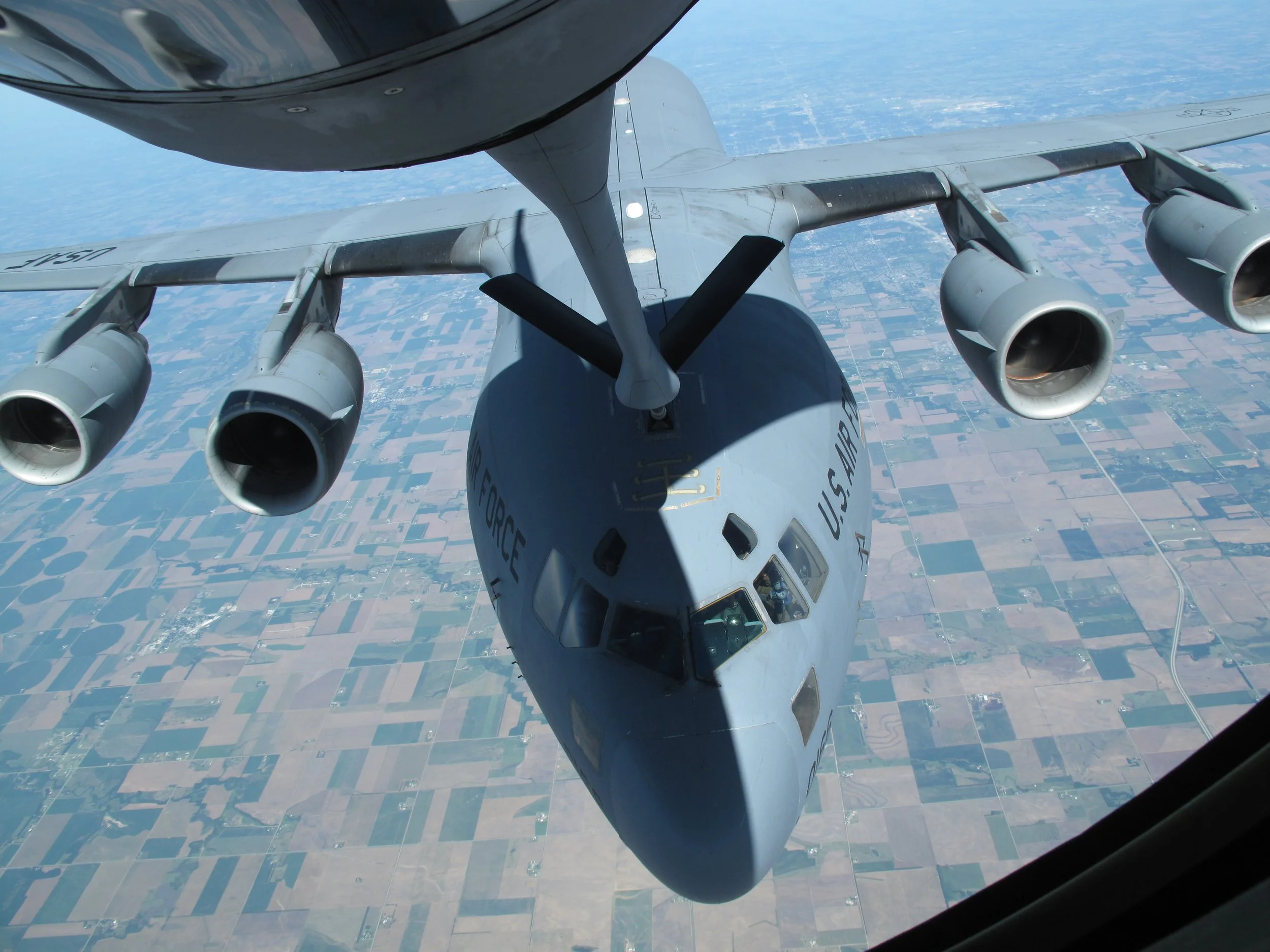
My final USAF sortie was in a Boeing C-17 Globemaster III based at southwestern Oklahoma’s Altus AFB. The C-17 is a large military transport designed to replace the aging Lockheed C-141 Starlifter. Equipped with four powerful jet engines, the C-17 can operate from runways as short as 1,067 meters. Besides the U.S., C-17s are operated by Australia, Canada, Qatar, the United Kingdom, the United Arab Emirates, and Kuwait. We arrived in the city of Altus the day before our scheduled flight. Unlike the simple (and somewhat uncomfortable) web seats lining the interior of the KC-135 I previously flew in, the C-17 had a pod equipped with comfortable, airline-style seating. After making a comment about the aircraft’s immense cargo area, an enlisted airman mentioned that he and his fellow crew members sometimes played football scrimmages in the cargo bay to pass flight time. At various times small groups of visitors riding in the cargo bay were invited to enter the cockpit. I was fortunate to find a place behind the pilots during an aerial refueling operation. We flew just under and behind a KC-135 as the drogue was lowered into place to transfer Jet-A fuel to our aircraft. The C-17 has a good safety record but with a few exceptions. Years before my C-17 ride I was with students in Alaska. Departing northbound from Anchorage by train, my group passed broken pieces of a C-17 that had taken off for practice flights before an airshow called Arctic Thunder. Departing Elmendorf AFB, the pilots made a right turn followed by an aggressive left turn that caused the transport to stall at low altitude. Regrettably, all four crew members were killed. To show respect during the recovery operation and investigation, we refrained from taking photographs of large pieces of the still smoldering aircraft.