Mexico. Of Mountains, Mines, and Mummies
Known to the Aztecs and Spanish for nearby mines that produced silver and gold, the mountain city of Guanajuato is easily my favorite place in Mexico. With tree-shaded plazas surrounded by quaint, colonial era buildings, Guanajuato is famous for its network of underground roadways and its unusual museum featuring dozens of gnarled human corpses.
The place where Guanajuato now stands was first occupied by a native people known as the Otomi who referred to the larger area as “Mo-o-ti” meaning “place of metals.” Mines for extracting precious metals were operated by native peoples long before the coming of Europeans. Arriving in 1548, the Spanish established an outpost in support of gold mines and within a few years, Guanajuato was the wealthiest city in Mexico. The region is also noteworthy as the birthplace of an independence movement in the years before Mexico’s War of Independence (1810-1812).
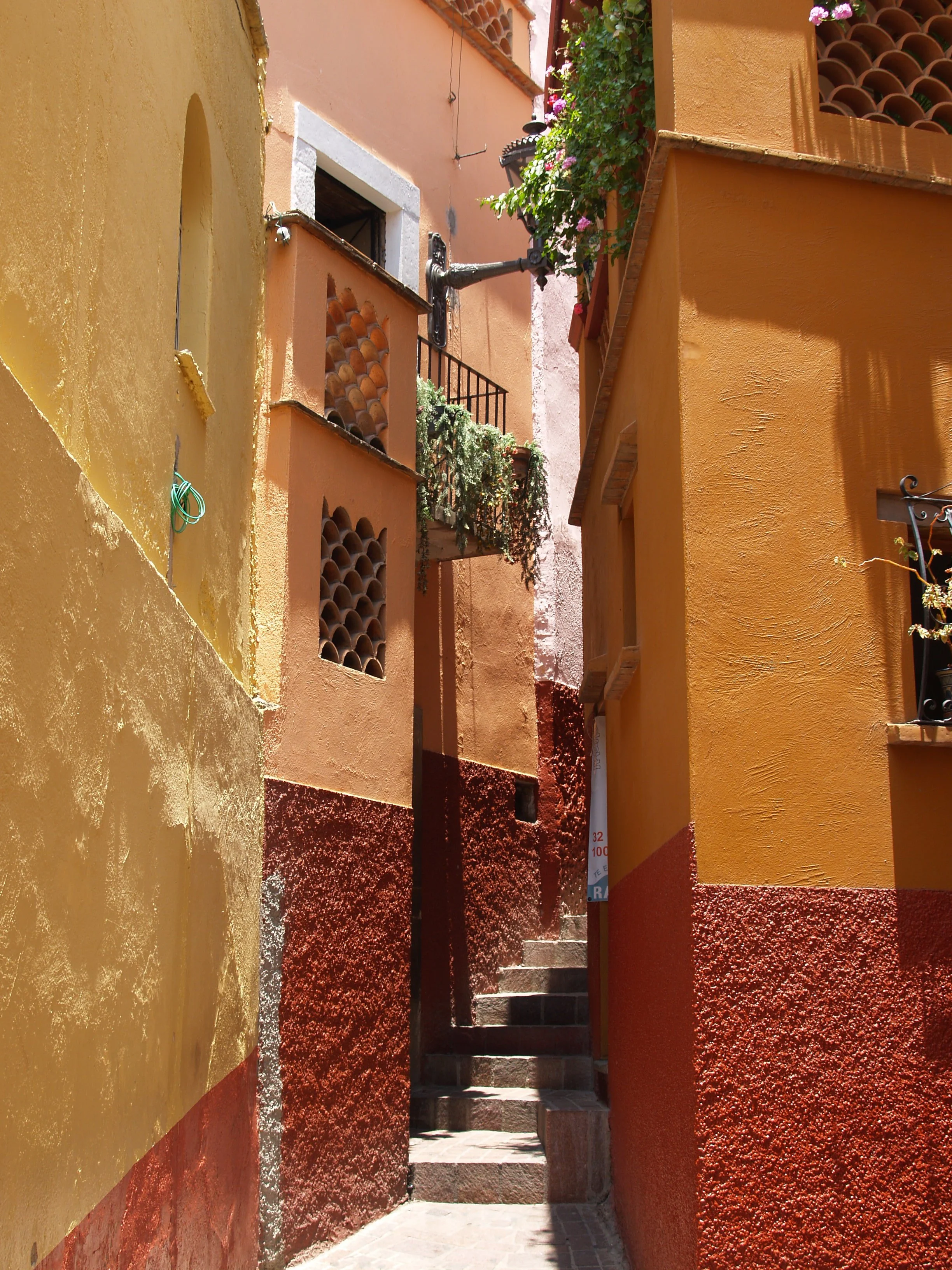
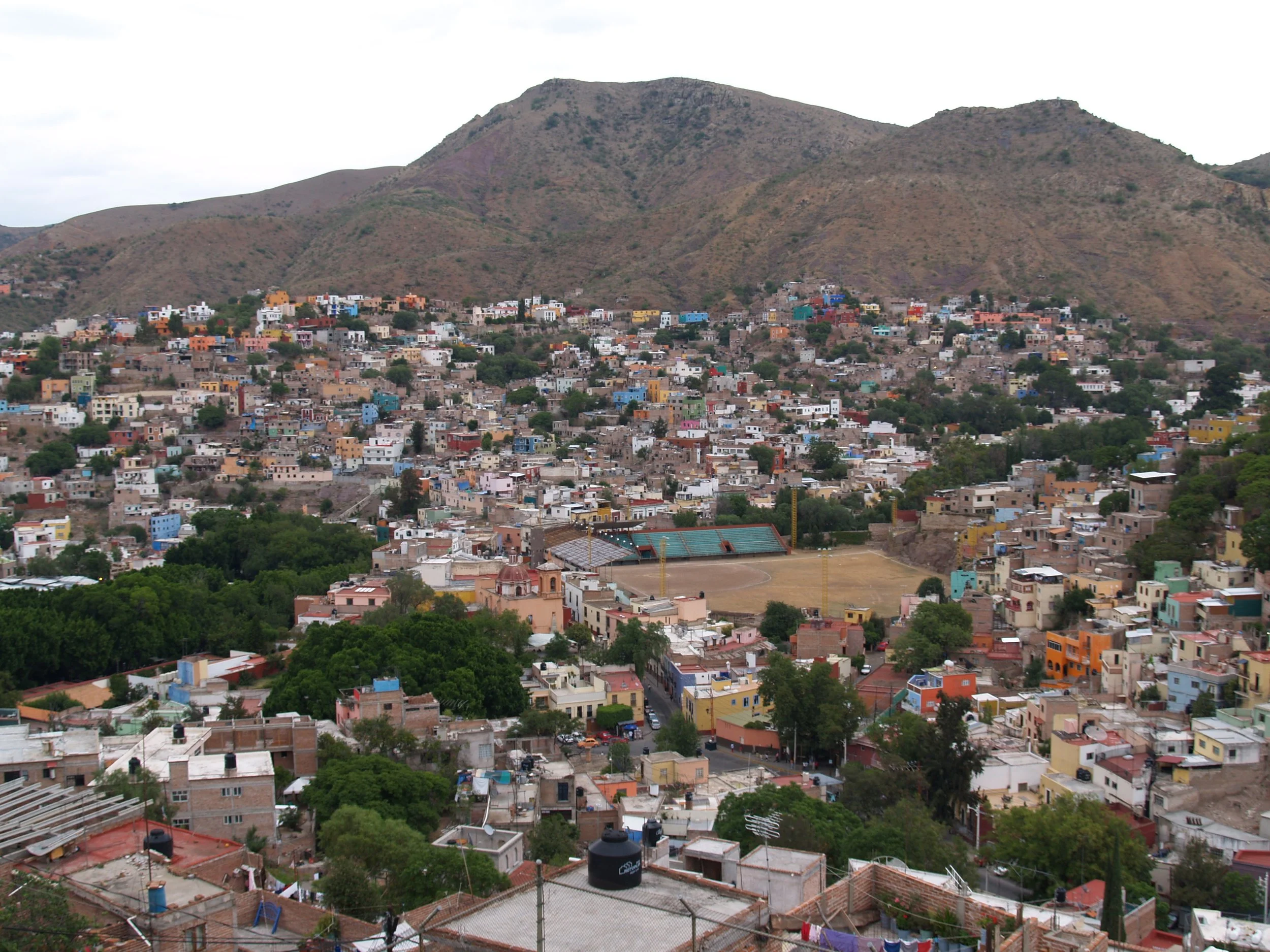
Positioned within the Trans-Mexico Volcanic Belt, Guanajuato (population 200,000) lies east of the Sierra Madre Oriental Mountains and within Mexico’s Bajío Region. Built on a sedimentary formation known as the Sierra de Guanajuato, the town has expanded along hills and in some places, funiculars (vertical cable cars) have been built to transport people to hilltop locations. The city’s inviting neighborhoods include houses painted in pastel colors ranging from saffron yellow to lime green. There are also inviting plazas such as Jardin de la Union. Appearing relatively compact, the oldest part of town has elegant churches on streets often too narrow for buses. On the slopes of Cerro del Gallo Hill are alleyways with names such as Sal si Puedes (exit if you can) and Callejón del Beso (aka kissing alley). Just 168 centimeters wide at its narrowest point, Callejón del Beso is flanked by balconies that almost touch. According to a local legend, couples who kiss on the alley’s third step (painted in red) are guaranteed seven years of happiness.
Arriving by bus from Mexico City, we made a brief stop at our hotel before heading to the old city. Oddly, tunnels constructed in the hills to divert floodwaters now serve as the town’s principal roadways. I decided that this city would not be a suitable place to negotiate in a rental car. After lunch we visited the San Ramon Mine Museum, located within the Valenciana District. Operated by the Spanish from the 16th through 18th centuries and extending 350 meters below ground, the Valenciana produced silver and gold ore. Passing old mining equipment, our tour group descended 60 meters into a narrow mineshaft. I tried to imagine challenging working conditions including high temperatures, toxic dust, frequent flooding, and collapses.
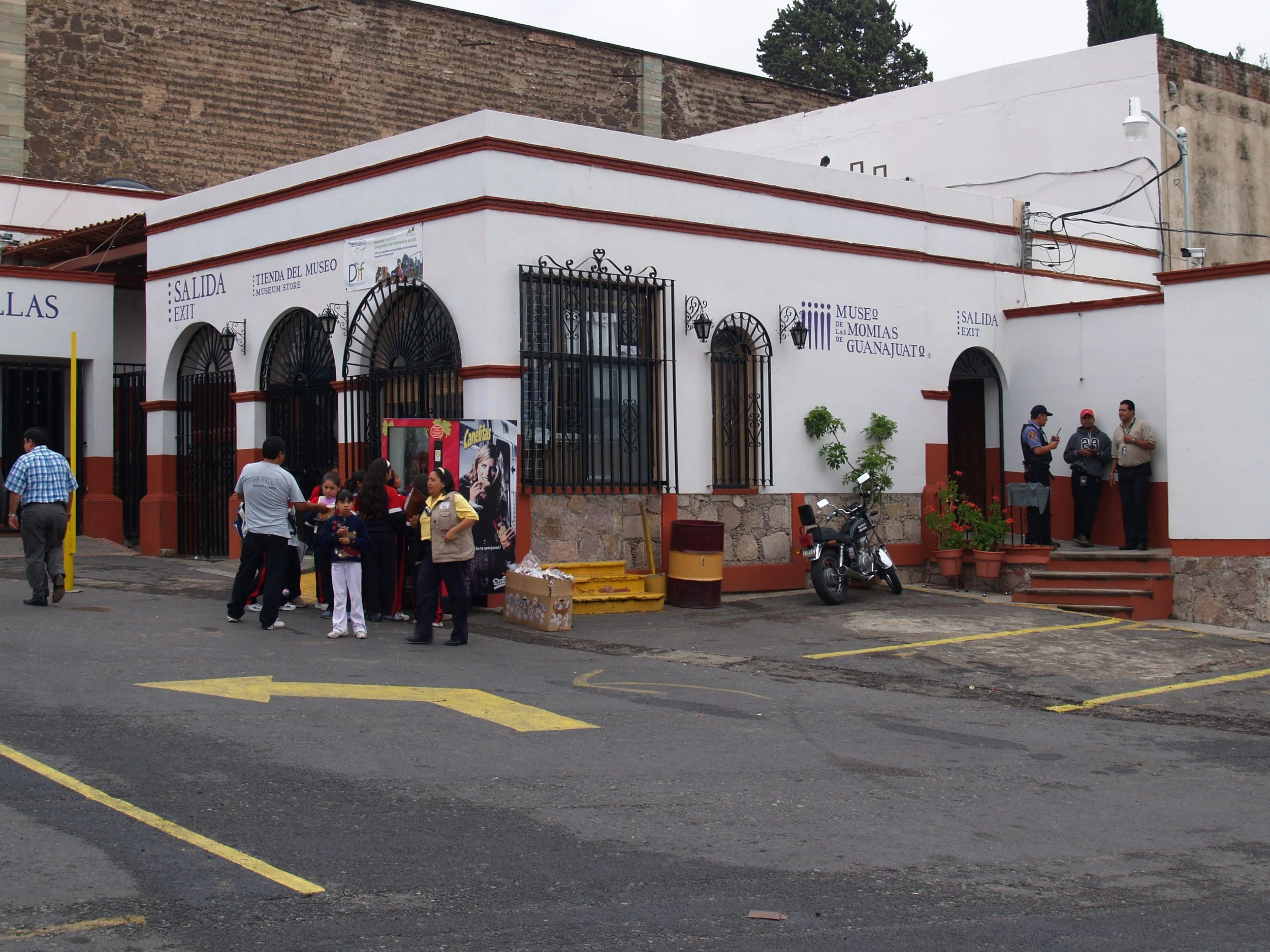
Located near Guanajuato’s Santa Paula Cemetery, the Museum of Mummies is among the oddest tourist attractions I’ve ever seen. The museum’s story begins in the early 1800s when deaths associated with a cholera outbreak caused the local cemetery to run low on burial plots. To address the shortage, an annual tax was levied on the families of persons buried in more expensive above ground crypts. In cases where the tax was not paid, the deceased were moved to a nearby building. In the process of exhuming bodies, workers were surprised to find many that had become mummified, presumably from an absence of oxygen and moisture needed for decomposition. As early as 1900, cemetery employees began charging a few pesos to curious visitors who wanted to see corpses that had been lined up along walls. A few famous people came to the museum such as science fiction writer Ray Bradbury who later wrote “Next in Line” (1947), a fictional story of an American couple forced to see Guanajuato’s mummies. The Museum of Mummies opened to the public in 1969 with 59 corpses on display. We paid 85 pesos each to see the macabre exhibit. Gnarled and pale, each mummy’s skin was pulled tight around bones and empty eye sockets. A few still had teeth and most were dressed in tattered and dusty burial clothing. Most disturbing were corpses with open mouths that appeared to be screaming. Along with adults were babies dressed in funeral gowns.
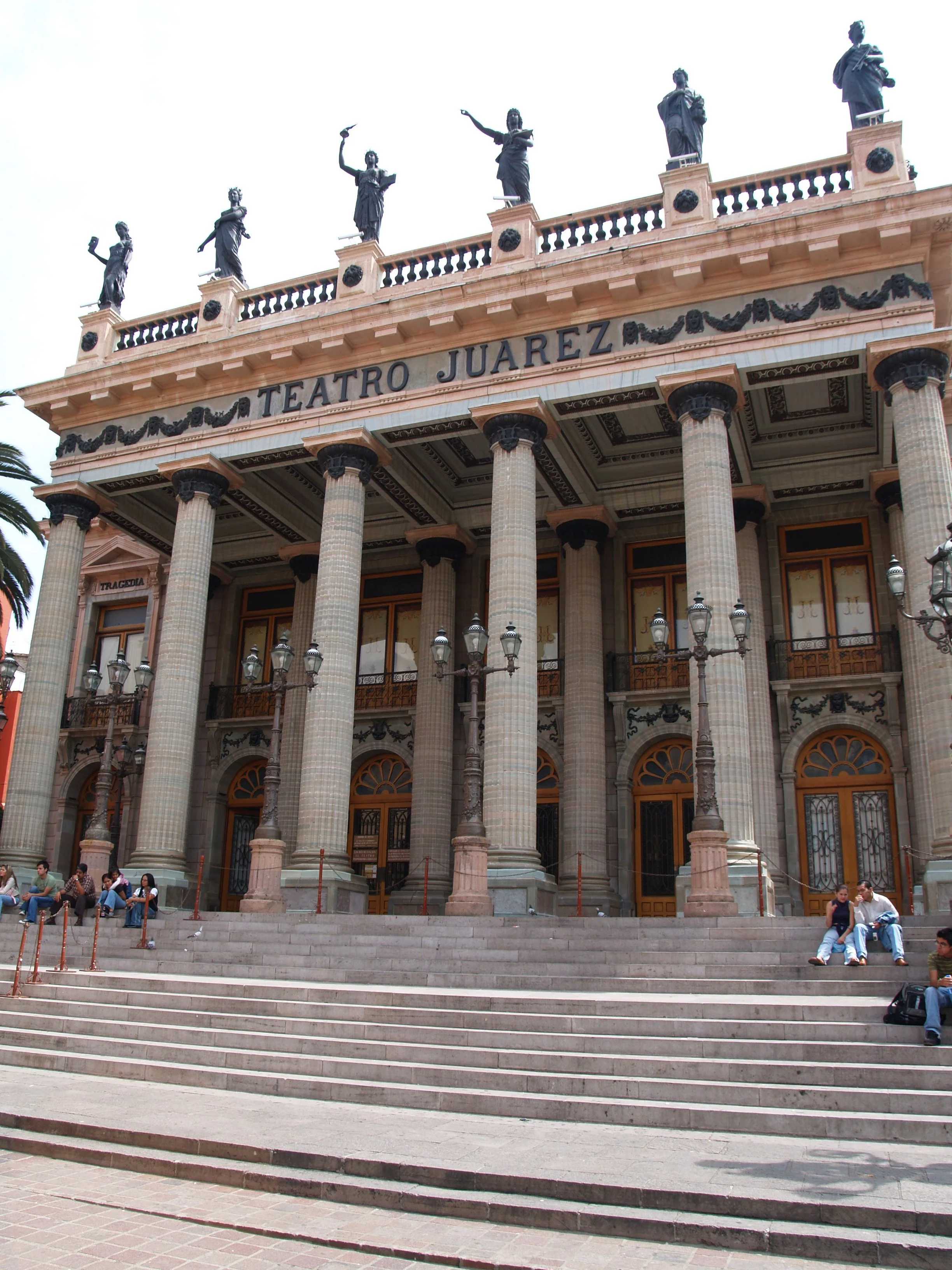
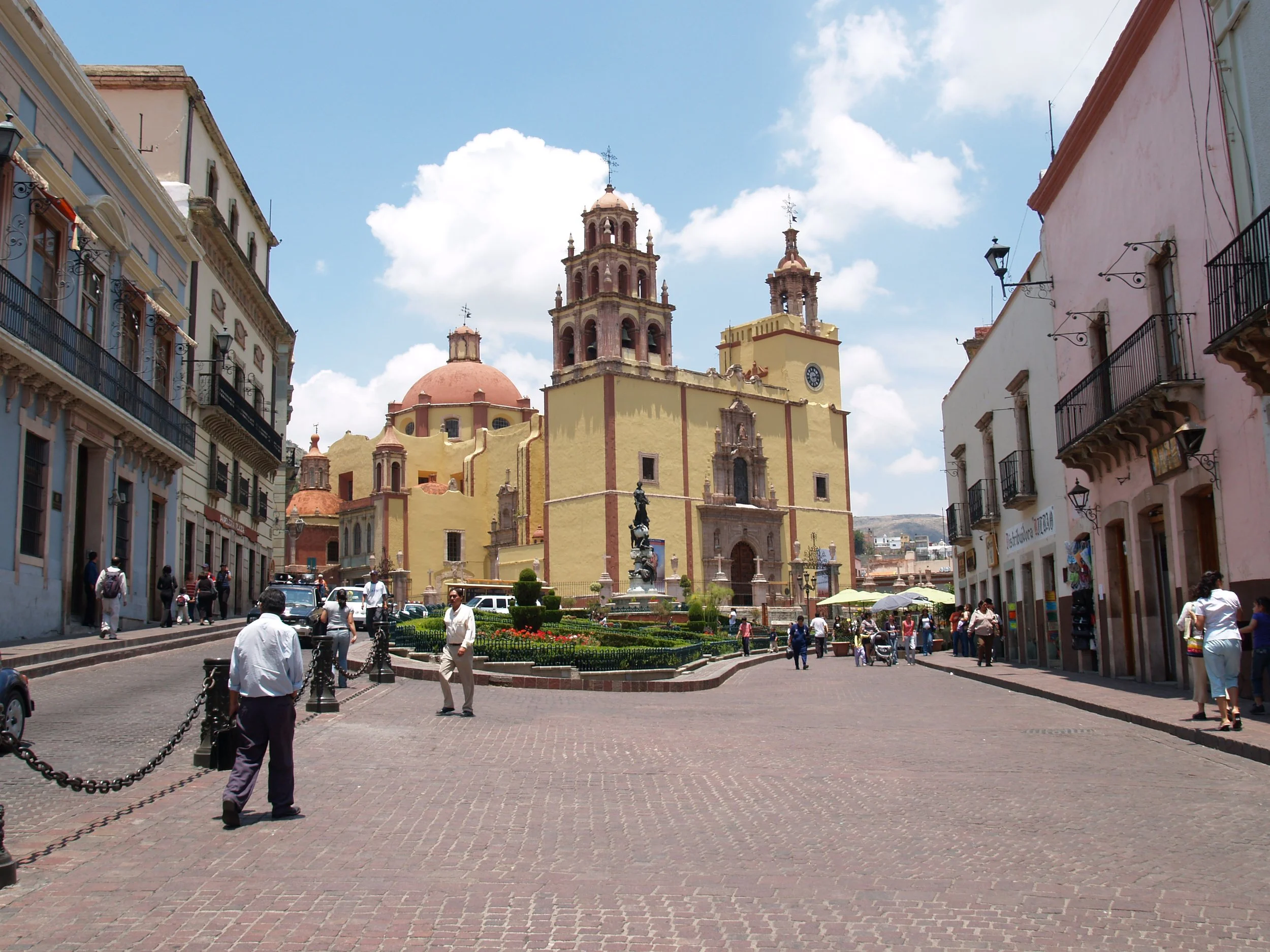
Another stop was the Juárez Theater, completed in 1903 and featuring a blend of Greek, classical, and Art Nouveau styles. Oddly, above its roof are eight bronze statues of muses. Among the most visually impressive and historically significant buildings in Guanajuato is the Basilica Colegiata, located on Plaza de la Paz (Plaza of Peace). The baroque-style church is dedicated to Our Lady of Guanajuato, the city’s patron saint and protector. Topped by a domed roof, the church’s exterior is painted yellow with red accents. The building was constructed in 1671 on a low hill that makes it appear taller than adjacent structures. Inside, visitors can see a painting of the Virgin Mary that was a gift from Spanish King Phillip II in recognition of silver produced at Guanajuato’s mines for the Spanish monarchy.