Utah and Colorado. Jurassic Monsters of the Green River
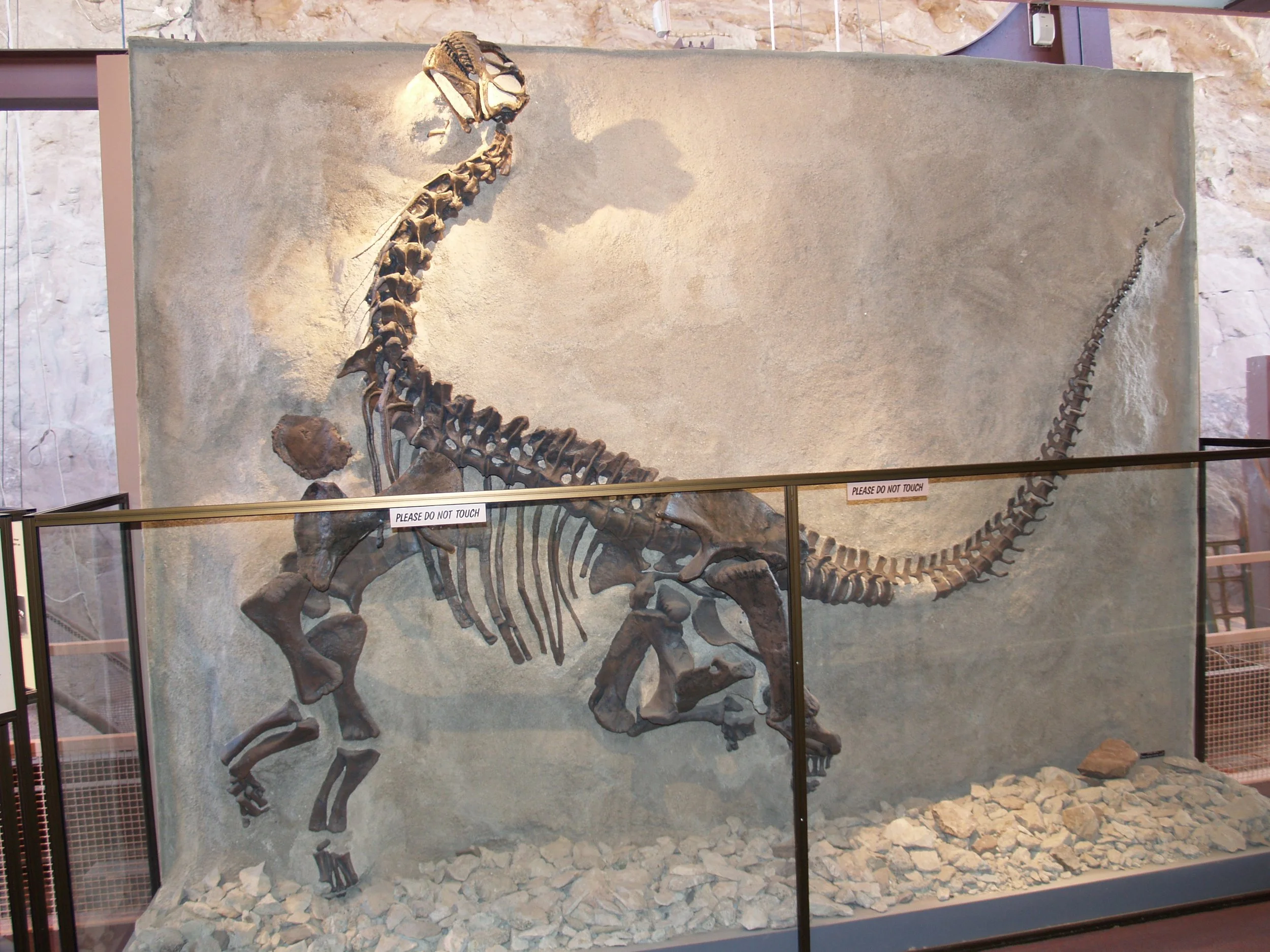
More than 147 million years ago, dinosaurs were drawn to a river within what is now northeastern Utah. There were plant eaters such as the 21-meter-long Apatosaurus louisae which walked on four legs and had a long neck and tail. Also present were Stegosaurus ungulatus which could be distinguished by large plates on their backs and spiked tails. Meat eaters included Allosaurus fragilis which walked upright on powerful hind legs and hunted other dinosaurs. The region’s climate was more humid at that time and supported an ecosystem with tall evergreen trees and shortleaf plants such as ferns. Smaller animals were also present including salamanders, frogs, turtles, crocodiles, and a few species of mammals.
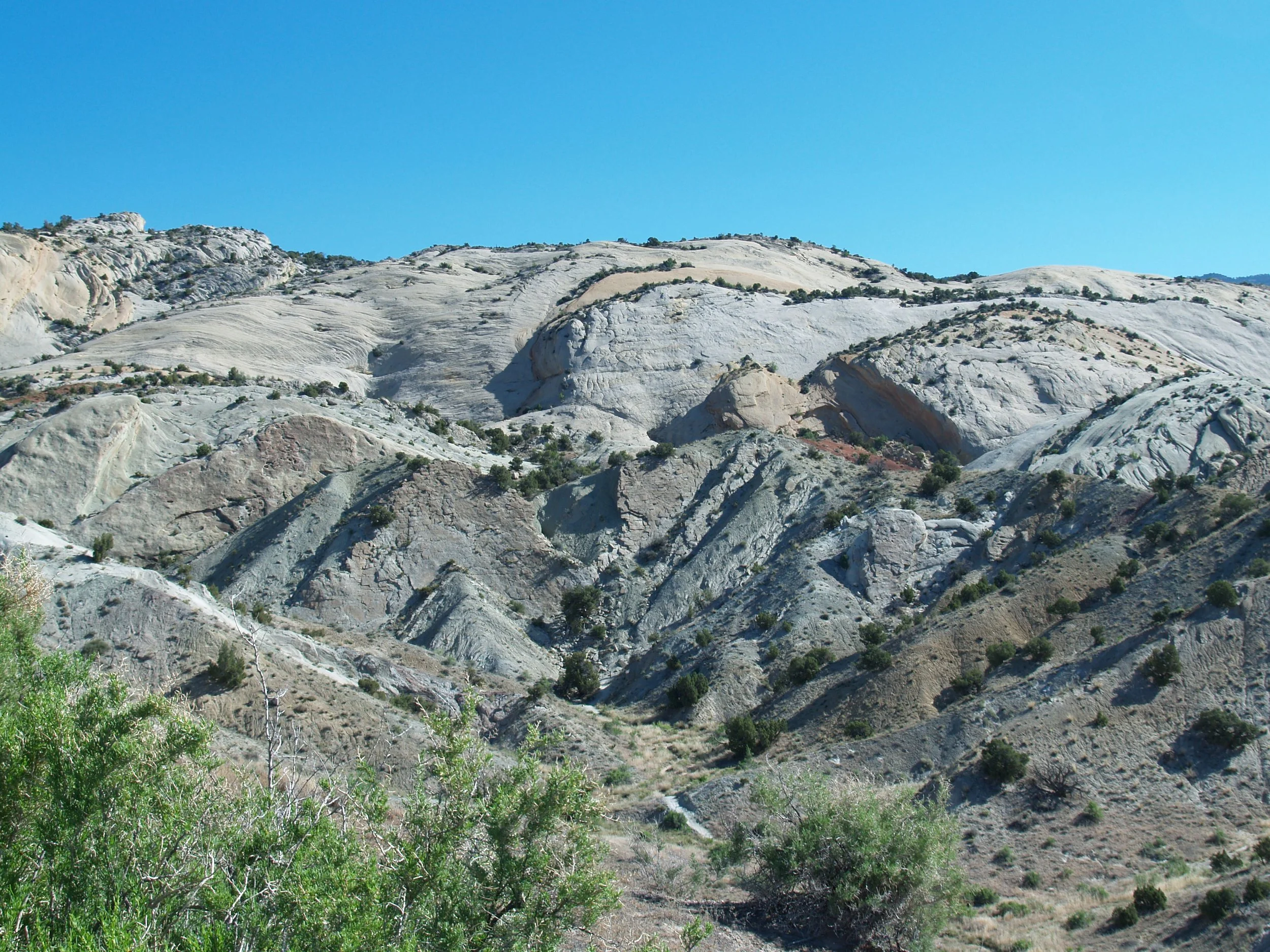
As dinosaurs and other animals died, their remains were sometimes covered by sediments before they had a chance to decay. Some dinosaur skeletons were buried mostly intact while others were disarticulated by predators. As bones absorbed water, bacteria produced calcium carbonate, forming a protective shell. Later, weight and pressure from successive layers of sediments located above slowly transformed lower layers into sedimentary rock. About 65 million years ago, forces in the Earth’s crust pushed upward, causing a buckle within the former riverbed. Layers of strata at the quarry site bent upward within an anticline, exposing rock layers. The region surrounding the quarry site has been occupied by people for more than 10,000 years. Fremont Indians left petroglyphs and pictographs on rock walls. When the Spanish arrived, the region was populated by groups of Ute, Fremont, and Shoshone and by the late 19th century, the area around the present-day quarry experienced an influx of homesteaders.
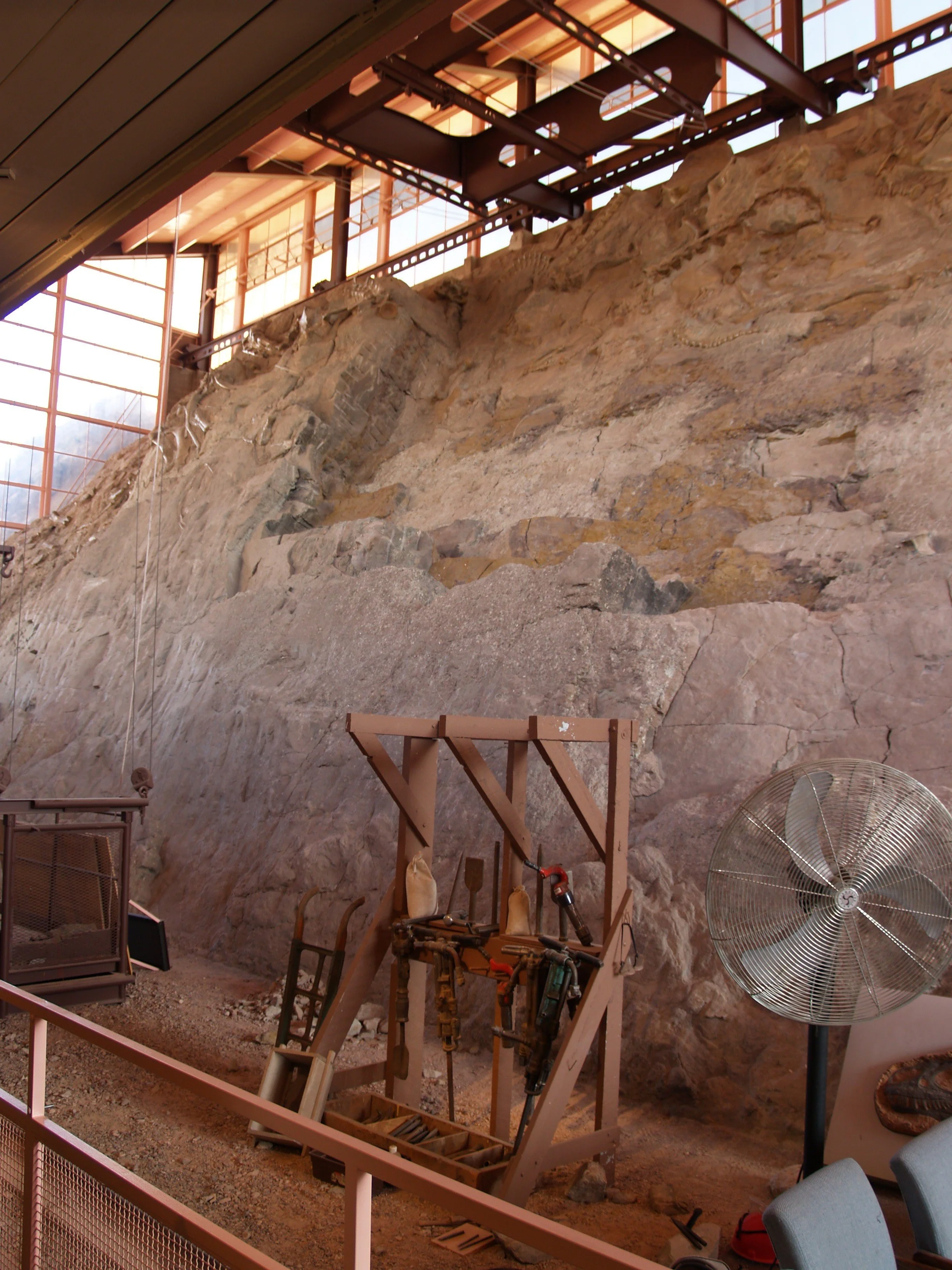
In 1909, the Carnegie Museum of Natural History in Pittsburgh, Pennsylvania sent a paleontologist named Earl Douglass to search for dinosaur bones on the southwestern flank of the Uinta Mountains. Soon after arriving, Douglass uncovered eight bones in eastern Utah near the town of Jasper. The bones he found were located within a layer of Jurassic rock that was once a river sandbar. Subsequently, the rock layer became known as the Morrison formation in recognition of dinosaur bones uncovered in the small town of Morrison, Colorado in 1877.
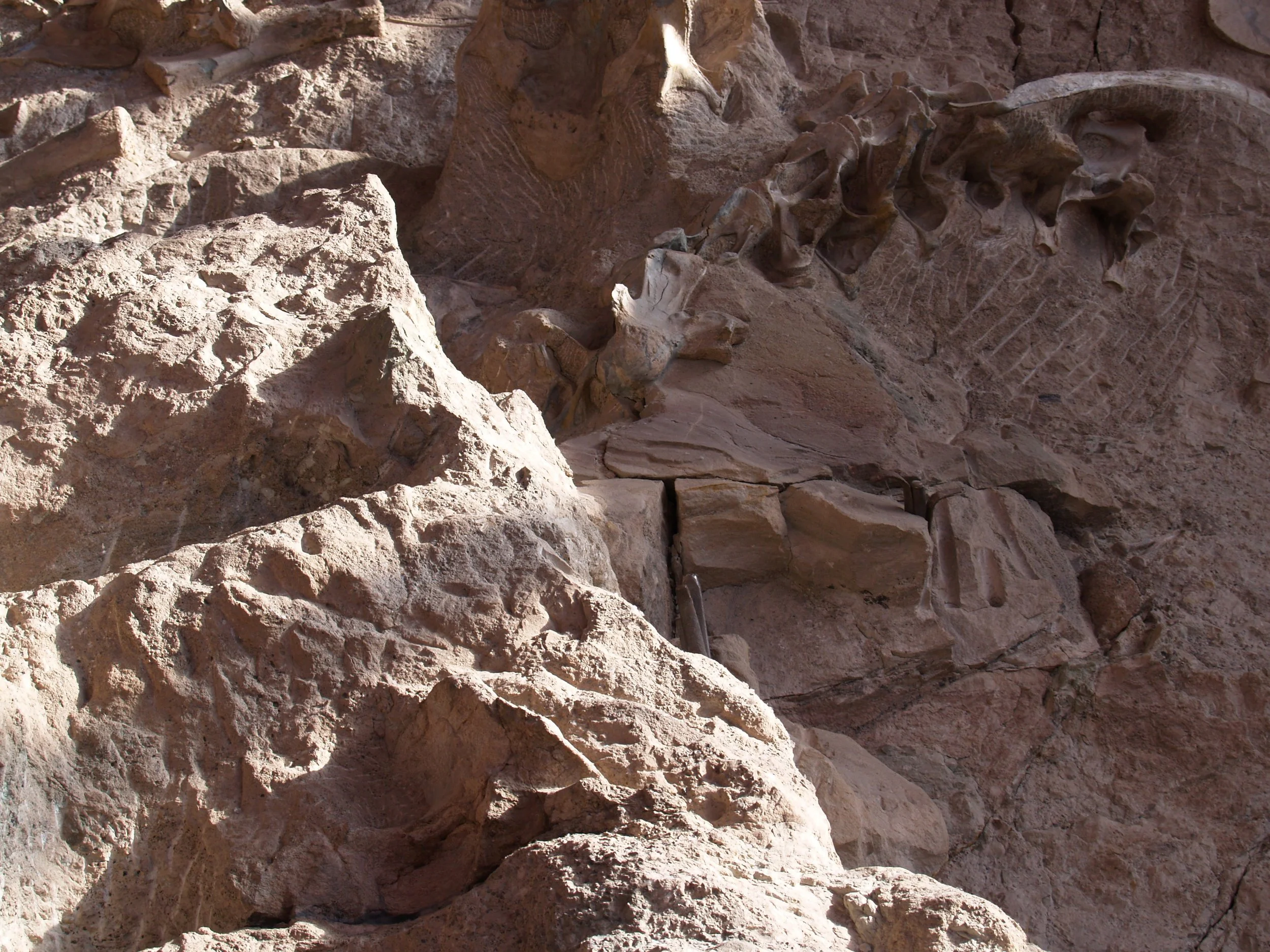
Recognizing the site’s international significance, U.S. President Woodrow Wilson signed an executive order establishing the 32-hectare Dinosaur National Monument in 1915. Although the monument is located within western Colorado and eastern Utah, all locations where bones have been discovered are on the Utah side. A Works Progress Administration project expanded the quarry’s rock face in the 1930s. As additional bones were removed from the low hill, Douglass recommended the creation of a publicly accessible site where, “…people can see the place where ancient monsters have been entombed for ages.” In 1952, a small shed was constructed at the quarry site to protect the wall of bones. The following year Dr. Theodore “Doc” White was hired as Dinosaur National Monument’s first paleontologist.
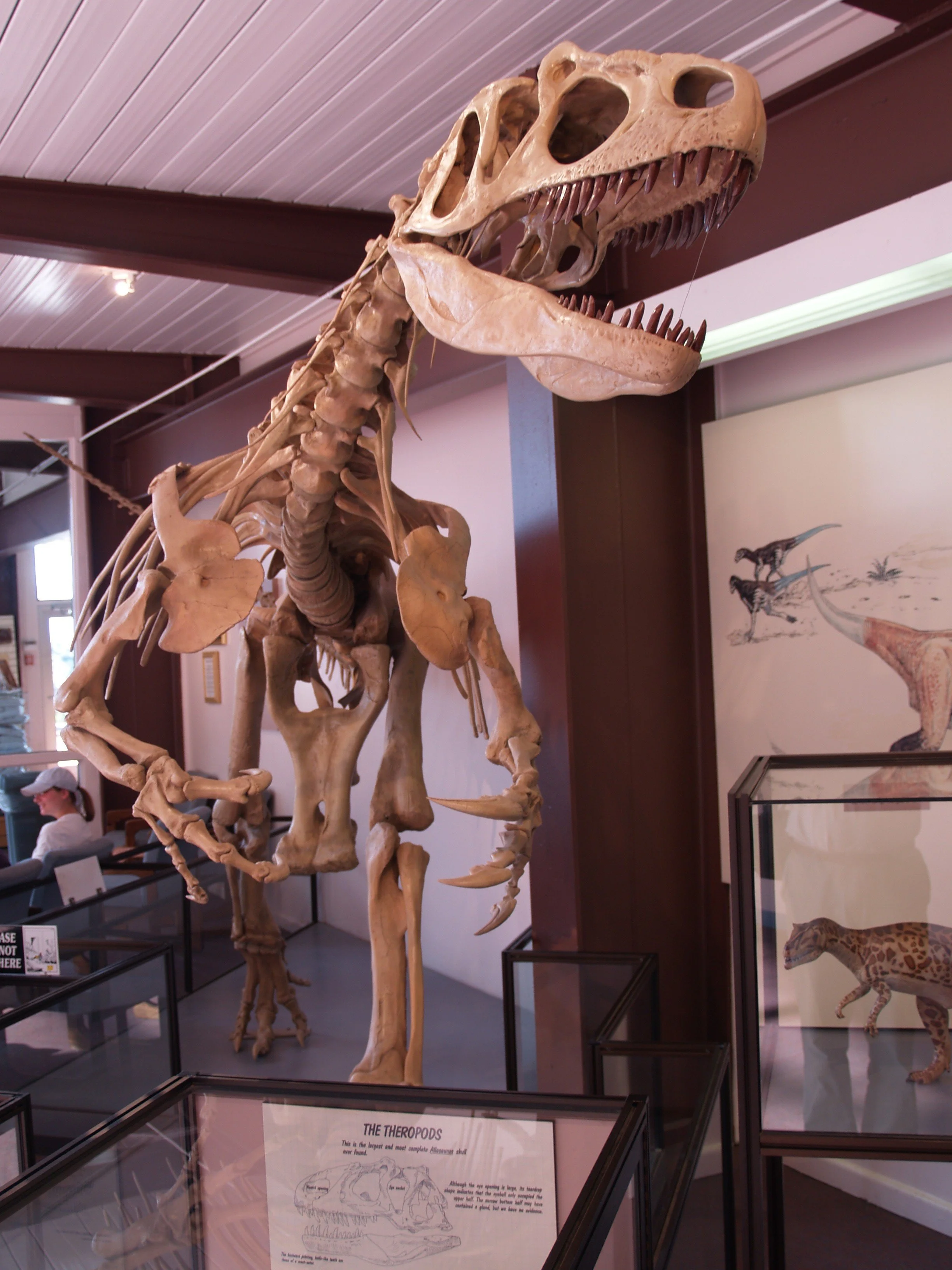
I visited Dinosaur National Monument in the late 1990s while leading a university field course. Traveling eastbound on U.S. Highway 40, we arrived at the visitor center in several university vans. In the distance to the north, we could see the southeast flank of the Uinta Mountains. Almost 90 percent of the monument’s 853 square kilometers is managed as wilderness. Outside of the visitor center we passed a full-sized replica of a stegosaurus.
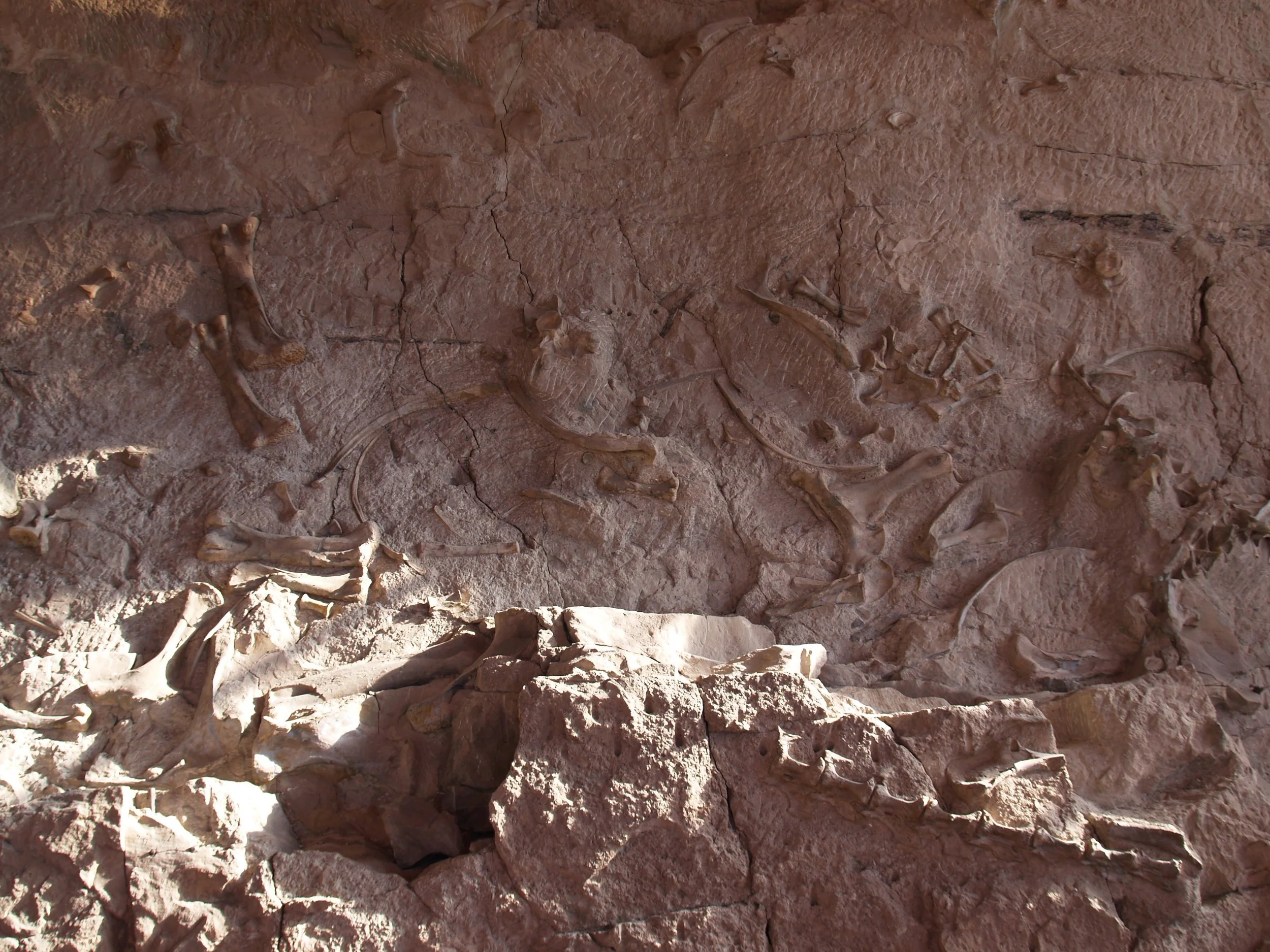
A free shuttle bus from the visitor center provides transportation to the Quarry Exhibit Hall. The wall of bones is 30 meters long and contains a wide range of dinosaur species and bone ages. Everywhere bones protruded from the sandstone wall. The most abundant dinosaur bones found on the wall were from sauropods (long-necked plant eaters). I had to remind myself that what I was seeing was real, and except for being carefully excavated by paleontologists, the bones have remained undisturbed for more than 145 million years. Work to remove new bones ended in the 1990s and there are no plans to carry out additional excavations at the quarry site. However, in January 2026 bones belonging to a long-neck diplodocus were discovered when workers were building a parking lot near the quarry.