New York. Niagara Falls, Where the Earth Exhales
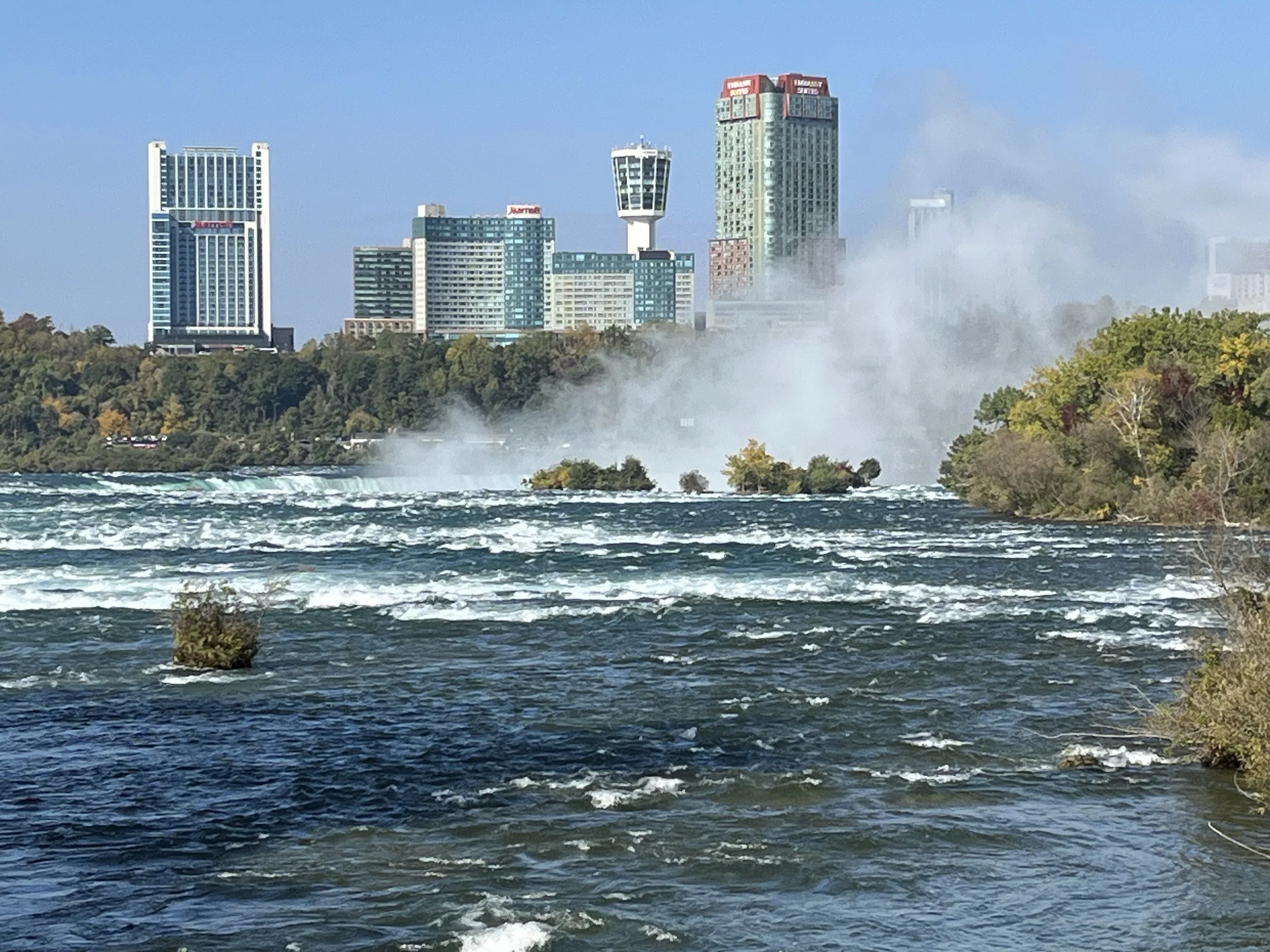
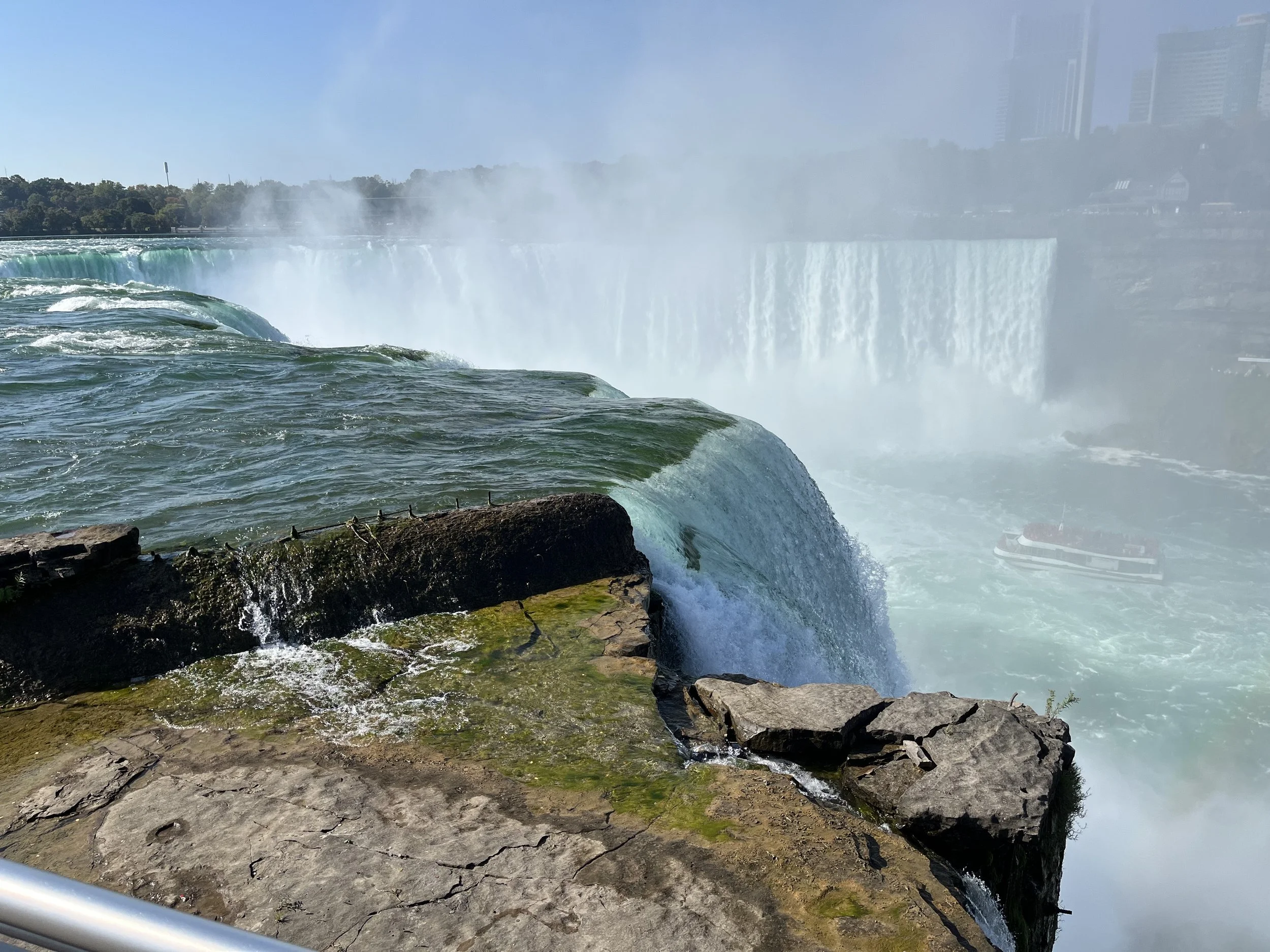
An unknown travel writer once said, “…turning gravity into thunder and water into memory,” Niagara Falls is, “…where the earth exhales.” With more than 2.8 million liters of water plunging downward each second, Niagara is indeed an extraordinary sight. Located on the U.S./Canadian border between New York and Ontario, Canada, it is a complex of three waterfalls: Bridal Veil, American, and Horseshoe. The falls were created by retreating glaciers at the end of the Pleistocene as water from the newly formed Great Lakes eroded a pathway through the Niagara Escarpment. Approximately 11,000 years ago, the falls were located between present-day Queenstown, Ontario, and Lewiston, New York. Since that time, water flowing across the escarpment has pushed the knickpoint eleven kilometers southward. The bluff responsible for the falls is covered by an erosion-resistant limestone and dolomite caprock. Flowing over the bluff, water moves northward from Lake Erie to Lake Ontario. Today, Horseshoe Falls is 790 meters wide and American Falls, 320 meters wide. Although visually impressive, Niagara is far from the widest or tallest waterfall in the world.
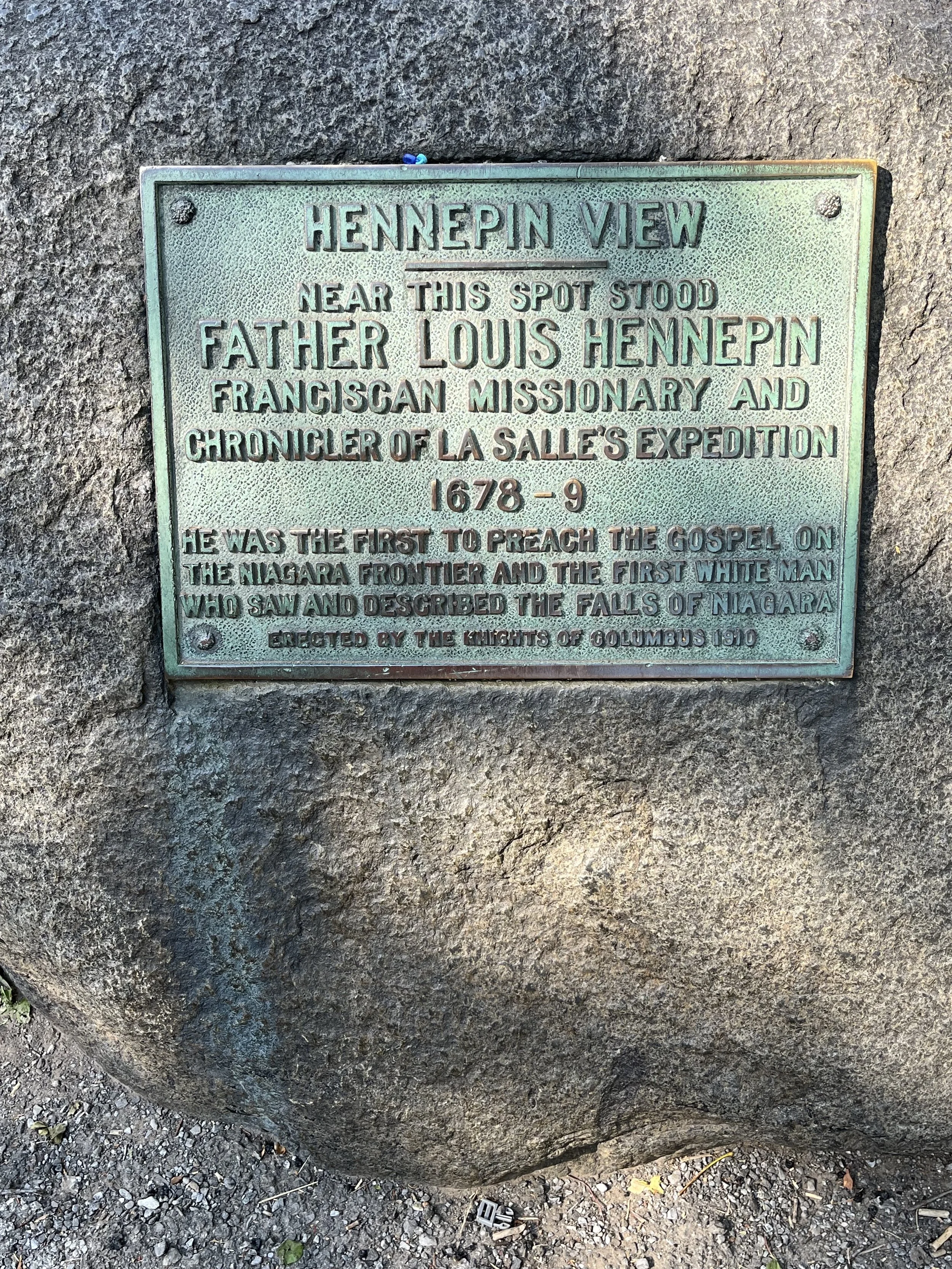
The region surrounding Niagara Falls has been occupied for more than 13,000 years. Its name is likely a derivative of the Iroquois word, Onguiaahra, meaning “thunder of waters.” Visiting in 1604, Frenchman Samuel de Champlain is believed to be the first European to see the falls. In 1677, the falls were described in a report written by a Belgian missionary named Louis Hennepin. A plaque located near an overlook commemorates Hennepin’s participation in La Salle’s 1678-1679 expedition. By the 1800s, Niagara Falls was attracting a large number of U.S. and international tourists. For example, future U.S. President Abraham Lincoln visited in 1848 and again in 1857. David B. Hill was an early advocate for protecting the falls and as governor of New York, Hill created the Niagara Reservation in 1885. That same year, the government of Ontario established Queen Victoria Falls Park. Landscape architect Frederick Law Olmstead is known to have participated in efforts to create a park at Niagara through design work aimed at providing public access without compromising the location’s beauty. Since its discovery, several people have gone over Niagara Falls or attempted to navigate the Niagara River’s rapids. Crouching inside a barrel, a 63-year-old schoolteacher named Annie Taylor survived falling from the top of Horseshoe Falls in 1901.
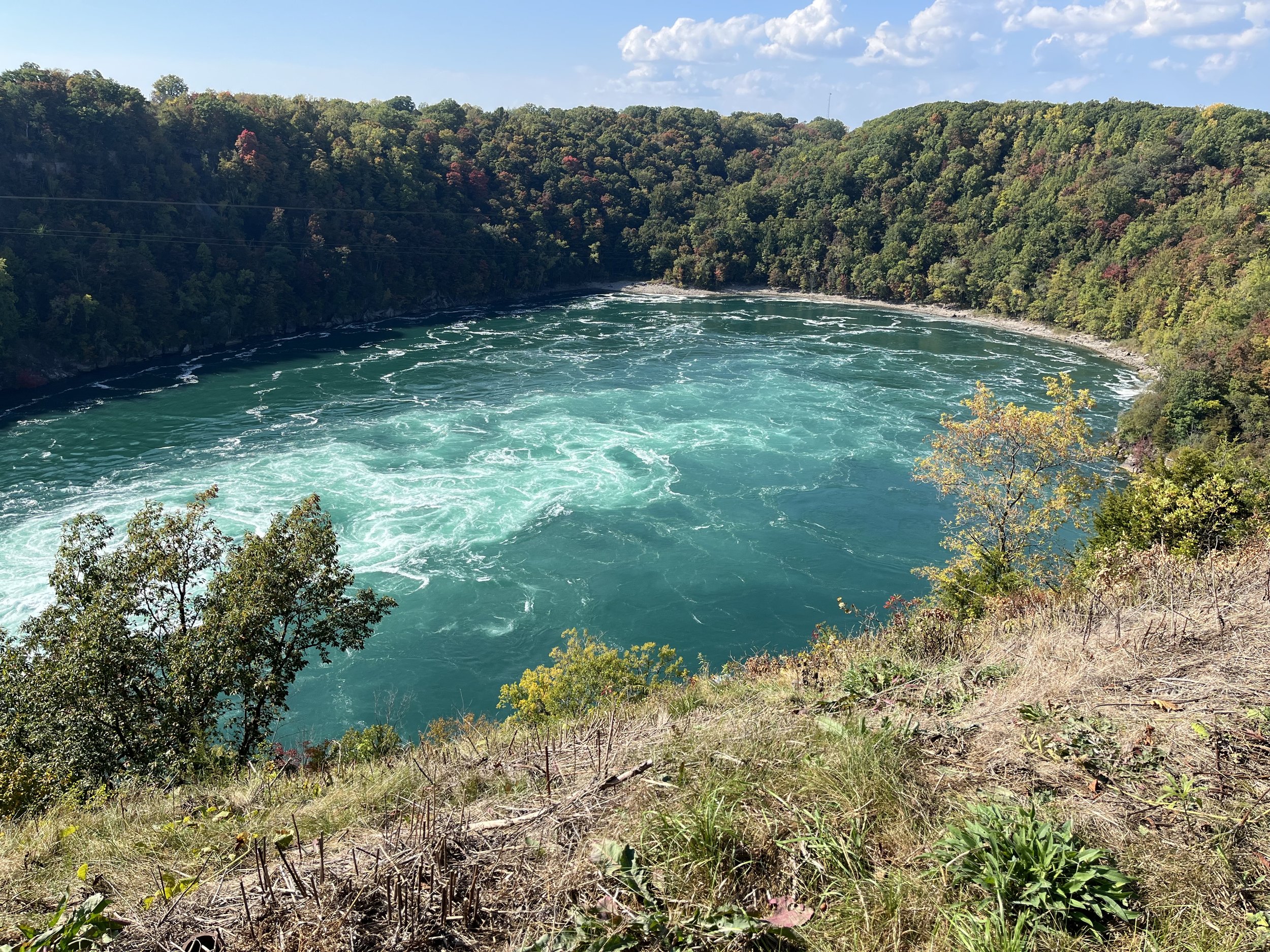
Downstream from Niagara Falls is Whirlpool Basin which measures 518 meters in length by 365 meters in width and has depths of up to 38 meters. When the flow rate is high, water moving inside Whirlpool Basin experiences what is called the “reversal phenomenon.” Under these conditions, water entering the whirlpool moves in a counterclockwise direction and past the natural outlet. As pressure builds the water attempts to cut across itself to reach the outlet as pressure forces the flow under the incoming stream. During lower rates of flow, the water moves in a clockwise direction and towards the outlet.
Named for goats that were kept there during the 18th century, Goat Island separates Horseshoe and Bridal Veil Falls. The island has no residents and is connected to the U.S. mainland by two bridges. About 11% of the Niagara River’s flow is directed east of Goat Island to American Falls. In 1969 water was redirected to enable scientists to study the rock structure and make recommendations about protecting American Falls. With significant erosion on its western side, geologists predict that Goat Island will eventually disappear as the falls migrate upstream.
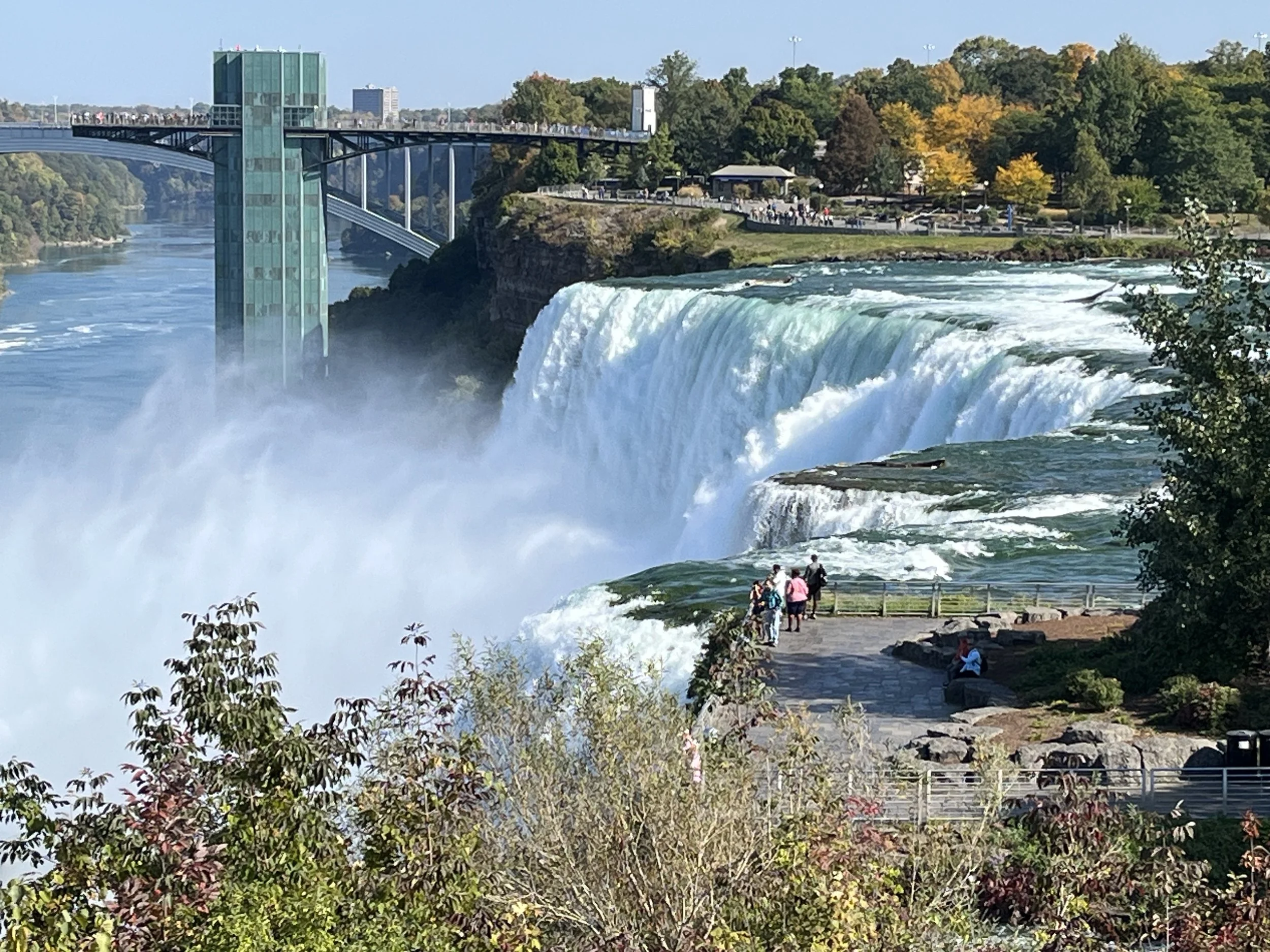
Located east of American Falls, the Niagara Observation Tower (aka Prospect Point Tower) offers panoramic views of all three waterfalls. The 86-meter aluminum, steel, and glass tower was constructed in 1961 and refurbished between 2001 and 2003. It has two elevators and was built by White Plains Iron Works at a cost of US$1.25 million.
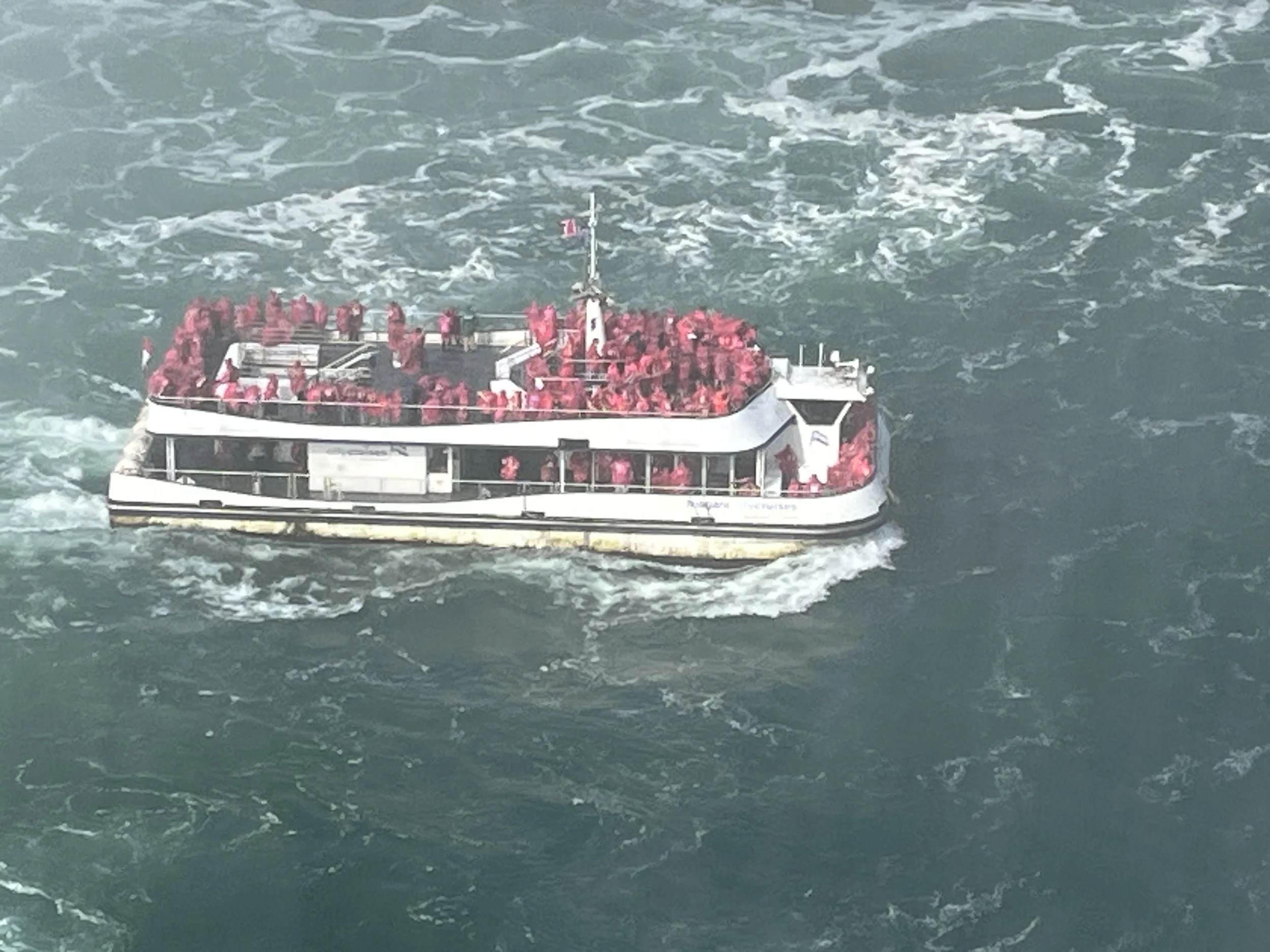
From the bluff we could see a tourist boat called “Maid of the Mist” that makes trips from the base of the Niagara Observation Tower to a place close to where water cascades downward from Horseshoe Falls. Making its inaugural trip in 1846, the first boat known as Maid of the Mist was steam powered. Successive boats have shared the name and in 1955, diesel-power tourist boats replaced older steam-powered ones. Passengers have included Soviet Premier Mikhail Gorbachev, actress/model Marilyn Monroe, and British Prince (now king) Charles III. Today, two electric powered boats transport tourists on twenty-minute rides to the base of the falls.