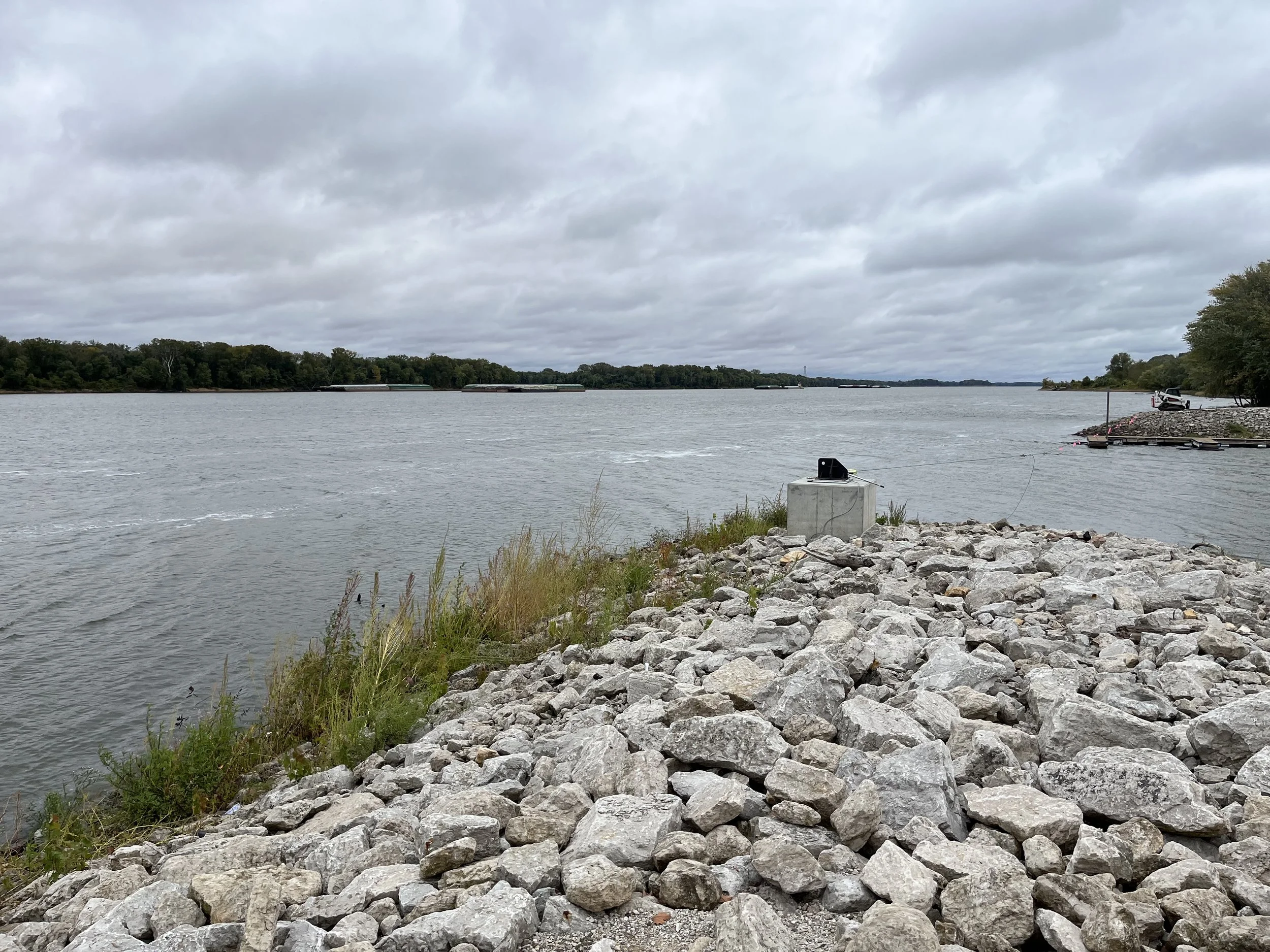
Missouri. Life on the Mississippi: A Visit to Mark Twain’s Boyhood Home
A few years ago, my wife and I made a detour on a return trip from the eastern U.S. to stop in Hannibal, located along the west bank of the Mississippi River and about 160 kilometers north of St. Louis. The quiet Missouri city is famous for being the hometown of celebrated American author Mark Twain (aka Samuel Langhorne Clemens) and the setting for three of his books, The Adventures of Tom Sawyer (1876), Adventures of Huckleberry Finn (1884), and Pudd'nhead Wilson (1894). In The Adventures of Tom Sawyer, Twain described Petersburg (his pseudonym for Hannibal), as a “…white town drowsing in the sunlight of a summer’s morning.” Samuel’s father, John M. Clemens, moved his family to Hannibal in 1839 where he worked for the Hannibal to St. Joseph Railroad. In addition to serving as a railroad hub, Hannibal was an important river port for steamships that transported goods on the Mississippi. Young Samuel served as a printer’s apprentice, typesetter, and riverboat pilot. His start as a writer began with contributions to a newspaper published by his brother. Twain later wrote in Life on the Mississippi (1883), “there was one permanent ambition” among his friends, and that was “…to be a steamboat pilot.” The town’s population has increased from about a thousand when Twain lived there in 1840, to 17,000 residents today.
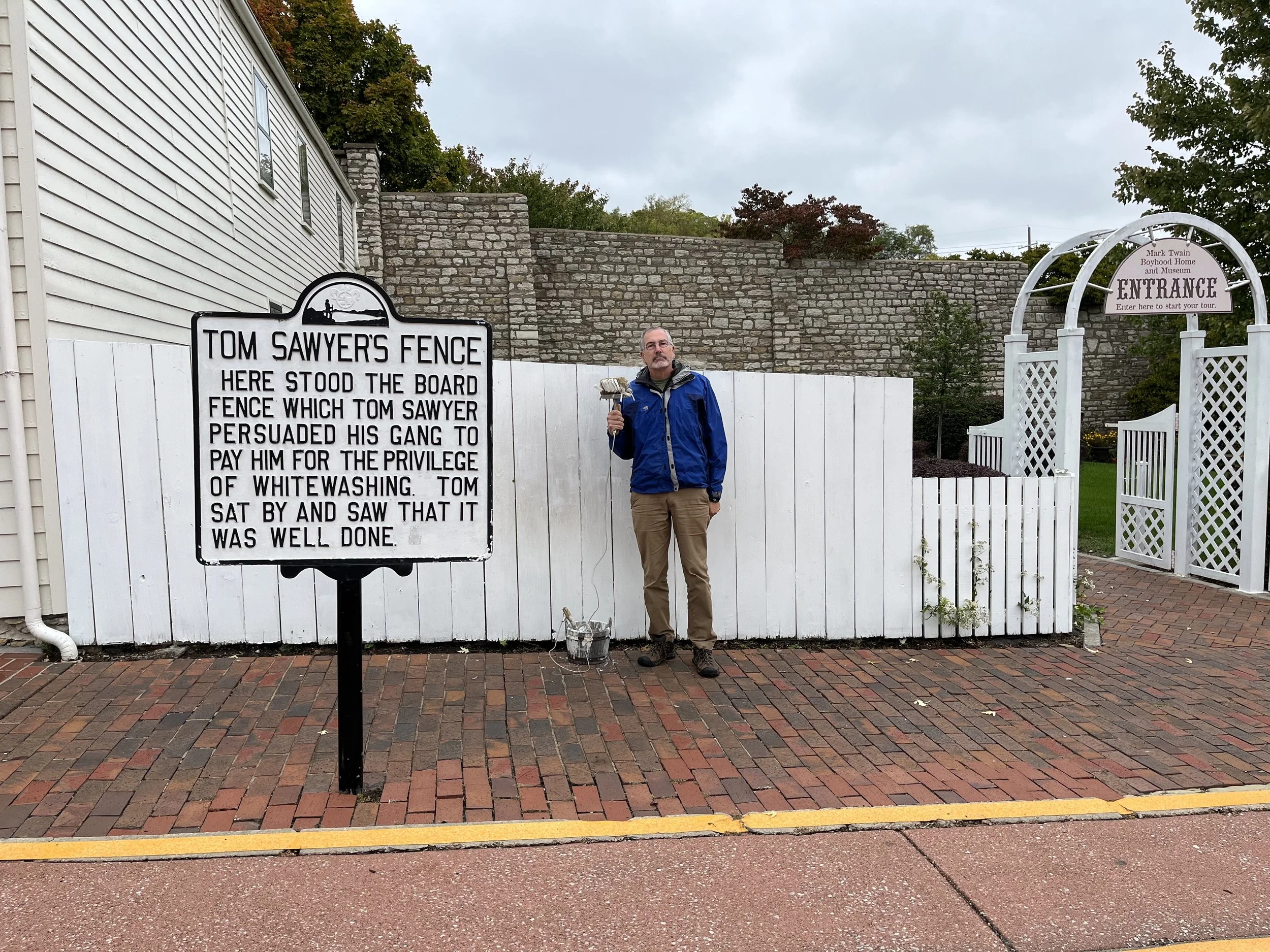
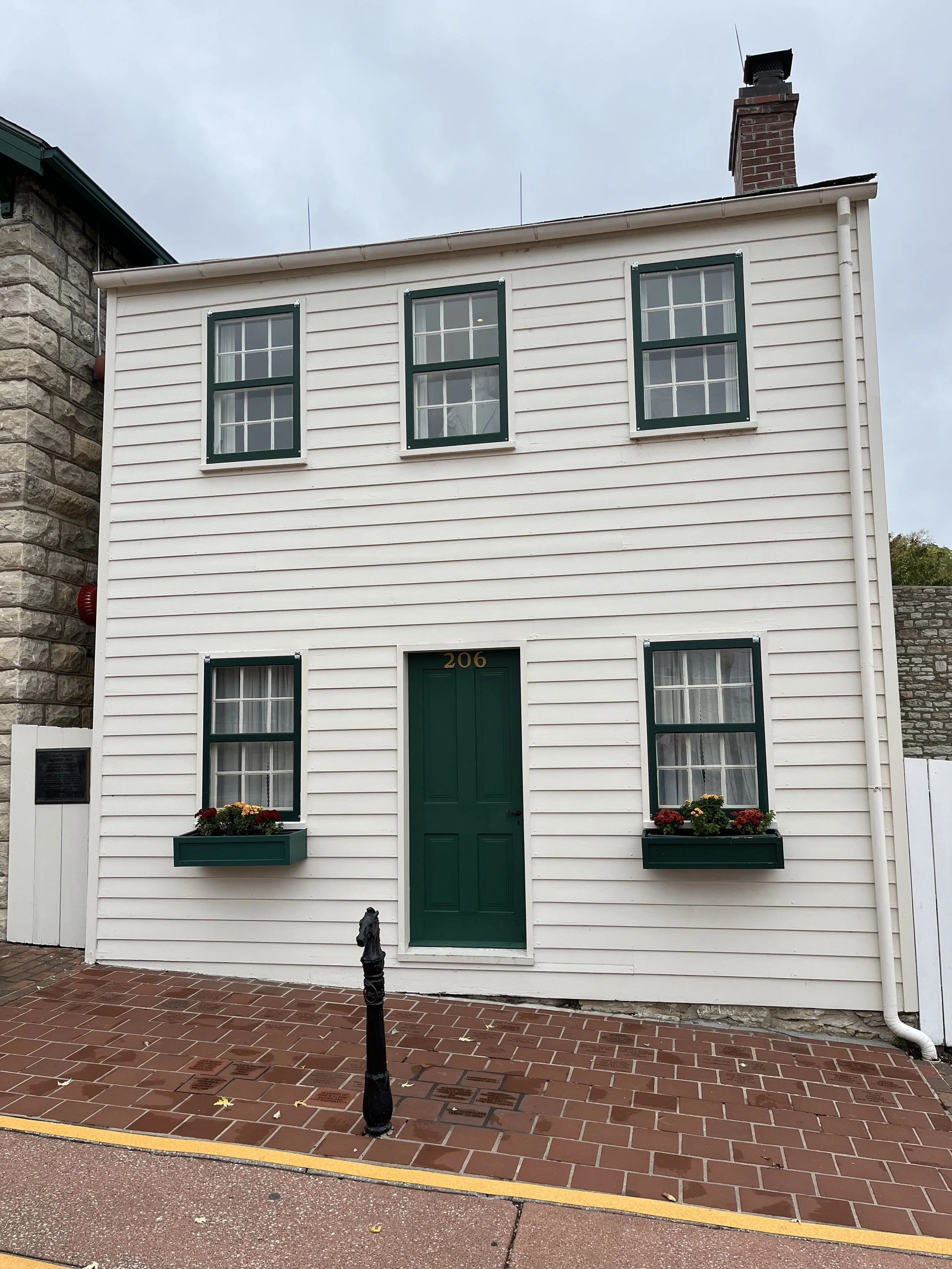
Traveling west on Interstate 72, we crossed the Mark Twain Memorial Bridge, exiting on U.S. Highway 36 towards Hannibal. After parking we found the Clemens’ home at the corner of N. Main and Hill Streets. A white picket fence and sign marking Twain’s boyhood home are located on the Hill Street side. Buildings preserved as part of the Mark Twain Boyhood Home include John Clemens’ law office and the drugstore where Samuel and his family lived on the 2nd floor. Across the street is the house where Laura Hawkins lived, Samuel’s childhood sweetheart and inspiration for the character Becky Thatcher in The Adventures of Tom Sawyer. According to a sign in front of the house, “Tom thought Becky to be the essence of all that is charming in womanhood.” There is also a reproduction of Tom Blankenship’s home. Blankenship was the inspiration for Tom Sawyer’s sidekick, Huckleberry Finn.
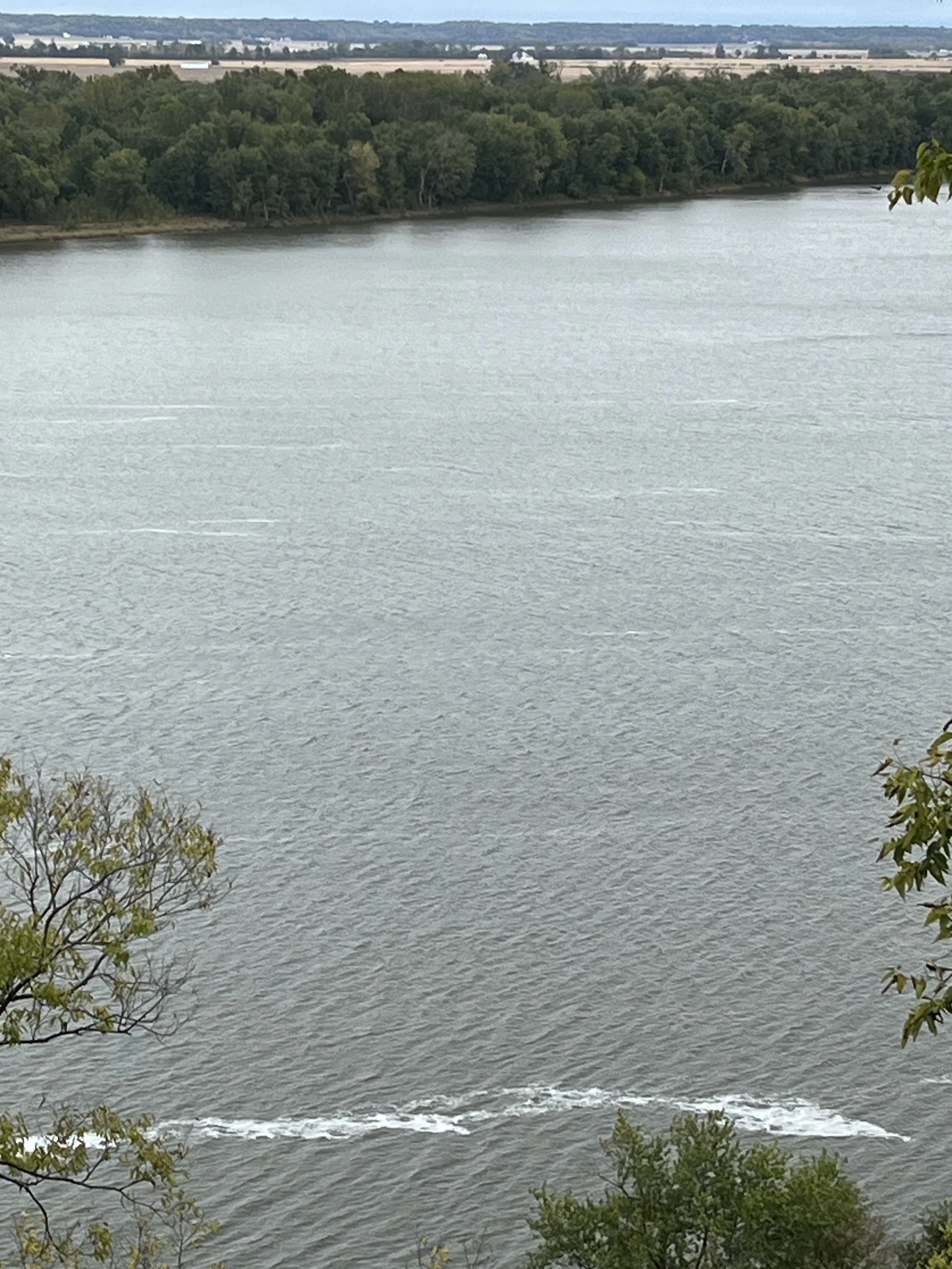
Our self-guided tour took us up 244 stairs to the top of Cardiff Hill and the Mark Twain Lighthouse. Commissioned as a Public Works Project, the lighthouse was completed in 1934 to celebrate Twain’s 100th birthday. We also passed the Tom and Huck statue, created by Frederick Hibbard in 1926 to honor two of the town’s most famous fictional residents. Returning to downtown Hannibal, we explored Main Street, passing the Mark Twain Dinette and Becky’s Old Fashion Ice Cream Parlor. We decided on lunch at the Rumor Has It Bar and Grill where I sampled a Snapper American IPA.

After lunch we crossed railroad tracks to reach the waterfront, once packed with flatboats and packet steamers. Parked at Center Street Landing is a paddlewheel boat called the Mark Twain. The town has several events that celebrate Twain’s literature including Tom Sawyer Days where children participate in a fence painting contest. There is also a frog jumping competition that commemorates Twain’s 1867 short story, “The Celebrated Jumping Frog of Calaveras County.”

Before departing we walked through the gate of a tall levee that protects the city. The levee and gate were tested over 174 days in 1993 when flooding along the Mississippi River crested at 9.7 meters above normal. More than 500 volunteers worked to fill sandbags to increase the levee’s height. Causing an estimated US$15-20 billion in damage, it was the costliest and most devastating flood in modern U.S. history.
Along with Mark Twain, Hannibal was also the hometown of William Lear, designer of the Lear Jet and Marie Ruoff Byrum, the first woman to vote after ratification of the 19th Amendment. Other notable natives were George Coleman Poage, the first African American to receive a medal in the Olympics, and Margret Brown (aka the “Unsinkable Molly Brown”) who survived the sinking of the RMS Titanic in 1912.