Wyoming. Brimstone and Bison in America’s First National Park
Known for its geothermal features and wildlife, Yellowstone became the world’s first national park in 1872. Mostly located in northwestern Wyoming, there are small portions of the park within the states of Idaho and Montana. Approximately half the world’s geyser and geothermal fields are found inside Yellowstone’s 8,983 square kilometers. Magma below the park is responsible for the park’s geothermal features that include geysers, fumaroles, hot springs, and mudpots. Yellowstone Lake fills a portion of the park’s massive caldera which sits atop what geologists describe as the world’s largest super volcano. There are other superlatives. Yellowstone has the largest contiguous land area containing megafauna (large mammals) in the lower 48 U.S. states with sizable populations of grizzly bears, wolves, bison, and elk. Native Americans have used land within the present-day park for more than 11,000 years. At the time the first Europeans visited, the park area served as a hunting ground for groups of Crow, Nez Perce, and Shoshone. John Colter, a participant in the Lewis and Clark Expedition (1807-08), passed through the present-day park and later described it as a place of “fire and brimstone.” The concept for protecting the area was first proposed by Cornelius Hedges, a participant in an 1870 expedition led by Henry Washburn.
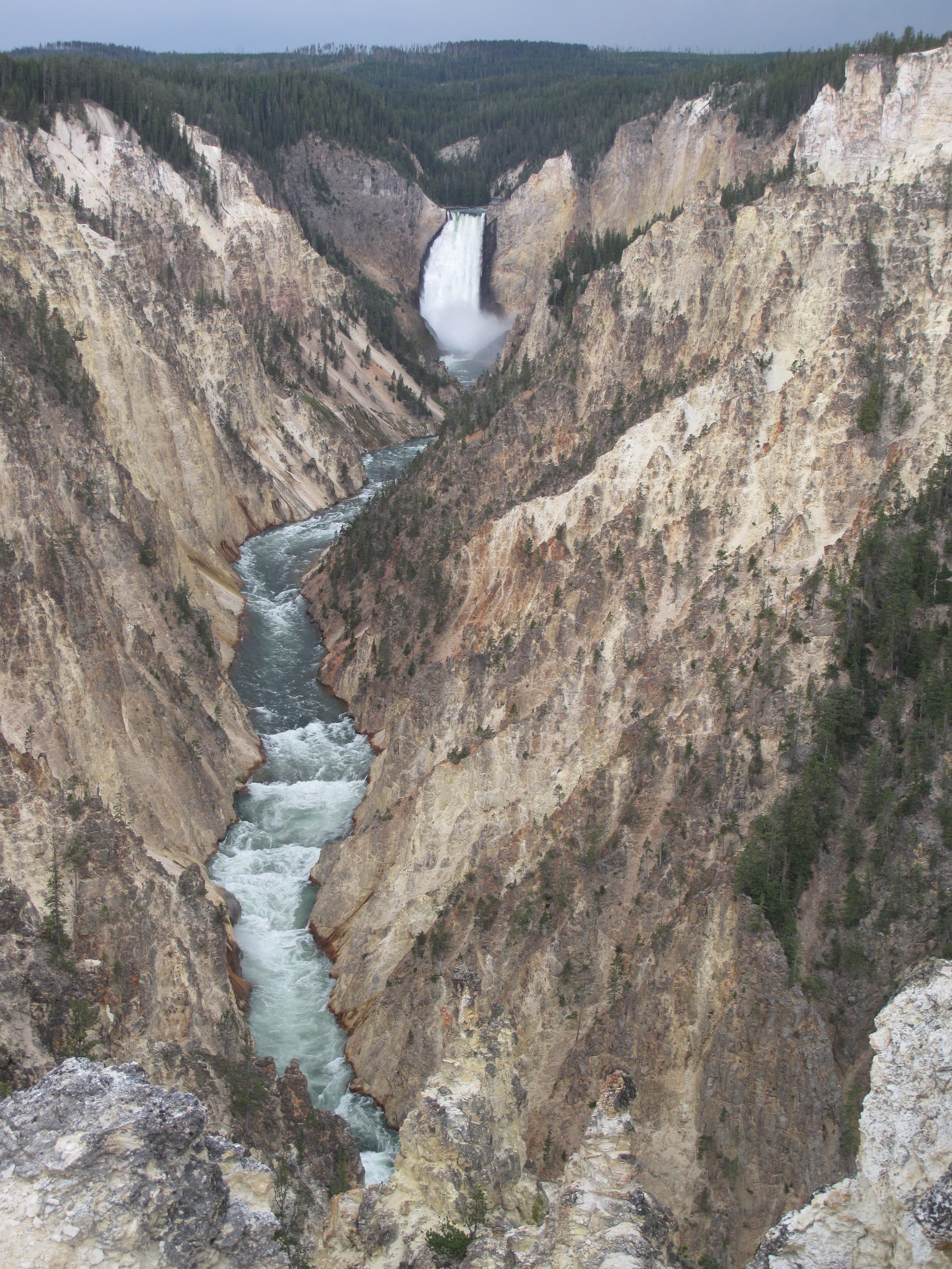
One of the park’s most spectacular scenic vistas is Artist Point, located within its north-central region and high above a V-shaped valley called Grand Canyon of the Yellowstone. The canyon was formed by the Yellowstone River, the longest undammed river in the continental U.S. The river begins within the park near Yount Peak and flows southward along a 965-kilometer course that ends at its confluence with the Missouri River in North Dakota. Grand Canyon of the Yellowstone is the first large canyon located downstream of Yellowstone Falls. Yellow, red, and brown colors can be attributed to the oxidation of iron within the canyon’s rock. Often visible along canyon walls are puffs of steam emerging from hydrothermal features. Geologists have estimated the canyon to be 10,000 to 14,000 years old.
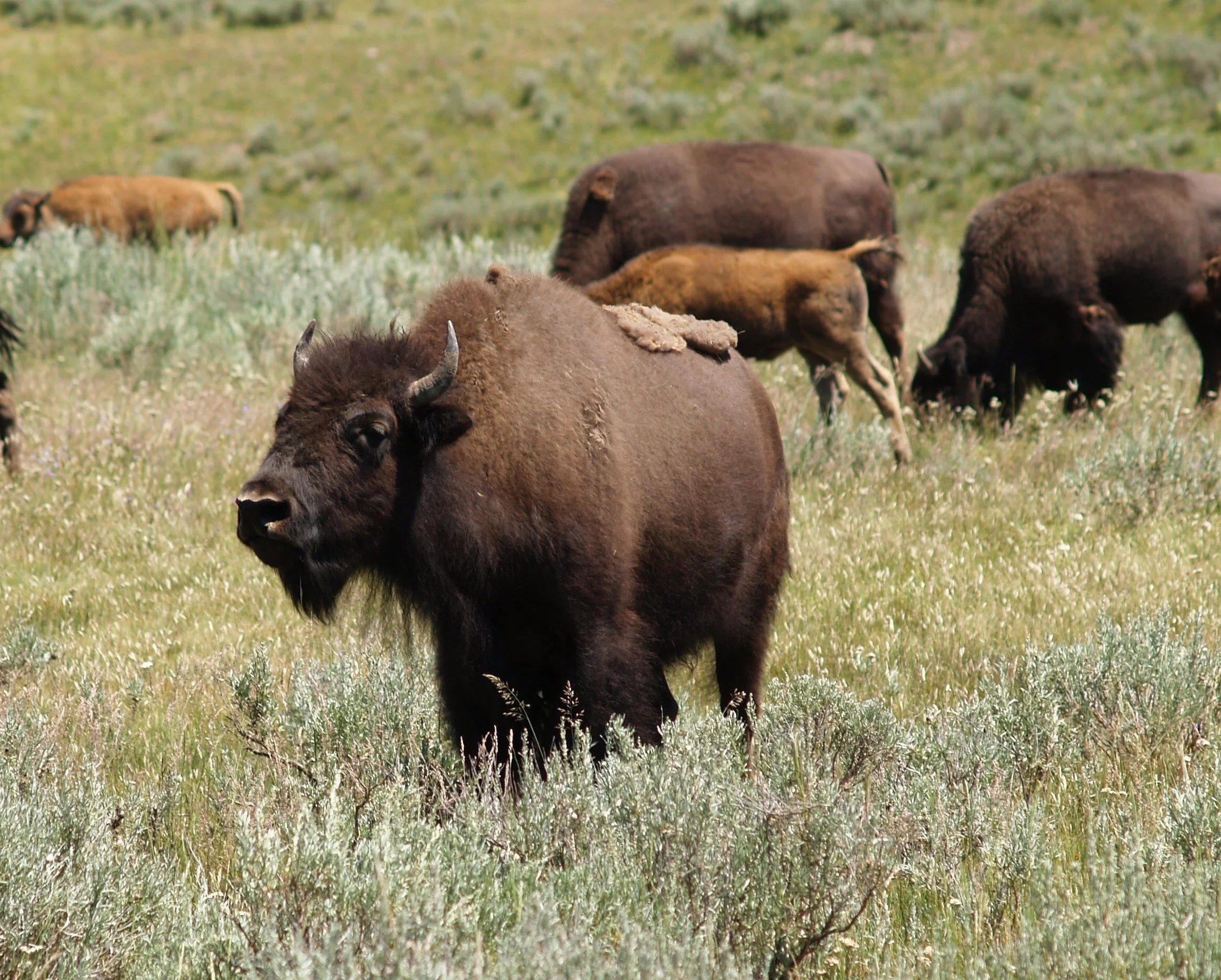
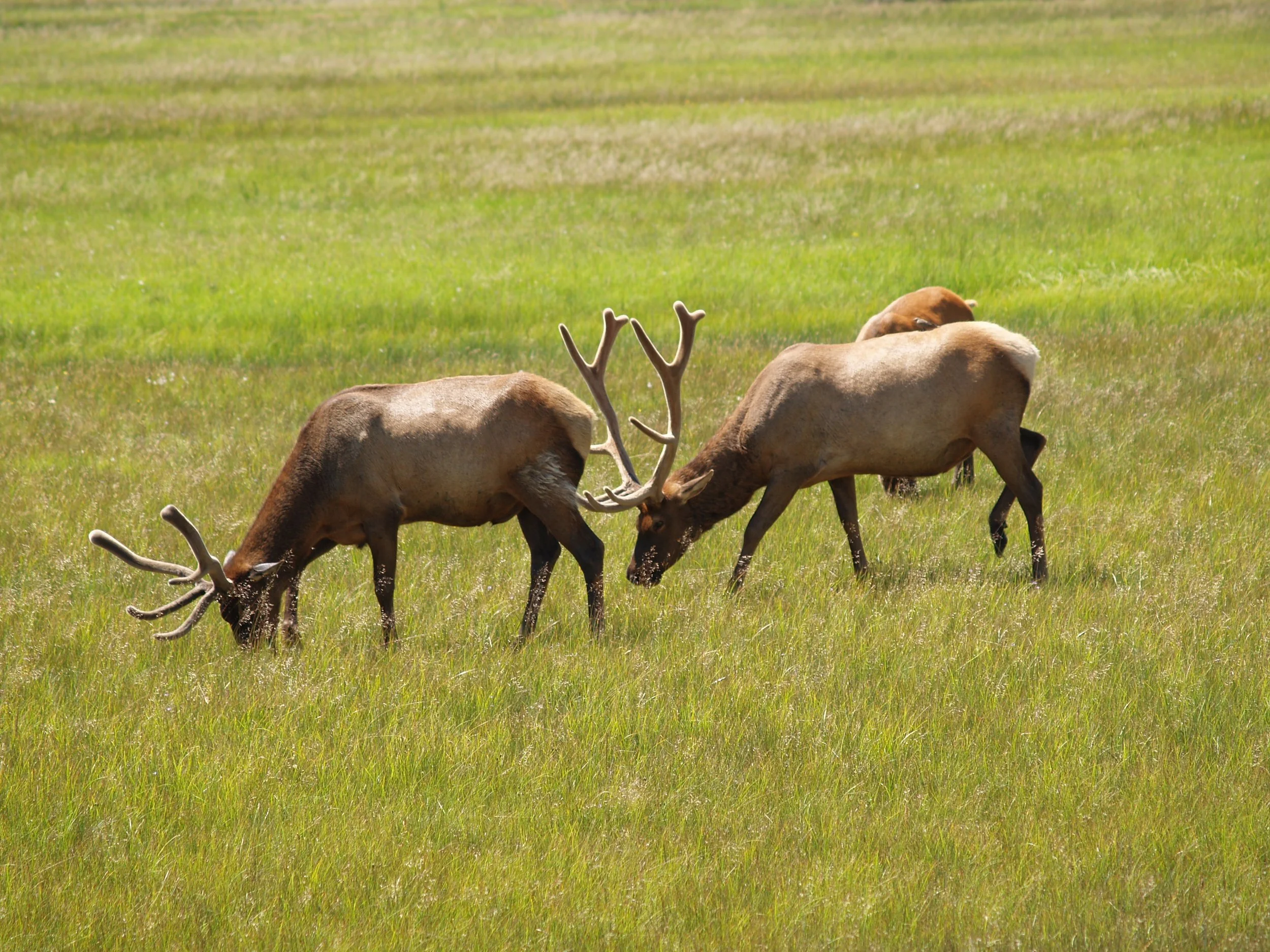
For visitors wanting to see megafauna, Yellowstone delivers. For example, the park has a large herd representing the last genetically pure American Plains bison. Considered the largest land animals in North America, more than 5,000 bison roam freely through the park with concentrations often seen in the Hayden and Lamar Valleys. Yellowstone is the only location where bison have lived in a wild state since prehistoric times. The average weight of a female bison is 500 kilograms while males weigh an average of 907 kilograms. The animals were once found in considerably larger numbers including more than 30,000 that roamed the Great Plains before a slaughter that started in the 1800s. By the beginning of the 20th century the population of bison had declined to less than a thousand animals. Some Yellowstone visitors refer to the animals as “buffalo.” While they are distantly related to buffalo found in southern Africa, bison are physically and genetically dissimilar to animals such as Africa’s Cape buffalo. Yellowstone’s bison have appeared in popular culture including movies such as The Thundering Herd (1925). Since bison have been known to attack humans, park visitors are advised to remain twenty-five meters from the animals at all times. Several other species of megafauna can be found within the park including elk. Biologists estimate that the park’s population of elk ranges from 5,000 to 15,000, depending on the season. Elk are the most abundant big game animals in Yellowstone and account for 90% of the winter diet of wolves. Adult females weigh around 226 kilograms while males can exceed 300 kilograms. An elk’s coat changes with the seasons and appears tan in the summer and light brown during the winter months. The animals can also be distinguished by their short tail and sand-colored backside.
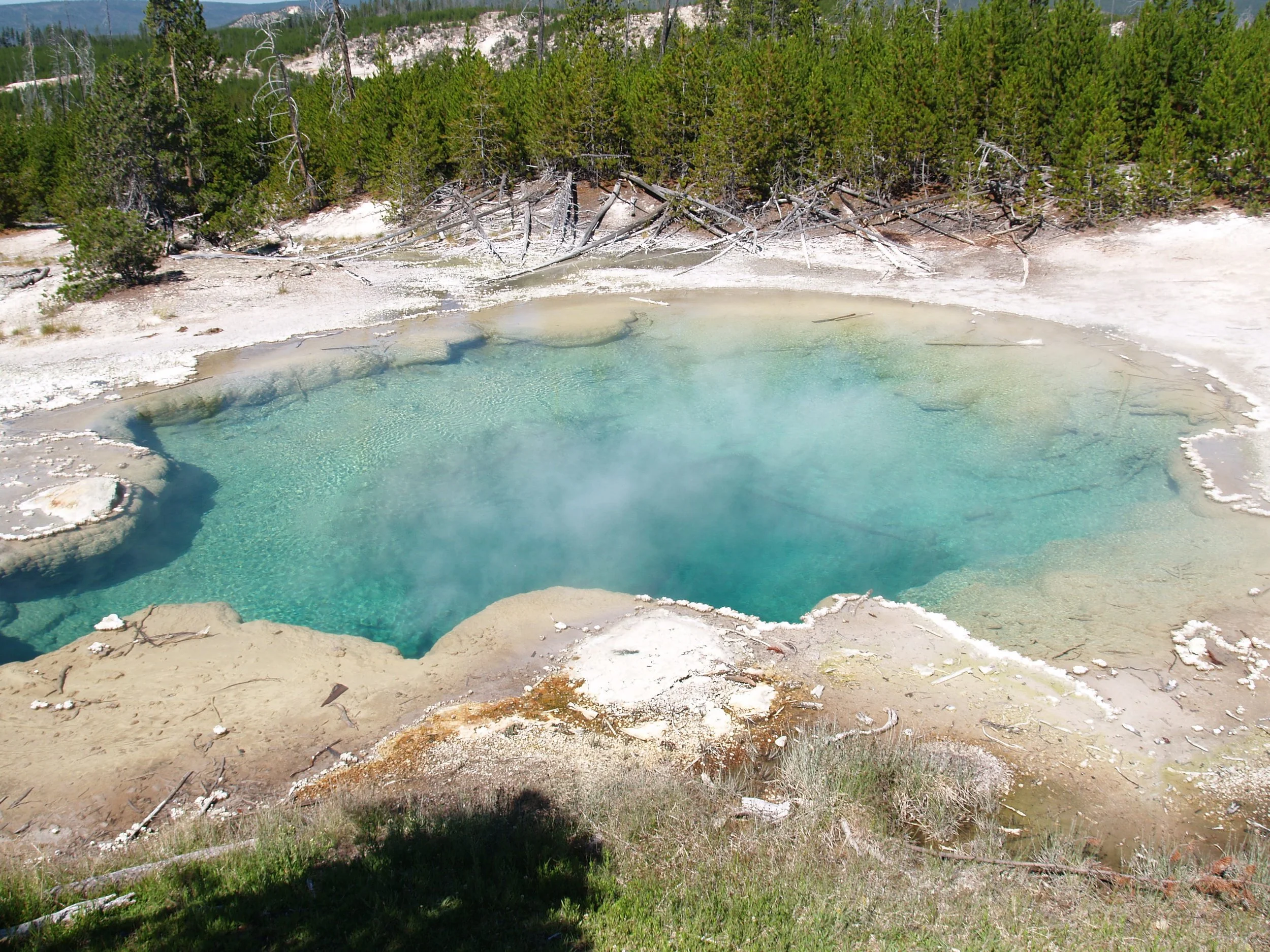
Named after Philetus W. Norris, the park’s second superintendent, Norris Geyser Basin is the largest, hottest, and most dynamic geothermal area within the park. The basin sits at the intersection of the Norris-Mammoth and Hebgen Faults and along the northwest edge of the park’s main caldera. The basin’s subsurface is extremely hot. Several years ago, a hole drilled 326 meters into rock below the surface revealed a temperature of 237°C. It is believed that geothermal features within the Norris Basin are more than 110,000 years old. After parking we explored the geothermal field’s two parts, Porcelain Basin and Back Basin. Devoid of vegetation, Porcelain Basin is negotiated using a 1.2-kilometer boardwalk that is without handrails. A 2.4-kilometer trail zigzags through the wooded landscape of Back Basin. Among hydrothermal features that we passed was Steamboat Geyser which is capable of pushing water to a height of 91-122 meters, making it the tallest geyser in the world. Eruptions are rare and regrettably, Steamboat didn’t exhibit any signs of ejecting water while I was visiting. Whereas most other geyser fields in Yellowstone are alkaline, Norris Geyser Basin is highly acidic as seen in Echinus Geyser’s pH of 3.5. Another famous hydrothermal feature is Emerald Spring which has blue water more than eight meters deep and is lined with chalky deposits. Its 83°C water temperature is near the boiling point.
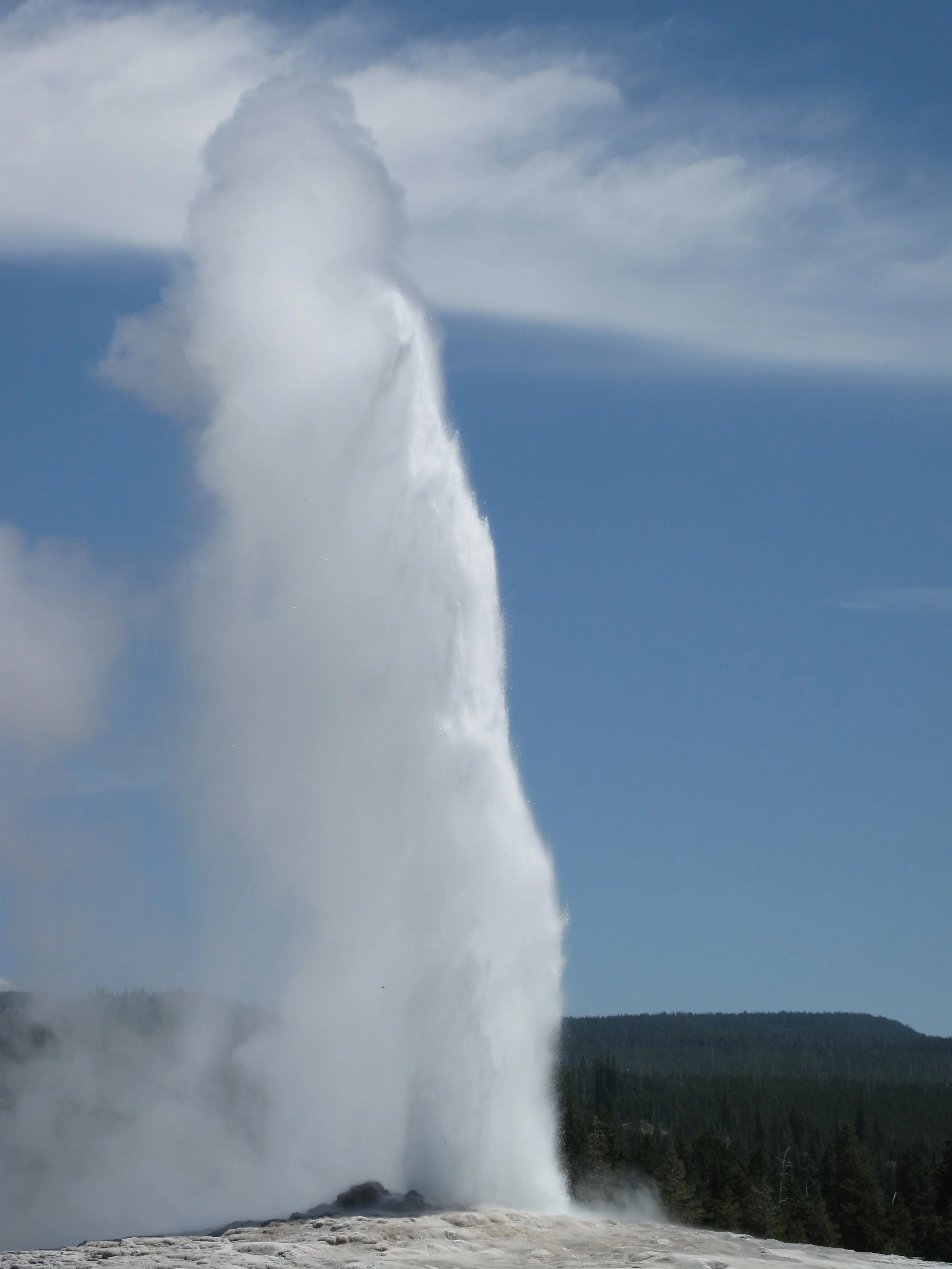
Located within Upper Geyser Basin and adjacent to Yellowstone Lodge is Old Faithful Geyser, the park’s best-known attraction. Considered a cone geyser because of its raised lip of precipitate material, Old Faithful erupts at 45 to 120-minute intervals (the average interval is 90 minutes). A typical eruption lasts several minutes and produces 32,000 liters of water with temperatures of more than 94°C. We checked a sign posted inside Yellowstone Lodge that provided an estimated time for the next eruption and found our way to benches in the viewing area.
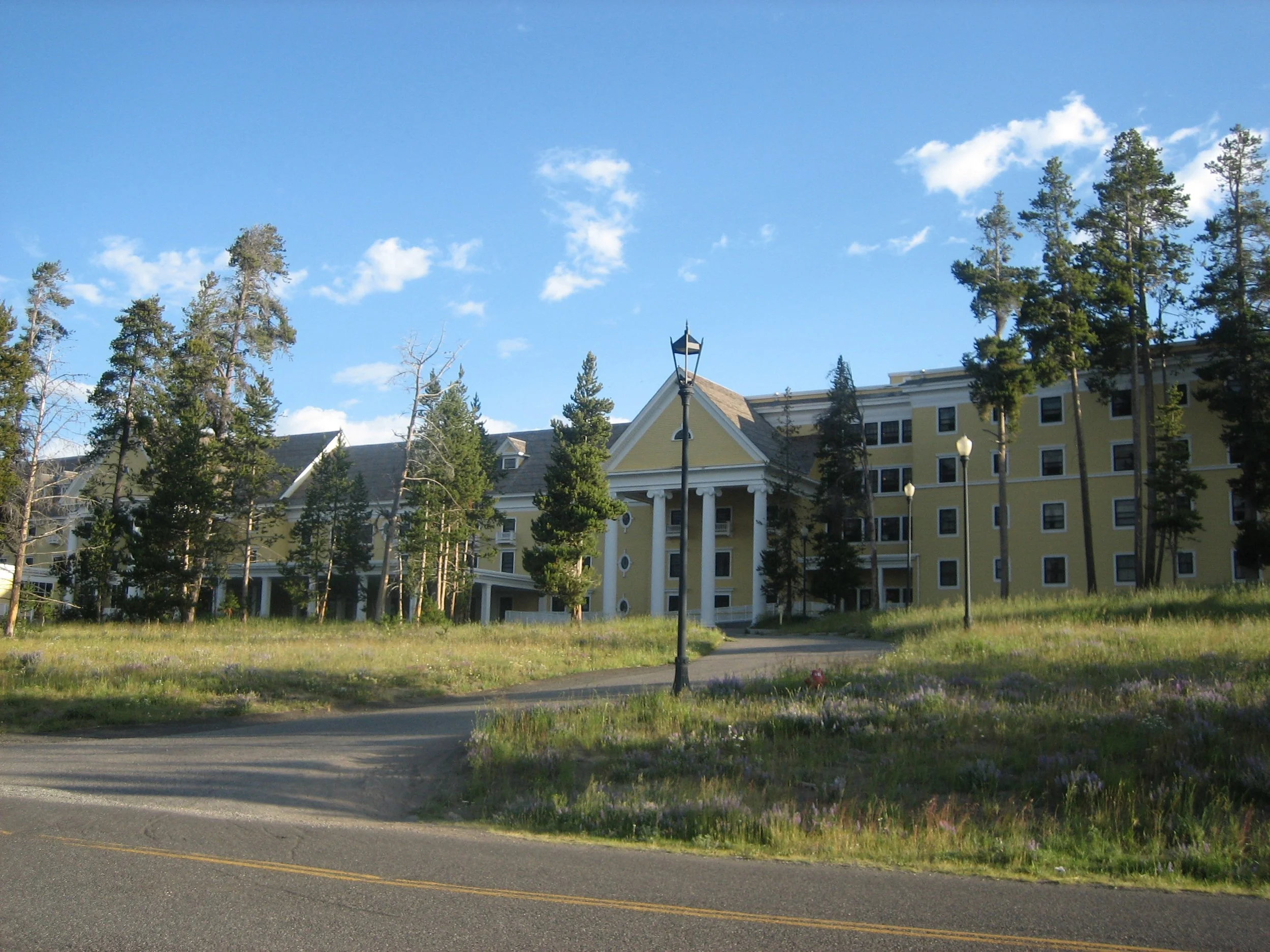
Opened in 1891, the Lake Yellowstone Hotel (aka the “Lake Hotel”) is the oldest lodge in the park. The hotel was financed during the late 19th century by the Northern Pacific Railroad. With majestic white columns and a yellow exterior, it is located near Fishing Bridge on the north end of Yellowstone Lake. In 1903, the hotel’s plain clapboard Colonial Revival exterior was replaced by three porticos facing the lake. I spent three nights at the hotel. There was no Internet available but on my second evening I sat in the sunroom near a grand piano where I enjoyed a glass of white wine and music from a string quartet.