Texas. Remembering School Segregation in a West Texas Town
I was taught that racial segregation within U.S. public schools ended in 1952 following the landmark Supreme Court ruling, Brown v. Board of Education. It came as a surprise that in some parts of Texas, school segregation continued for another thirteen years. On a drive through West Texas, a friend and I made plans to visit a recently designated historic site that tells the story of school segregation. Our destination was the town of Marfa. Designated in 2024, Blackwell School National Historic Site interprets racism that dominated public education in Texas for much of the 19th and 20th centuries. Between 1886 and 1965, Anglo and Mexican American students living in Marfa attended different schools up to the 9th grade.
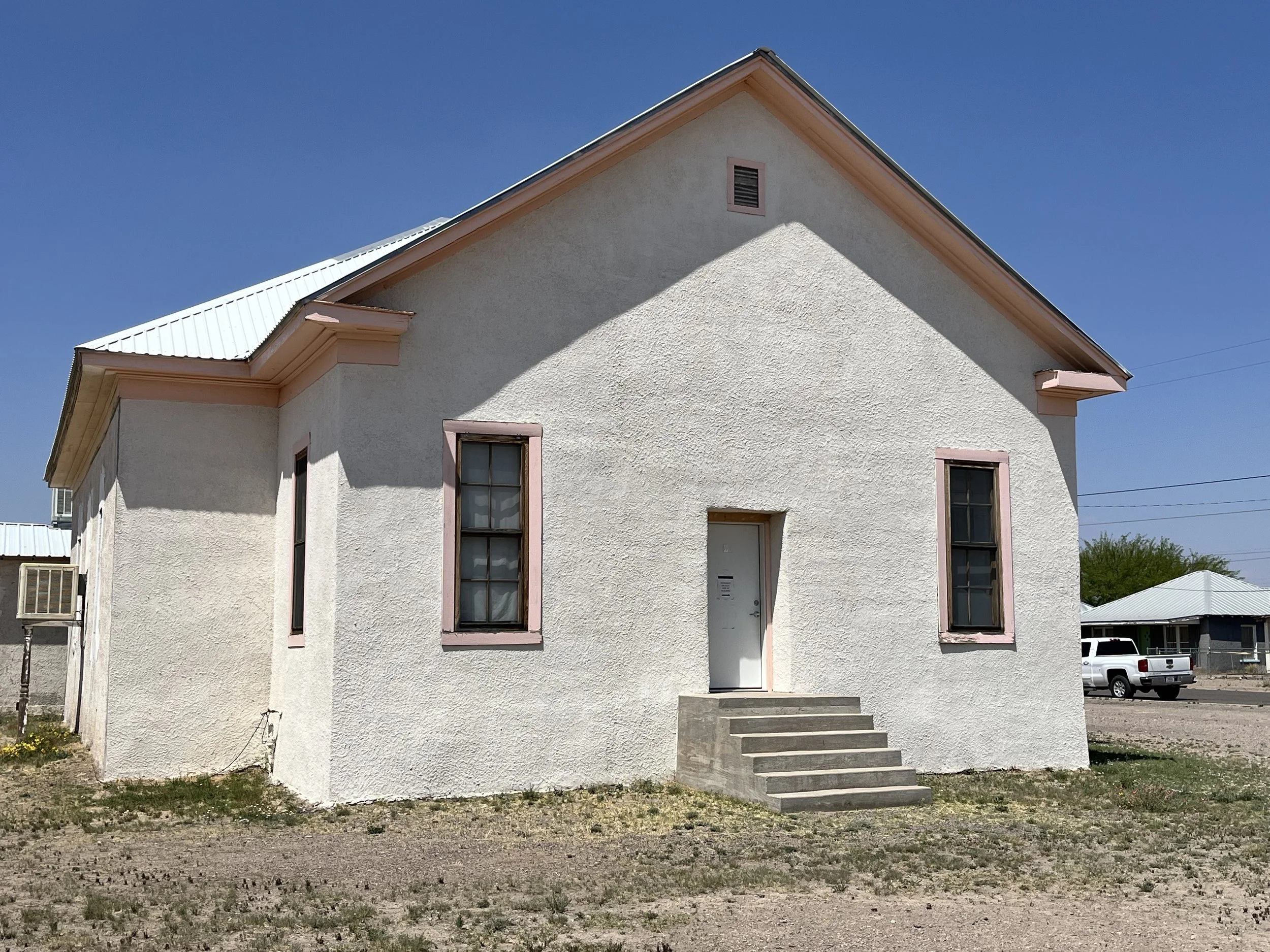
Located between the Davis Mountains and present-day Big Bend National Park, the town of Marfa was established in 1883 as a water stop for steam trains along the Galveston-Harrisburg-San Antonio Railway. The name Marfa is Russian for “Martha.” Initially all Marfa students attended a two-room adobe schoolhouse located south of railroad tracks that bisected the city. In 1892 the Marfa Independent School District completed work on a school building for elementary and middle school students of Anglo descent. Mexican American students continued to attend classes in the old schoolhouse (dubbed the “Mexican School”) until a larger building was finished in 1909. In 1940, the Mexican School was named in honor of Jessie Blackwell, its first principal.
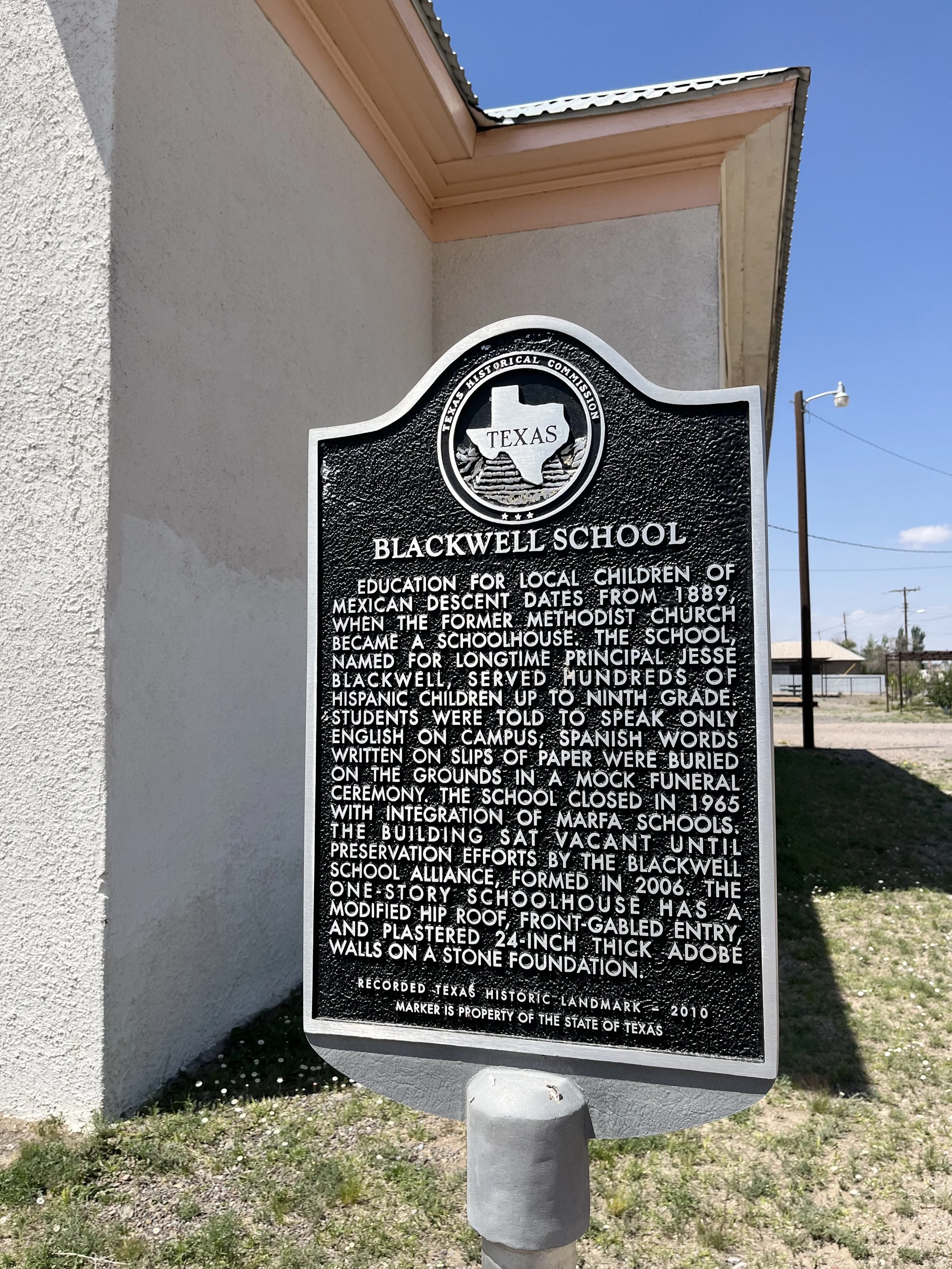
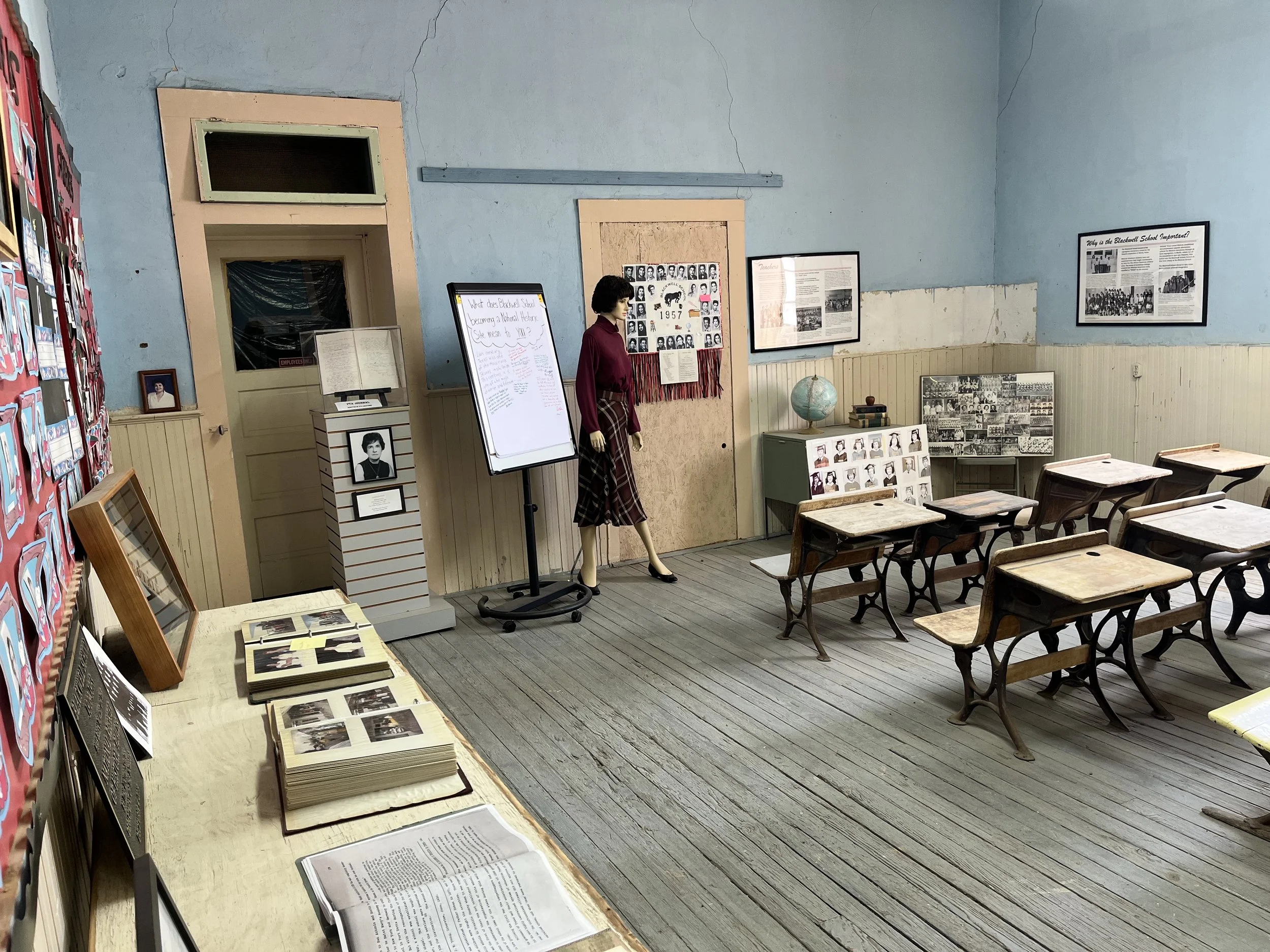
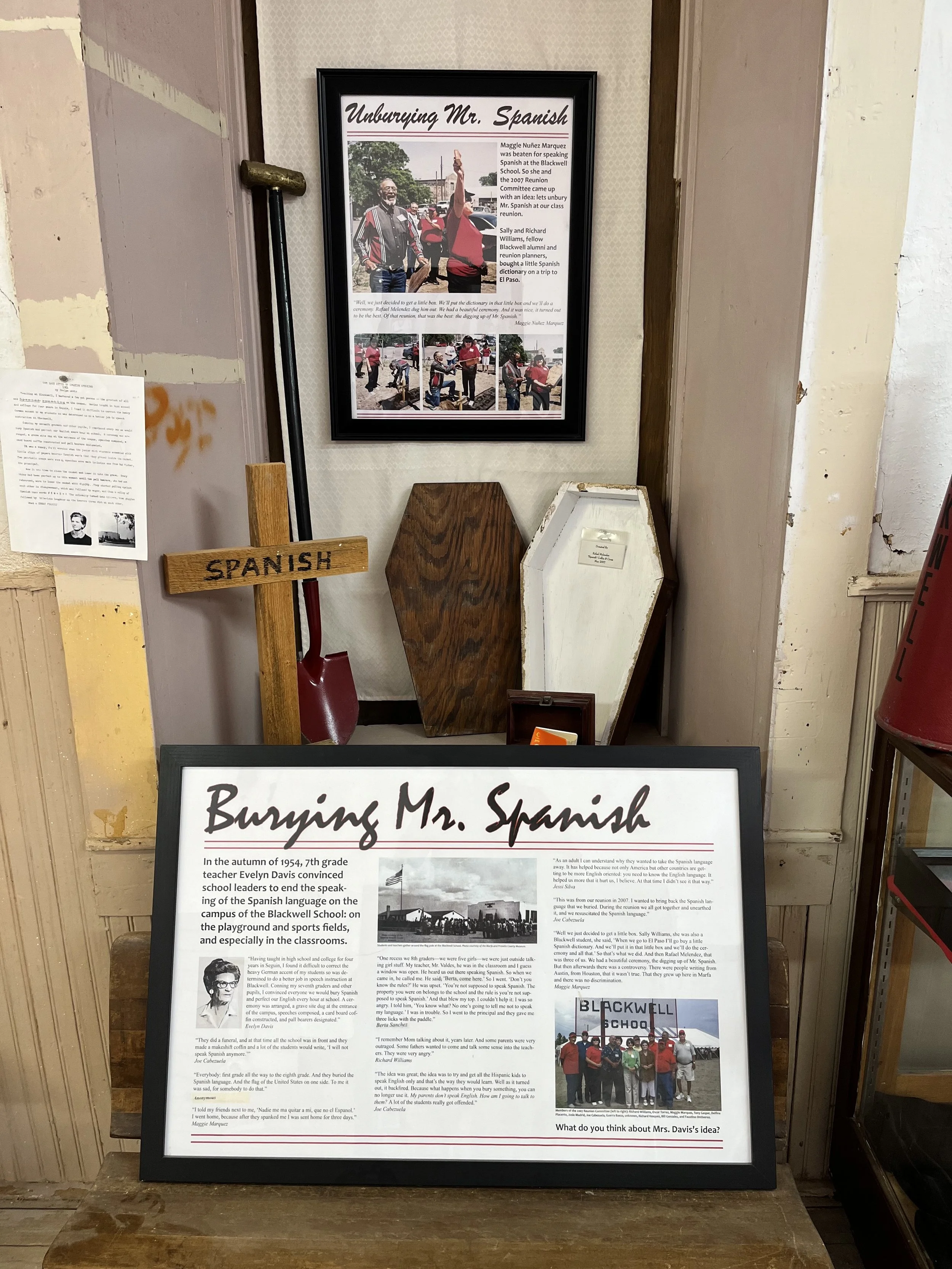
Surrounded by the Chihuahuan Desert, Marfa is positioned at the intersection of U.S. Highways 67 and 90 and about 97 kilometers from the U.S.-Mexican border. The town is best known as an “artsy” place and gateway for seeing the mysterious “Marfa Lights.” We drove east on U.S. Highway 90 to reach the school which is located at 501 South Abbott Street. In 1969 the School District tore down several buildings on the site but left the historic adobe building. We parked and then entered a door leading into the band hall which serves as a National Park Service (NPS) visitor center. After talking with an NPS ranger we walked through former classrooms featuring memorabilia, interpretive panels, and photographs. Stories written by former teachers and students describe cultural challenges. For example, students were frequently punished for speaking Spanish. In 1954, teachers held a mock funeral for the Spanish language that included burying a small coffin containing “Mr. Spanish.”
We passed a wall with memorabilia about the 1956 movie, Giant. Filmed in Marfa and surrounding areas such as the Reata Ranch, the movie featured James Dean, Elizabeth Taylor, and Rock Hudson. Cast members stayed in Marfa’s Paisano Hotel during filming. Focused on cattle and oil, the film captured racial hatred directed against Mexican Americans. In a scene at Sarge’s Diner, Bick Benedict (played by Rock Hudson) intervenes on behalf of three elderly Mexican Americans who are refused service, leading to a violent brawl with the diner’s owner.
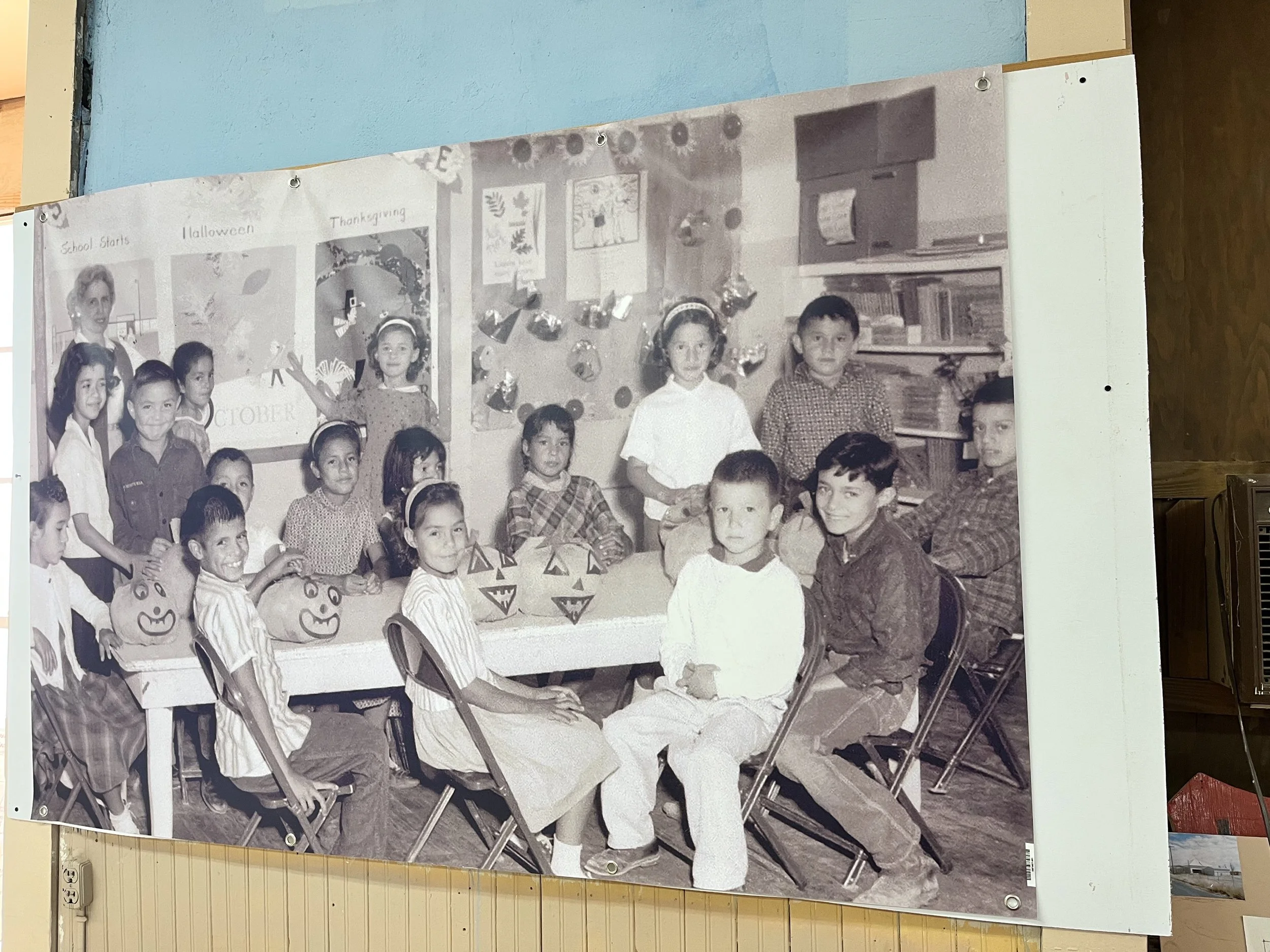
Blackwell School symbolizes injustice associated with the “separate but equal” policy that dominated the U.S. in the years before the Civil Rights Movement. Despite being categorized as “white,” Mexican Americans were excluded from restaurants, barber shops, churches, and schools. Indeed, Mexican Americans who served as extras during the filming of Giant weren’t allowed to see the film when it debuted in West Texas movie theaters. The Marfa Independent School District was among 120 Texas school districts that operated separate schools for children of Mexican descent. Segregation continued even after Delgado v. Bastrop (1948) mandated the end of Mexican American and Anglo segregated schools and the 1952 Supreme Court ruling on Brown v. Board of Education. School segregation in Marfa finally ended in 1965 and today, all children attend Marfa Elementary School and a junior/senior high school.
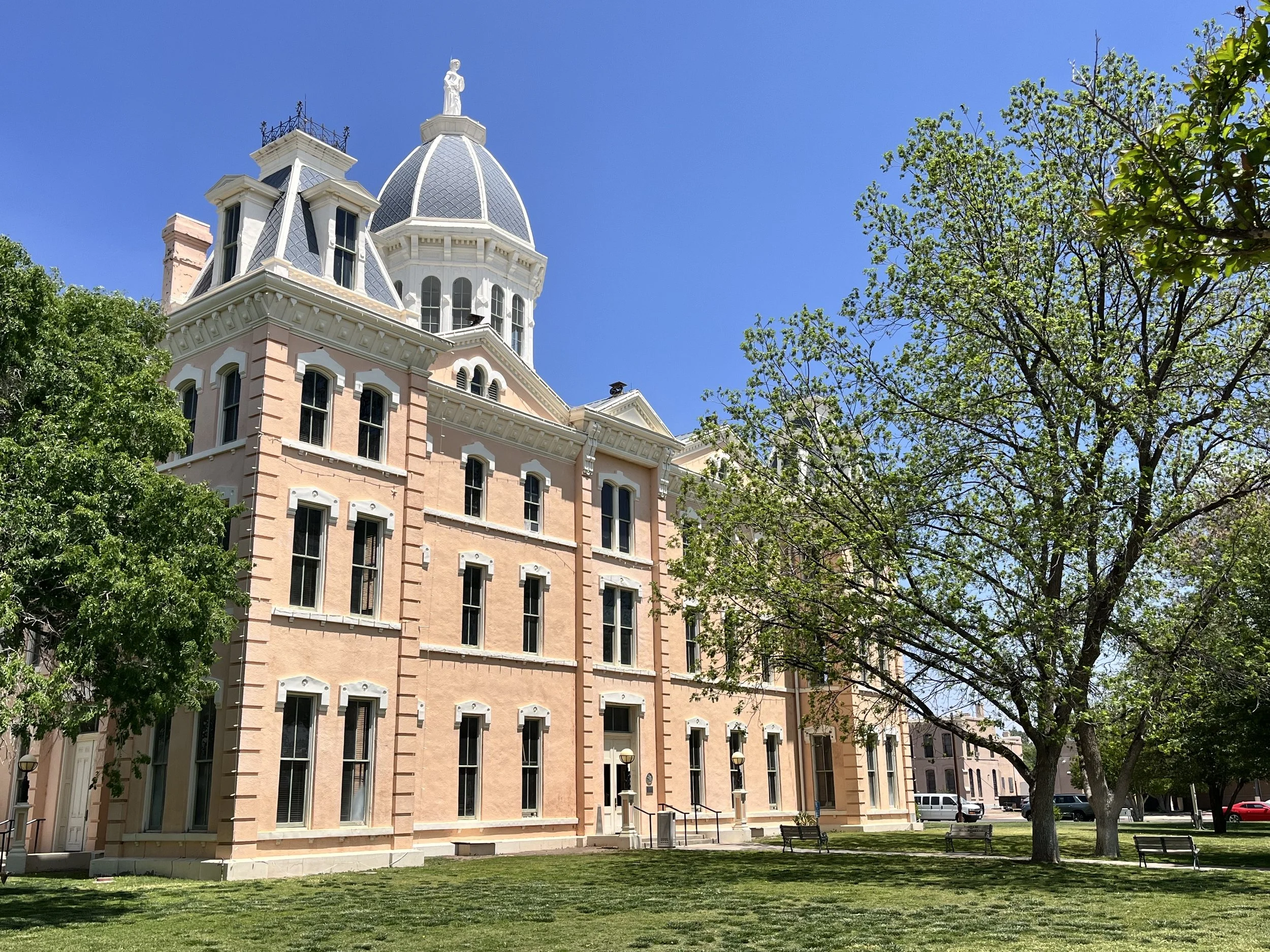
Before departing Marfa, we stopped at the Presidio County Courthouse. Designed by Alfred Giles and completed in 1887, the courthouse was constructed using brick and stone brought from the surrounding area. The three-story structure has a Second Empire design with Italianate detailing that featured a pink stucco exterior and Roman-style arches that surround a central dome. Octagonal in shape, the dome has two large windows on each side. At its top is a figure representing Themis, the Greek goddess of justice. Themis has been without her scales and sword since they were shot off by an angry citizen reported to have shouted, “There is no justice in Presidio County.”