Oklahoma. Too Many Empty Chairs: Remembering the 1995 Oklahoma City Bombing
April 19, 1995 was a routine day. I had just completed a 50-minute lecture and was returning to the Geography Department for my office hours. I recall someone mentioning an explosion in Oklahoma City. Soon details began coming in. A bomb made of diesel fuel and fertilizer had destroyed much of the Alfred P. Murrah Federal Building in downtown Oklahoma City, killing 168 people and injuring 850. Many of the dead were children who attended a daycare center on the building’s first floor. It was also reported that dozens of cars parked near ground zero were incinerated and that 300 buildings had been damaged. At the epicenter there was a crater nine meters wide and 2.4 meters deep. One of my former graduate advisees worked across the street in the Water Resources Building. Did he survive?
Initially, it was believed that the explosion was engineered by Middle East terrorists. However, within a few hours it became known that the perpetrators were American citizens. I drove past the Murrah Building about a week after the bombing. From a distance, it looked like a wrecking ball had been used to remove about a third of the building’s mass. Over the next few months the FBI interviewed 28,000 persons and gathered almost a billion pieces of evidence. The perpetrators had rented a truck in Junction City, Kansas to carry the explosives and on the morning of April 19, they parked the vehicle in front of the Murrah Building. The bombers were tried and convicted in 1997. In addition to human impacts, the tragedy cost $652 million in damage. Several structures near the blast zone had to be taken down including the Athenia Office Building and the Water Resources Building.
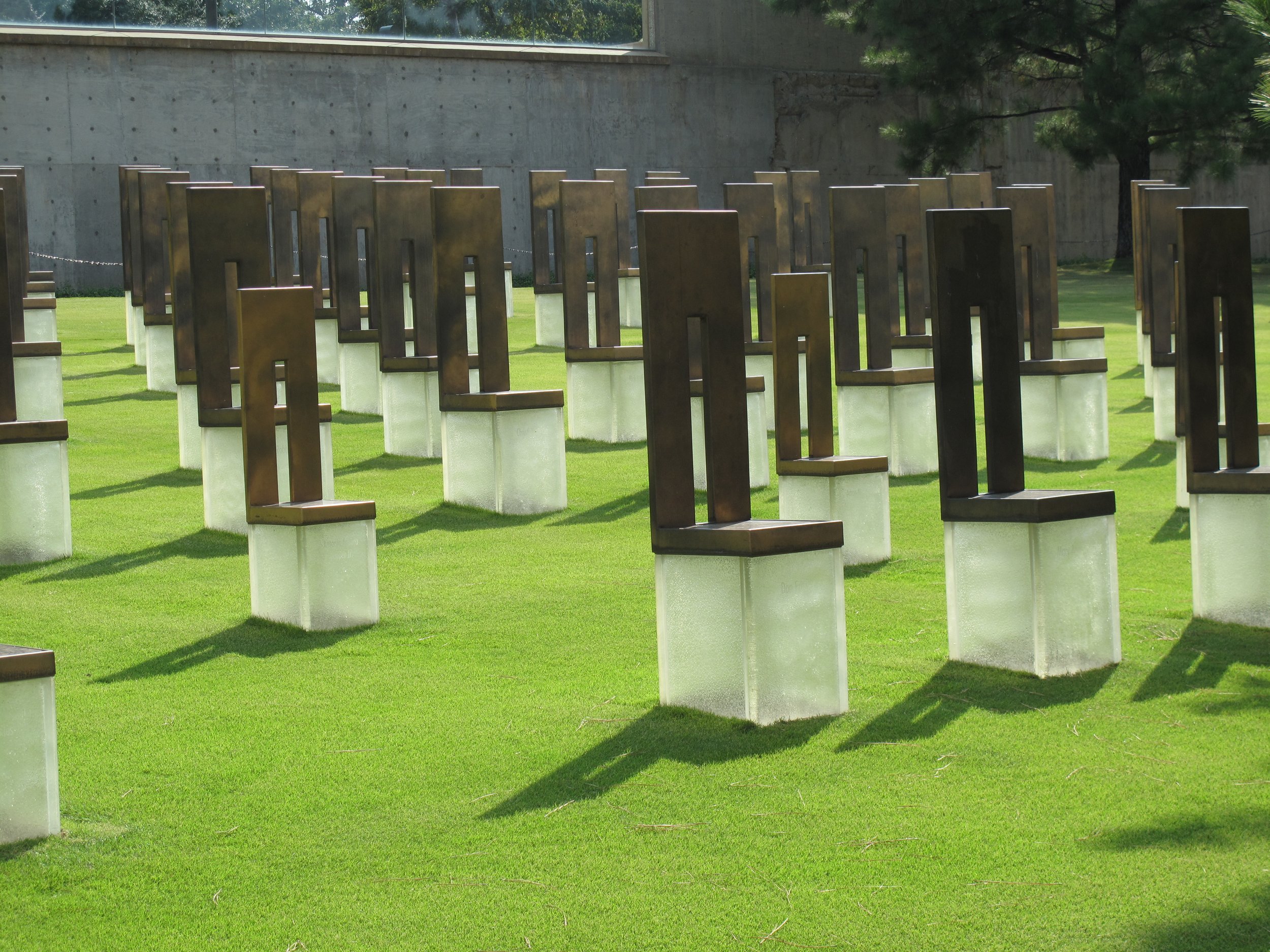
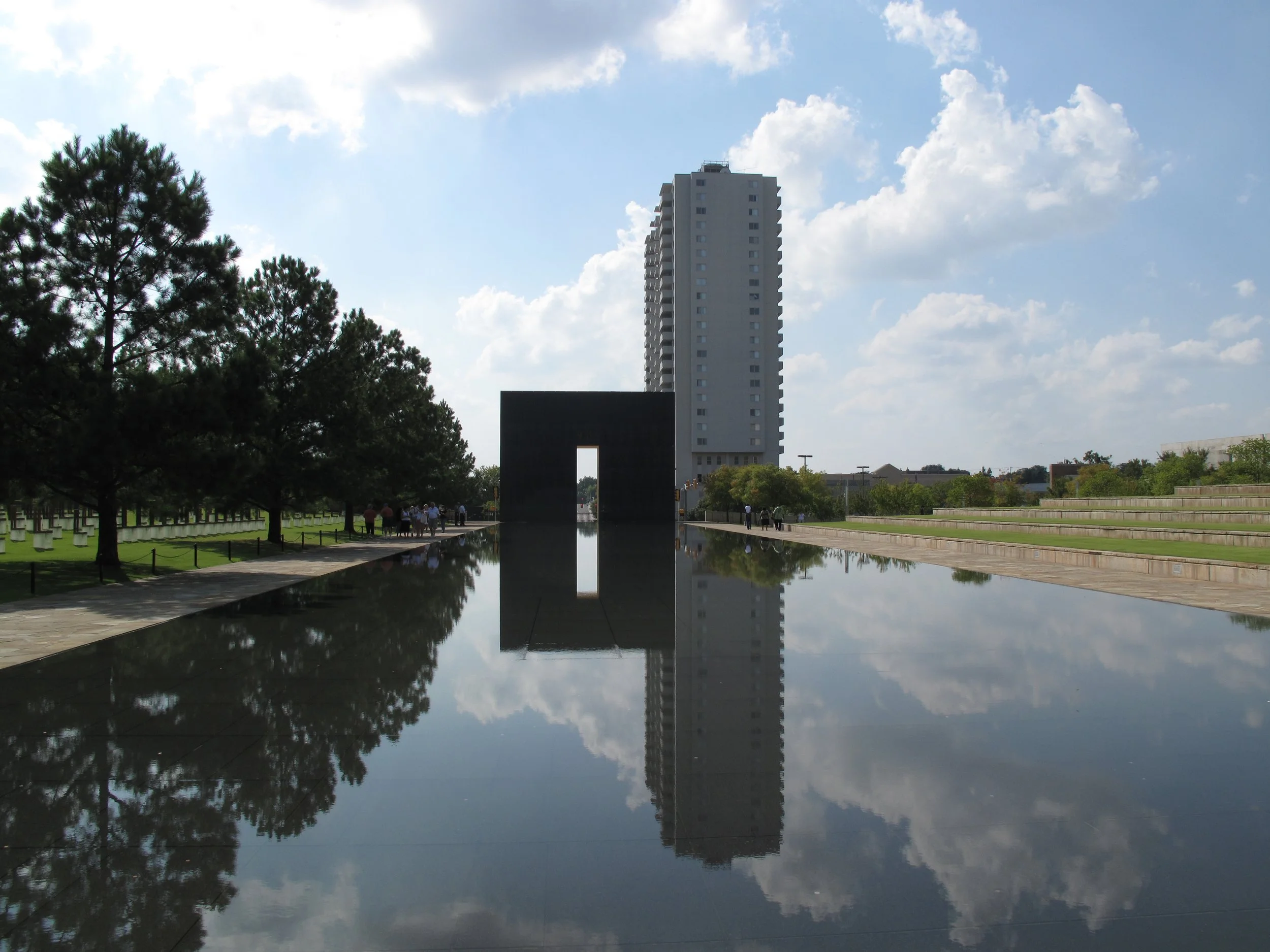
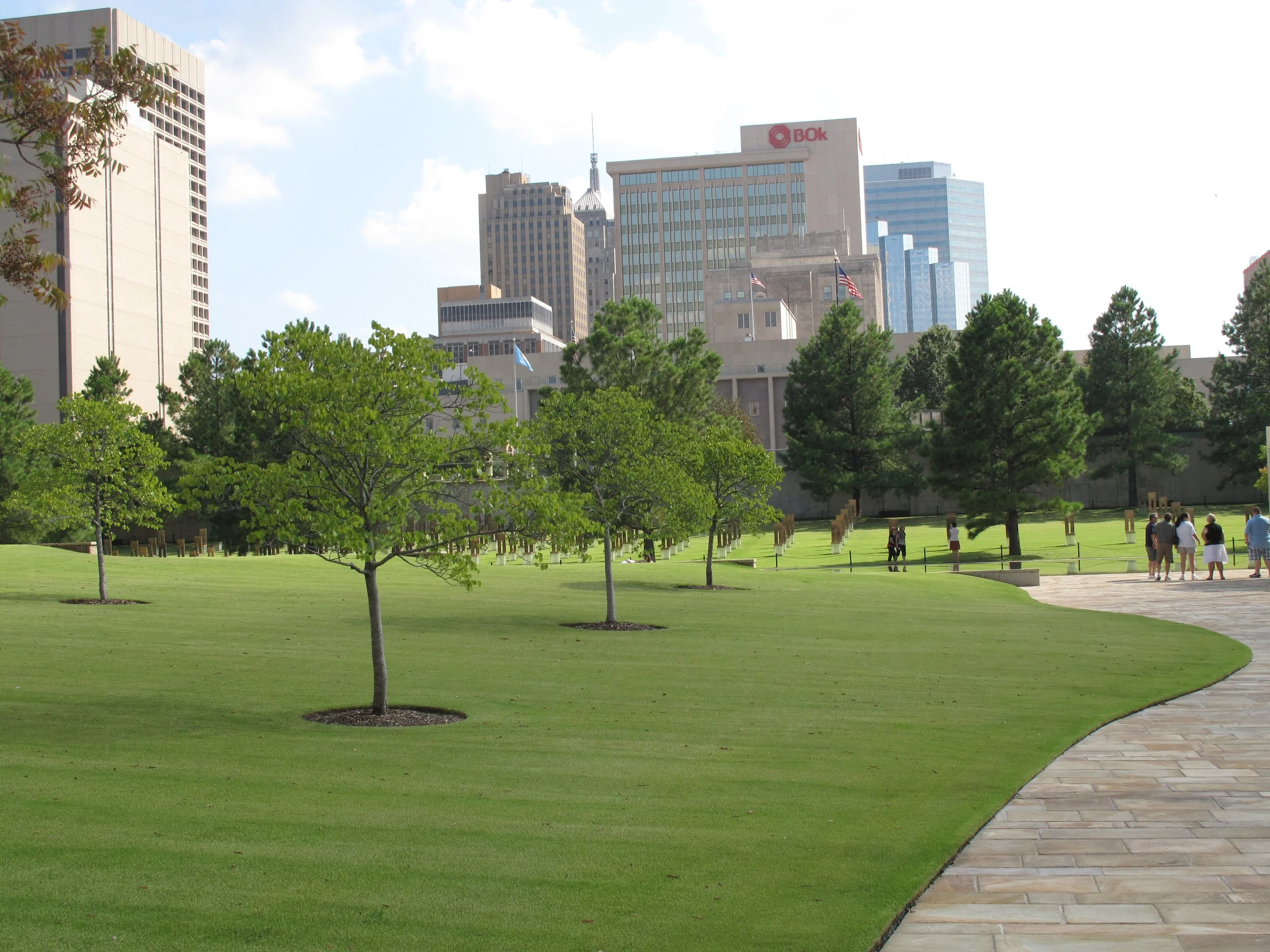
Built at a cost of $29 million, the Oklahoma City Memorial was dedicated in April 2000. I’ve come around in my thoughts about the purpose and importance of such a memorial. Although interpreting the event and persons responsible, the memorial focuses on people impacted and their families. Importantly, it also honors first responders and others who participated in recovery efforts. The memorial is located at the former location of the Murrah Building on NW 5th Street between N. Harvey and N. Robinson avenues. Bronze gates are positioned at either end of a reflecting pool running east/west. On each gate is an inscription: 9:01, the last moment of peace, 9:02 the moment of destruction, and 9:03, the first moment of recovery. Nearby are 168 glass chairs that each represent a person lost. They are arranged in nine rows corresponding to the Murrah Building’s nine floors with five other chairs symbolizing people killed outside the building.
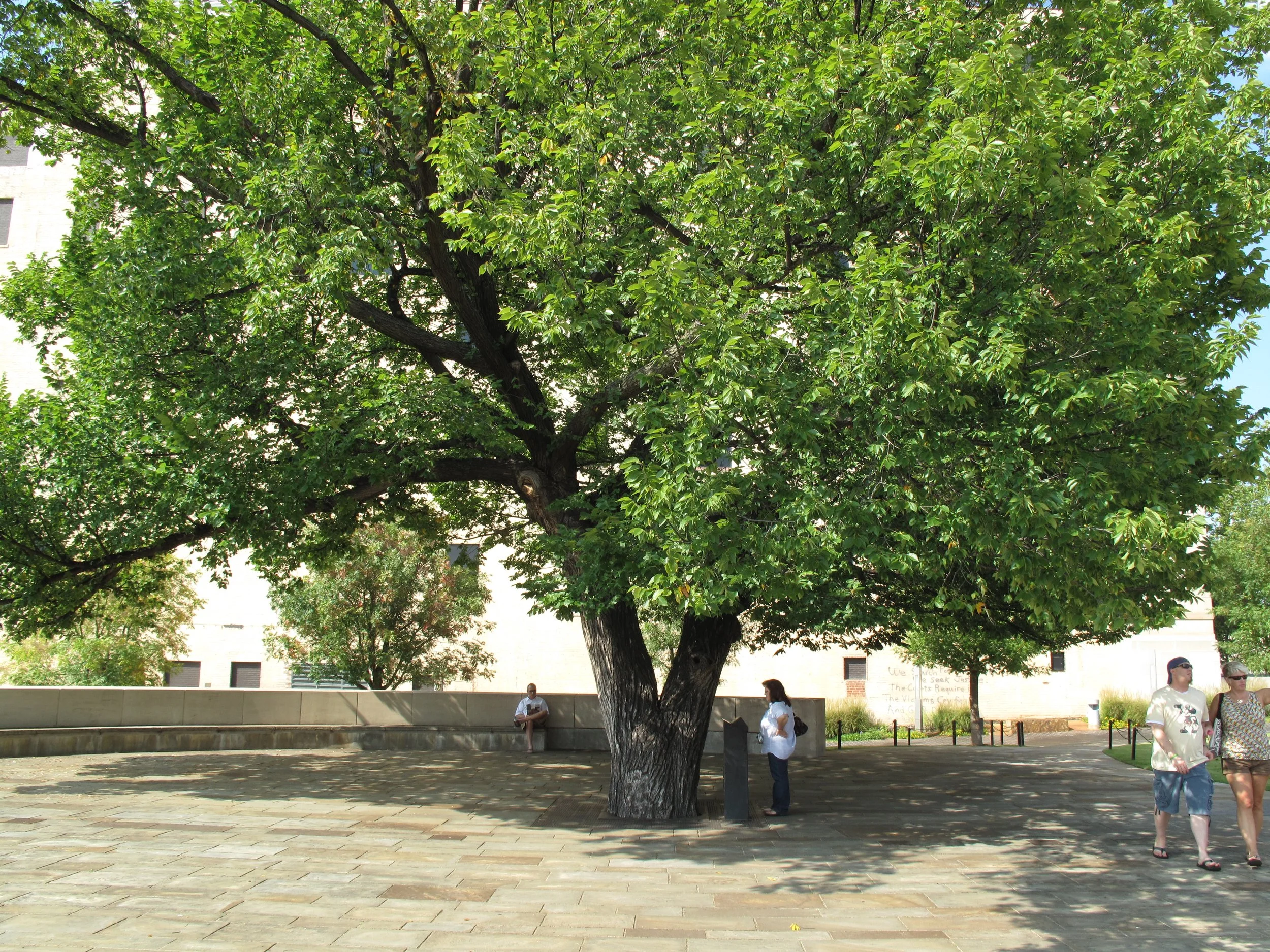
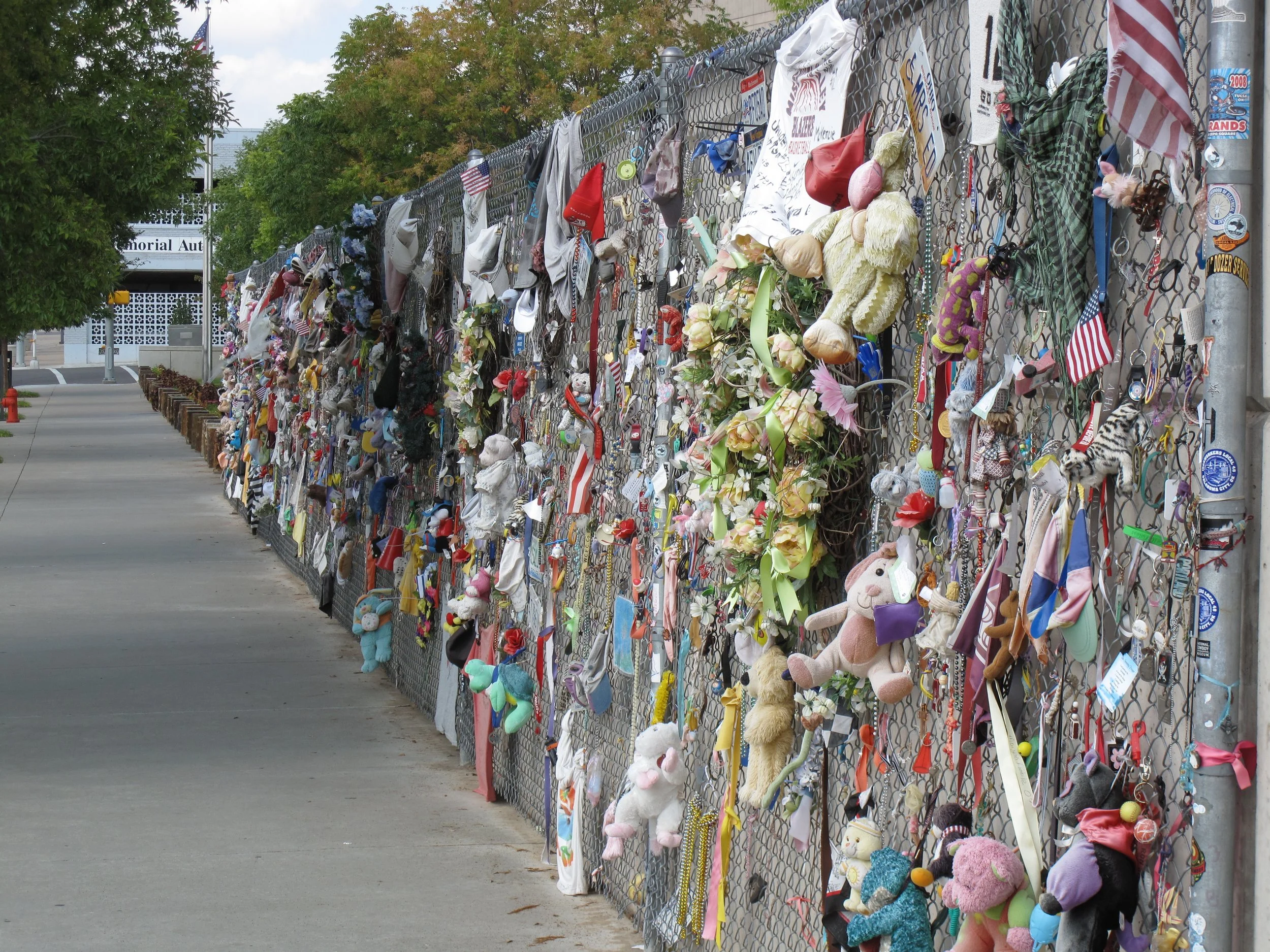
On the north side of the Murrah building’s footprint is the survivor tree, an American elm that was damaged but survived the blast. Nearby is a three-meter-high fence installed to maintain security during recovery operations and the FBI’s investigation. Standing for four years, it became a makeshift memorial where visitors left flags, stuffed animals, wreaths, and other items. A 64-meter section of the fence still stands as part of the OKC Memorial. Planted since the bombing is a grove of amur maples, Oklahoma redbud, and other trees that represent first responders and others who rendered assistance.
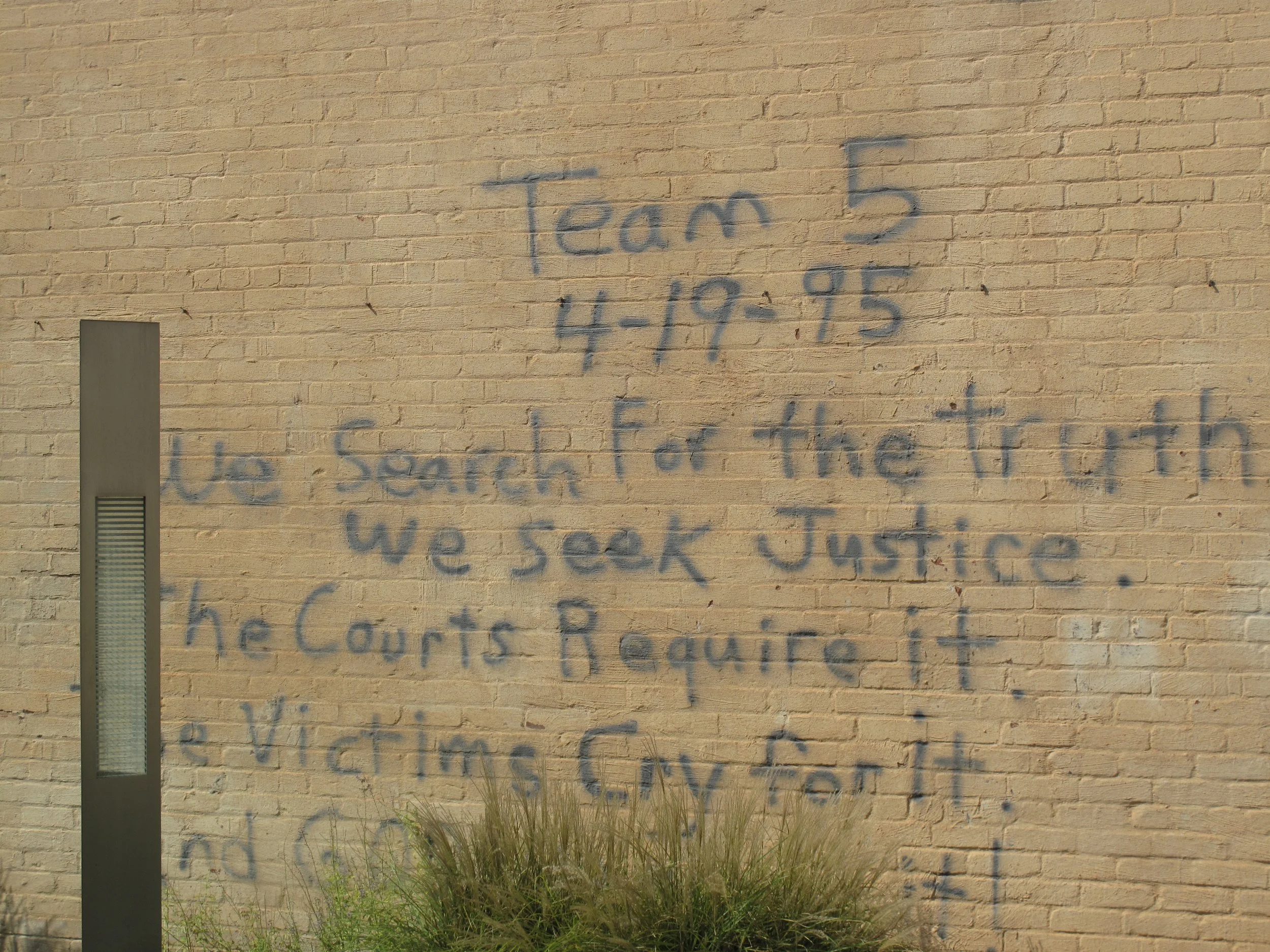
Just north of the memorial is the former Journal Record Building, now a museum that interprets the site and events before and after the bombing. Still visible on the side of the building is a spray-painted message from an Edmond crime scene investigator that reads “Team 5. 4-19-95. We search for the truth. We seek justice. The courts require it. The victims cry for it. And God demands it.” Today, the memorial is administered by the National Park Service and is open to the public 365 days a year.
The Oklahoma City Bombing was the worst act of domestic terrorism in U.S. history. Reflecting on the bombing, President Bill Clinton noted, “We need for people to recognize that our differences are good, healthy, even essential but only if our common humanity matters more. On April 19, Timothy McVeigh showed us what happens when our common humanity doesn’t matter anymore.”