New Mexico. The World’s Largest Gypsum Sand Dunes
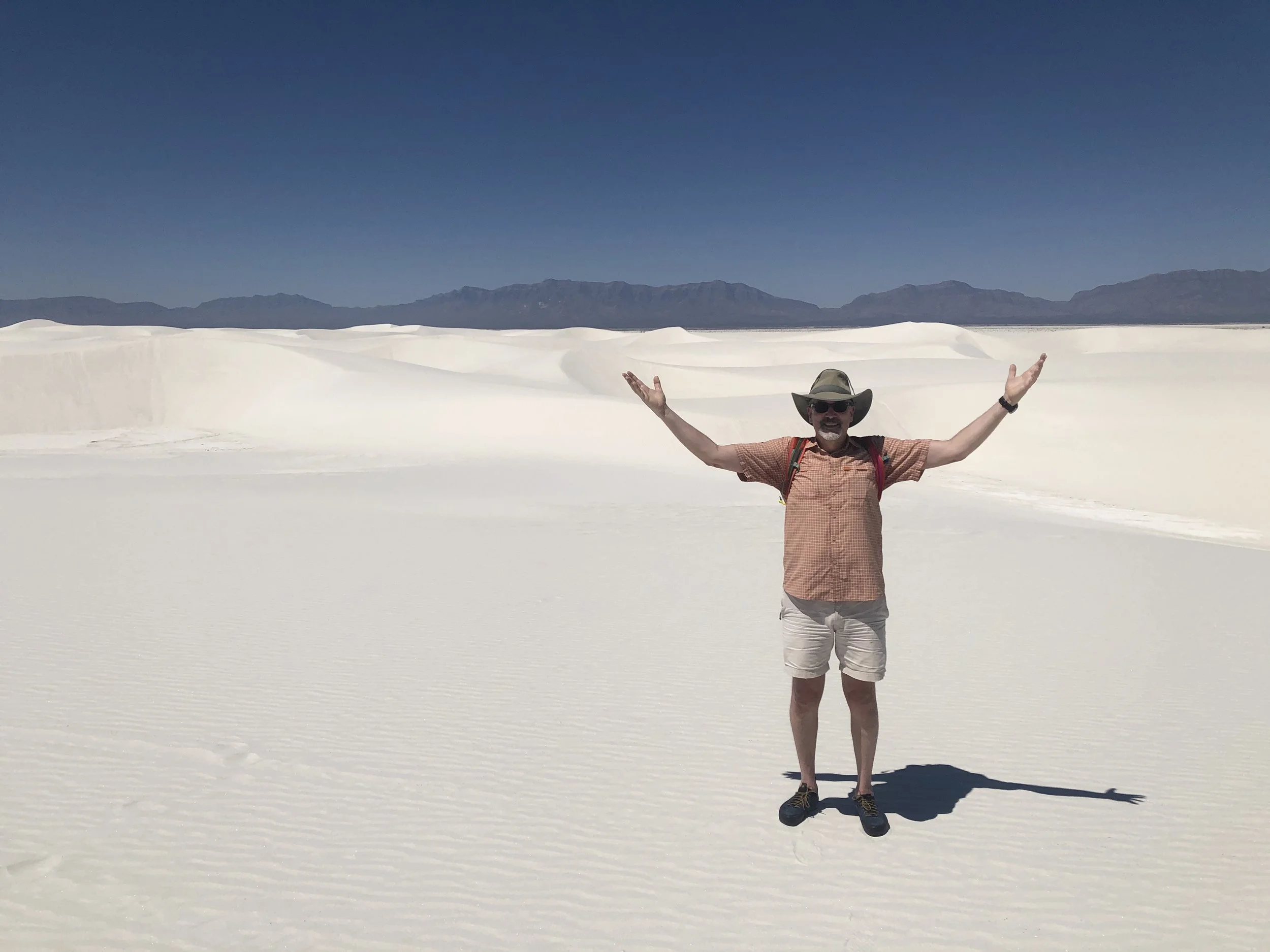
Picture wave-like ridges of sparkling white sand framed by blue sky and distant mountains. Covering an area of 590 square kilometers, White Sands National Park protects 41% of gypsum dunes located in the Chihuahuan Desert. Surrounded to its north, west, and south by White Sands Missile Range, it is the largest concentration of gypsum sand on Earth, an estimated 4.1 billion metric tons. But where did the sand come from?
During the Permian Period (290 to 251 million years ago) a shallow sea covered what is now southern New Mexico. Water-soluble gypsum from the mountains was carried into the Tularosa Basin, an endorheic (closed) system where water seeps downward or evaporates but doesn’t drain into an ocean. Weathering and erosion broke the crystals into sand grains that were pushed southwest by the prevailing wind. The human imprint on the area is more recent. Nomadic tribes followed herds of bison from the Great Plains to the Tularosa Basin, and some Mescalero Apache were living there when the Spanish arrived in 1534. The Spanish collected salt from the basin that was used in processing silver ore. Ranching arrived in the area during the 19th century and in 1880, the Apache fought the U.S. Calvary during the Battle of Hembrillo Basin.
My journey to White Sands National Park began in nearby Alamogordo, New Mexico (population 32,000). Founded in 1898, Alamogordo is surrounded by a dry landscape of mesquite, saltbush, cactus, and yucca. Trees are less common with willow and cottonwood found near sources of water. East of the city are the Sacramento Mountains and to the west is Holloman Air Force Base.
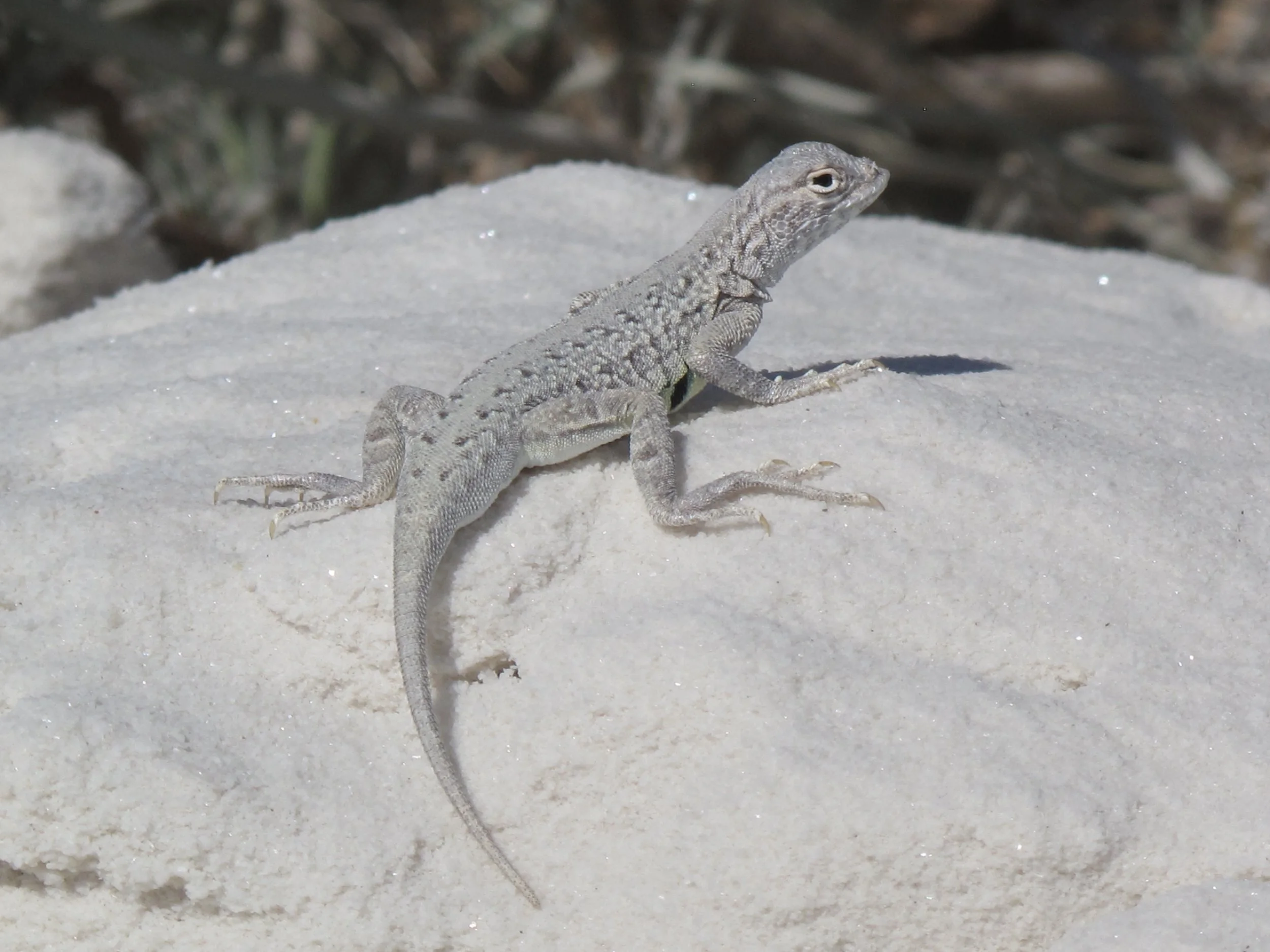
White Sands became a national monument in 1933 and a national park in 2019. Dunes within the park rise to heights of eighteen meters and depths of up to nine meters. The landscape has both transverse and barchan dune types with sands that migrate up to ten meters a year. The dunes are taller in western areas of the park and progressively shorter in the east. The park’s desolate landscape has been featured in numerous films including Hang ‘Em High (1968) and The Book of Eli (2010). We took the thirteen kilometer “Dunes Drive” from the visitor center to the western-most parking area. The park has 300 plant species, 50 animal species, 30 reptile species, and 600 species of invertebrates. Plants must adapt to nutrient-poor soil that has a high alkali concentration. Animals range from kangaroo rats and ravens to wrens, kit fox, bobcats, and jack rabbits. Among the park’s reptiles, the bleached earless lizard has a unique white collar. About 70 centimeters long, it eats wasps, beetles, ants, and bees.
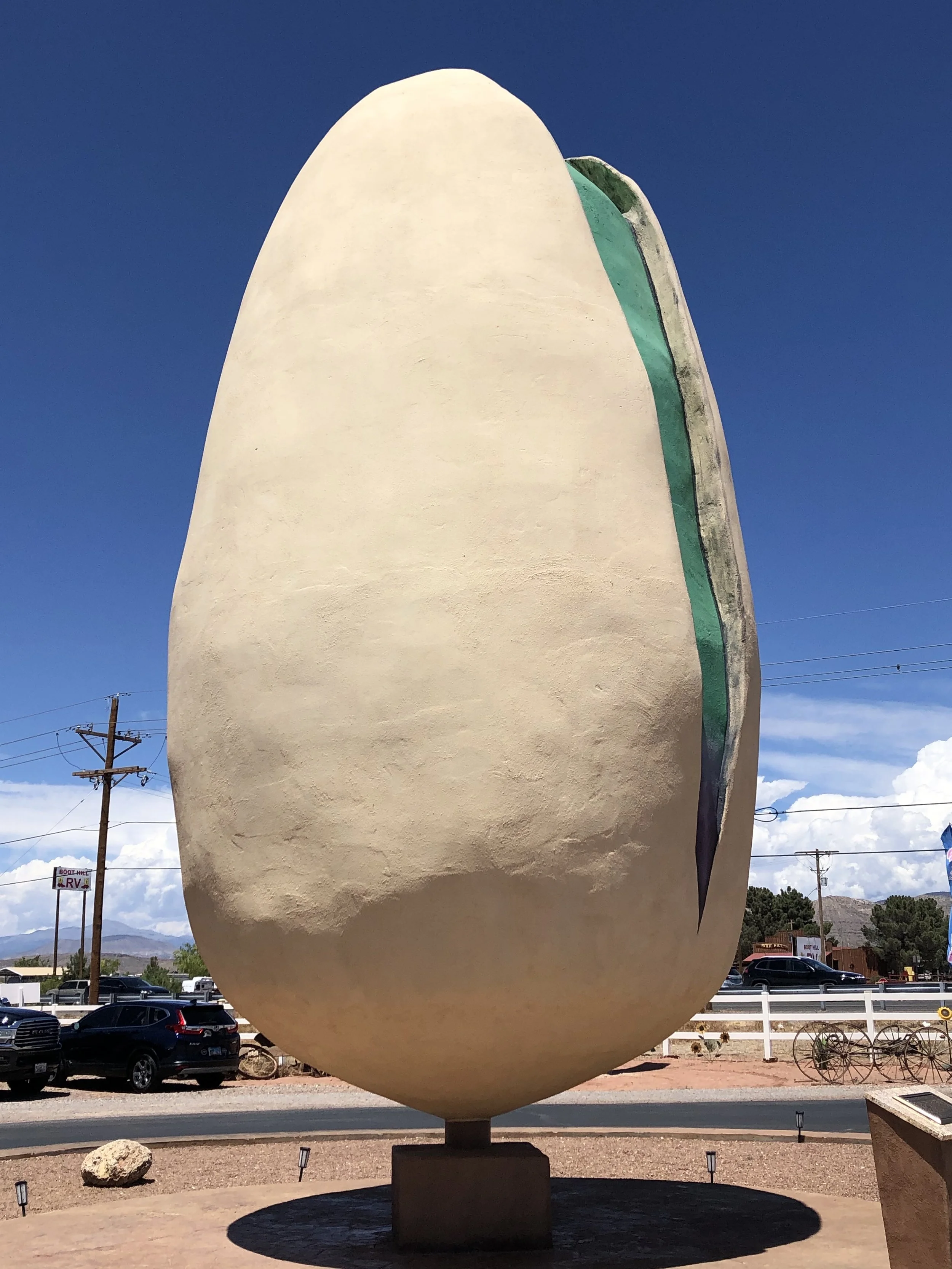
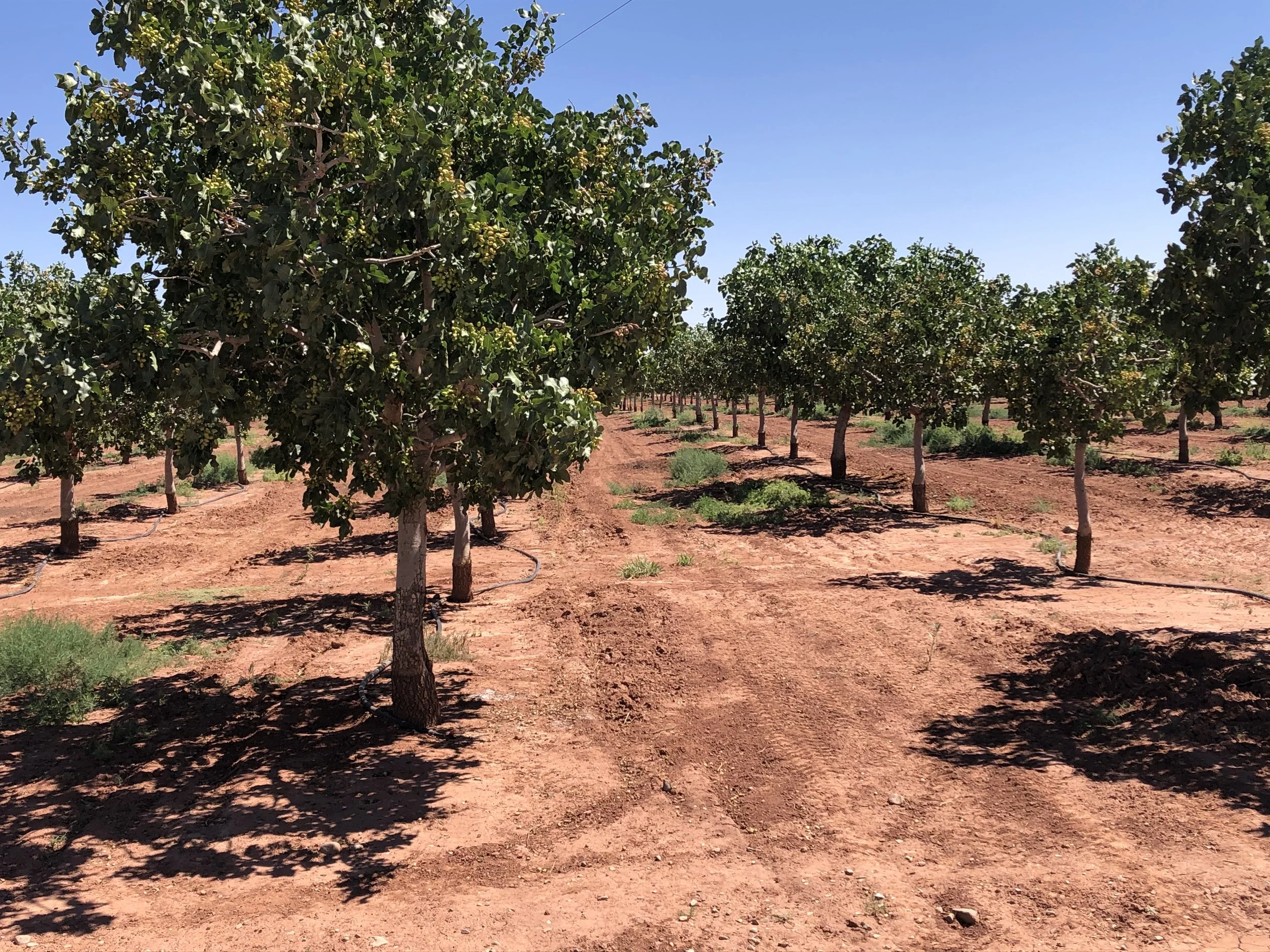
Returning to Alamogordo, we stopped at Pistachioland for a look at the world’s tallest pistachio, a bulbous, ten-meter-tall sign. Built in honor of Tom McGinn, the sign, along with the farm and store, are located on Highway 70 and eleven kilometers north of Alamogordo. The McGinn family continues to operate the store and adjacent orchard with its 12,300 pistachio trees. The farm also has 7,500 grape vines that support the Arena Blanca Winery. My travel companion and I paid a small fee for a one-hour tour of the 36.4-hectare farm.
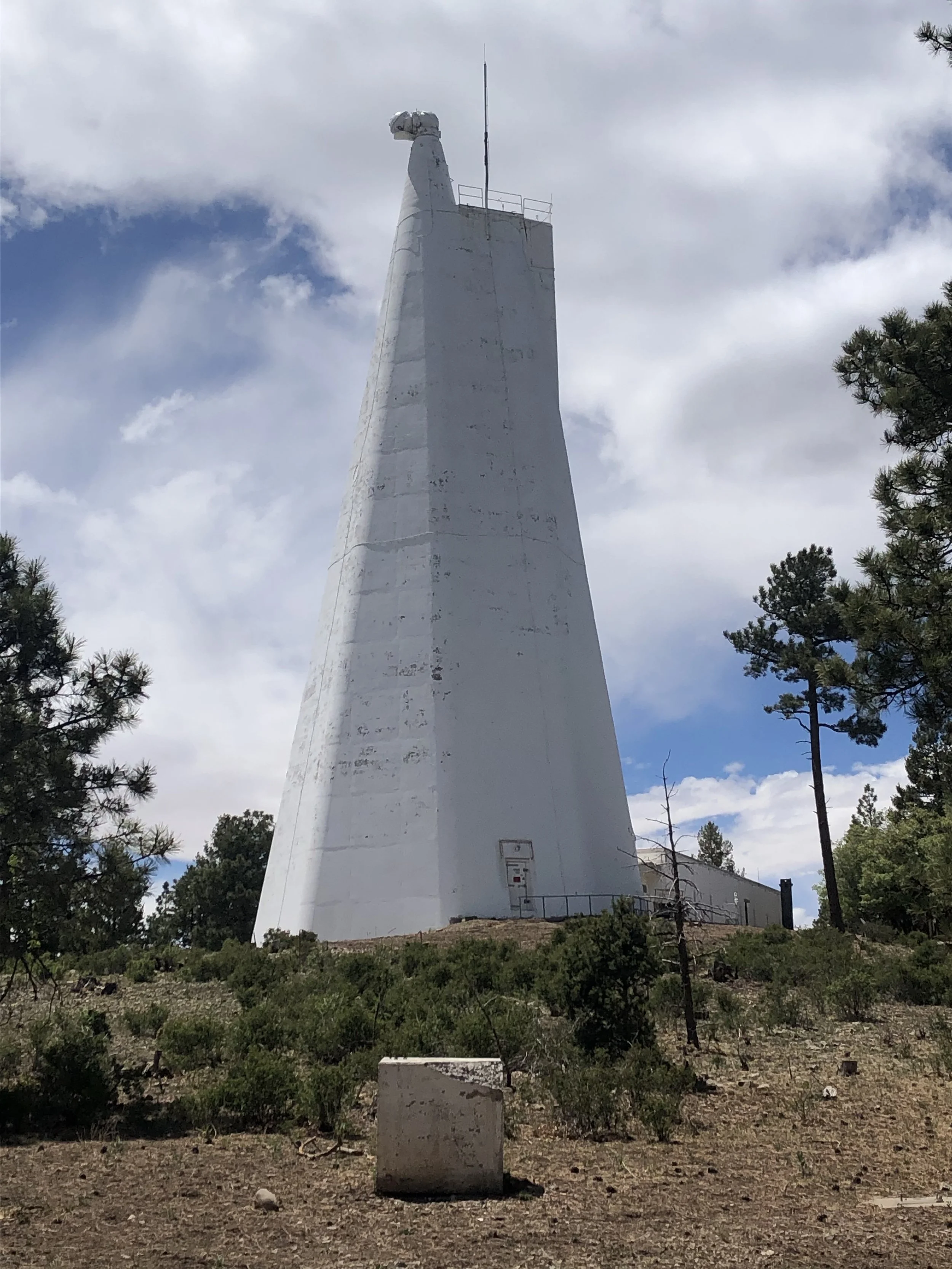
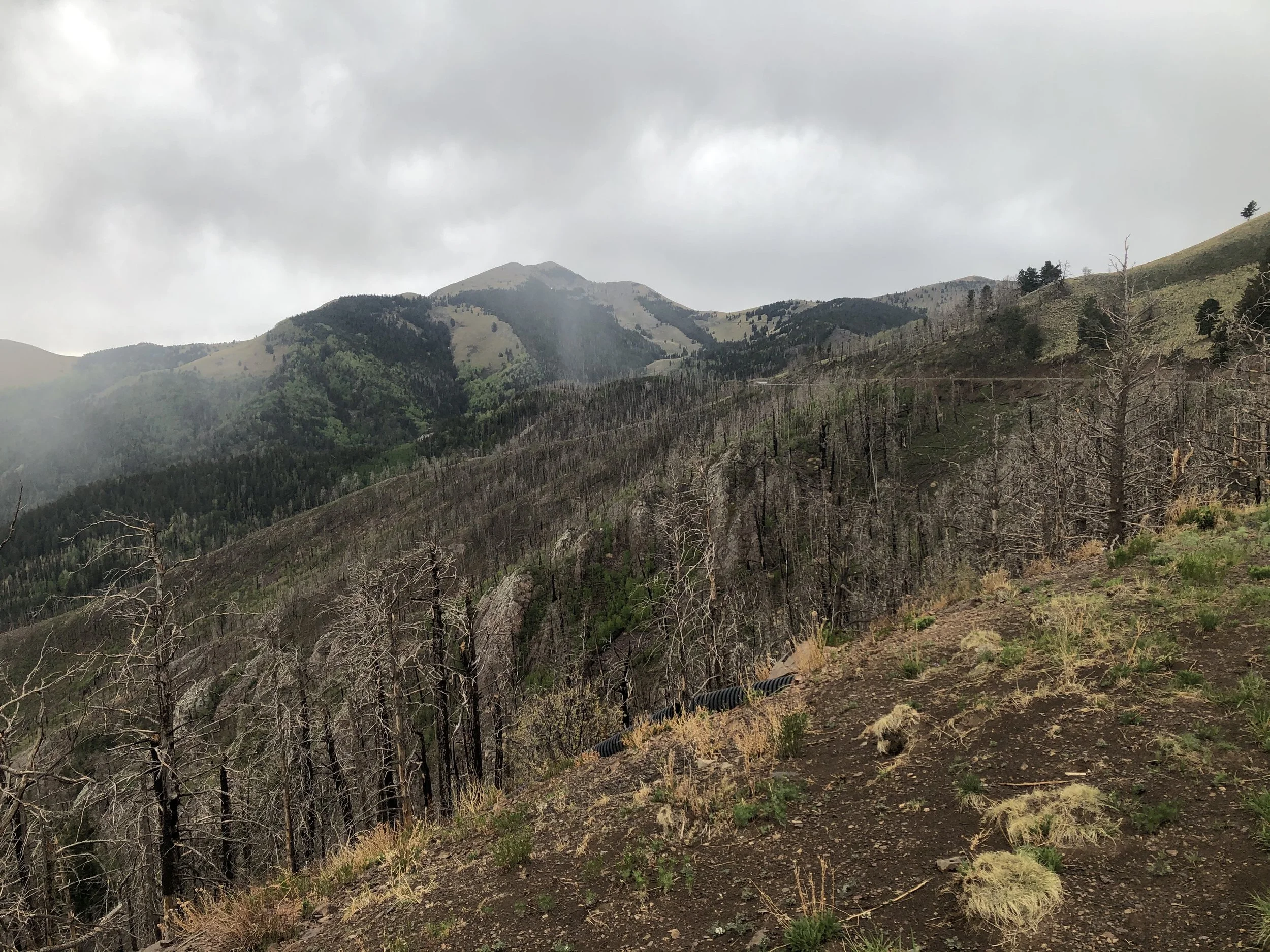
On the afternoon of our second day we explored the nearby Sacramento Mountains, a southern extension of the Rockies. Extending 137 kilometers north/south by 68 kilometers east/west, the mountains form an east-dipping fault block of mostly limestone rock. In terms of management, the Sacramentos are within Lincoln National Forest. High on a ridgeline and twenty-five kilometers south of the town of Cloudcroft is Sunspot Solar Observatory. We followed New Mexico State Road 6563 to 2,800 meters above sea level. Located on a ridgeline, the observatory offers views of the San Andreas Mountains on the far west side of the Tularosa Basin as well as the Organ Mountains, positioned to the south near the city of Las Cruces. The observatory’s equipment includes the world-renowned Dunn Solar Telescope. In 1947, U.S. government scientists became interested in the impact of sunspots and solar flares on radio blackouts. The Dunn is a vertical axis solar telescope designed to capture high resolution images of the sun. Its 41-meter tower sits on an observation platform with more than half of its superstructure located underground. The observatory is operated by New Mexico State University with partial support provided by the U.S. National Science Foundation.