Qatar. Dune Bashing in Doha
Located on a peninsula that projects northward into the Persian Gulf, Qatar extends 160 kilometers north/south and 80 kilometers east/west. In terms of size, it is slightly smaller than the U.S. state of Connecticut. Like neighboring Saudi Arabia, the country is mostly flat and low-lying desert punctuated with salt flats called sabkhas. With its highest point at just 103 meters, Qatar is the second flattest country in the world after the Maldives and without lakes or reservoirs, its freshwater supply comes from distilling seawater. Qatar is hot most of the time with June to September temperatures that can exceed 50°C. The country’s diverse population is made up of people from more than 94 nationalities.
Doha, Qatar’s capital, is located on a shallow east coast bay. Indeed, the name Doha comes from the Arabic word “Dohat” meaning “rounded bay.” Although difficult to reach by sea because of coral reefs, the city operated as a port serving small vessels until a deepwater harbor was built in the 1970s. Doha was founded by members of the Sudan Tribe who emigrated from Abu Dhabi and for much of its history, the quiet fishing town supported a vibrant pearl diving industry. The Ottoman Empire operated a military garrison there between 1871 and 1915. During the late 19th century, Qatar’s Thani Dynasty sought British patronage as protection against Ottoman forces and nearby tribal groups and in 1916, Qatar became a protectorate of Great Britain. The discovery of oil after WWII helped transform Qatar’s economy and improve the standard of living of its residents. In 1971, the country received its independence. Today, Qatar has a large number of guest workers, especially Iranians, Indians, and Pakistanis. Fewer than 15% of the country’s residents are citizens and just one in three is female. The population is 65% Muslim with minorities of Christians, Hindus, and Buddhists.
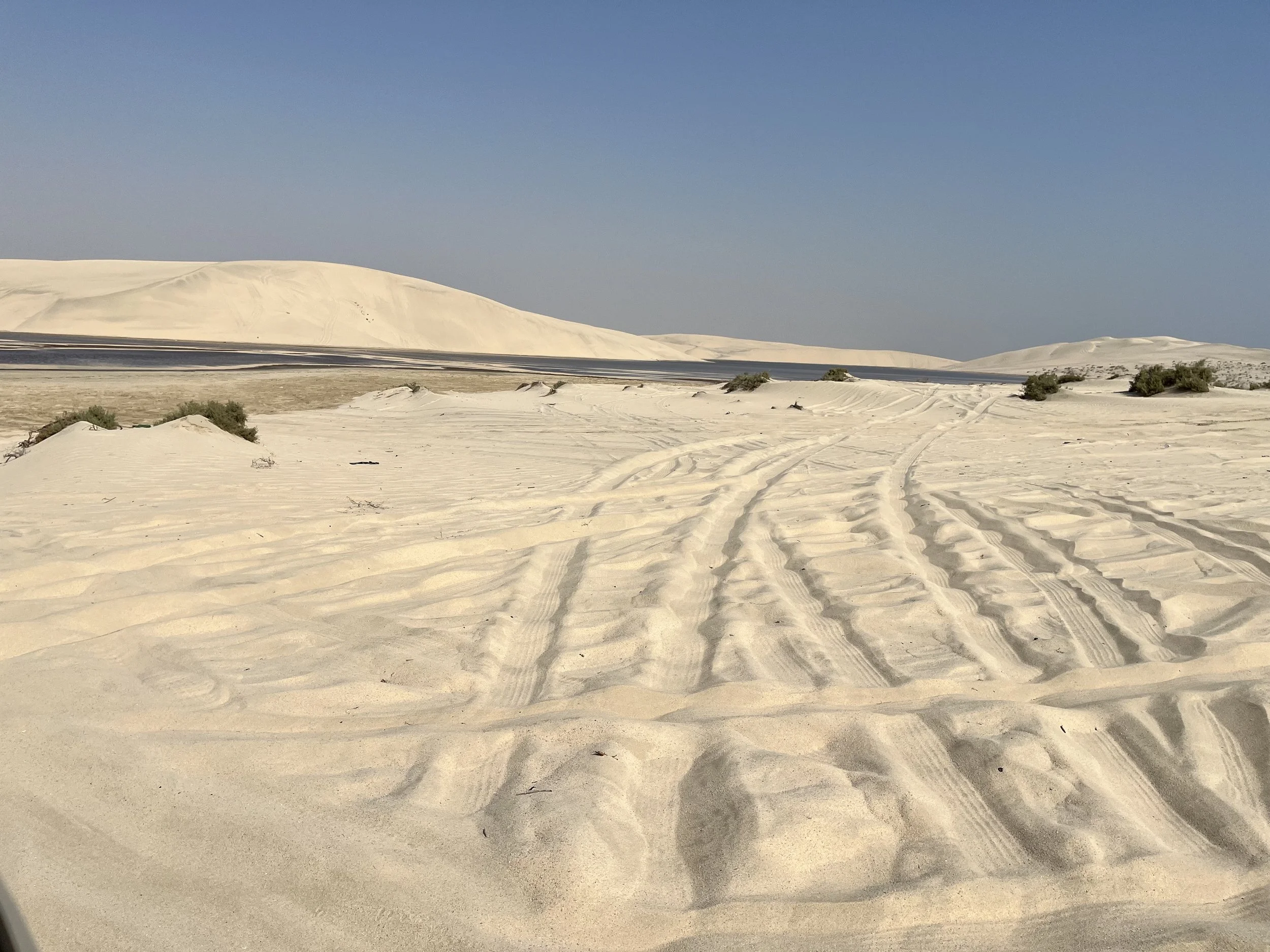
We arrived at Hamad International Airport on an early morning flight. I had arranged for a local guide who soon arrived in his 4WD Toyota Land Cruiser. The road south took us past several large refineries and after forty-five minutes we reached an area of massive sand dunes. Among other events, Doha hosts dune races that are part of the Qatar International Baja competition. To provide better handling in the sand our driver released air from each of the Land Cruiser’s tires. We proceeded into an area of rolling dunes and high sand ridges. Climbing a dune ridge, we crested the top and then descended the back side at break-neck speed. Midway down, our driver abruptly turned the steering wheel making the Land Cruiser list sharply to one side and for a moment, it felt as if our vehicle would roll over. We stopped a few times at the top of taller dunes for photographs.
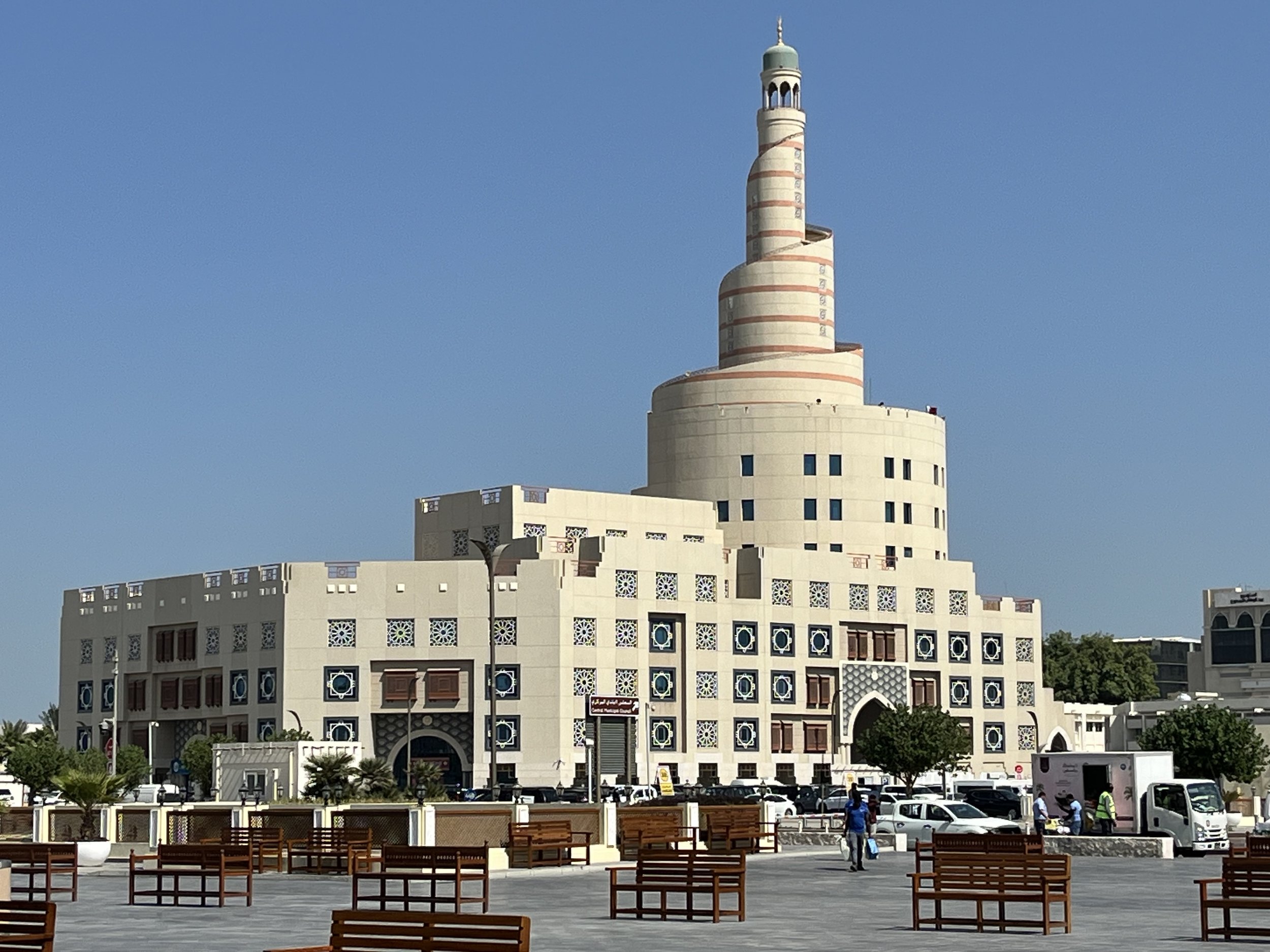
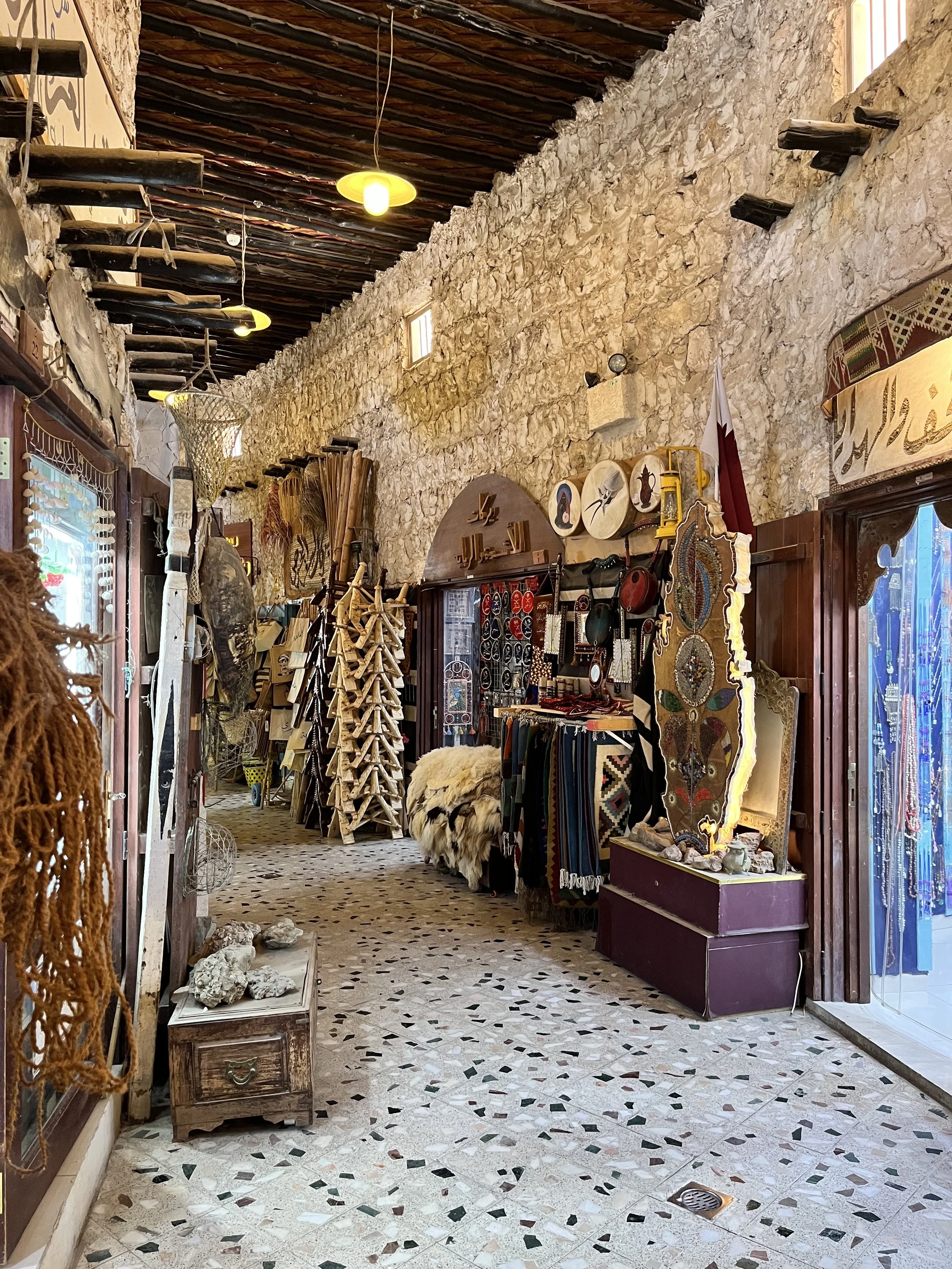
Returning to Doha, our driver found a parking place in an underground garage below Souk Waqif (aka the Market of Doha). Located adjacent to a dry riverbed known as Wadi Musheireb, the location was once a gathering place for nomadic Bedouin who traded goods and livestock. Housed inside a 19th century market building is a maze of covered pathways connecting shops that feature handicrafts, leather goods, clothing, and spices. Adjacent to the souk is the Abdulla Bin Zaid Al Mahmoud Islamic Cultural Center with its unique twisting minaret that was inspired by the Great Mosque of Samarra in Iraq.
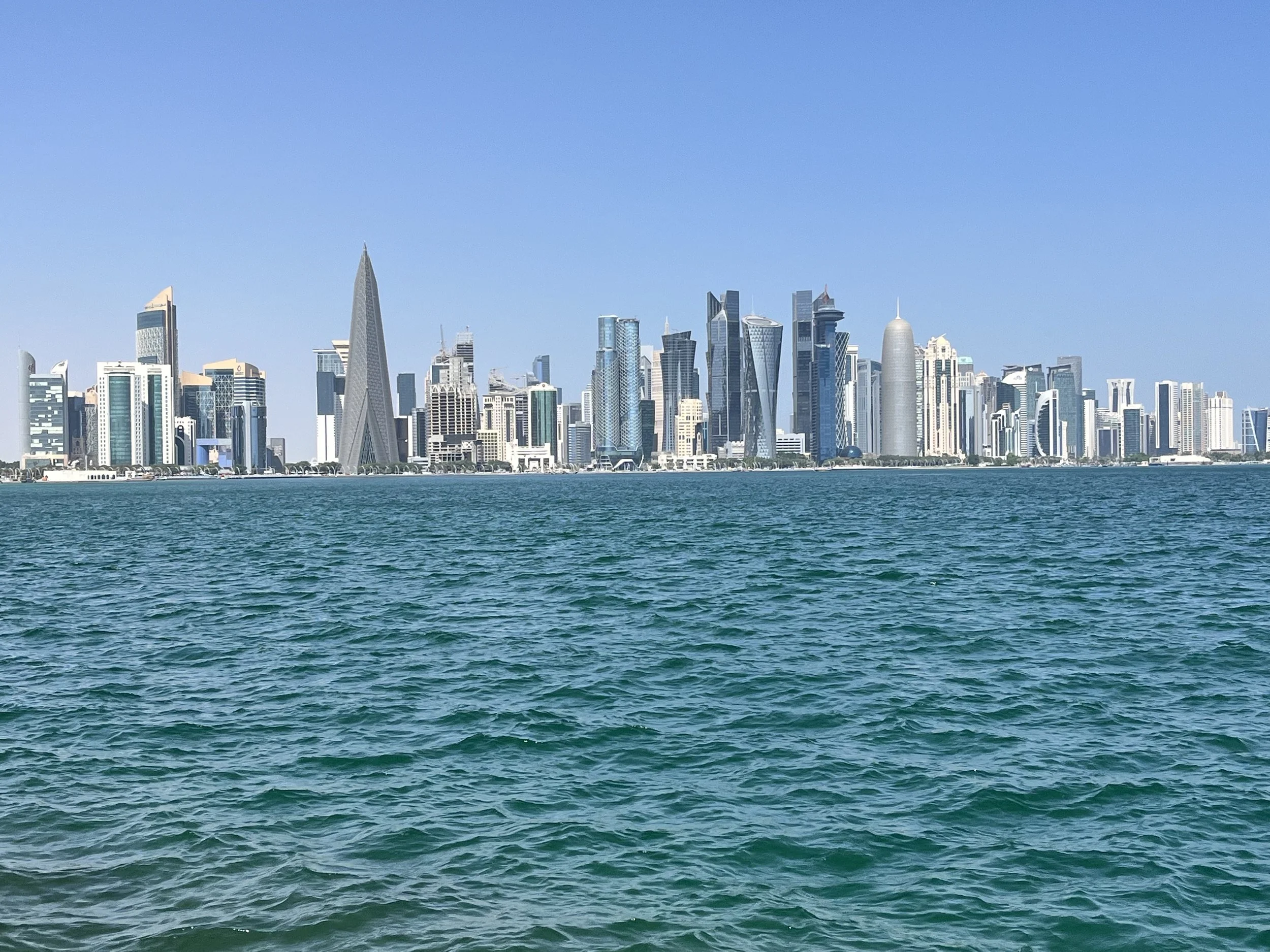
A short distance from the Souk is a wide corniche built along a roadway that offers views of Doha’s impressive skyline. Among more than a dozen tall buildings visible across the bay is the 300-meter tall Aspire Tower which contains a hotel called Torch Doha and a revolving restaurant that offers 360° panoramic views of the city. Nearby are two office buildings, the 238-meter-tall Doha Tower (aka Burj Doha) and the 242-meter World Trade Center.
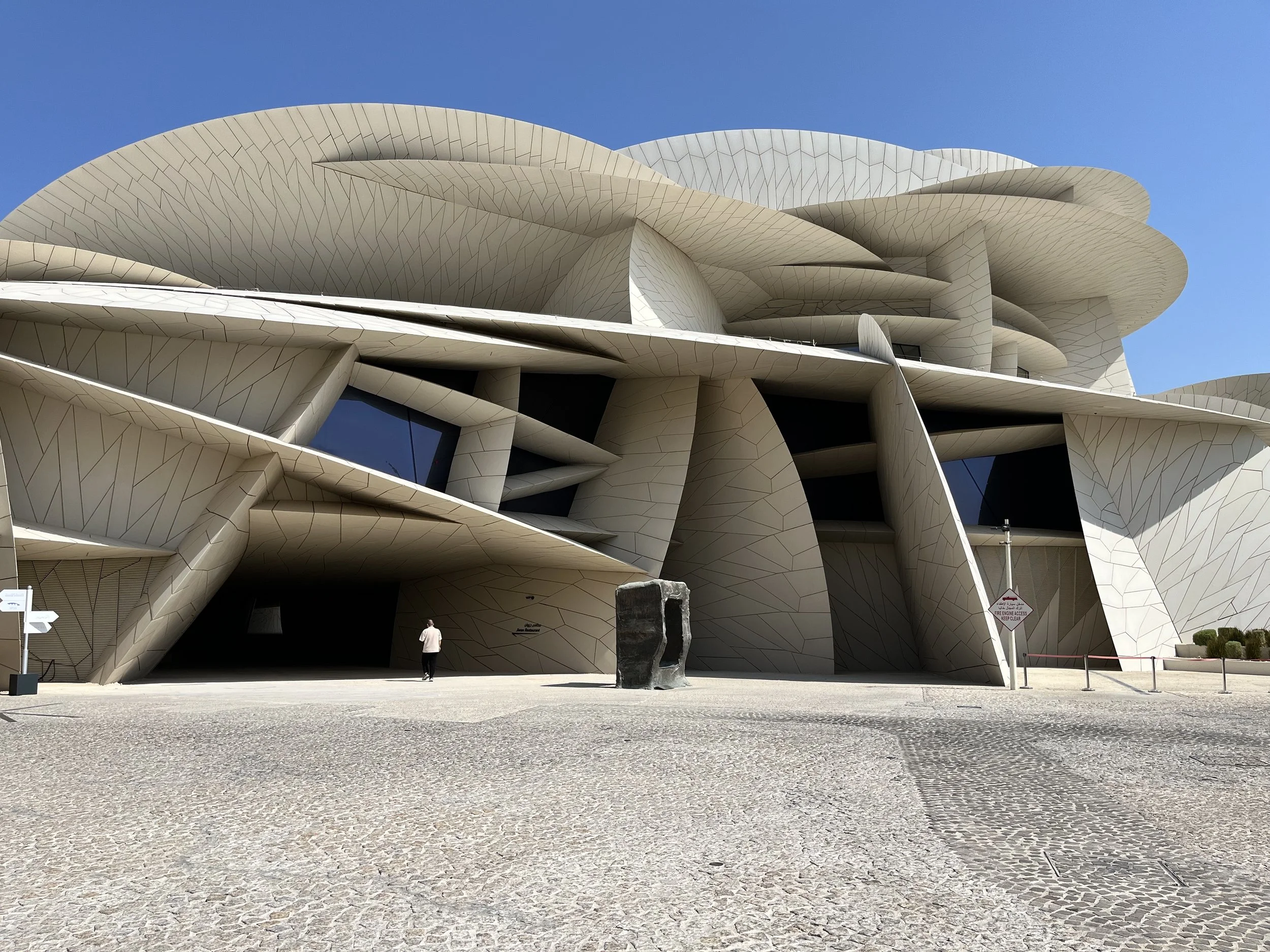
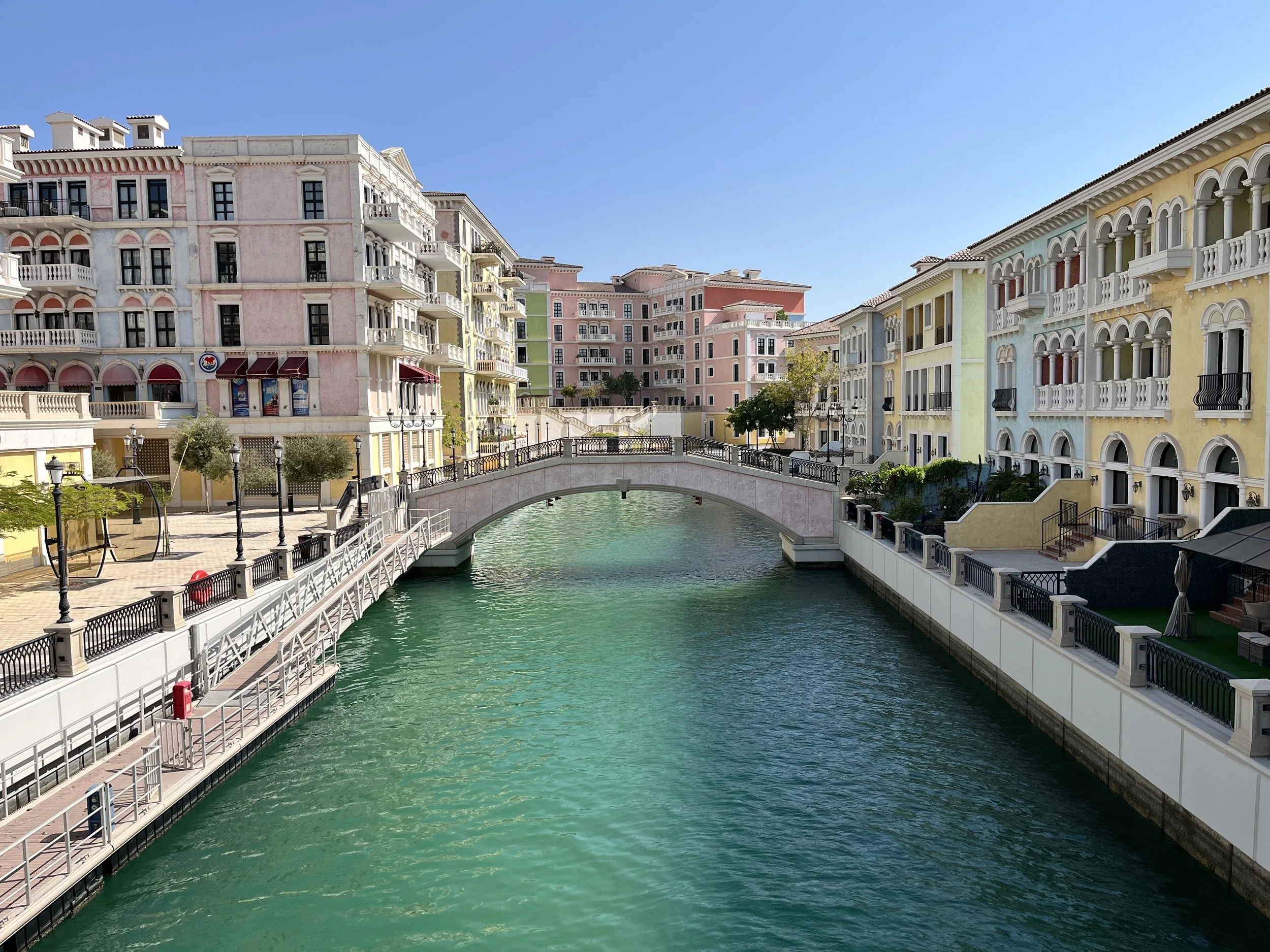
Returning to the Land Cruiser we made a brief stop at the National Museum of Qatar. With an exterior of cantilevered disks that resemble a mineral formation known as “desert rose,” the museum is a series of interconnected galleries. It is located on the site of Sheikh Abdullah bin Jassim al Thani’s first palace. Sheikh al Thani was emir between 1913 and 1949 and presided over the country at the time oil was discovered. Driving north through the city, we stopped at the Pearl Qatar (aka the Arabian Riviera), a group of artificial islands in the city’s West Bay District. We passed car showrooms featuring Bentleys, Ferraris, and Maseratis. In the center of a private yacht marina is St. Regis Marsa Arabia Island. Elsewhere we saw Mediterranean-style apartments, boutiques, and shopping centers. One neighborhood is made up of colorful Venice-inspired villas, bridges, and walkways surrounding a series of canals.