
Iraq. Kurdish Erbil After Saddam
Erbil (aka Irbil or Hawler) is the capital of Iraq’s Kurdish Region and its most populous city (1.5 million). First settled in the 5th century BC, Erbil benefitted from its location along a major trade route between Mosul in the north and Baghdad to the south. The city has been controlled by successive empires including the Sumerians, Assyrians, Babylonians, Macedonians, Greeks, and Ottomans. In 331 BC, Alexander the Great defeated Persian King Darius III at a location 80 kilometers northwest of the city during the Battle of Gaugamela. Once a center of Christianity, Erbil was conquered by Muslims in the 7th century and by invading Mongols in the 13th century. Beginning in the 18th century, the city and surrounding lands were controlled by Hadhabani Kurds.

The city’s center and highest point is Erbil Citadel, a large “tell” or mound that has been continuously occupied for more than 8,000 years. A high wall around the citadel was added by Ottoman Turks during the mid-1800s. More recently, Erbil suffered under Iraqi dictator Saddam Hussein. Following the 2003 U.S. invasion, the Kurdistan Regional Government assumed control over the city and much of northern Iraq. Today, Erbil has a Kurdish majority with minority populations of Turkmen, Arabs, and Assyrians. Since the fall of Saddam’s regime, the city has experienced significant economic growth.

At the time I visited (2005), regular domestic air service was in the process of being reestablished, so my travel companion and I arranged for seats on a humanitarian airline called Air Serv. There was still a threat from ground launched missiles, so our aircraft climbed in a corkscrew pattern to gain altitude above Baghdad International Airport before turning north. After landing we collected our bags and bid farewell to two stocky-looking men who had traveled on our flight. On leaving the terminal they walked to a vehicle in the airport parking lot and began putting on body armor and checking automatic weapons that had been left for them. We reasoned that they were employed by Blackwater or a similar contractor that was providing security.

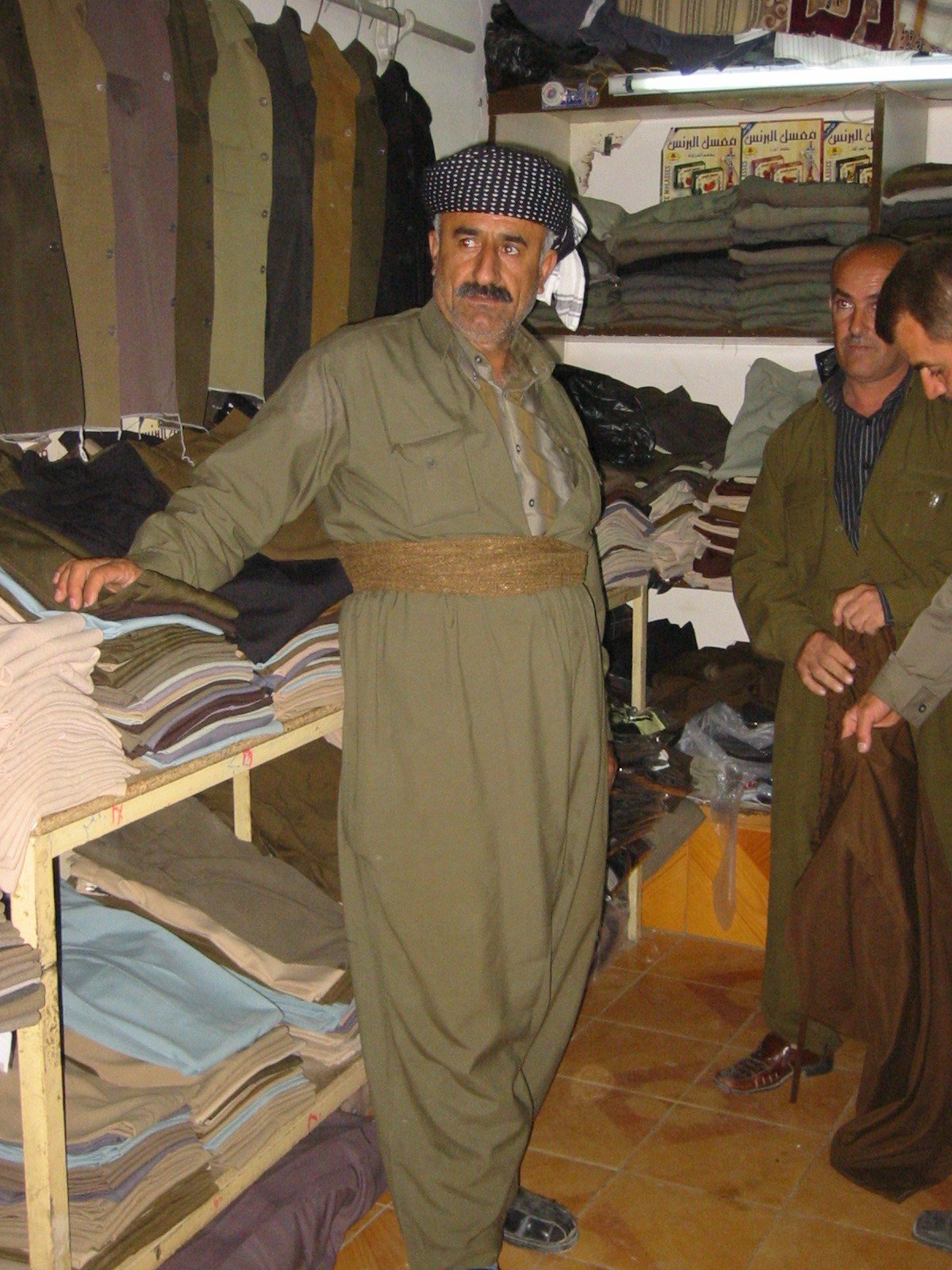
Our drive from the airport revealed the city’s recent progress with new highways, shopping centers, and high-rise buildings. Erbil’s streets are arranged as a series of concentric rings that encircle the citadel (castle). Near our hotel we visited the city’s historic bazaar with its opportunities to haggle over jewelry, rugs, Kurdish clothing, and other items.
On our way to Erbil Citadel, we stopped at the 36-meter tall Mudhafaria Minaret, constructed from brick during the 12th century. The citadel’s original buildings have long since been adapted or replaced to serve as private homes. Inside, we wandered through the maze of narrow streets, alleys, and cul-de-sacs. While fully occupied during our visit, government officials relocated residents two years later to facilitate repair and renovation. Only one family was allowed to remain so the citadel could retain its claim of unbroken occupation.

Our self-guided tour included stops at restaurants where we sampled traditional Kurdish foods such as dolma (vegetables or meat and rice stuffed in grape leaves), kofta (a spicy meatloaf), biryani (basmati rice with vegetables and chicken), and naan (flat bread). We also toured classrooms, teaching labs, and research facilities at Salahuddin University, named for Salahuddin Ayyubi, a brilliant military leader who defeated crusader armies during the 12th century. The instructor of one lab where we were scheduled to visit had attended a course I taught in Amman, Jordan the previous year. I had been told I would be meeting a few of his students and some university administrators. However, on my arrival, a Kurdish television crew was arranging camera equipment for filming the “lecture” I would be giving. I’m not sure if anything I said on camera made sense, but the producer seemed satisfied.
