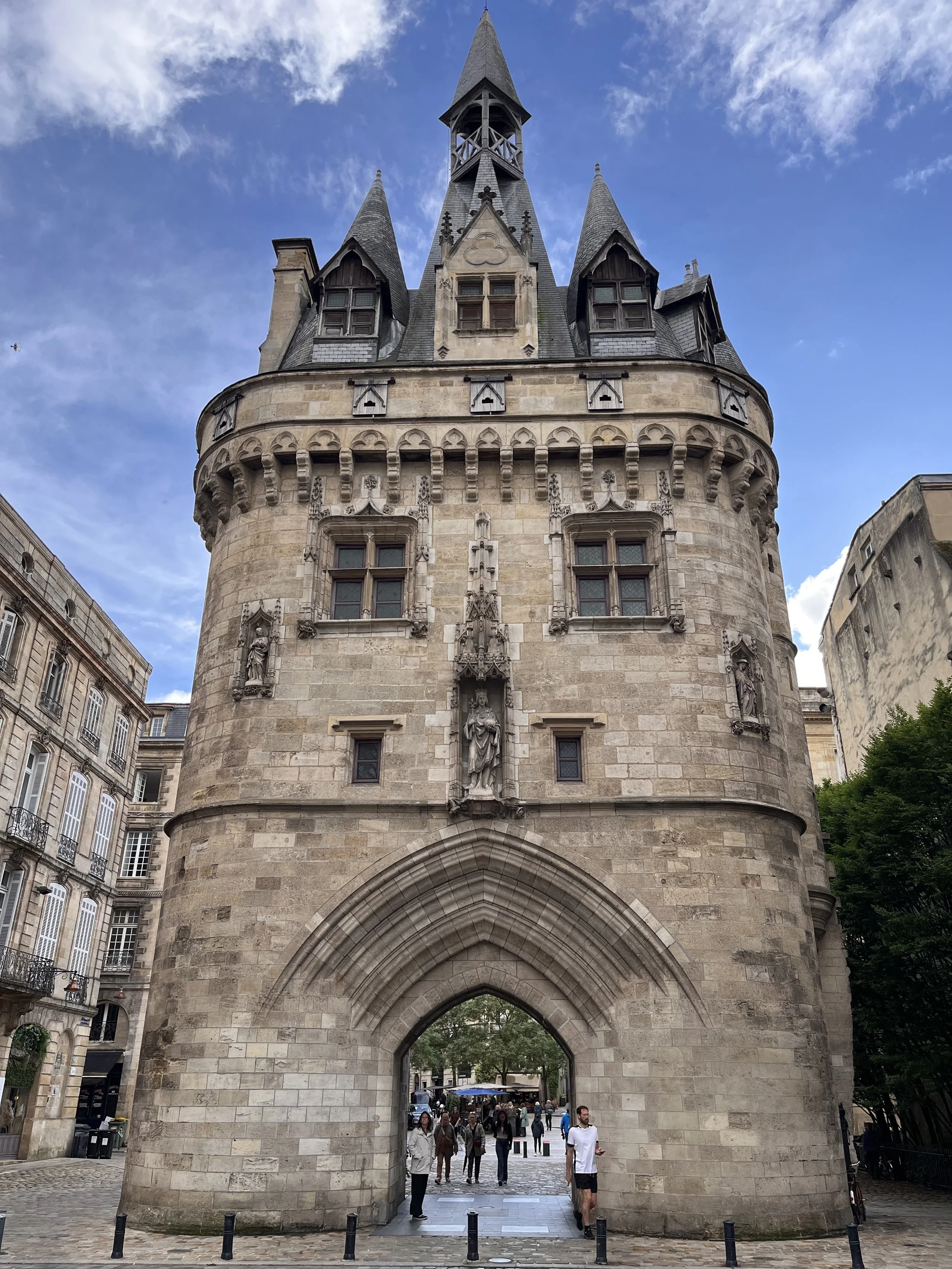
France. Wine Capital of the World
I love full-body red wines, so my wife and I added the city of Bordeaux (population 267,000) to a longer trip across western France in 2026. The Bordeaux region is unquestionably among the world’s largest and most important wine producing areas with an astounding 10,000 chateaux and more than 13,000 grape growers. Red and white wines produced there range from common table wines to top shelf labels. The city is also a center for gastronomy with food specialties that include a vanilla and run flavored pastry called a canelé. Among its distinctions, Bordeaux has Europe’s longest pedestrian shopping street. French romantic writer Victor Hugo described the city’s charm: “Take Versailles, add Antwerp, and you have Bordeaux.” Previously known as Bituriges Vivisci, the present-day site of Bordeaux was first occupied by Celts in 300 BC. Falling under Roman control in 60 BC, the settlement became a center for lead and tin mining. Sacked by Vandals in 276 and 409, the city later fell to the Visigoths. By the 6th century, Bordeaux was part of the Merovingian Kingdom of Franks. Finally, in 1653 it was annexed by the Kingdom of France. Bordeaux served as capital of France during the Franco-Prussian War (1870-71), WWI, and WWII. For much of its history, Bordeaux’s Port of the Moon was France’s most important harbor and the second busiest in the world after London. The River Garonne divides the city into left and right banks. A mild climate and limestone soils of clay, gravel, and sandy stone are believed to be partly responsible for the quality of the region’s wines. Typically, the most expensive wines are grown closest to the River Garonne. Many of the region’s premium red blends are a mix of 70% cabernet, 15% cabernet franc, and 15% merlot while whites are 80% sémillon and 20% sauvignon Blanc. More than 700 million bottles of wine are produced in the Bordeaux region every year.
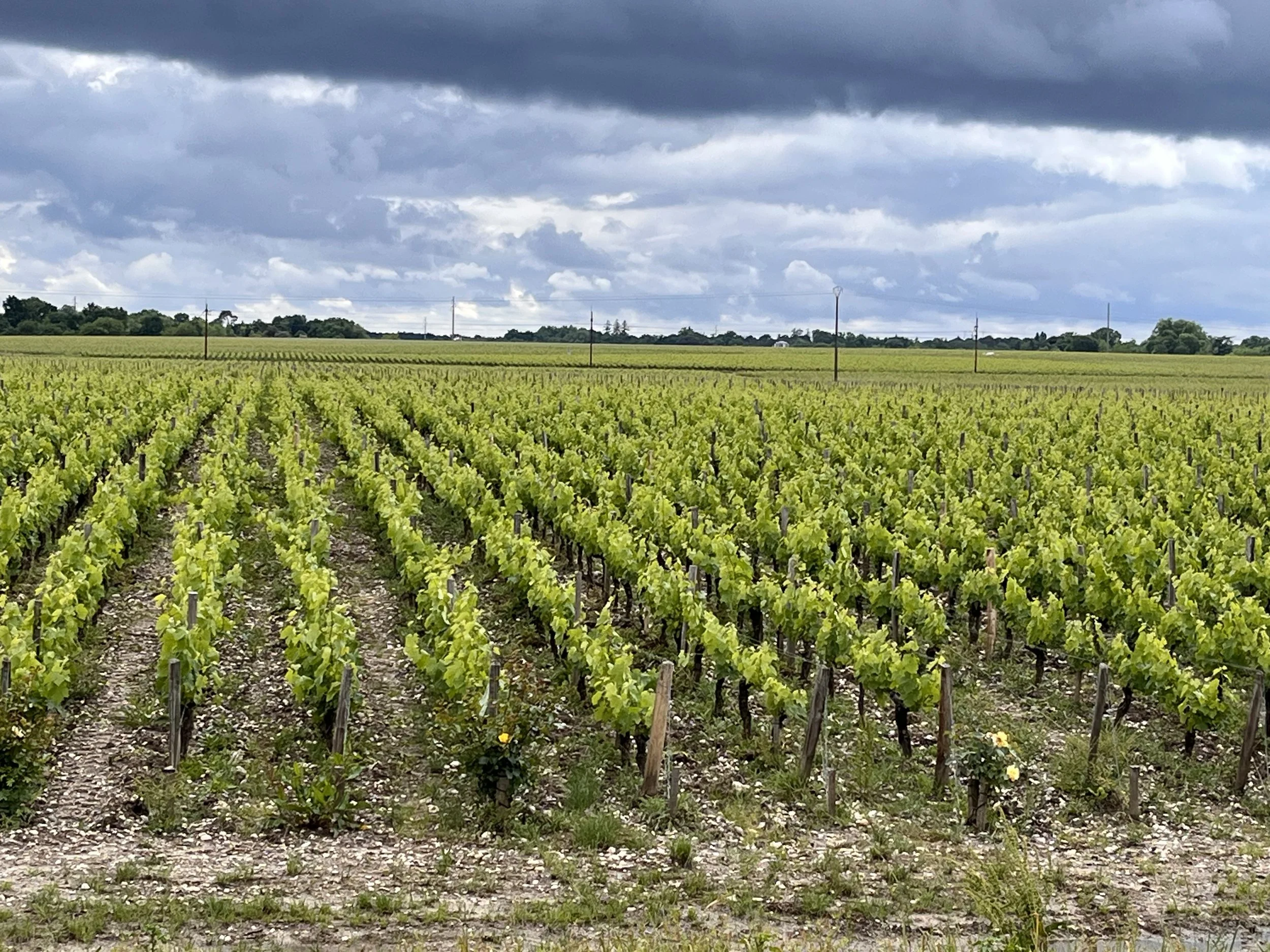
Used between 1940 and 1943, BETASOM is a WWII-era submarine base located in Bordeaux that was built for the Regia Marina (Royal Italian Navy). More than 1,600 sailors and support personnel were based there along with 30 submarines. As a counter to aerial bombing, the facility was made stronger in 1941 with the addition of reinforced concrete. Measuring 245 meters wide, 162 meters deep, and 19 meters high, the main structure was protected by a concrete roof 5.6 meters thick. Strengthening of the building’s roof was effective since bombs dropped by British aircraft in 1941 did no significant damage. After the war city engineers determined that it would be challenging to demolish the structure. In 2010 the building was converted into a cultural center for the visual and performing arts.
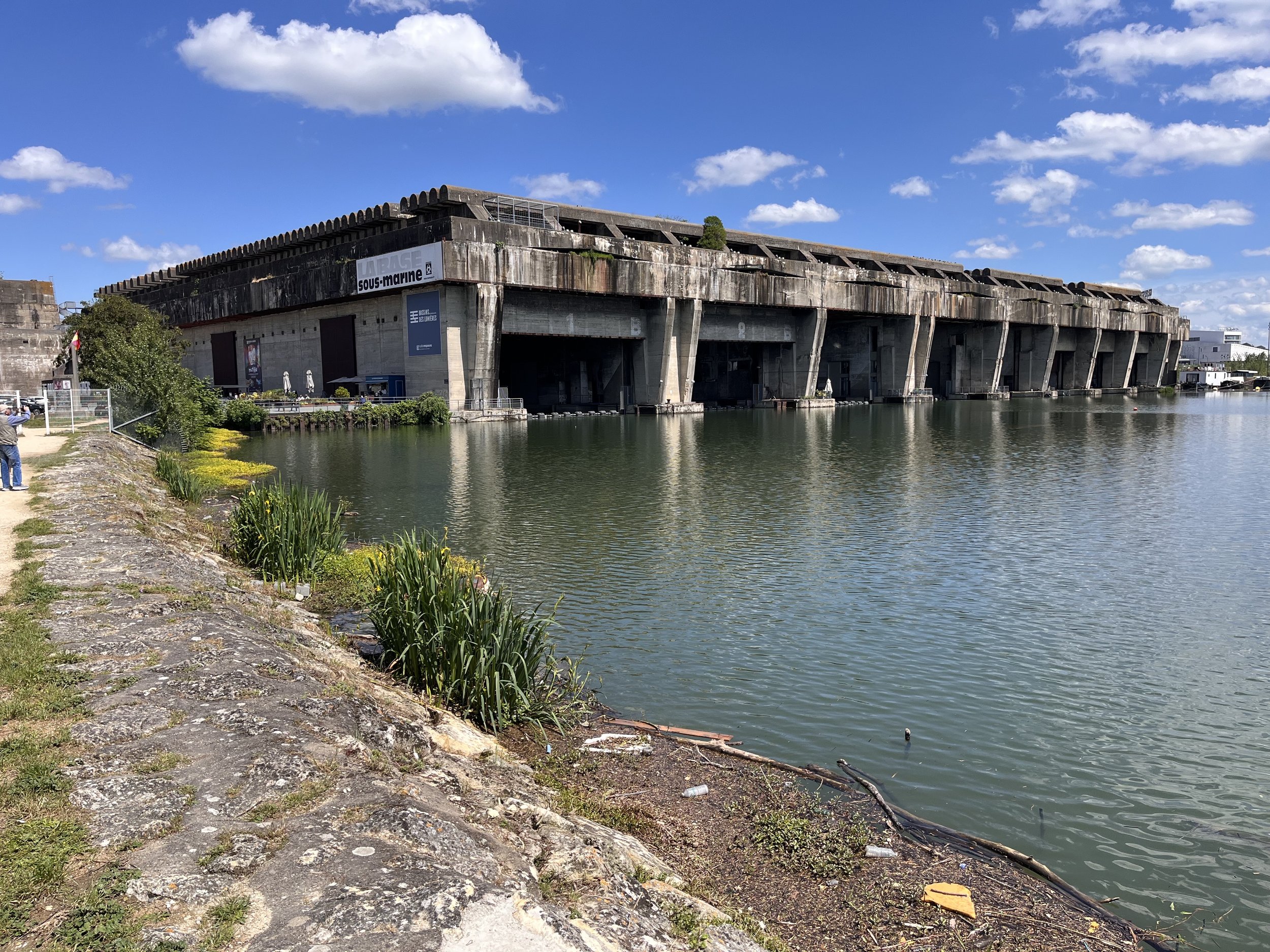
Located in Stock Exchange Square, the 3,000 square meter Palace de la Bourse was completed in 1775. With architectural elements later emulated by buildings in Paris, the palace was designed during the reign of French Emperor Louis XV and forms a horseshoe with three wings: Farms Hall (south wing), the Stock Exchange (north wing), and the Central Pavillion (west wing). The building’s exterior is decorated with more than a hundred mascarons (sculpted faces) representing Greek deities such as Minerva, Mercury, and Neptune. On the river-facing side of the building is the Fountain of Three Graces.

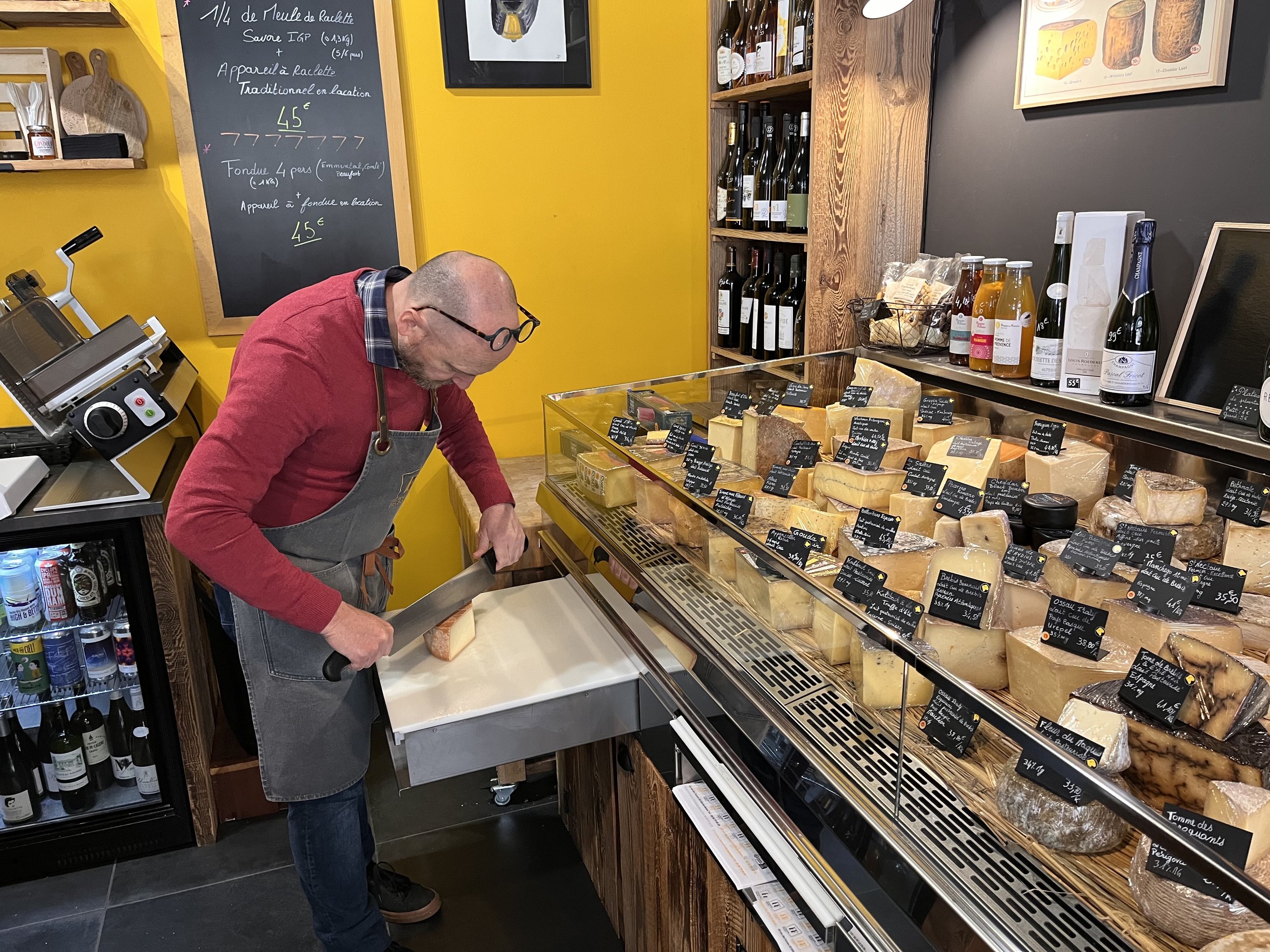
On our third day in Bordeaux, we signed up for a wine and food pairing. Our group’s first stop was a store called Fromagerie Frécant where we purchased a selection of cheeses including chévre (goat cheese), brie, and camembert. Because of its value, cheese was sometimes used in commercial transactions such as rent and tax payments. Our guide explained that pairing cheese and wine involves matching the intensity of cheese with the strength of a wine. For example, tannins in wine interact with fat in cheese. Our first pairing, chèvre and a sauvignon Blanc wine, involved a soft cheese and a slightly acidic wine. We also sampled gruyere cheese and pinot noir and aged cheddar matched with a dry cabernet sauvignon.
Exploring the oldest part of the city, we passed Bordeaux Cathedral, a large catholic church dedicated to St. Andrew. The cathedral now serves as headquarters for the Archbishop of Bordeaux. Surrounded by a Roman fortified town, the first church on the site was constructed in 814. In July 1137, 13-year-old Eleanor Aquitaine married future French King Louis VII in the cathedral and a week later Eleanor became Queen of France. The marriage was annulled in 1152 and subsequently Eleanor married the future King of England (Henry II), later giving birth to five sons including the future Richard the Lionheart. Bordeaux Cathedral was rebuilt in the Romanesque style in 1170 and remodeled again as a Gothic structure in the 14th century. Arranged in the shape of a cross, the building has two 81-meter-high towers. Because it was constructed on marshy ground, the building couldn’t support the weight of a belltower. When added later, the belltower was constructed as a detached structure to protect the larger building from vibrations associated with ringing the bells. The cathedral was used to store fodder during the French Revolution and suffered from a devastating earthquake in the 19th century.

With a castle-like appearance reminiscent of a Disney theme park, Porte Cailhau is a gate and triumphant arch built within Bordeaux’s city wall. The 35-meter tall, five-point tower was completed in 1496 to commemorate French King Charles VIII’s 1495 victory during the Battle of Fornovo. Defensive elements of the walls and gate include a portcullis (heavy vertical grill/gate), machicolation crowning, and a crenellated wall top. The gate also has decorative elements such as a steep conical roofline and ornate windows. The gate served as the main entrance to the city for many years and was declared a historical monument in 1883. On the gate’s front façade is a statue of King Charles III.