
Estonia. Ghosts of Medieval Tallinn
With cobblestone streets, Gothic towers, and a largely intact defensive wall, Estonia’s capital city of Tallinn (population 452,000) has one of the best-preserved medieval quarters in Europe. Located along the southeastern coast of the Gulf of Finland, it is the country’s principal administrative and economic center and just 80 kilometers south of Helsinki, Finland. Arriving from St. Petersburg, I disembarked at the city’s train station.
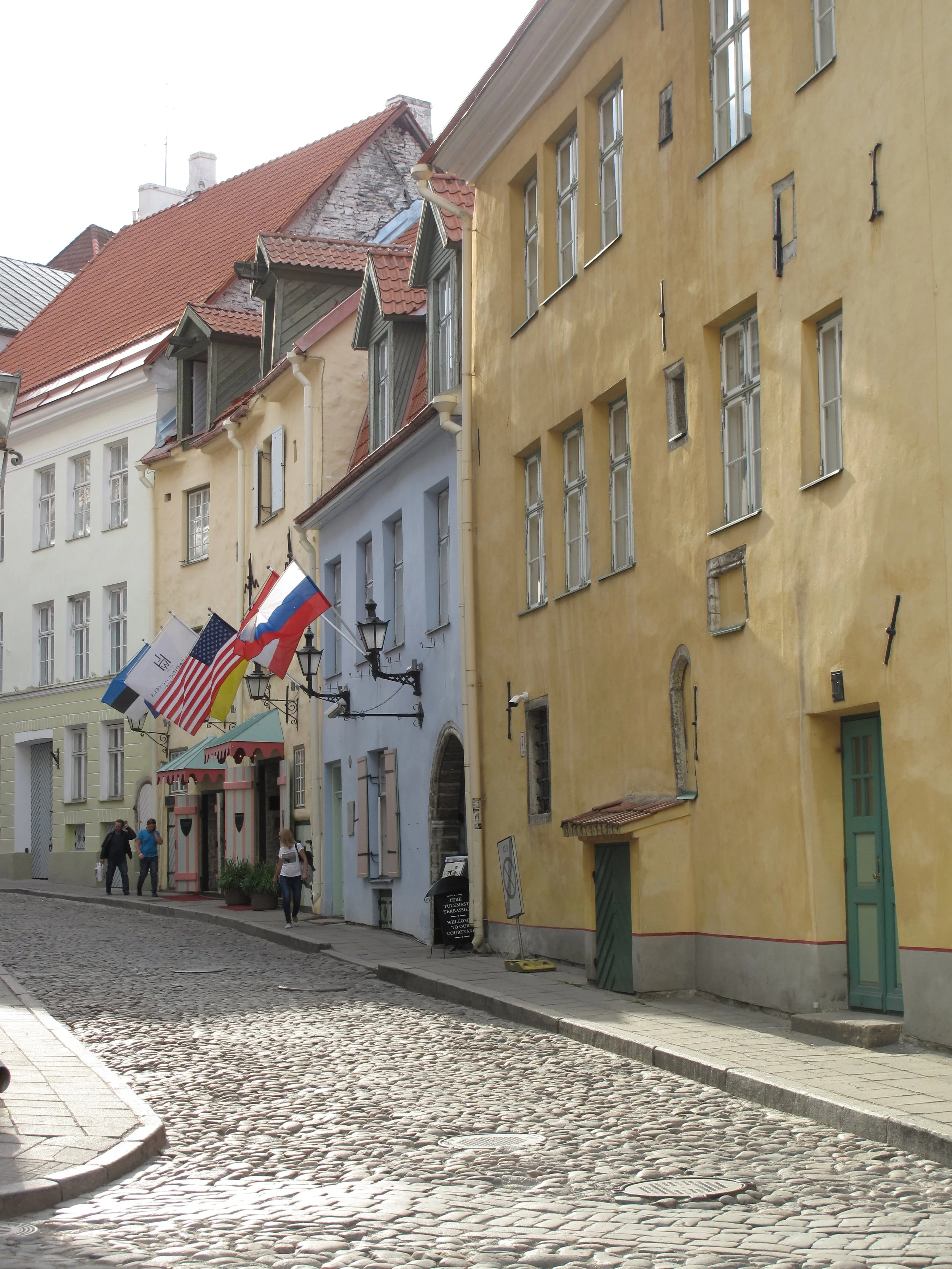
The first people to inhabit the site of modern Tallinn arrived more than 5,000 years ago. Among the earliest permanent structures was a fortress constructed on Toopea Hill in the 11th century. Arab cartographer Muhammad al-Idrisi’s 12th century world map identified a town on the site named Quwri. Later, its inhabitants were among the last pagan peoples of Europe to be Christianized. King Valdemar II of Denmark claimed land south of the Gulf of Finland in 1219 and in 1346 the Danes sold the city to the Teutonic Order. Tallinn’s port, known as Revel, served as an important trading hub from the 14th through 16th centuries. Beginning in the early 18th century Estonia was controlled by Russia and after German occupation during WWII, the country was annexed by the Soviet Union. Estonia’s stagnation under communism ended when it became independent in 1991. Today, Tallinn’s population is about 50% ethnic Estonian. Tallinn has two medieval-era towns. All-linn (lower town), is a former medieval trading center frequently visited by Danish, German, and Dutch merchants. Built on a hill 20-30 meters above All-linn, Toopea (upper town) was the focus of political power.

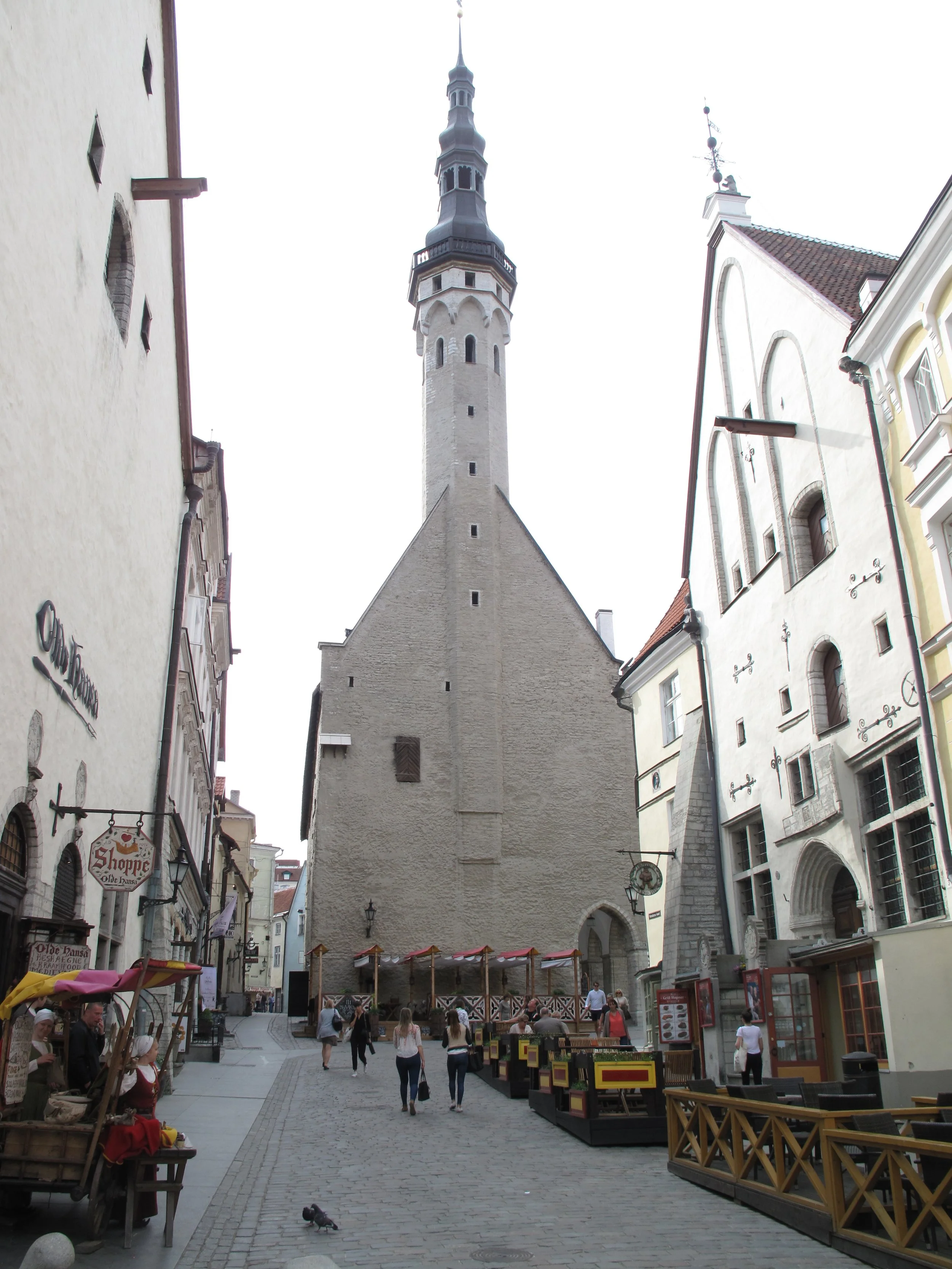
With inviting shops and restaurants, Town Hall Square is the focal point of All-linn. Located on the square, Tallinn Town Hall is a two-story Gothic structure made from limestone and covered with clay roof tiles. The building served as a courthouse, warehouse, and theater. An octahedral tower rising from the building’s eastern gable is topped with a baroque spire, constructed in 1627. Surrounding All-linn is a five-meter-high medieval wall, built during the 12th through 14th centuries. Since it was commissioned by Danish Queen Margaret Sambiria, residents of Tallinn still refer to it as “Margaret’s Wall.” Fitted with armor and weapons, citizens took turns standing watch in one of the wall’s numerous watchtowers.
Today, two kilometers of the original wall and twenty-six of its watchtowers are intact. Among them is Virginia’s Tower, used in later years as a prison for prostitutes. Another, Short Gate Tower, was locked each night to prevent residents of All-linn from entering Toopea.

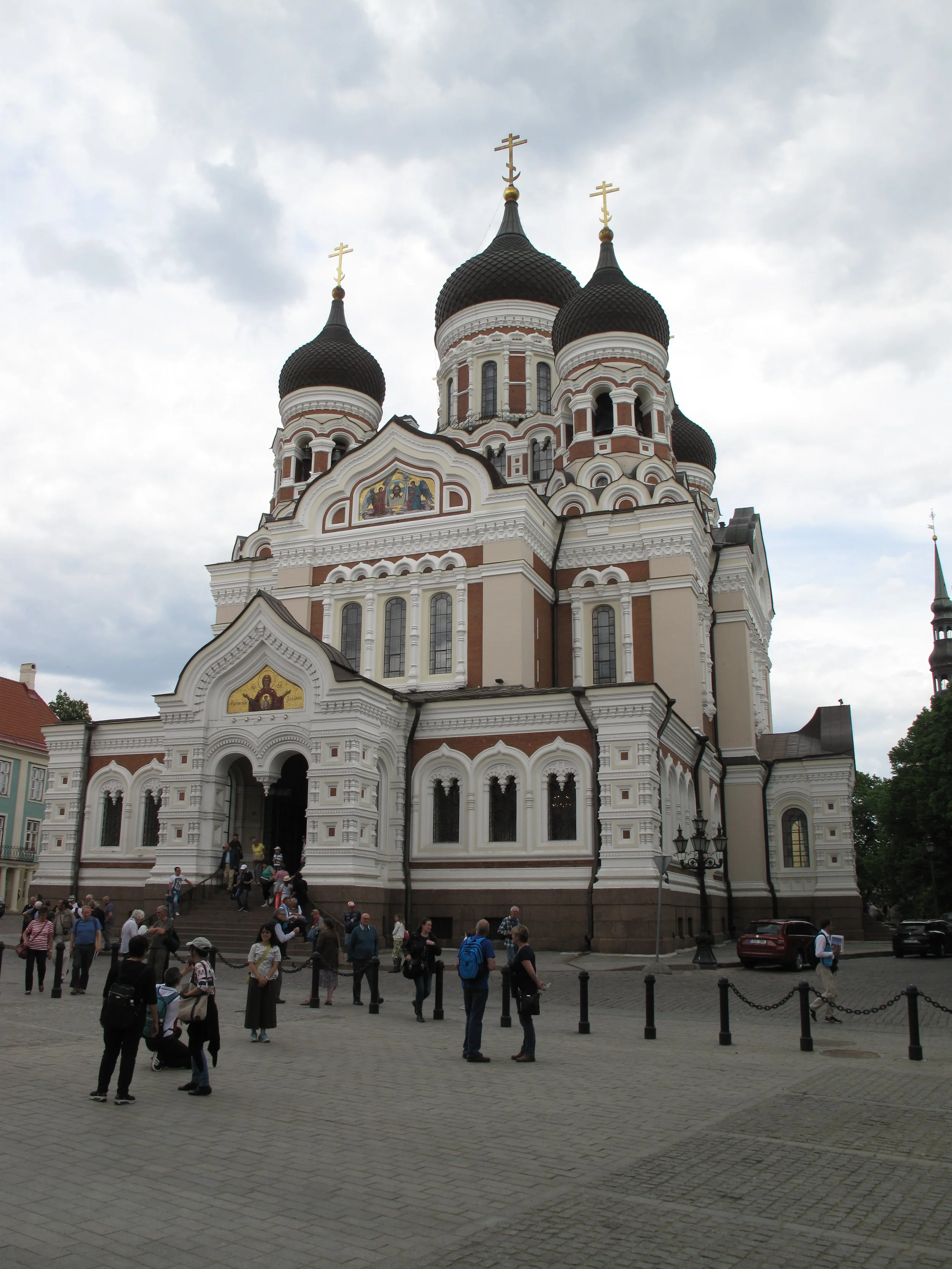
Toopea’s most prominent buildings include Pink Palace which houses the Estonian Parliament. Another is Alexander Nevsky Cathedral, an Eastern Orthodox church that was completed in 1900, during the time Estonia was controlled by Russia. Designed in the Russian Revivalist style by architect Mikhail Preobrazhensky, the cathedral was dedicated to Orthodox Saint Alexander Nevsky. Finished in granite, it has five onion-topped domes, the central one capped by a cross. Adjacent to Toopea is the Danish Kings Garden. A legend says that the garden is where a flag descended from the heavens during the 1219 Danish invasion. Surrounded by flowerbeds, it is illuminated with lamps and features a cobblestone pathway.
Among the garden’s most conspicuous features are three 2.5-meter-tall sculptures: Ambrosius (waiting monk), Bartholomeu (praying monk), and Claudius (observing monk). The sculptures were created by Simson von Seakyll and Paul Mänd and are meant to represent the restless energy of medieval conflicts. Ghost stories about the garden date back to the 18th century. In one, witnesses report seeing a hooded figure carrying a glowing cross who hits people and throws objects. Another ghostly apparition is a knight who rides a white horse and offers to sell skins taken from enemies in battle.
