
Spain. A Summer on Spain’s Cantabrian Coast
I spent the summer before my freshman year of college in two places located along Spain’s Cantabrian coast (aka “Green Spain”). For my first month I lived in the industrial city of Gijón (population 250,000), positioned along the Bay of Biscay and within the Province of Asturias. Gijón is 282 kilometers northwest of Spain’s capital city of Madrid. The remainder of my time in northern Spain was spent in the Basque town of Markina-Xemein (population 4,500) which is east of Bilbao and about an hour’s drive from the French border.

After completing an orientation in Madrid, I boarded a northbound bus. My host family was a group of twenty-something siblings (two men and two women) who shared a four-bedroom apartment. Gijón’s earliest human occupation dates to Neolithic people (5000 BC). The first permanent settlement, called Gigia, was established by the Romans. Subsequently, the city site was occupied by barbarian groups and later, Visigoths. The area fell under Muslim control early in the 8th century. Briefly part of Moorish Spain, the city was retaken by Christian forces during the 722 Battle of Covadonga. During the Spanish Civil War (1936-1939) Gijón was held by Republican forces until its capture by Nationalists commanded by General Francisco Franco.

Living a short distance away, I became a frequent visitor to Gijón’s beaches. I also enjoyed walks along a causeway built to protect Puerto del Musel, the city’s harbor. One day I noticed that a portion of the breakwater was created from former ship hulls arranged end-to-end. Initially I thought they were WWII liberty ships but later learned that the vessels were WWI-era “Crete barges” purchased by the city in 1927. With concrete hulls made in the United Kingdom, each of the eight ships was 55 meters long and 9.5 meters wide. In another part of the city I visited the historic train station, built in 1874. The Asturias Mining Basin was once among the country’s most heavily industrialized areas. The station served trains that transported coal produced at the La Camocha and Nalón mines. Whereas more than 100,000 people were employed in coal mining during the 1950s, the industry employs fewer than a thousand workers today.
Each day I walked past El Bibio Plaza de Tores (Plaza of Bulls). Constructed in Gijón’s Bibio neighborhood in 1888, the Neo-Mudéjar style stadium holds nearly 14,000 spectators. When Francoist forces won their victory during WWII the facility was used as a temporary concentration camp for Republican prisoners. For many years the stadium’s biggest event has been the annual Feria de la Begoña, a bullfighting competition that attracts well-known matadors. As interest in bullfighting has declined, the venue has been used for concerts, exhibitions, and private parties.

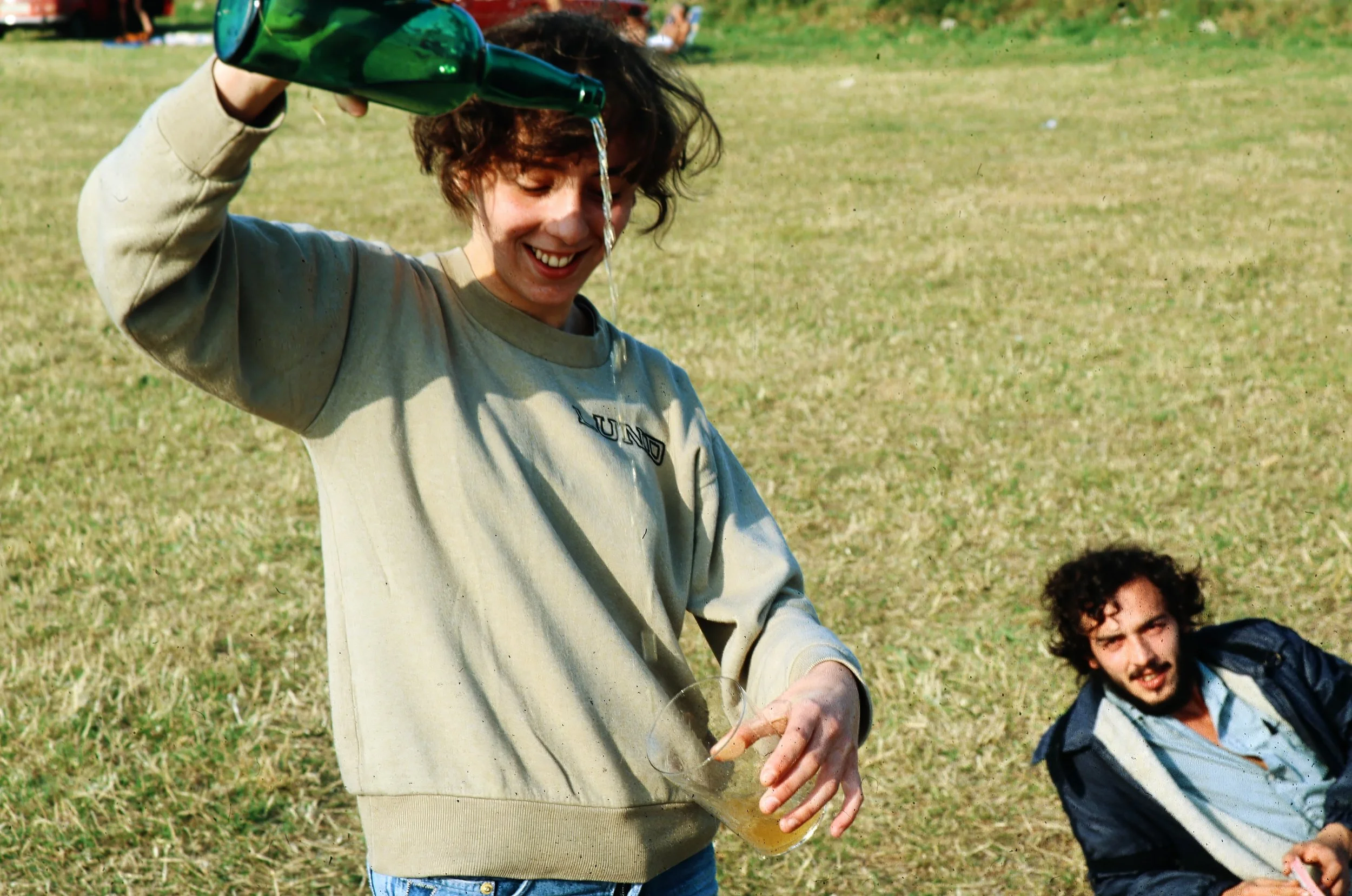
One weekend my hosts took me on a camping trip to Picos de Europe (Peaks of Europe), a 20-kilometer-long subrange of the east-west running Cantabrian Mountains. The chain of rugged limestone peaks was formed by glacial action. It was there that my host family introduced me to the region’s traditional apple cider known as sidra. Produced in the area since 60 BC, the drink is made by fermenting cider in chestnut barrels called llagares until its alcohol content is between 5 and 6%. Cloudy, slightly acidic, and tart, the liquid is consumed with small sips known as culetes. Sidra is served by holding the bottle high overhead and pouring the liquid against the side of the glass to make it bubbly and frothy. By tradition the pourer passes the glass to the first person in the group who returns it for another pour with the bottle holder drinking last.
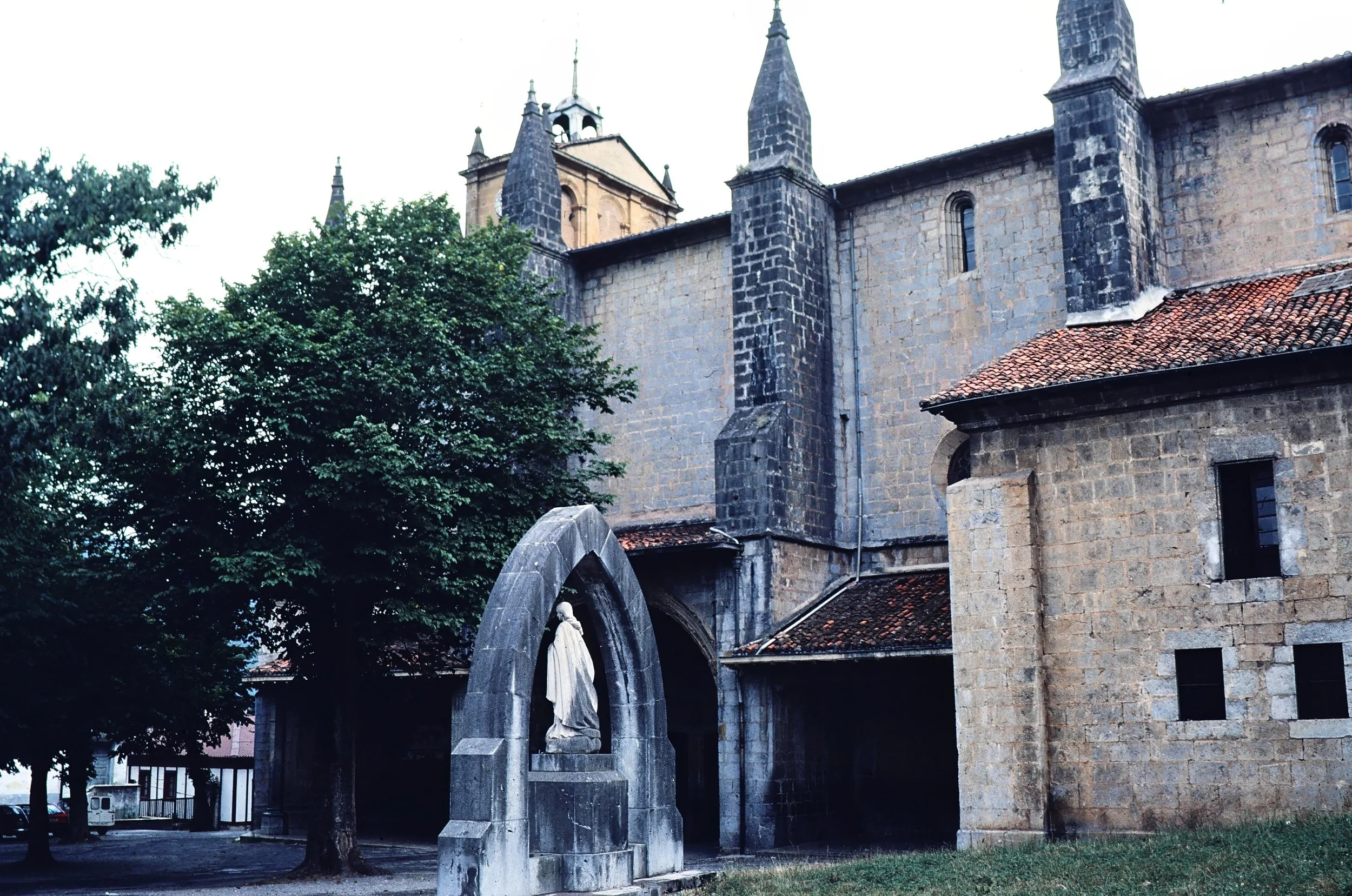
The Basque village of Markina-Xemein is located in a valley between the cities of Bilbao and San Sebastian. When it was founded in the 14th century, Markina was without a parish church, so the village was combined with the adjacent town of Xemein in 1952. The Church of Xemein began as a monastery in the 10th century. With Renaissance and Gothic elements, the church has a rectangular floor with six limestone columns and three naves. Exterior limestone walls are supported by buttresses. Less than three weeks after I returned to the U.S., the Basque separatist organization ETA launched an attack on off-duty civil guards (national police officers) who were having lunch in a Markina-Xemein bar. Four civil guards were killed by gunfire.
