Belgium. Chocolate and Beer in Brussels’ Grand Square
Brussels has been described as the “Crossroads of Europe.” Blending Baroque, Gothic, and Art Nuevo architectural styles and featuring a world-class culinary scene, the city is well suited to exploration on foot. Located on the River Senne, it is Belgium’s capital and largest city (population 1.2 million). Geographically, the city is located in Belgium’s central plateaus and north of the rugged Ardennes Mountains. Brussels is known for its bilingual population and status as the administrative center for the European Union and headquarters of the North Atlantic Treaty Organization (NATO). While I ordinarily make a beeline to major points of interest, for unknown reasons I became fixated on finding chocolate and beer.
Stone Age people lived on the present-day city site more than 3,000 years ago. Following their conquest of Gaul in 57 BC, the Romans occupied a larger region that contained modern-day Brussels. After the Roman withdrawal, the city became part of the Frankish Empire and then a center for the textile trade. The city’s protective walls were added in the 13th century. During the Nine Years War (1688-1697) French King Louis XIV laid siege to the city. Belgium’s first king, Leopold I (1790-1865), replaced the city’s walls with tree lined boulevards and commissioned many new buildings.
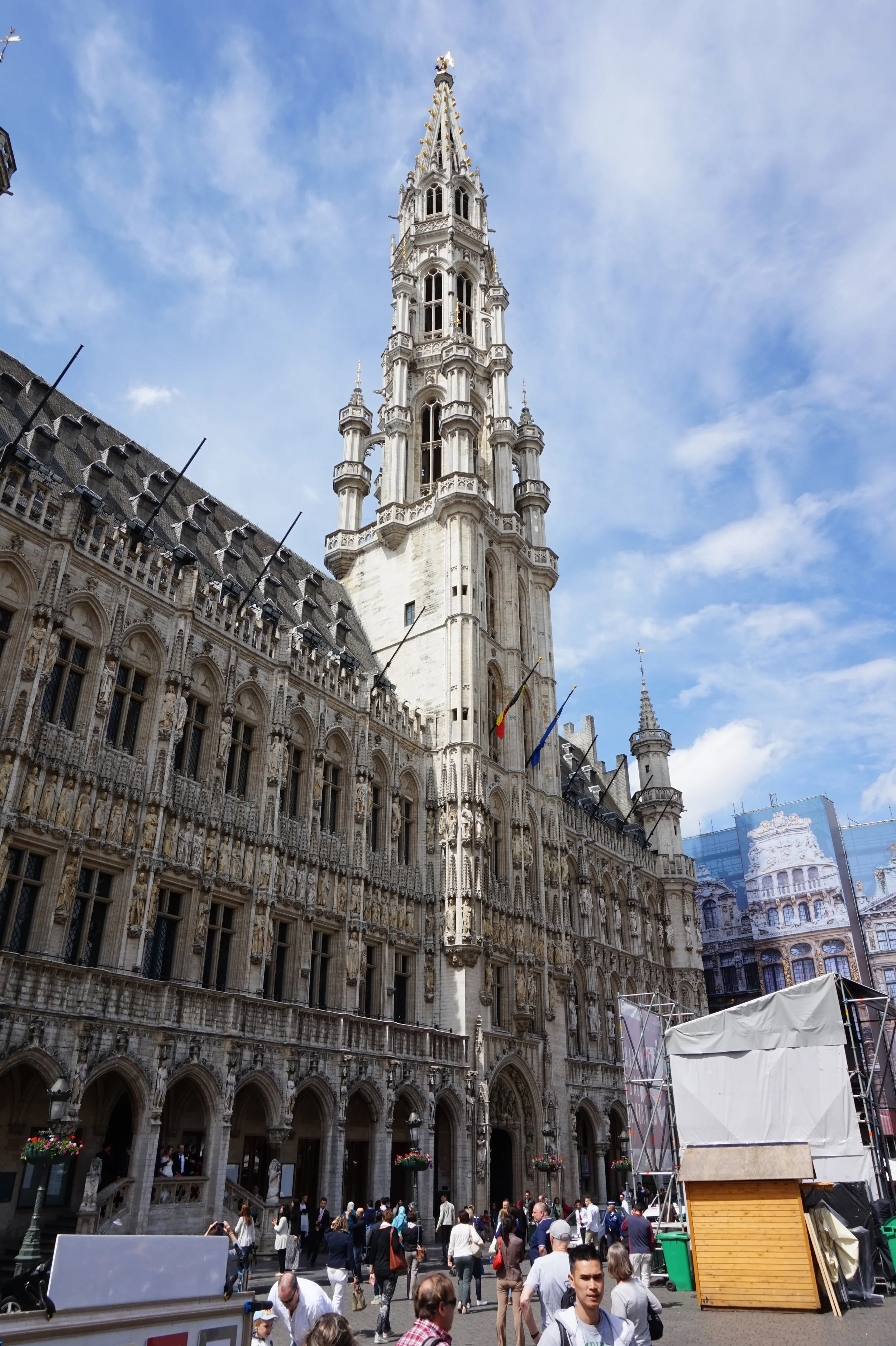
Today, the western part of Brussels (aka the “Lower Town”) is the commercial quarter while most upscale housing is found within the city’s south and southeastern sectors (the “Upper Town”). Traveling by bus, I was dropped off near Grand Palace Square (aka Grand Square) in the historic center of the city. Initially called Nedermerckt (Lower Market), Grand Square began as an open-air marketplace built on a former marsh. Today, the square is surrounded by ornate buildings including Guildhalls, a Baroque structure once used to administer the collection of taxes. Two other buildings on the square are Town Hall and Bread House (aka King’s House). Completed in 1455, Town Hall is Grand Square’s most visually imposing building. The last remaining medieval-era structure on the square, it features a 96-meter-tall tower that narrows to a pinnacle topped by a 2.7-meter statue of Saint Michael, patron saint of Brussels. The building’s exterior is decorated with statues of local nobility including dukes and duchesses of Brabant and knights of the Noble Houses of Brussels. The building was damaged in 1695 when a 70,000 strong French army bombarded Brussels with the goal of drawing forces of the League Augsburg away from an attack on the French city of Namur. During WWI the building was used as a makeshift hospital. Bread Hall (in Dutch, Broodhuis and in French Maison du Roi) is a neo-Gothic building constructed in the 13th century as a bread market. Today, it houses the city museum.
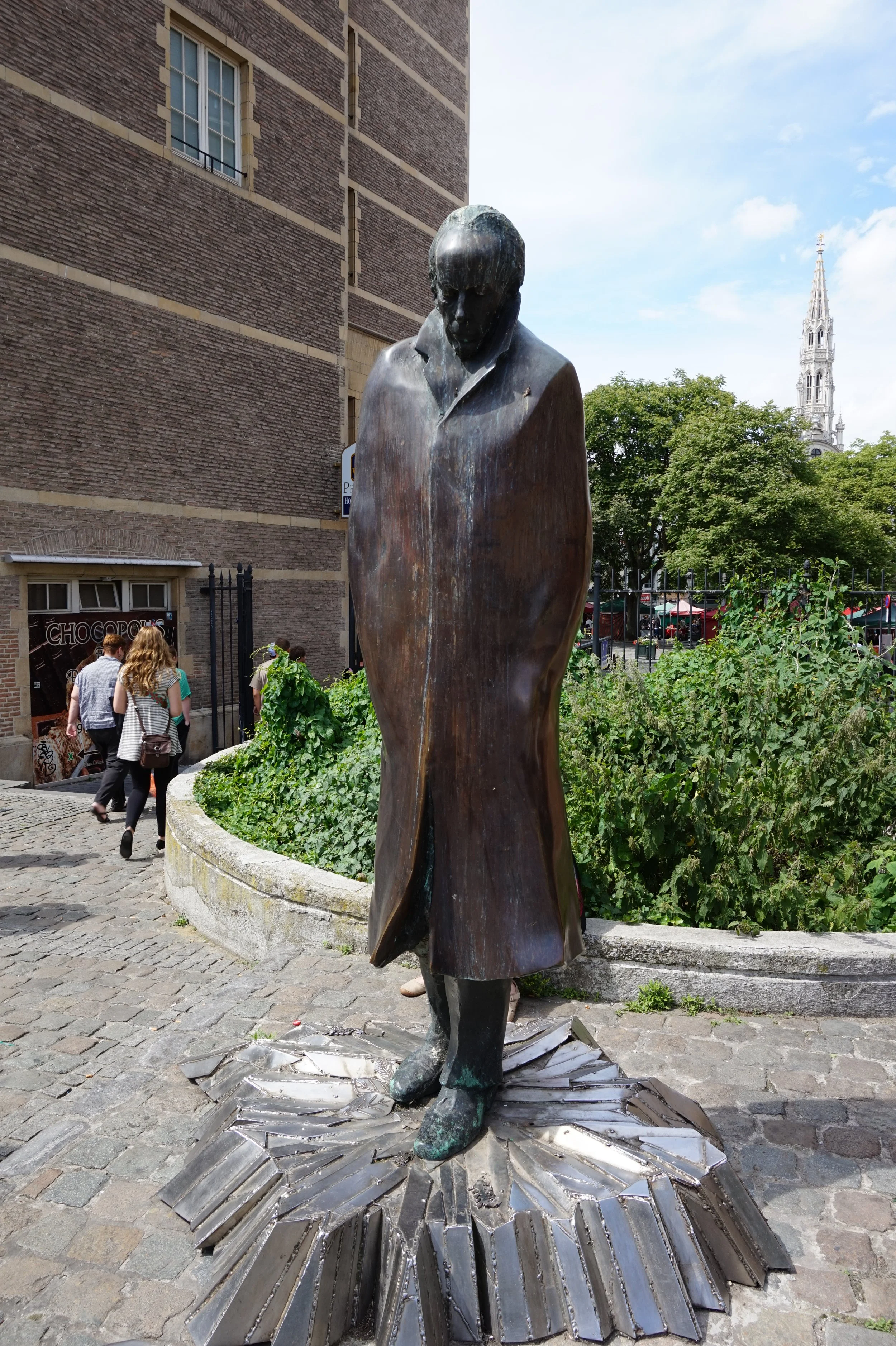
A short walk from Grand Palace Square is Place d’Espagne (Spanish Square) and a statue of Bela Bartok (1881-1945). Bartok was a Hungarian pianist and one of the most important composers of the 20th century whose works included string quartets, orchestral pieces, and piano solos. Created by Hungarian artist Imre Varna, the bronze statue was erected in 1995, the 50th anniversary of Bartok’s death. It depicts the composer wearing a coat and looking downward as he walked.
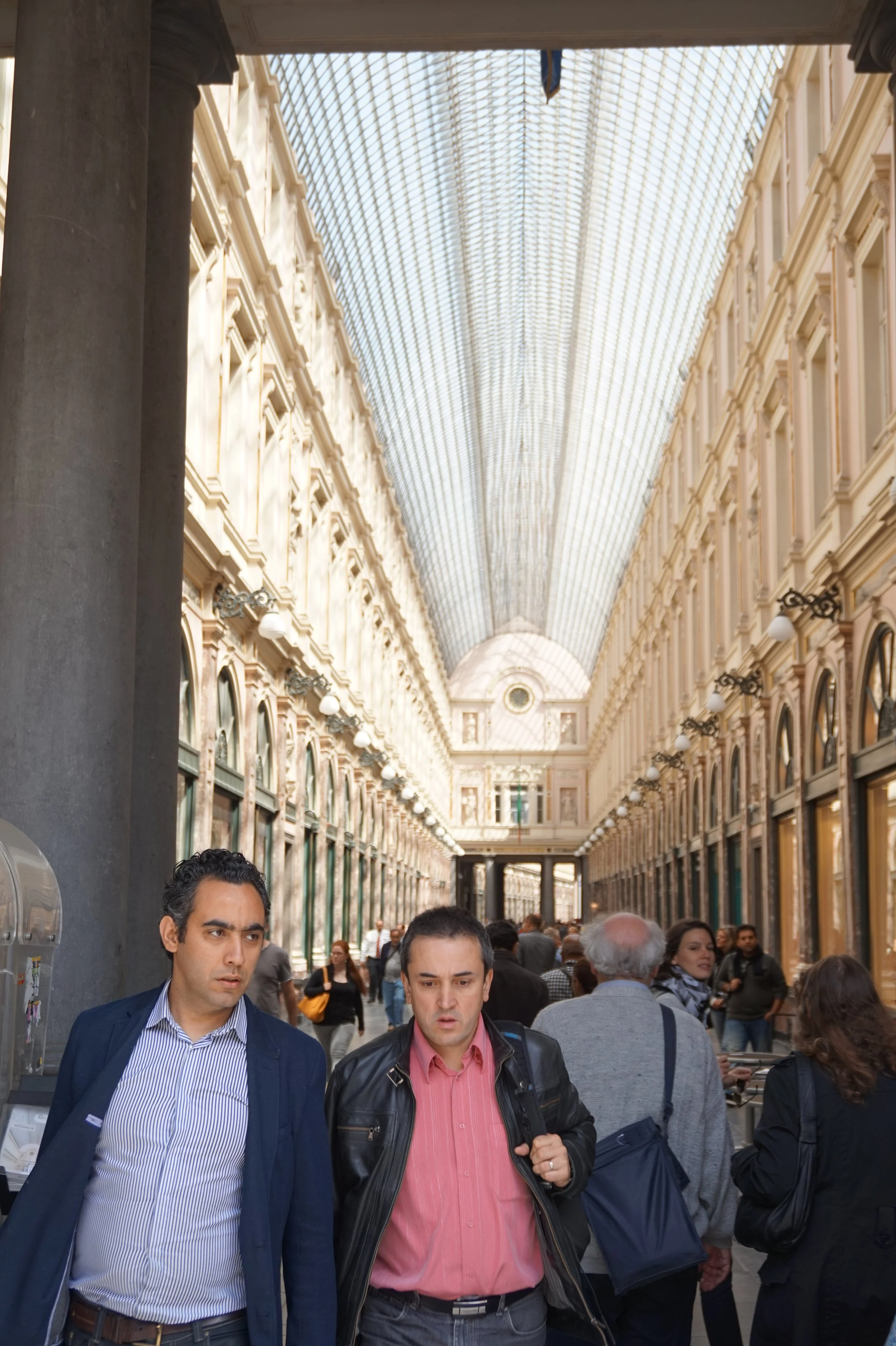
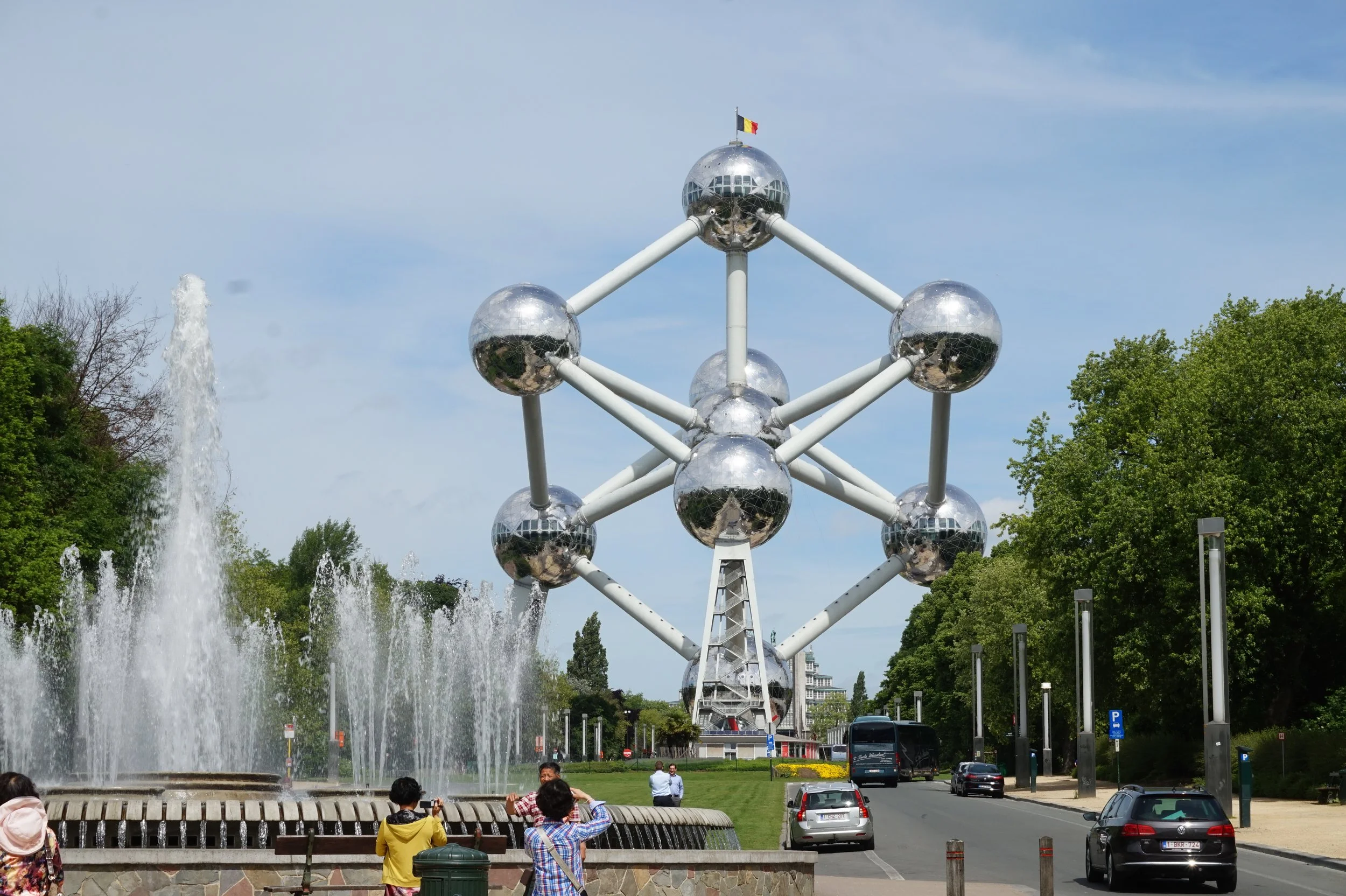
Another stop was Galeries Royales Saint-Hubert (Royal Saint-Hubert Galleries) a shopping center with three parts: the King’s Gallery, Queen’s Gallery, and Prince’s Gallery. Designed by architect Jean-Pierre Cluysenaar and featuring arched shopfronts, the building was completed in 1897. Since the building combines a shopping center with a public walkway, it is sometimes referred to as the “umbrella of Brussels.” With apartments occupying upper floors, the galleries feature clothing stores, boutiques selling food and jewelry, and several bars and restaurants. The complex also serves as a venue for festivals and parties. Forming a contrast to older buildings is the Atomium (with its name coming from atom and aluminum), a futuristic looking building constructed for the 1958 World’s Fair. Located on the Heysel/Heizel Plateau, the 102-meter-tall structure features 18-meter-wide stainless-steel spheres that are accessible using escalators or a lift. It is designed to represent an iron crystal.
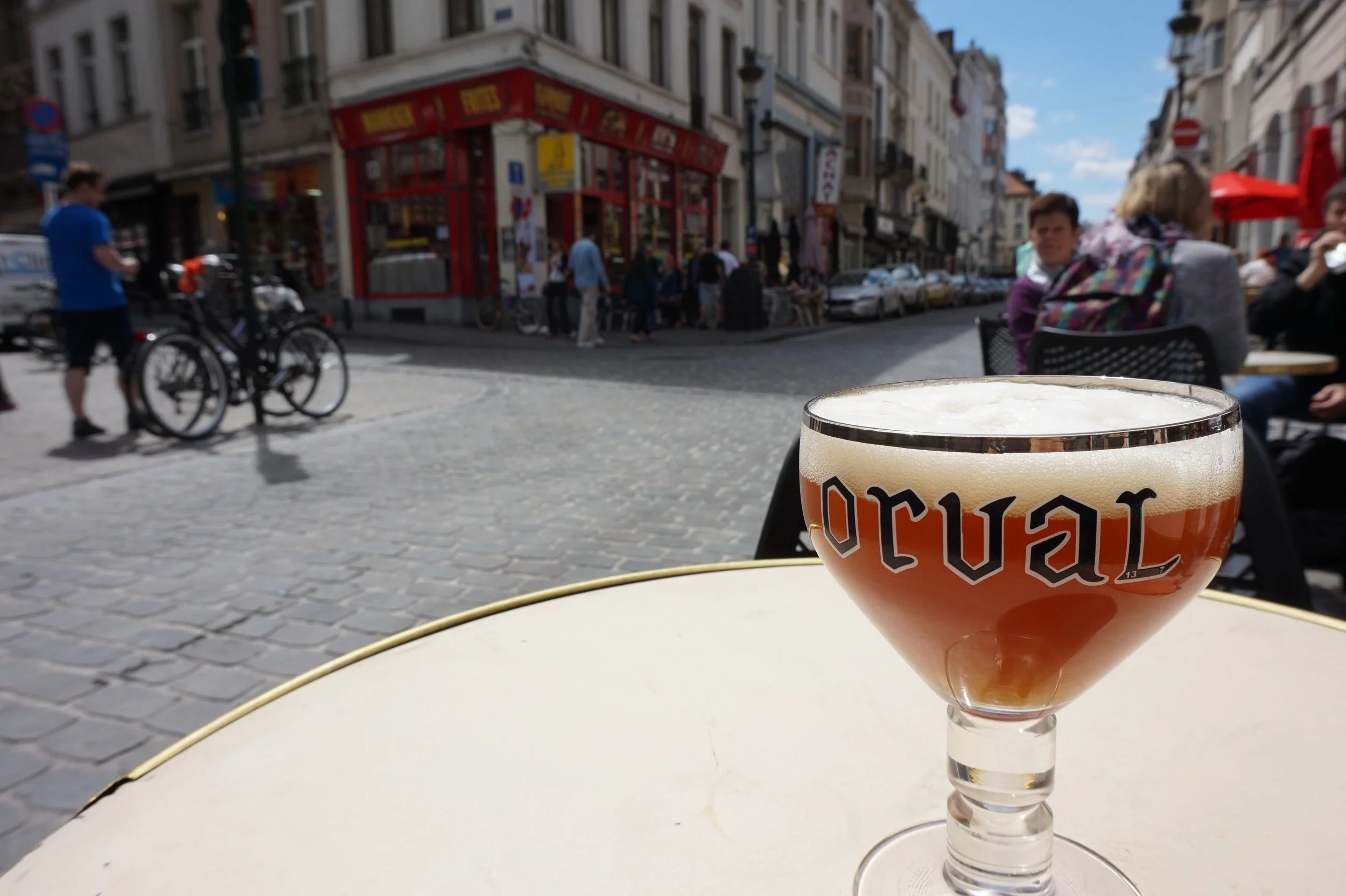
Waiting on my companions, I located a store selling a brand of chocolate bar I had been searching for. Belgium had an early start in producing chocolate. Beginning in the 1880s, the country imported cacao from its colonies in Africa including the Congo Free State (later known as the Belgian Congo and now the Democratic Republic of the Congo). Successful in my quest to find chocolate, I paused at an outdoor restaurant where I ordered an Orval beer. Produced since Roman times, Belgium beers range from Flemish red ales to strong ales and wheat beers. There are more than 400 breweries in Belgium that together produce 1,600 unique beers. Orval is a Trappist style beer (top fermented and brewed under the supervision of Cistercian monks) served in a unique glass. With an alcohol content of 6.2%, it is light in color and slightly cloudy. My first sip revealed its fruity and slightly bitter taste.