
United Kingdom. City of Romans, Saxons, Vikings, and Normans
Located midway between London and Edinburgh, York is a quaint English city with timber-framed buildings arranged on each side of narrow and uneven cobblestone streets. Along with notoriety for being the site of an important Anglican cathedral, the city is known for its succession of occupants that have included Romans, Saxons, Vikings, and Normans. The site of modern York was settled by Mesolithic people more than 9,000 years ago. When the Romans arrived in England, they found the country divided into many small states, each governed by a king. In 71 AD the Ninth Roman Legion conquered a powerful Celtic tribe known as the Brigantes and subsequently founded a city called Eboracum. Soon after, the Romans built a wooden fort above the River Ouse that was later reinforced with stone walls. York declined in importance in the years following the end of the Roman Empire and by the 7th century, Eoforwīc (meaning “wild boar town”) was the most important settlement controlled by Anglo-Saxon King Edwin of Northumbria. Led by Ivar the Boneless, Vikings captured the city in 866 and renamed it Jórvík. In 954 the city was recaptured by King Eadred during the Anglo-Saxon’s successful campaign to unite England. The city fell again during the 11th century Norman invasion of England and by the 12th century, York was England’s second-largest city. The Normans brought architectural skill in building tall structures using stone in lieu of wood. Among their contributions were Clifford’s Tower and York Minster, the largest Gothic cathedral in Northern Europe.
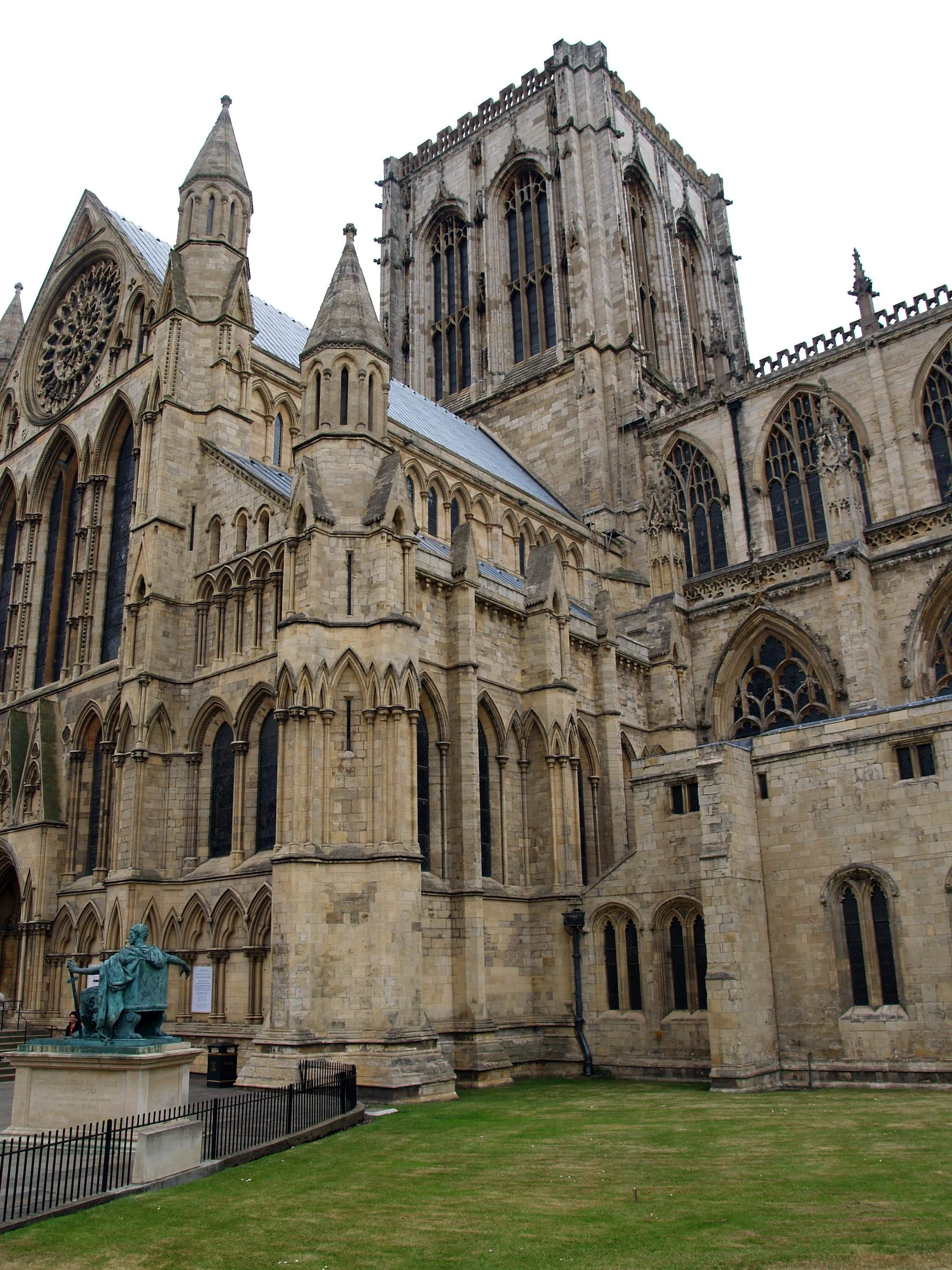
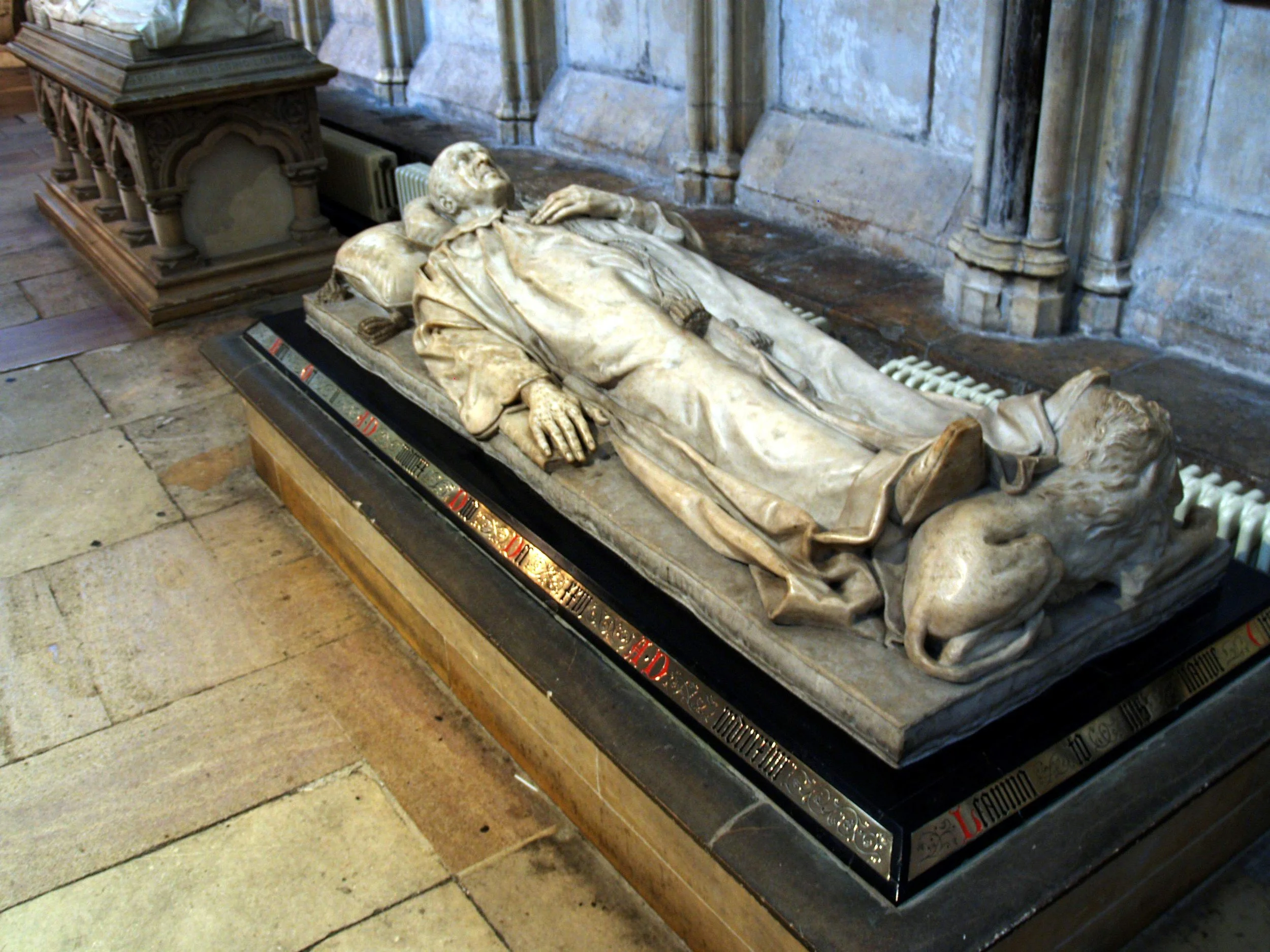
We parked our rental car for a walking tour that began on Shambles Street, said to be the inspiration for Dragon Alley, the magical shopping area featured in J.K. Rowling’s Harry Potter books. On each side of narrow, cobblestone streets are charming timber-framed buildings. The city’s most imposing structure is York Minster which served as the seat of power for the second-highest official within King Henry VIII’s Church of England after the Archbishop of Canterbury. The structure was built on the site of a Roman basilica. The Anglo-Saxon term “minster” refers to a teaching church. Constructed in 627, the first church on the site was replaced ten years later by a stone building. In 1100 a 110-meter-long Norman-style cathedral was constructed. Arranged in the form of a cross and finished with a white marble exterior, the present Gothic-style cathedral was constructed between 1230 and 1472. It has a central tower and an octagonal chapter house on its north transept, famous for its “Five Sisters” (five lancet windows). Two towers form its western side. Located in side chapels are the tombs of clergy and other well-known people. Most crypts are topped by a stone likeness of the person and some include a dog at the person’s feet that symbolizes faithfulness and loyalty.
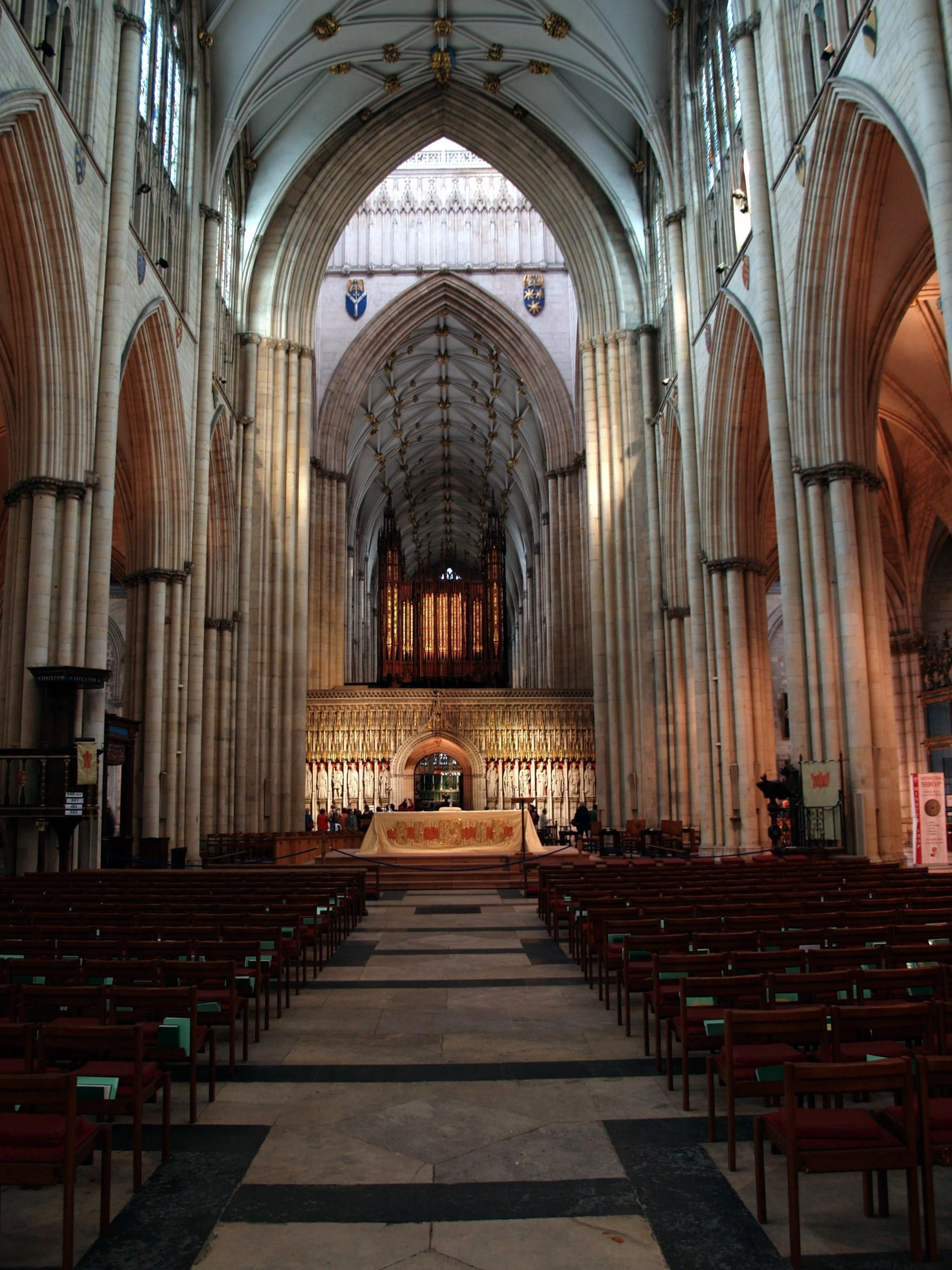
York Minster is known for having some of the oldest surviving medieval stained glass. Its chapter house was a meeting place for the cathedral’s governing body. In an effort to remove evidence of the building’s Catholic history, Queen Elizabeth I had workers strip the minster of memorials, altars and vestments.
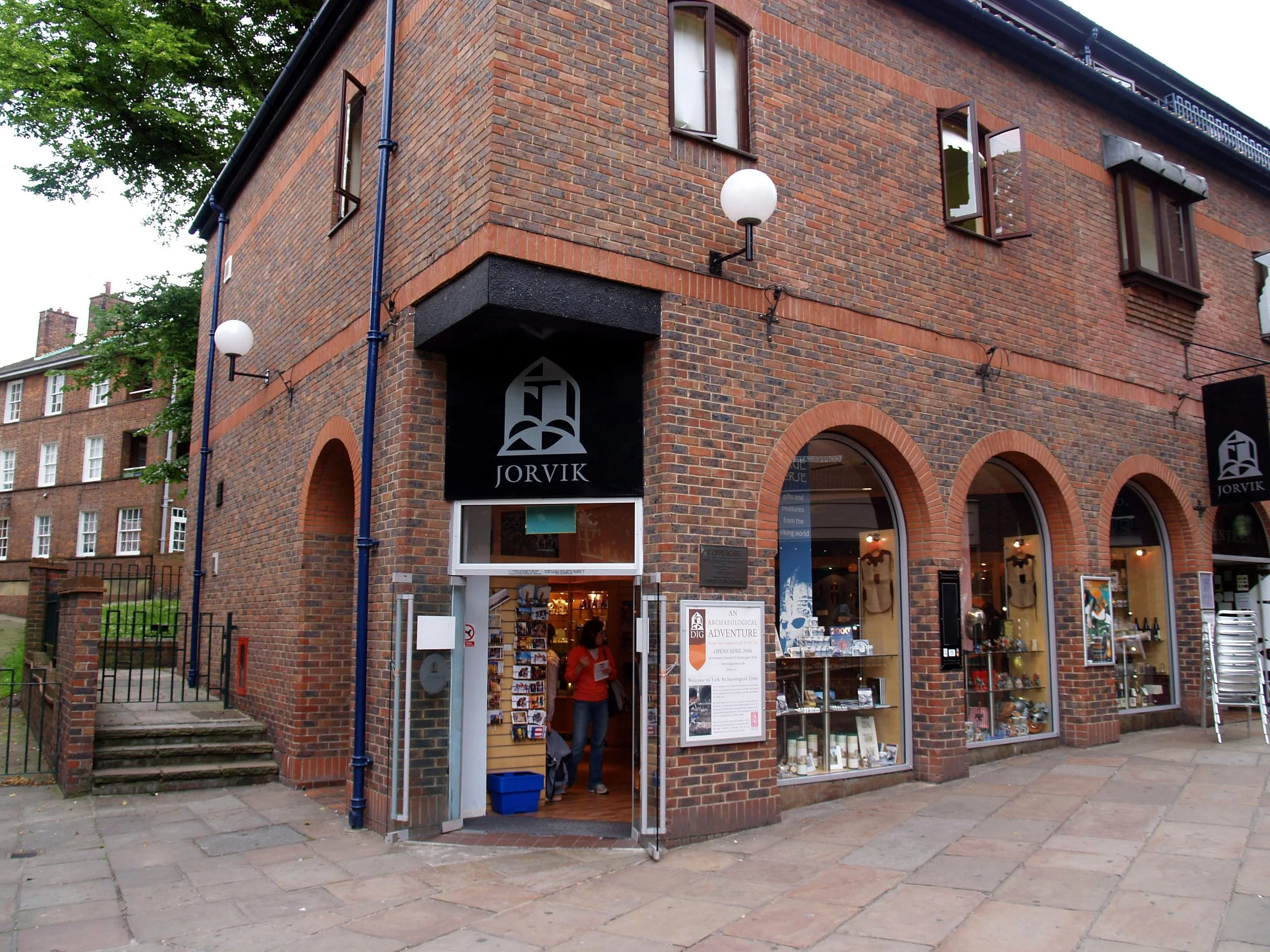
Before departing we made a stop at Jorvik Viking Centre. Opening in 1984, the center’s goal is to help visitors learn about Jórvík during its Viking occupation in the 9th and 10th centuries. We rode a sixteen minute “dark ride” that took us through rooms with mannequins and dioramas depicting Viking life.
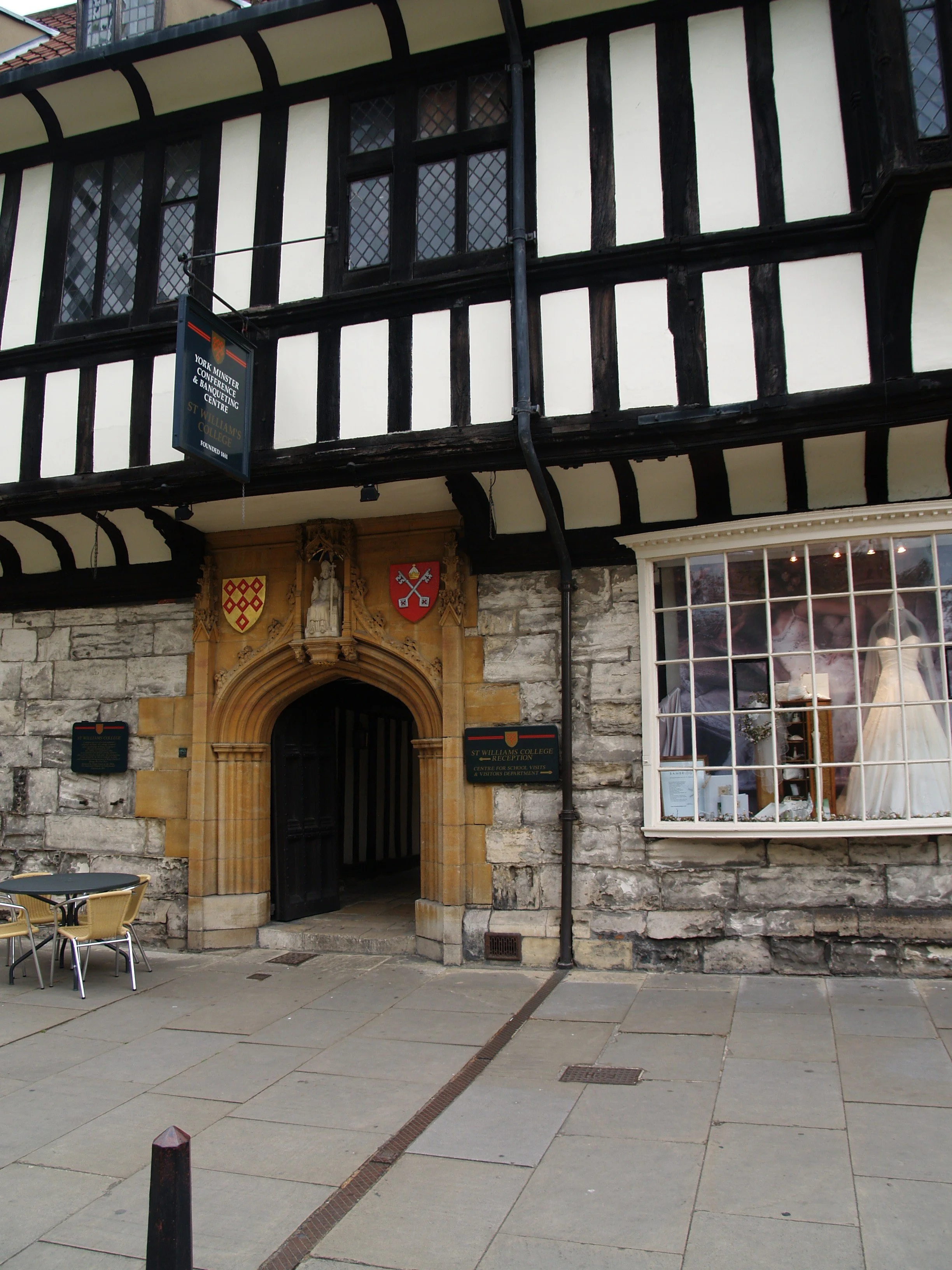
Nearby was St. Williams College, a medieval dormitory for priests who worked at York Minster. The principal duty of “chantry priests,” also known as “fellows,” was to pray for the souls of deceased benefactors. Fellows also taught within the local community. The building was named in honor of William FitzHerbert, a catholic priest born in the late 11th century who later served as Archbishop of York. Founded by George Neville, Earl of Warwick, the three-story building is made of magnesian limestone. The exterior of its timber-framed first floor has black wood with white plaster. During the English Civil War, the building housed the Royal Printing Press. Later, it was used for slum dwellings until it was sold to the city council in the late 19th century. Today, the Tudor-style building is used to host medieval dinners and conferences.
Built in the 14th century, Monk Bar is the largest and most ornate gateway into the old part of the city. The name “bar” comes from the old Norse word “barr” meaning a barrier or gate while “Monk” comes from Monkgate Street which is named for the monks of York. Located on the north side of the city wall, Monk Bar is an example of medieval military architecture. The structure is a barbican or fortified tower and gateway. Above the gateway opening is a portcullis or heavy wooden grille reinforced with iron that could be lowered to block the gate. Upstairs, rooms in the barbican were used as a residence by the gatekeeper and later, to house rebellious Catholics.
