Ireland. A Medieval Cathedral on St. Patrick’s Rock
An Irish legend says that the Rock of Cashel was created when the Devil, fleeing from St. Patrick, took a bite out of a nearby mountain and then spat it out. Another story is that St. Patrick came to the Rock to convert Aengus, King of Munster, to Christianity. Archaeologists believe that the site was once used for pagan ceremonies. Located in the Golden Vale (part of County Tipperary), the Rock of Cashel is a low limestone outcrop topped by a fortress complex once used by the Kings of Munster. In Gaelic, the site is called Carraig Phádraig (St. Patrick’s Rock). In 1101 King Muircheartach O'Brien donated buildings on the Rock of Cashel to the Catholic Church and soon after, the Rock became a center of ecclesiastic power. Completed in 1270, the Rock of Cashel’s largest building is a stone cathedral constructed in the shape of a cross.
The Rock of Cashel complex was damaged in 1647 by English Parliamentarian troops during the Irish Confederacy Wars. At that time, Irish Catholic soldiers, clergy, and townspeople were massacred and religious artifacts looted. Subsequently, the Rock became a Protestant (Anglican) place of worship. The Cathedral was damaged again when the Anglican Archbishop of Cashel ordered its roof to be removed. It has been reported that the archbishop didn’t like walking to the hill’s summit. The roof was partially intact until 1848 when it suffered a complete collapse.

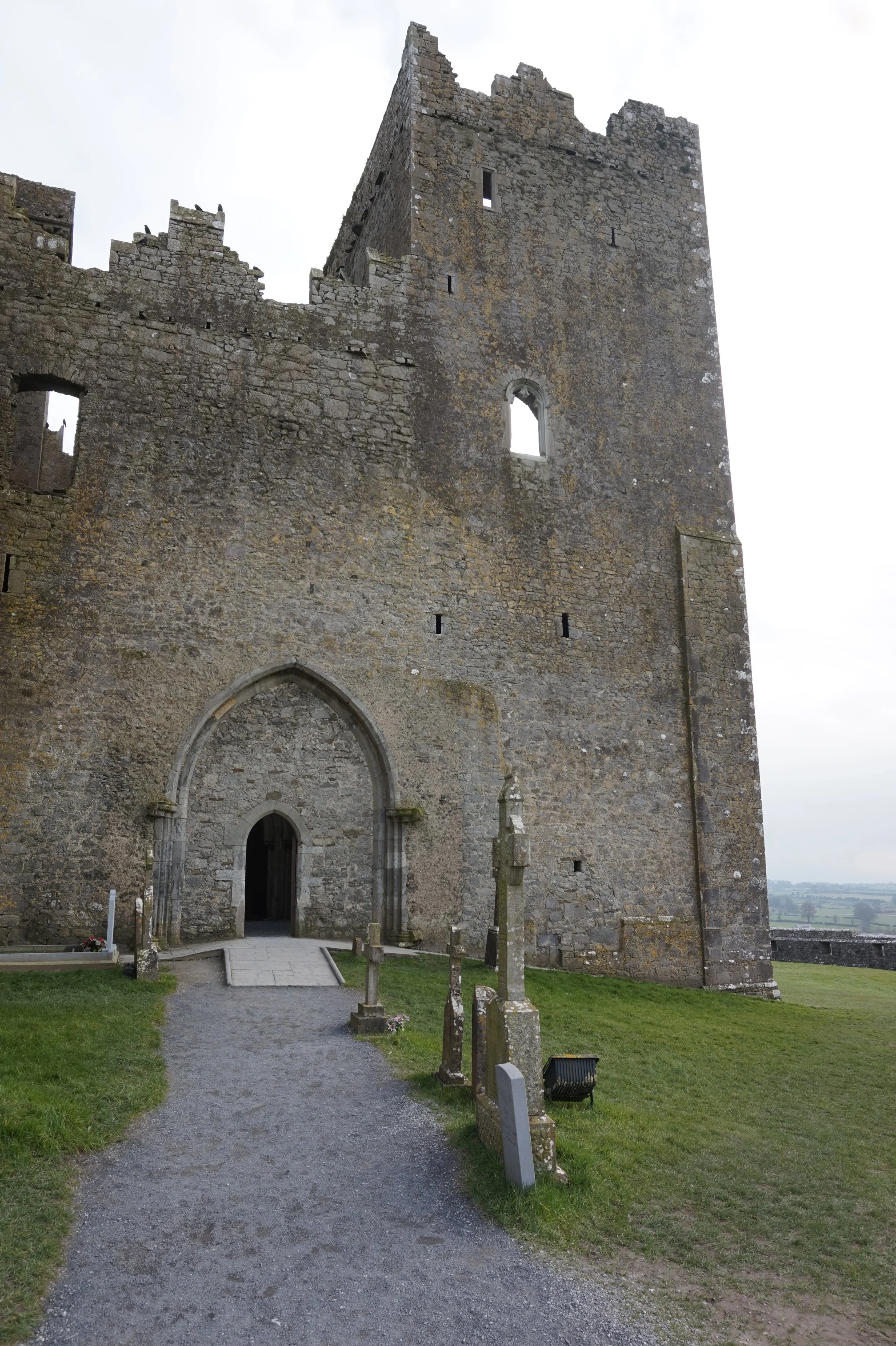
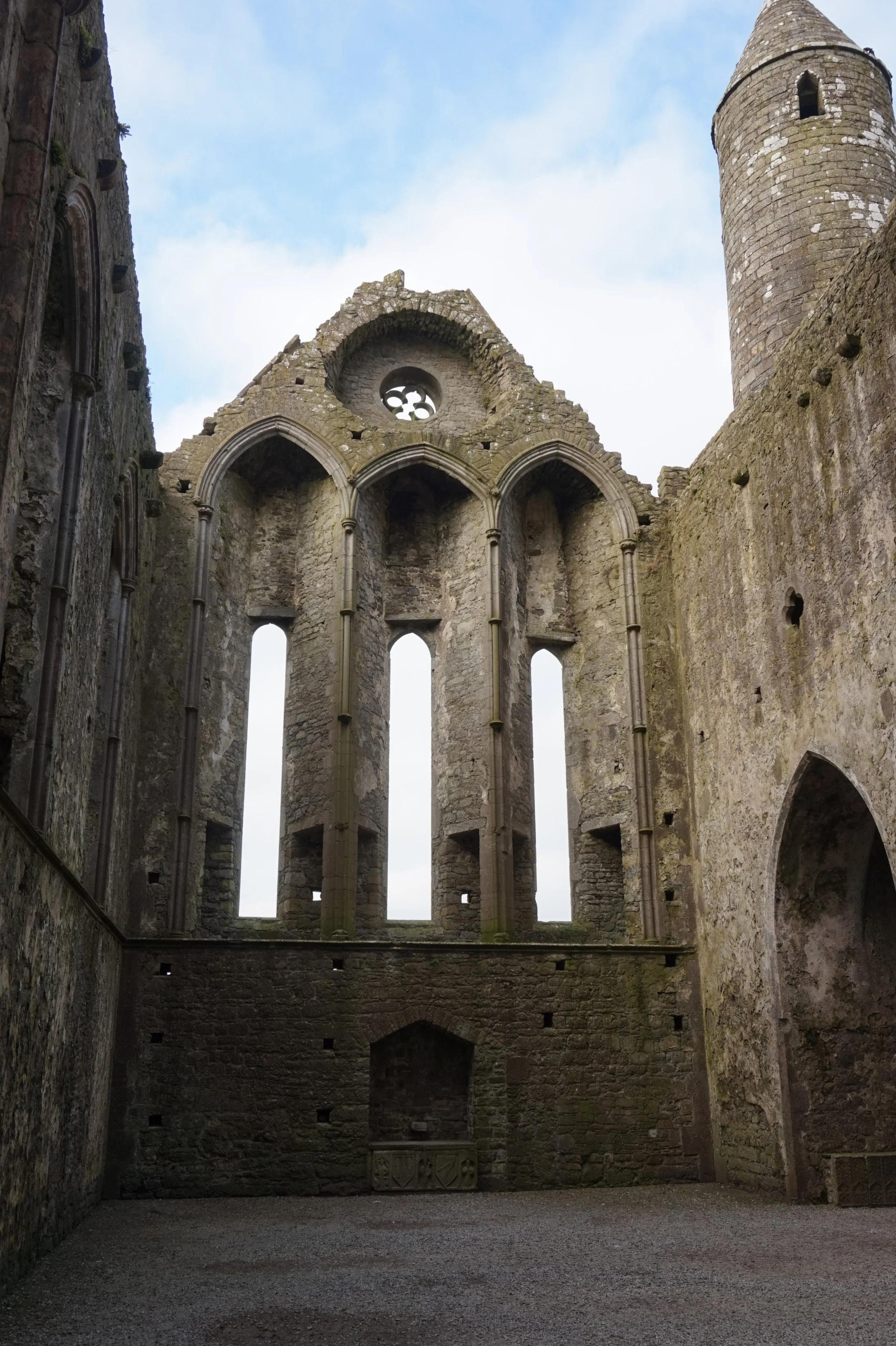
Today, the Cathedral complex is among the most impressive medieval structures in Ireland and from a distance, looks like a cartoon palace suspended above the surrounding landscape. The complex includes the Gothic cathedral, a Romanesque chapel, the abbey, and a 15th century tower house.
Perched above fertile green fields, the Rock and its buildings dominated the skyline as we approached in our rental car. Outside the complex is a graveyard featuring tombstones topped by Celtic crosses. One of the most famous is Scully’s Cross which was damaged by a lightning strike in 1976. The cross’s surviving arm is supported by one of its original upright struts. Jesus is depicted on one side of the cross and a bishop on the other.
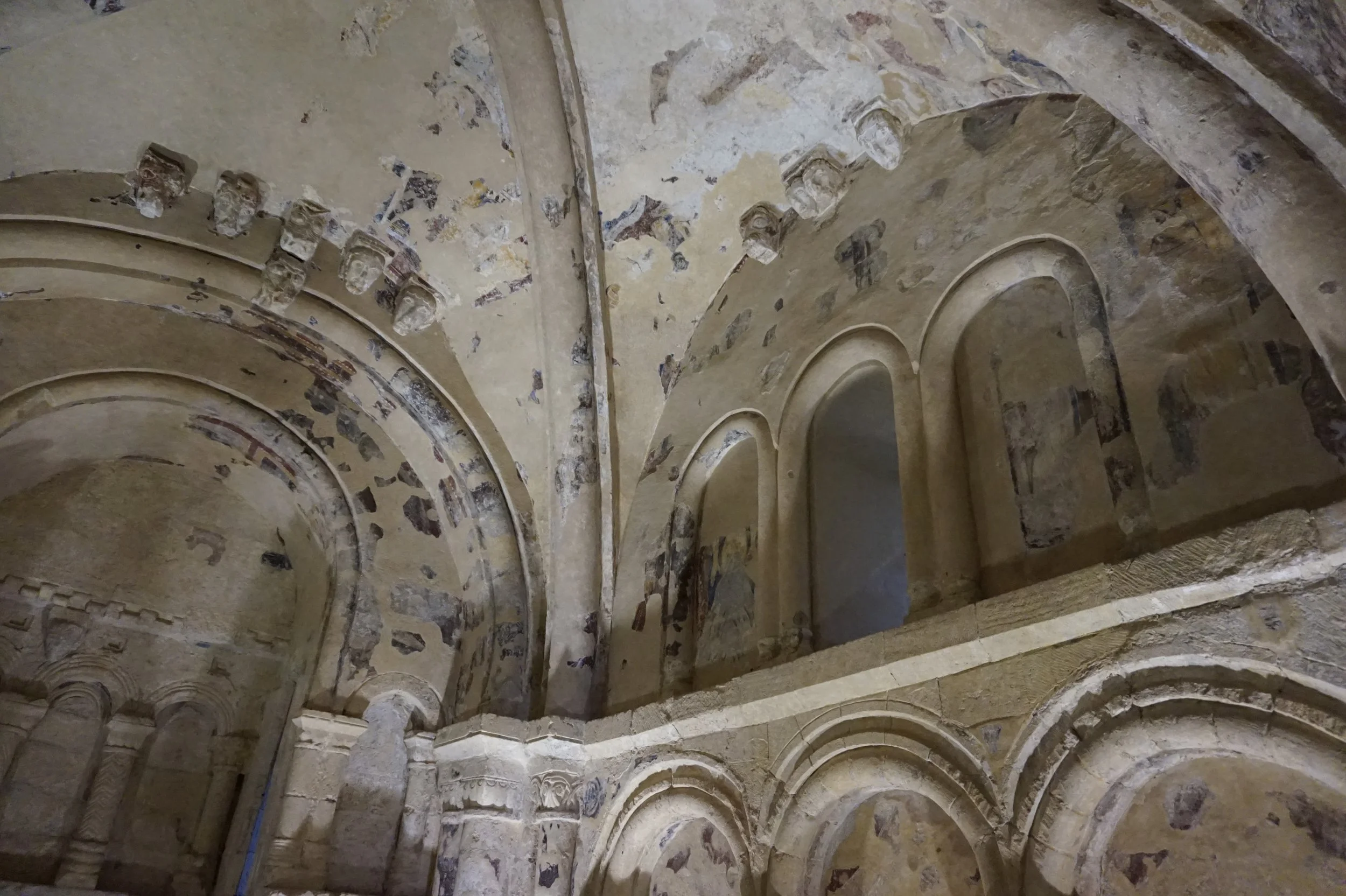
The Round Tower is believed to have been added in the 12th century, shortly after the complex was given to the church. Round towers are free-standing bell towers that became popular in the late 10th through mid-12th centuries. The Hall of Vicars Coral was added during the 15th century to serve laymen who participated in chants. Another building is Cormac’s Chapel, among the best-preserved early Romanesque churches in Ireland. Inside is a nave and chancel decorated with ornate arches depicting animals and human heads. The structure’s south wall has a scene featuring Christ’s baptism. We wandered around within the roofless Gothic cathedral. From inside we could see its transepts that featured three-light lancet windows.
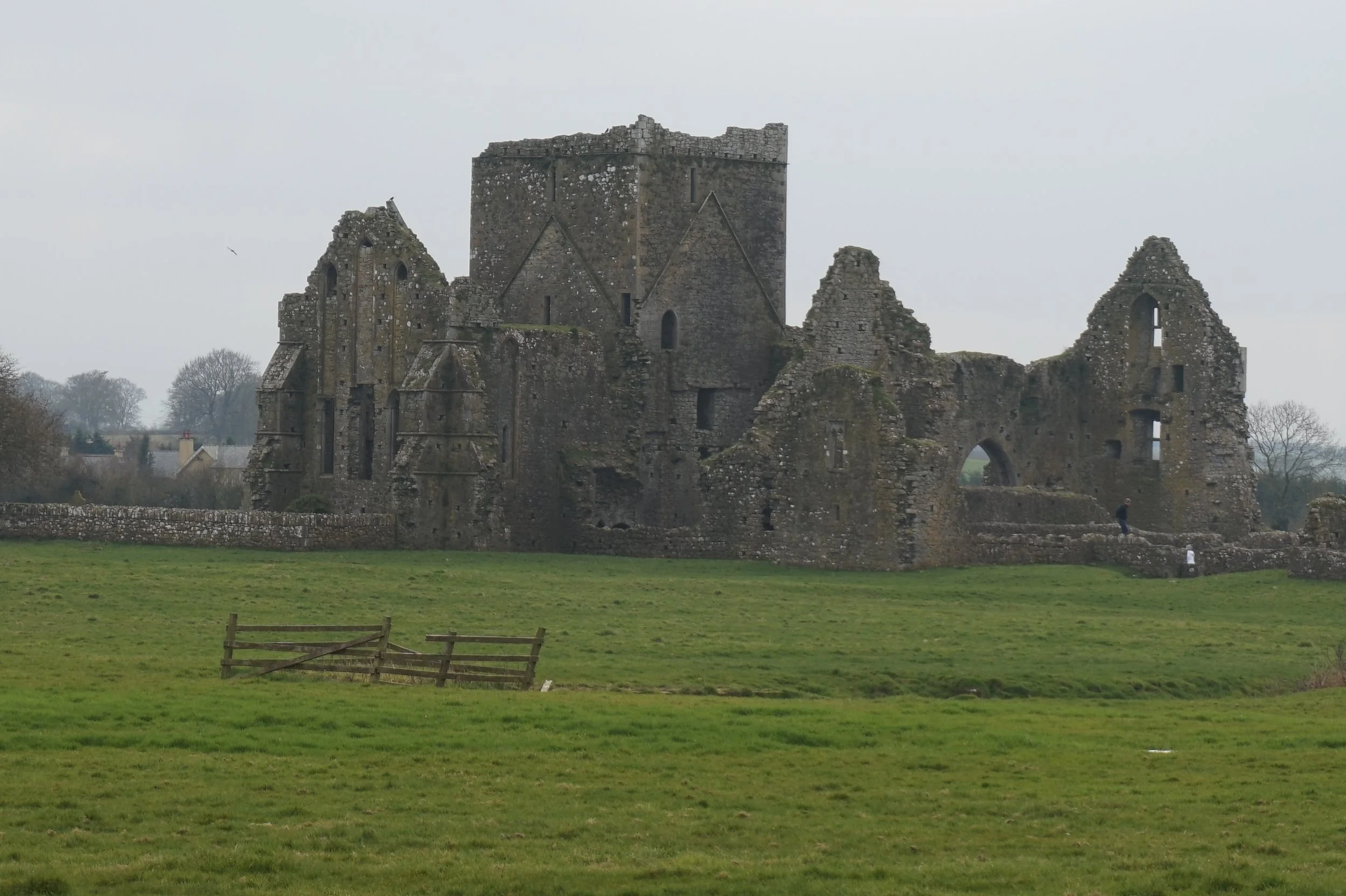
Within a field west of the complex are the ruins of the Hore Abbey, established in the 13th century and abandoned in the 16th century. It is the last Cistercian monastery founded in Ireland. After our walking tour of the Rock, we wandered through the town of Cashel, a quintessential Irish village with shops lining its main street.