Russia. Monks, Mongols, and the Eastern Orthodox Vatican
Orthodox Christianity came to Russia in 988 following the baptism of Vladimir the Great in Constantinople (now Istanbul, Turkey). The Russian Orthodox Church (ROC) separated from the Catholic Church as a result of the Great Schism in 1054. Today there are 95 million members of the ROC living in Russia and 20 million living outside the country. Until 1948, the church was headquartered in Kiev, Ukraine.
Founded in 1337, Trinity Lavra is Russia’s most important orthodox monastery that some call the “Eastern Orthodox Vatican.” Located about 70 kilometers northeast of Moscow, the monastery was founded by a monk named Sergius of Radonezh. Born in 1314, Sergius and his brother established a monastic chapel deep within the forest where people came seeking comfort during the Mongol invasion. Soon after, Sergius began working with Russian Prince Dmitry Donskoy to fight the invaders and in 1380 the prince defeated the Mongol’s Golden Horde during the Battle of Kulikovo. Many Russians believe that Sergius united the country and in 1422 Saint Sergius was declared a patron saint of the Russian State.
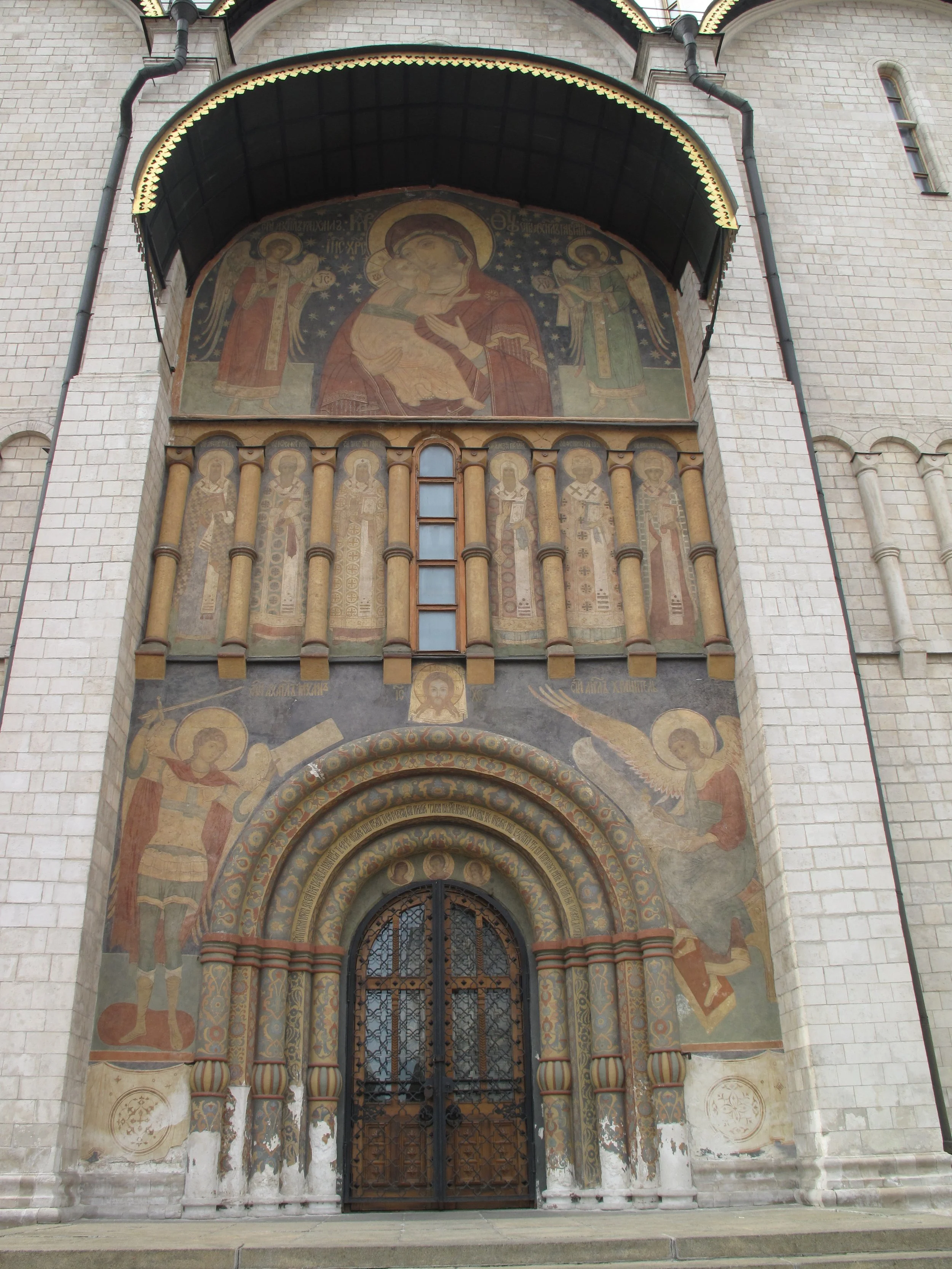
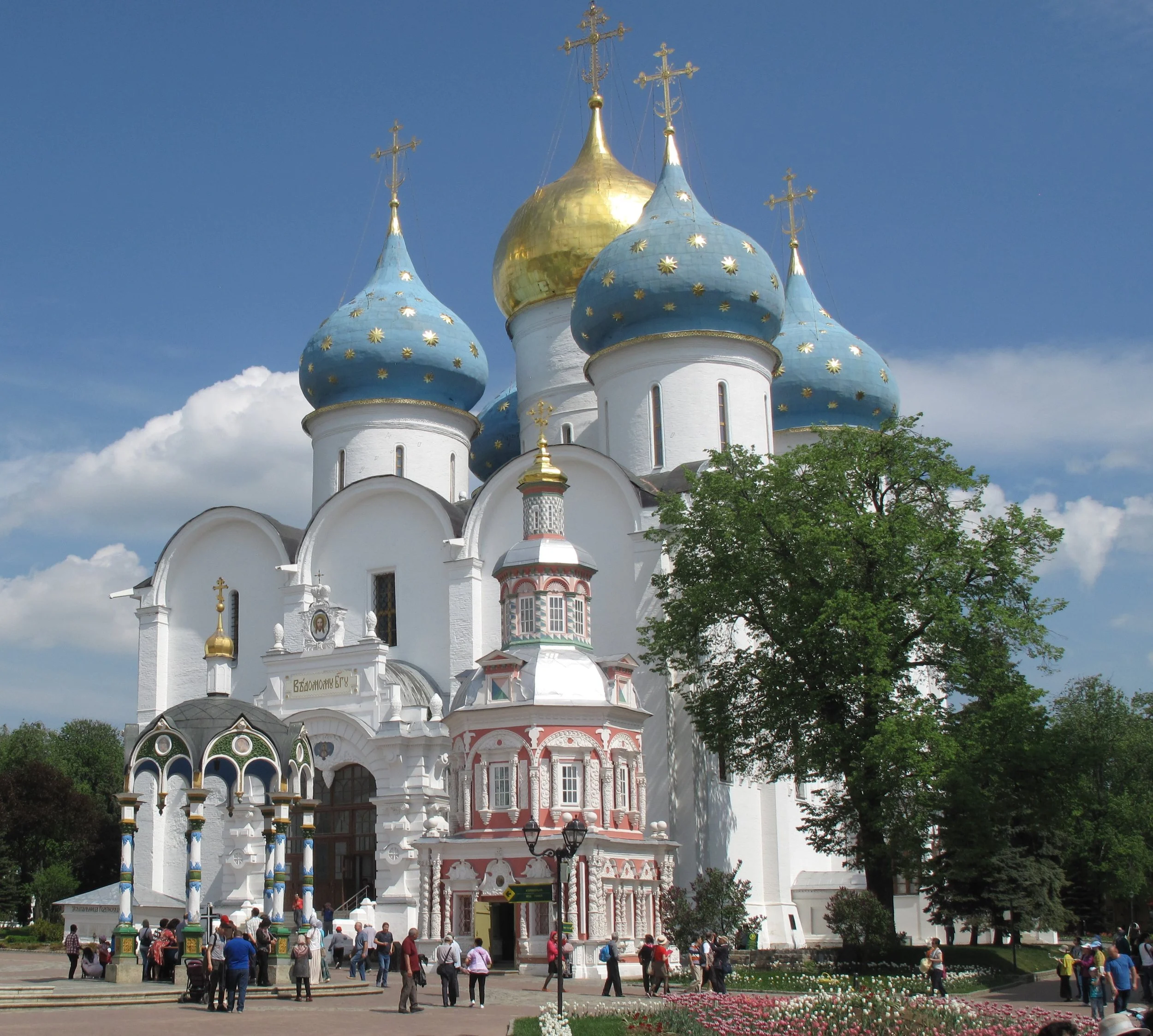
The Trinity Lavra complex expanded with several additions. In 1476, Ivan III (Ivan the Great) built the Church of the Holy Spirit on the site. Subsequently, his grandson, Ivan IV (Ivan the Terrible), commissioned a twenty-six-year project, the six pillared Assumption Cathedral, which was finally completed in 1885. Dominion (aka Assumption) Cathedral resembles Kremlin Cathedral in Moscow. The church contains the tomb of Boris Godunov, Regent of Russia and Tsar from 1598 to 1604. It was designed with four blue-topped, onion-shaped spires that surround a higher, central spire topped with gold. The nearby Trinity Cathedral is the final resting place of Saint Sergius and the place where Russian princes received blessings before launching military campaigns. At 88 meters, the baroque-style bell tower was the tallest part of the cathedral.

During the 16th century a six-meter-high wall was added to protect the monastery. The monastery complex was subject to a siege by Polish-Lithuanian forces between 1608 and 1610. Along with its religious functions, the monastery operated as a safe haven. Russian Tsar Peter the Great (1682-1725) sought refuge from his enemies there on two occasions. In 1776 many of the monastery’s wooden structures were destroyed by fire. During the Russian Revolution (1917-1923) the Soviet government shut down the monastery, dismissed its monks, and converted many of its buildings into museums. Believing the monastery had special historical value, some buildings were returned to the ROC in 1945 by Joseph Stalin. Today, the complex of about 50 buildings showcases the intermingling of traditional Russian building designs with western European architectural styles.

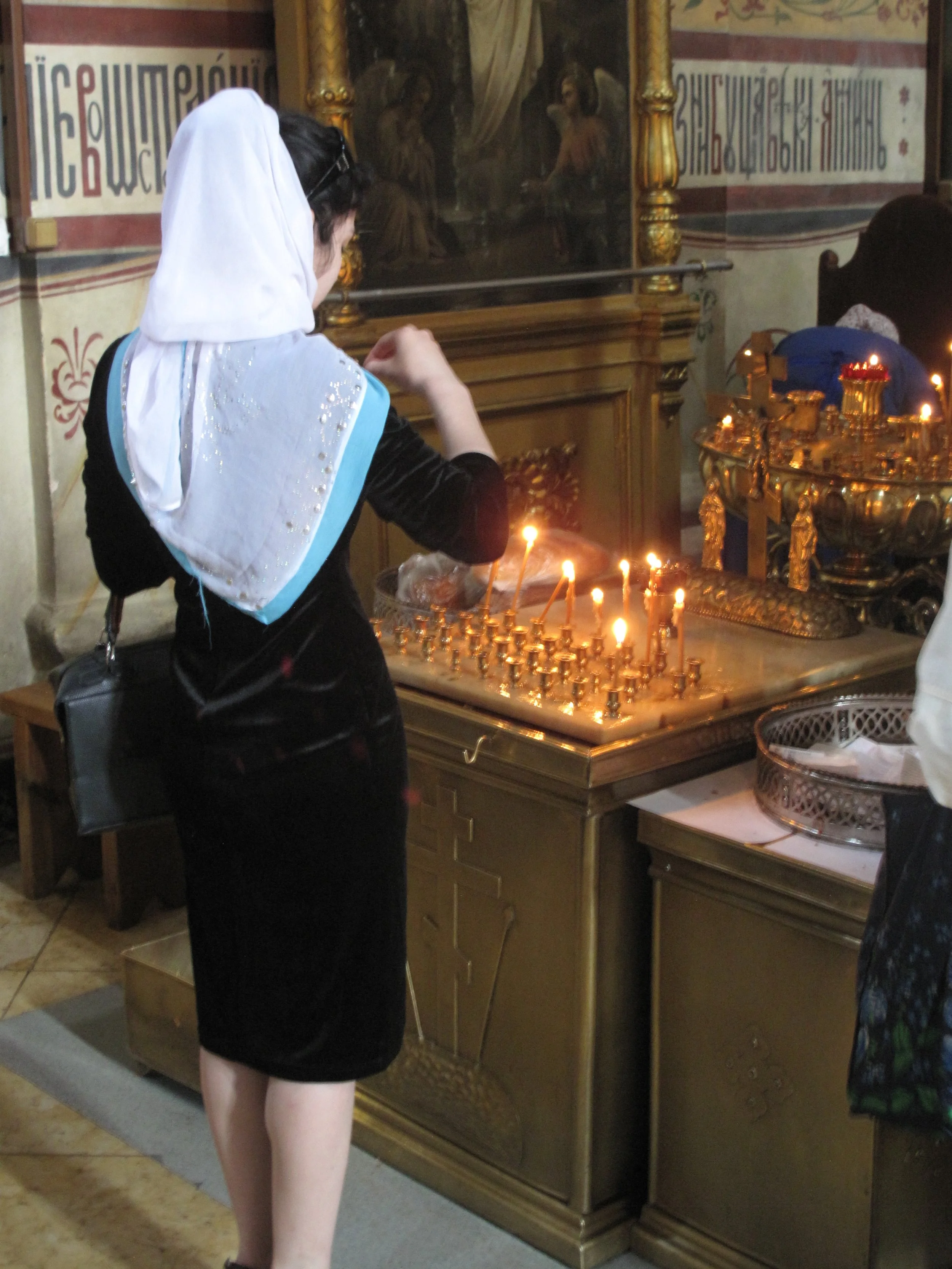
Russian Orthodox churches differ from Catholic and Protestant churches in several ways. Without pews, church attendees stand during a service. Most Orthodox churches have an abundance of gilded objects, holy relics, and frescos. Orthodox priests are expected to have beards and may be married.
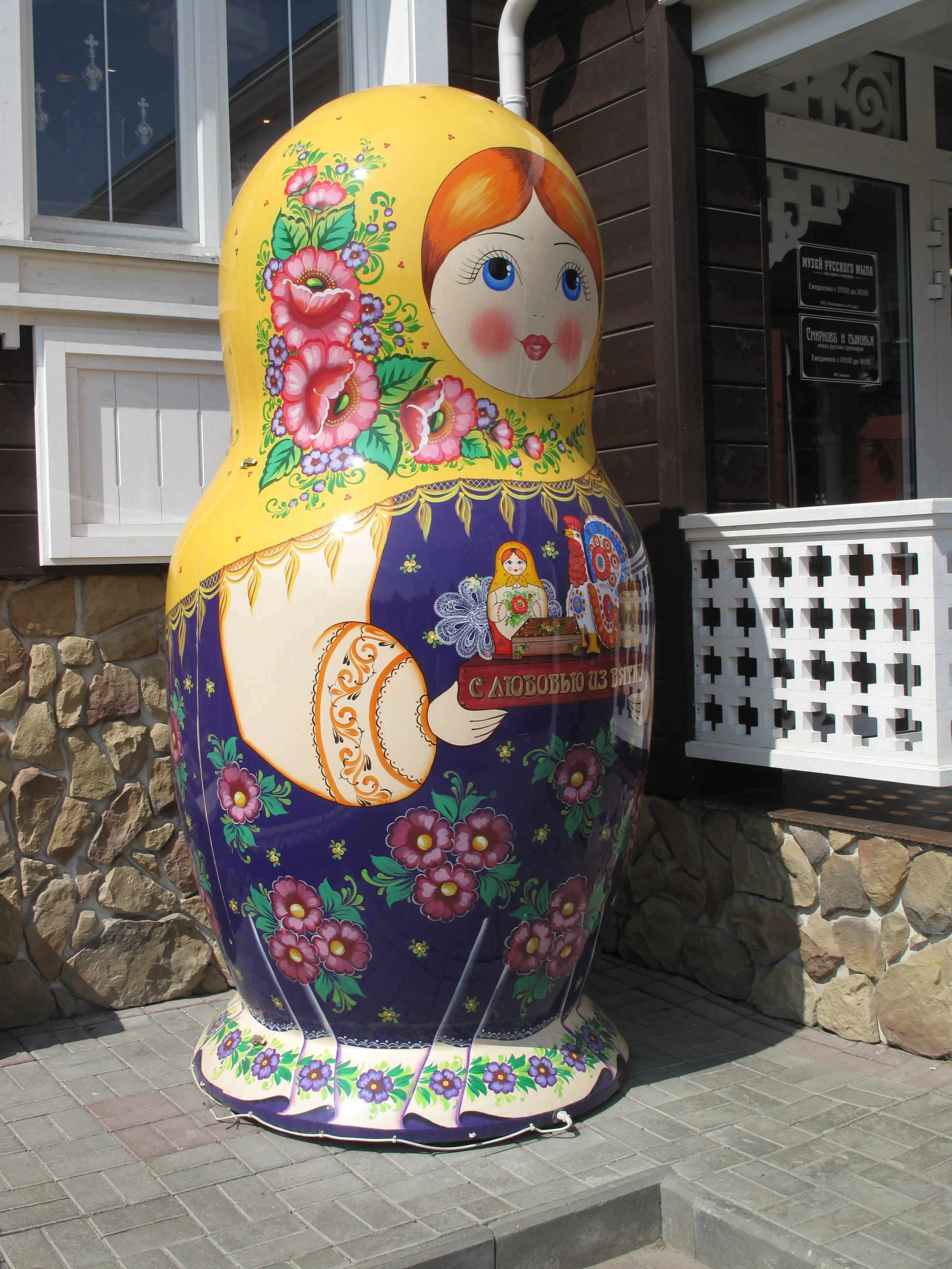
Carved on a lathe and painted by hand, Matryoshka dolls are hollow figures of decreasing size that can be nested (smaller ones fit inside larger ones). Symbolizing fertility, motherhood, and family, the dolls were first made in Russia in the early 1890s. Vasily Zvyozdochkin carved a set of Matryoshka dolls that earned international acclaim and won a bronze medal at the 1900 Paris Exposition. I couldn’t help but to photograph a life-sized Matryoshka doll outside a shop.