Spain. The Last Muslim Kingdom in Iberia
Positioned in the foothills of the Sierra Nevada Mountains and within the Province of Andalusia, the city of Granada is at the meeting point of four rivers, the Darro, Genil, Beiro, and Monachil. Geographically, it is closer to Africa than Madrid. Combining Christian, Jewish, and Muslim elements, Granada is known for its Moorish and Spanish Renaissance architecture. The Romans and later the Visigoths established settlements on the site of the future city. Granada became part of the Islamic world following the Umayyad conquest of Hispania. During the 11th century the Zirids, a North African Berber group, established an independent kingdom called the Taifa of Granada. The Zirids built a fortress and palace on Sabika Hill, later the site of Alhambra. Sephardic Jews also thrived there until many were massacred in 1066. Twenty-three sultans of the Nasrid Dynasty presided over the Emirate of Granada between 1232 and 1492 and in 1330, Granada was the largest city in Europe.
Late in the 15th century, the Spanish monarchs Ferdinand II of Aragon and Isabella I of Castile shared a common cause in defeating the last Muslim empire on the Iberian Peninsula. The two rulers took advantage of conflict as Abu I-Hasan Al, the Sultan of Granada, was locked in a bitter fight over control of the Nasrid Dynasty with his son, Muhammed XII. Captured by Christian forces, Muhammed XII was forced to swear an oath of obedience to Ferdinand and Isabella in exchange for the Muslim population of Granada being permitted to live in peace. In March 1492, Ferdinand and Isabella signed the Alhambra Decree which ordered the expulsion of Jews who refused to convert to Christianity. Although Muslims were also forced to convert, many continued to practice Islam in secrecy. Today, the city is known for its attractive cármenes (houses surrounded by gardens). Its economy is focused on agriculture and the production of paper, fabrics, and soap.
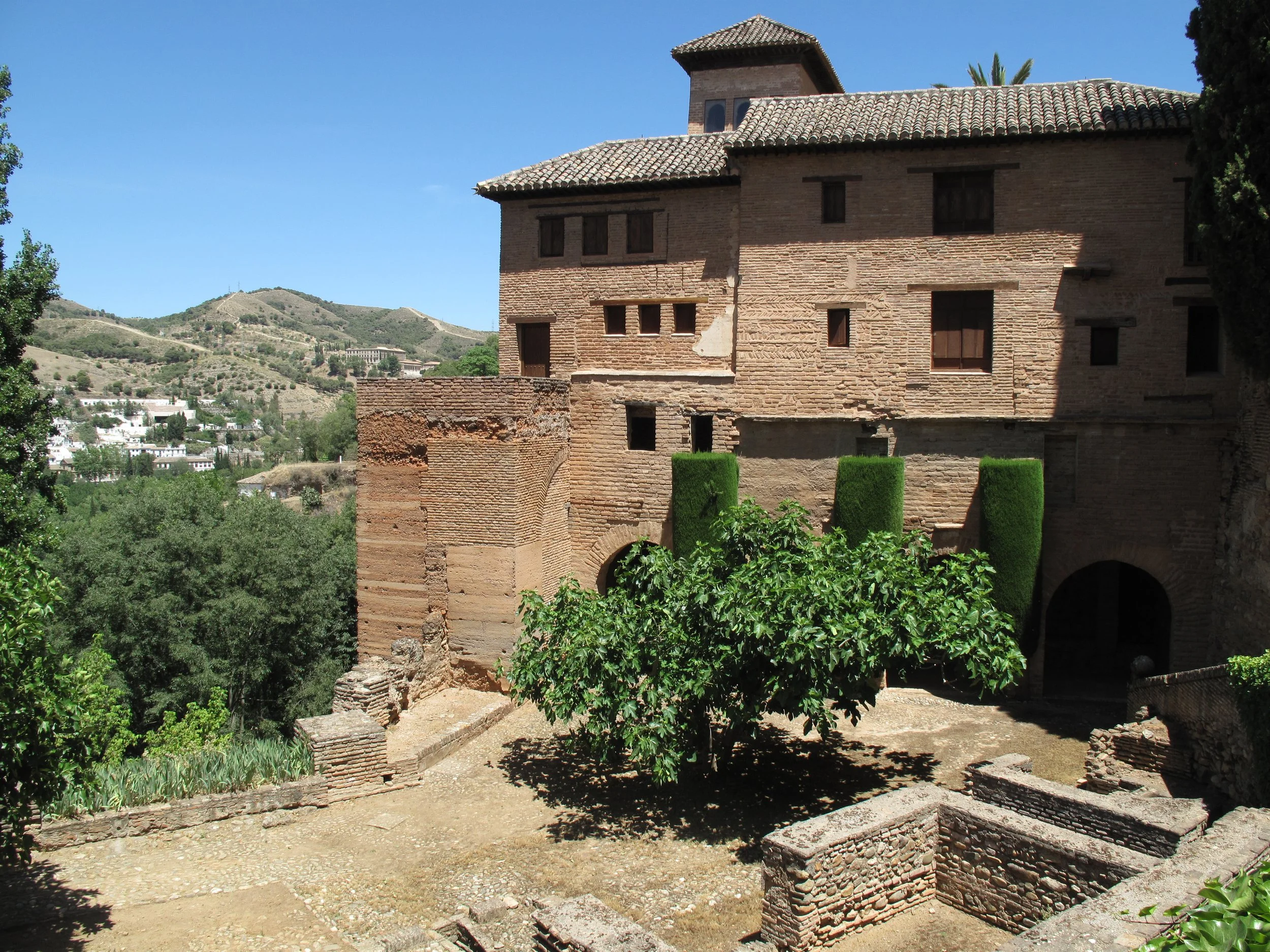
Located at the top of Sabika Hill, an outcrop of the Sierra Nevada Mountains, Alhambra is a fortified complex of six palaces. Within the larger palace area there are public baths, workshops, a tannery, and a mosque. Built by Muhammed I Ibn al-Ahmar, founder of the Emirate of Granada, it is a city within a city. After the Reconquista, the palace became the royal court of Ferdinand and Isabella. The Hall of Ambassadors in Alhambra is where Christopher Columbus received his royal endorsement for his first cross ocean expedition. Following a visit in 1526, Holy Roman Emperor Charles V made Alhambra his royal residence. In 1812, Napoleon’s troops damaged some of the palace’s buildings. The complex was damaged again by an 1821 earthquake. Falling into obscurity, Alhambra was occupied by disabled and economically disadvantaged people during much of the early 19th century. An effort to restore the complex was initiated in the mid-1800s.
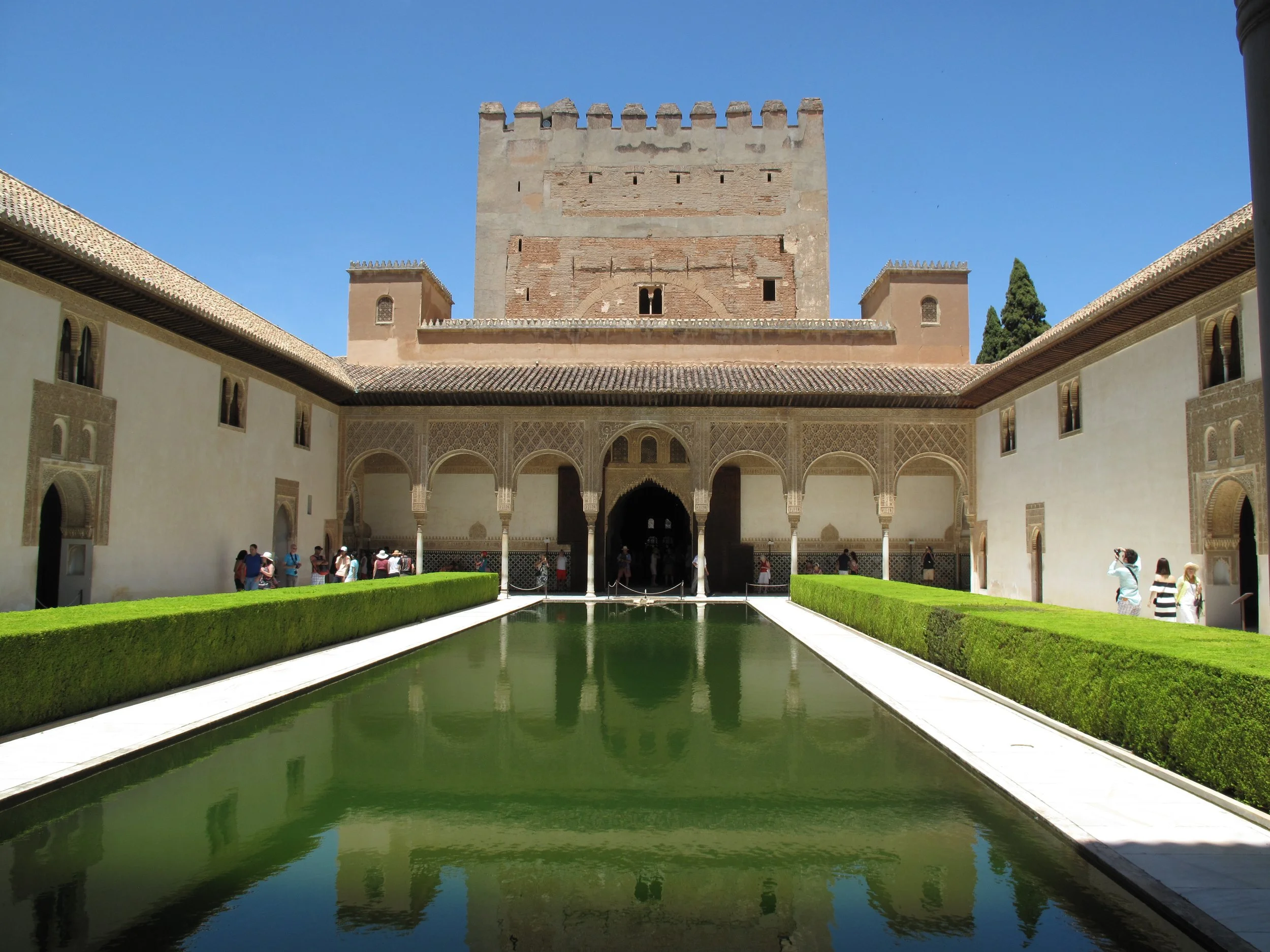
On Alhambra’s western edge are the towers and fortified gates of Alcazaba Fortress. The architectural style of Nasrid Palace incorporates traditional Moorish designs. Among other sites within the complex, we visited the Court of Myrtles which is part of Comares Palace. The courtyard is named for myrtle bushes that surround a pool. It was commissioned by Nasrid Sultan Ismail during the early 14th century. The courtyard’s dimensions are twenty-three meters by thirty-six meters with its long axis aligned north to south.
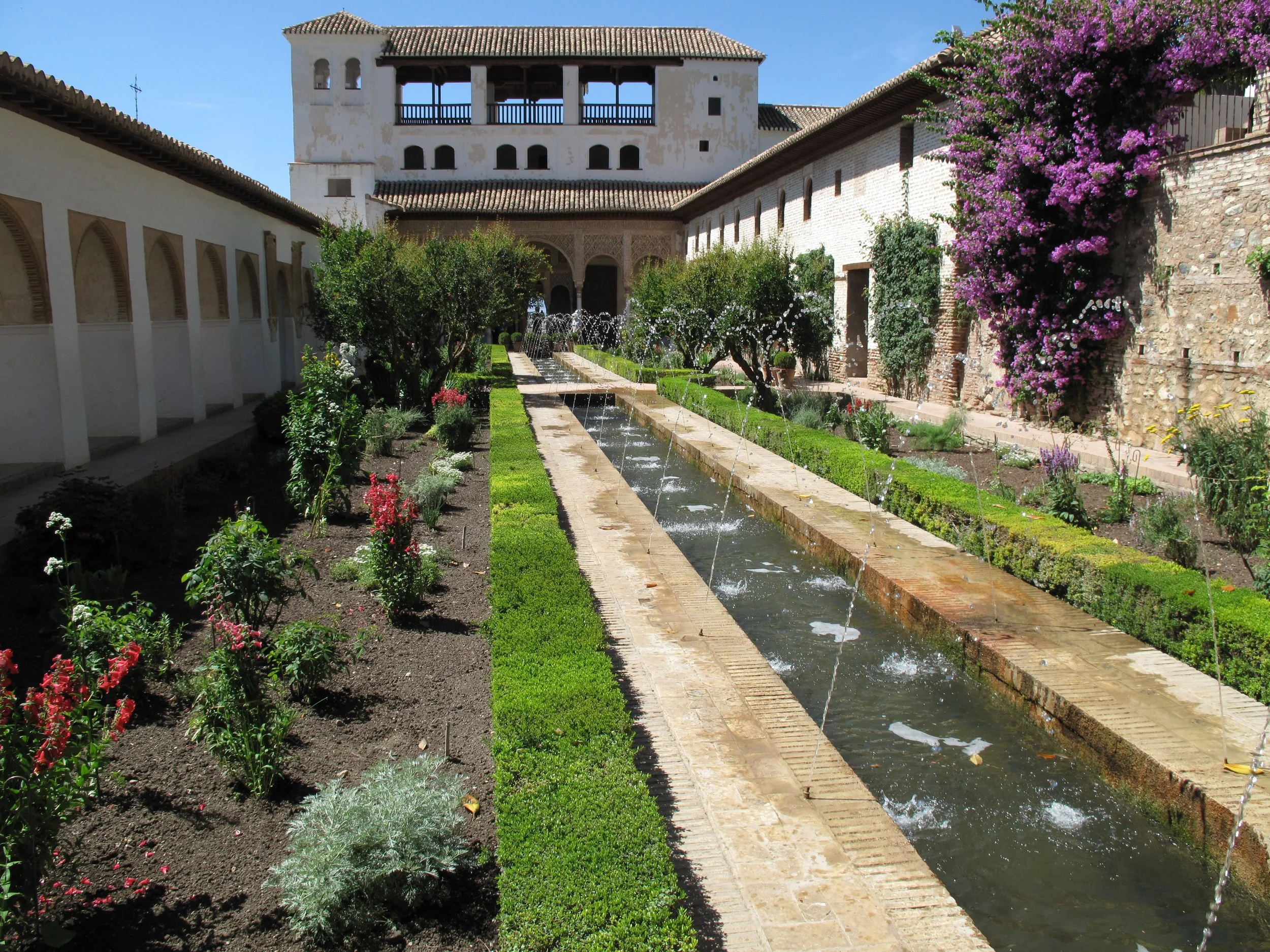
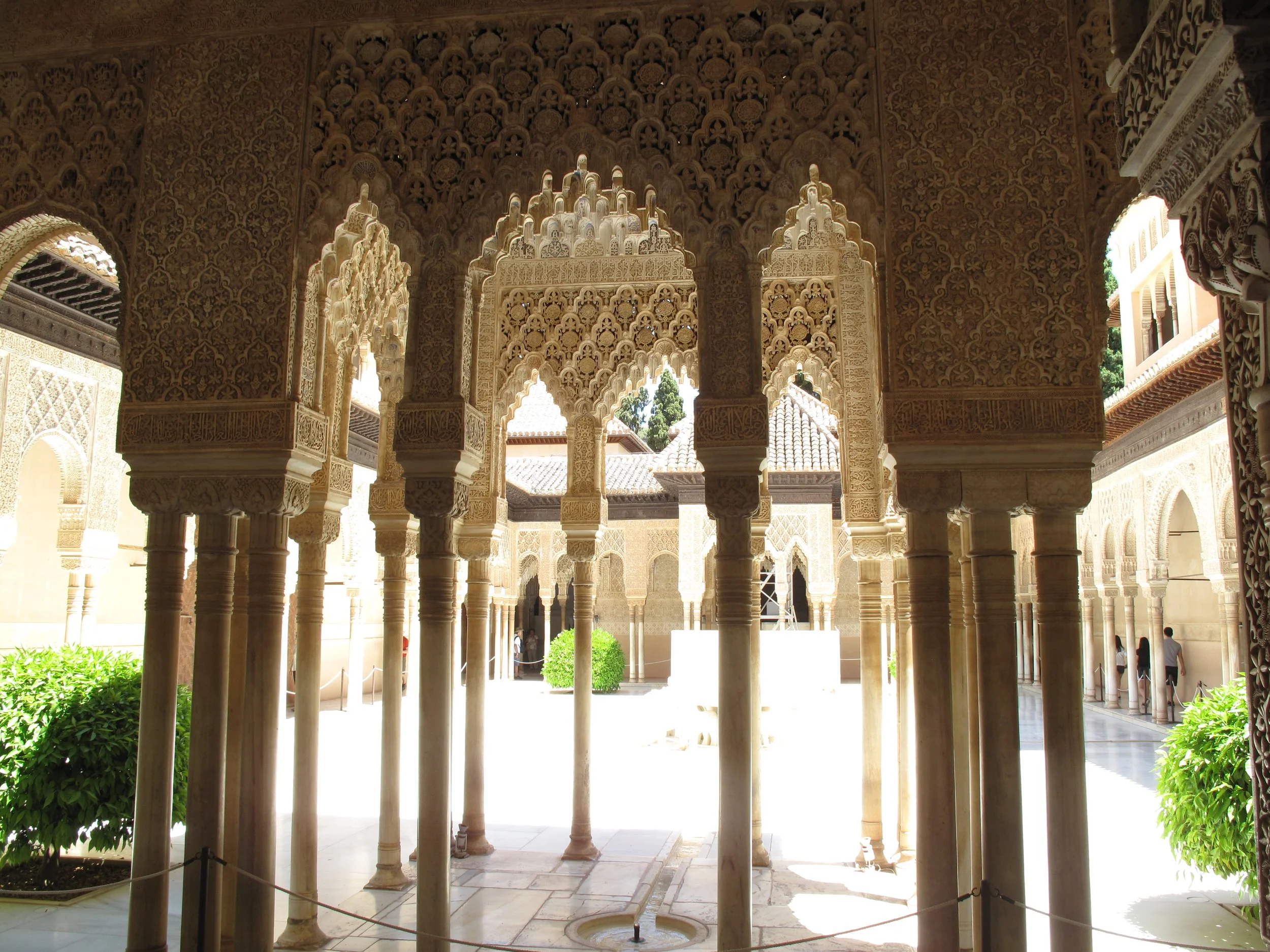
The Court of Lions (aka Palace of the Lions) is an example of Islamic architecture. Its lion sculptures surround a central marble fountain located within a rectangular courtyard. Four main halls surround the courtyard with water channels connected to smaller fountains in each of four adjoining halls. The Patio de la Acequia (meaning “Courtyard of the Canal”) is located in the Palace Generalife (meaning “Garden of Architect”). Generalife was the summer palace and country estate of Nasrid rulers and is believed to have been constructed at the end of the 13th or beginning of the 14th centuries. The palace had its own orchards while its gardens served as a private retreat for members of the royal family. Water entering the palace comes from the nearby Darro River.
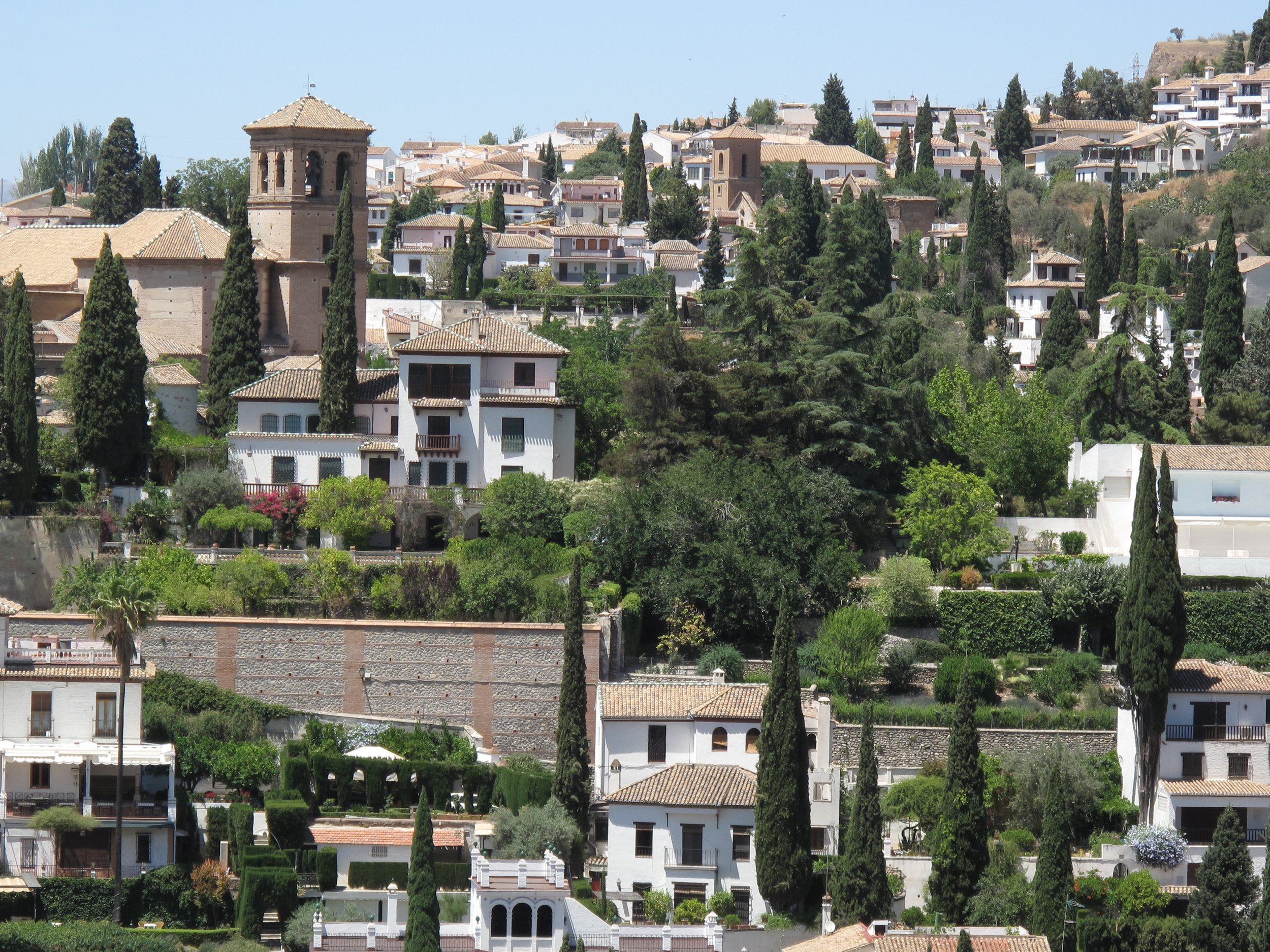
Located on a hill just north of Alhambra is the historic neighborhood of Albayzin (aka Albaicín). Believed to have been occupied since the 7th century BC, Albayzin, has retained its medieval street layout. After 1492 many of its mosques were replaced by parish churches. Partly bounded by the Darro River, the neighborhood has cobblestone streets lined with restaurants and bars that serve free tapas (appetizers).