
Spain. Europe’s Largest Royal Palace
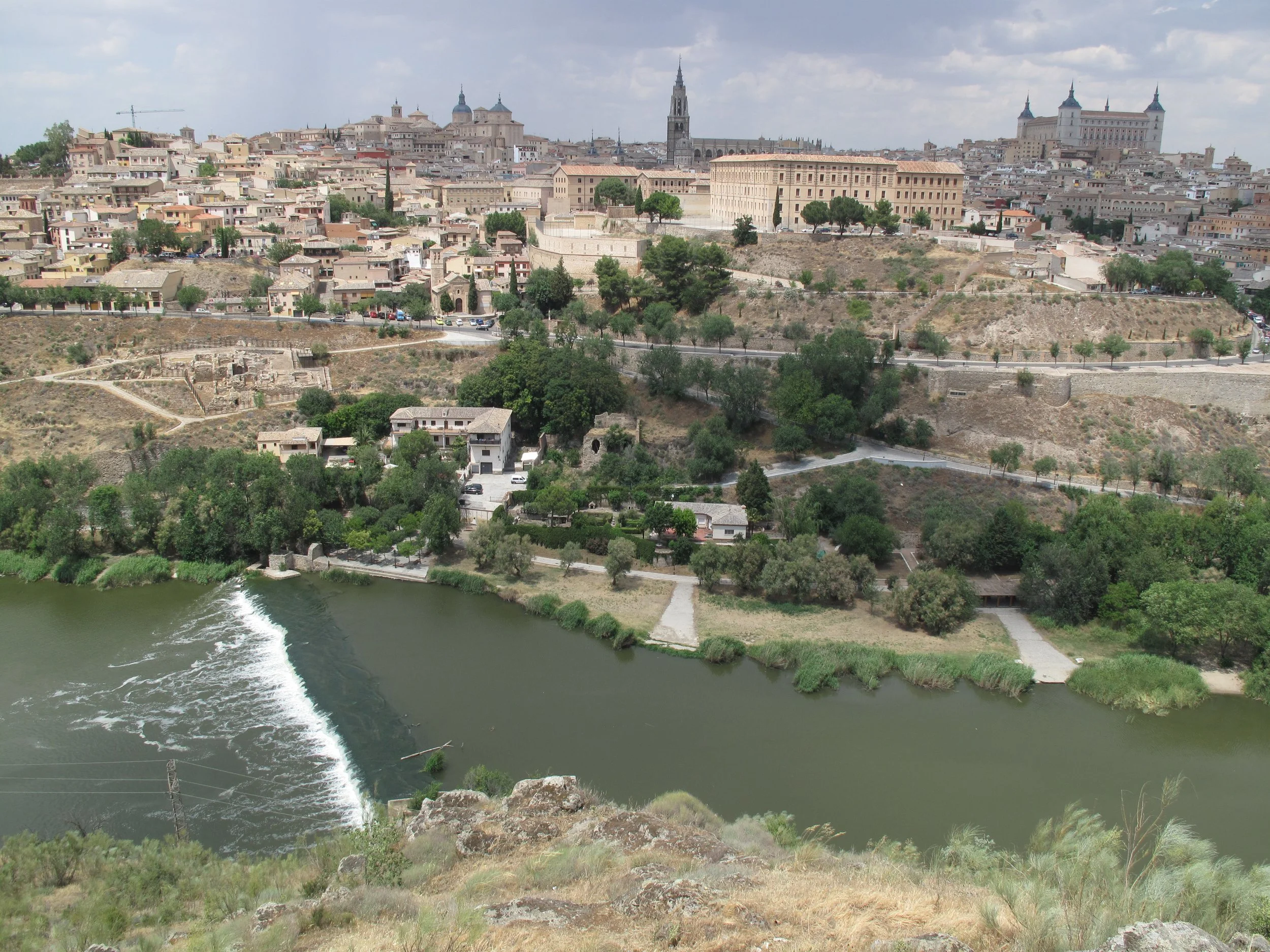
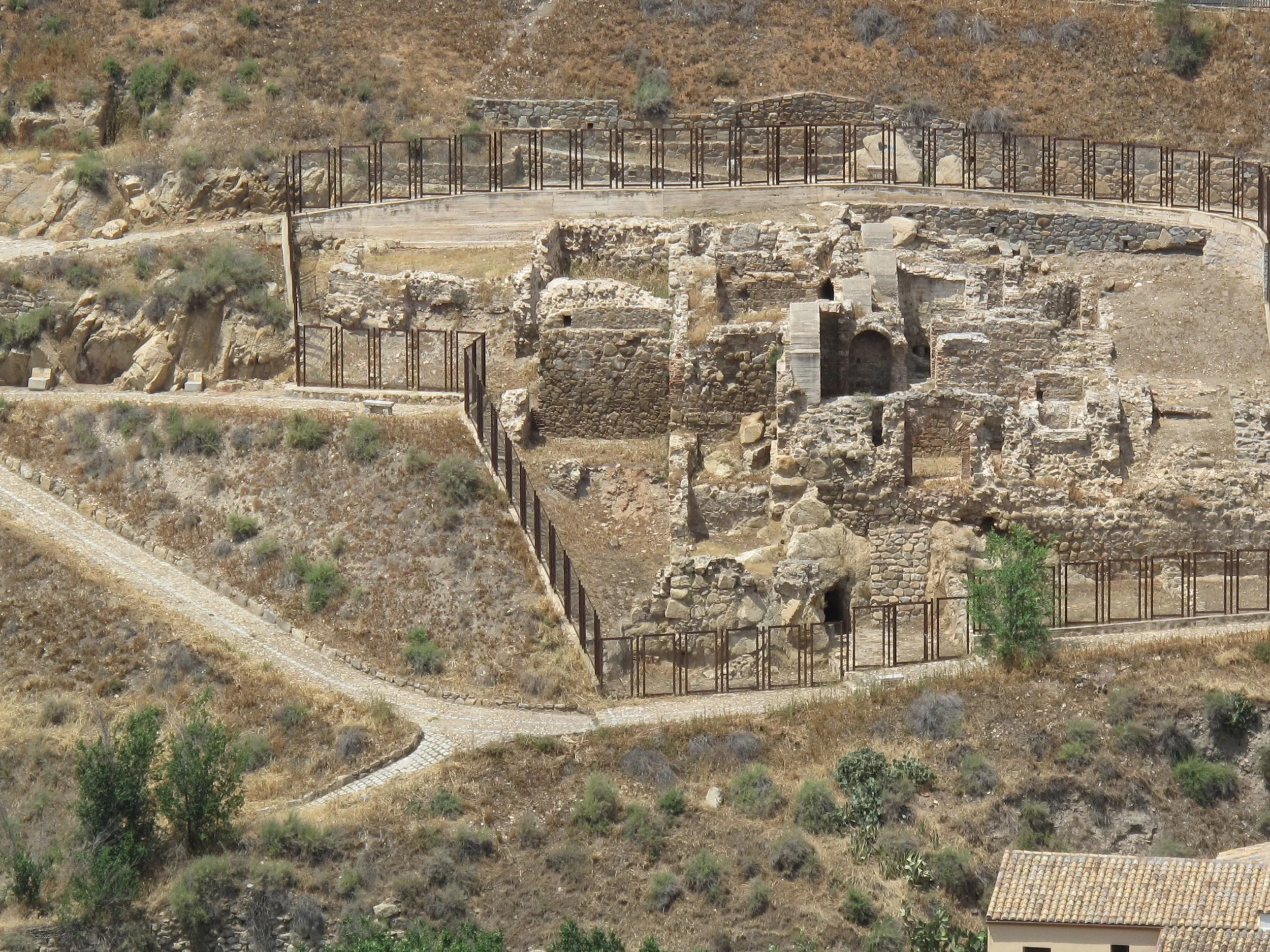
Positioned on the north bank of the Tagus River, the City of Toledo’s history extends back more than 2,000 years. In 193 BC, Roman troops led by Marcus Fulvius Nobilior defeated Celtic tribes and captured a city called Toletum that they renamed Hispania. The Romans built public baths, a circus (open air venue used for chariot races), and a municipal water supply. Later, the city served as capital of a Visigoth kingdom before falling to Arab Muslims during the 8th century. For a brief period during the 11th century, the city was an independent Muslim kingdom. Reconquered by Christian forces in 1062, Toledo became famous for producing bladed weapons such as swords. We drove past the ruins of Banos de Tenerías, Toledo’s public baths that date to the early 11th century. It has been speculated that the baths were built so that people could purify themselves before entering the Al-Dabbagin Mosque.
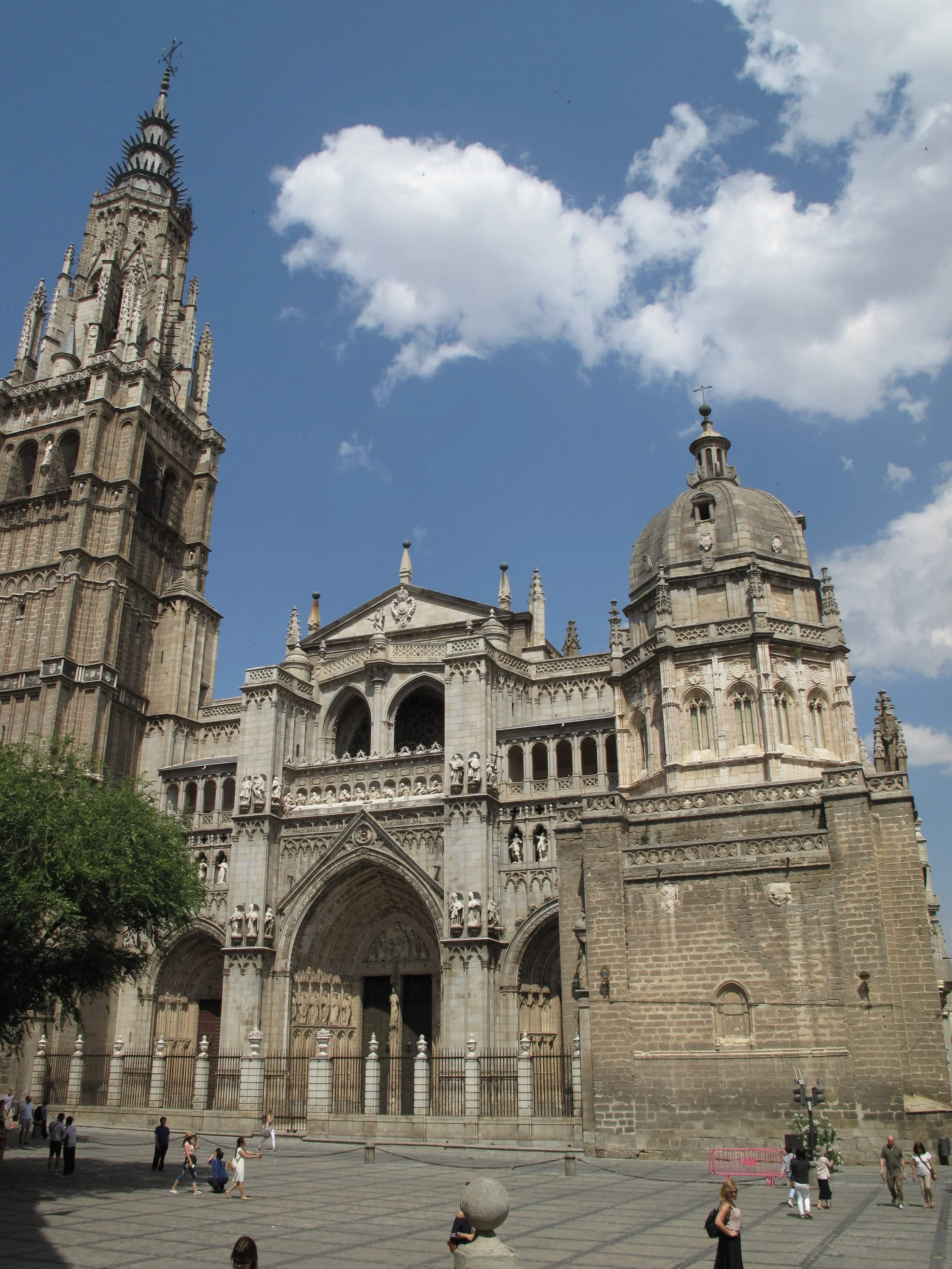
Established in 1085 after the Reconquista (when Christians reclaimed the Iberian Peninsula from Islamic Moors), the Church of Santa Tome was formerly a mosque. Positioned in Toledo’s historic center, the church was rebuilt during the 14th century. We entered after paying a modest admission fee. Inside are enormous horseshoe-shaped arches and a painting by El Greco called “The Burial of Count Orgaz” that depicts the count’s burial. Attendees in the scene include Saints Stephen and Augustine who are depicted as having descended from Heaven. Others shown are El Greco and his son. Considered a masterpiece, the painting is among the city’s most popular tourist attractions.
Madrid is not an ancient city. Established as a modest 9th century Moorish outpost built on a rocky outcrop, it is seventy kilometers northeast of Toledo and positioned near the geographic center of the Iberian Peninsula. Viewed from above, the city appears as a maze of streets and squares with the Manzanares River flowing through its center. Like Toledo, Madrid was captured during the late 11th century Reconquista with arriving Christians soon displacing Muslims and Jews. Madrid’s growth and expansion were tied to the policies of Spanish King Phillip II and later monarchs who wanted the nation’s capital to be in a central location.
Dating to the 15th century, Plaza Mayor is in the heart of Madrid. Forming a rectangle measuring 129 meters by 94 meters, it was originally called Plaza del Arrabal. The site of Madrid’s most popular market until the 16th century, the plaza was completed in 1619 during the reign of King Philip III and remodeled after fires in 1631, 1670, and 1790. The site has an infamous past. In June 1680, 117 people were burned there during the Spanish Inquisition. Later, the plaza was used for brutal contests between matadors and bulls. Today, it is surrounded by restaurants, bars, privately owned businesses, and residences. Facing inwards towards the plaza’s center are 237 balconies.

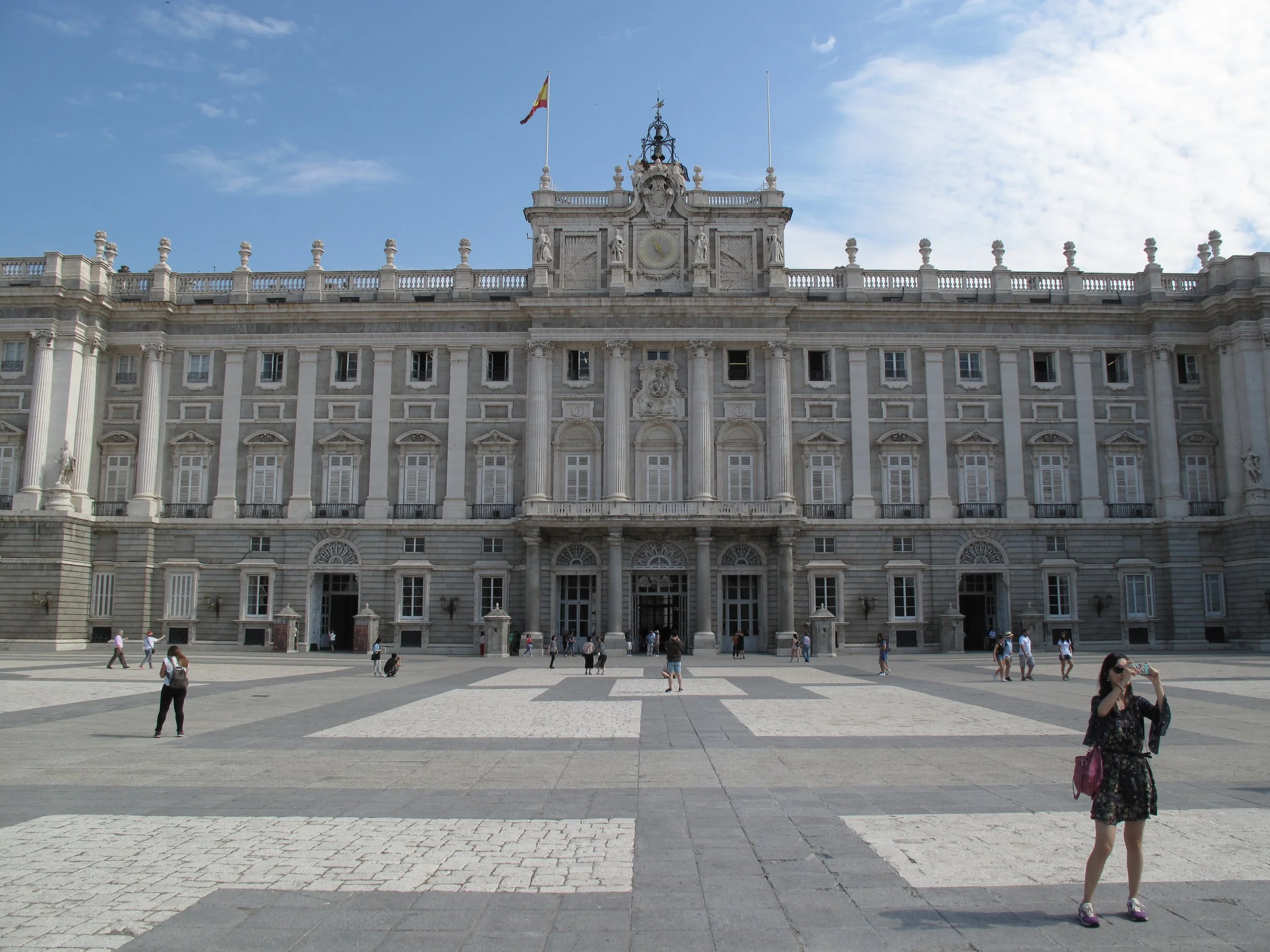
Madrid’s Royal Plaza is just a half kilometer northwest of Plaza Major on Calle de Bailén and near the site of a Muslim fortress built by Muhammad I of Córdoba during the 9th century. Once the official residence of the Spanish Royal Family, the palace is now used for state ceremonies. With over 135,000 square meters of space and 3,418 rooms, it is the largest palace in Europe and was first used as a royal residence in the 15th century during the reign of King John II of Castile and León. Holy Roman Emperor Charles V renovated the palace in 1537. The building was destroyed by a fire in 1734 and subsequently, a new palace was constructed for King Charles III. Inside is the royal library, armory, King Charles III’s apartments, the queen’s apartments, the chapel, and the crown room. Artwork displayed inside includes paintings by Tiepolo and Goya. Built in 1892, we walked through Plaza de Armería, the palace’s main courtyard.
Northeast of the Royal Palace and Plaza Major is Plaza de Toros de las Ventas (aka Las Ventas), Madrid’s bullfighting stadium. Designed with a Moorish style and located in Madrid’s Salamanca District, the arena has a capacity of nearly 24,000, making it the third largest bullfighting stadium in the world after facilities in Mexico City (41,000) and Valencia, Venezuela (24,700). During the Spanish Civil War, the stadium was used as a concentration camp by forces loyal to Generalissimo Francisco Franco. The bullfighting season lasts from March to December. Seat prices are determined by distance to the arena’s bottom and whether a seat is in the shade. In seventy-five years, more than 300 matadors have been injured during bullfights and five have died.
