
Spain. Seville and Córdoba: Moorish Cities of Andalusia
The southern Spanish cities of Seville and Córdoba share a unique architectural style that blends Islamic and Christian influences. Located along the Guadalquivir River, the site of modern Seville was established by a people known as the Tartessians in the 8th and 7th centuries BC and was subsequently occupied by Phoenicians and Carthaginians. In 206 BC, the settlement was conquered by Romans and under Julius Caesar the Roman city of Hispalis was significantly expanded. Following the fall of the Roman Empire, the city was controlled by Silingi Vandals until being conquered by Islamic Moors in 711. The Moors renamed the city Ishbilliyah. The city remained a focal point for violence for several more centuries. In 844 it was sacked by Viking forces and during the 15th century, the city was a focal point for the Spanish Inquisition. Many residents became wealthy as a result of the city’s pivotal role in sustaining a monopoly on trade involving Spanish possessions in the Americas. Only ships operating from the inland Port of Seville were permitted to carry goods to or from the Americas. Today, Seville has a population of about 700,000. Although more than eighty kilometers from the Atlantic Ocean, Seville has continued to operate as a port city because of access provided by the Guadalquivir River.
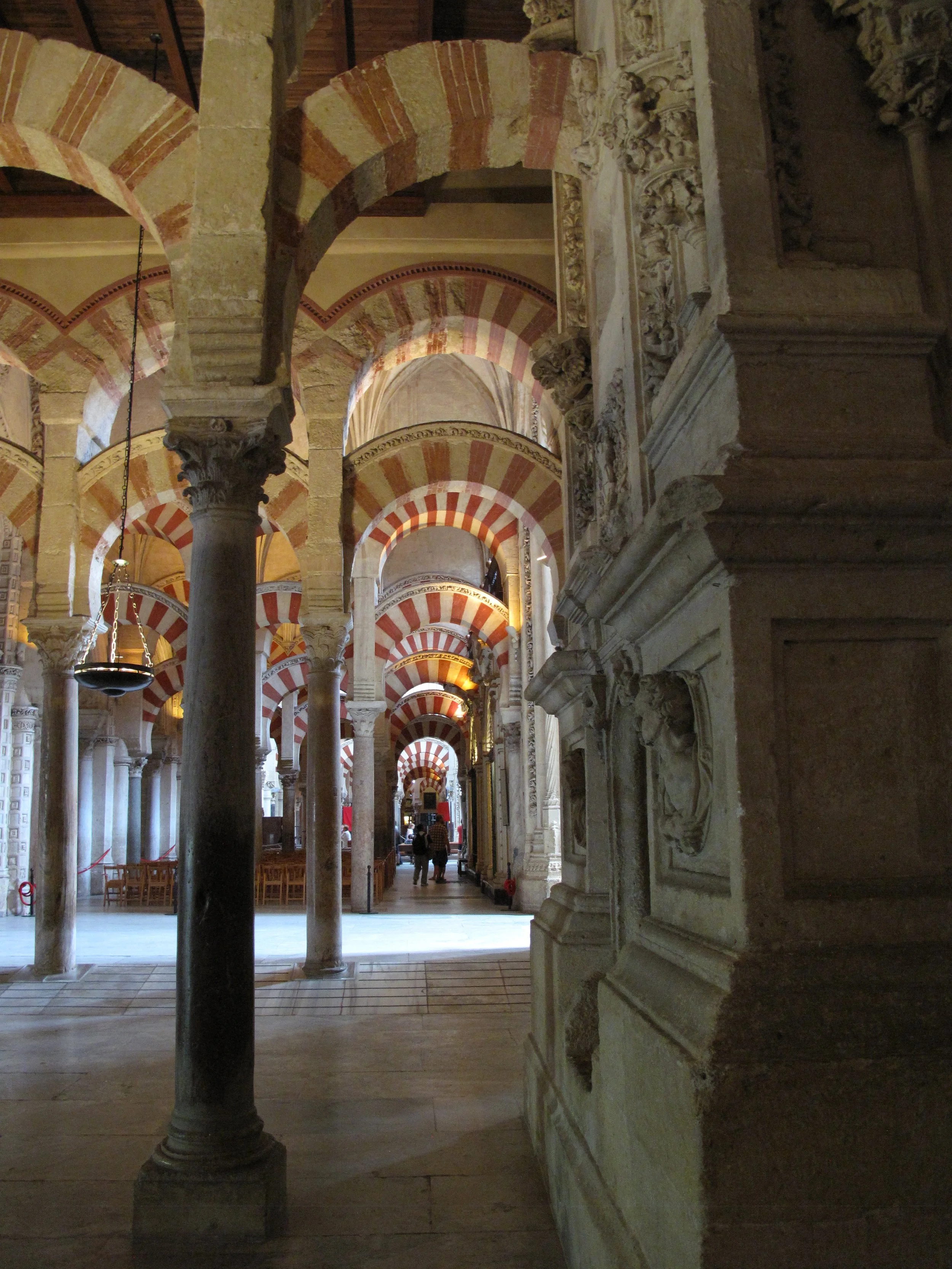
The Cathedral of Seville is the world’s largest Gothic Cathedral. It is located on the site of the Great Mosque of Seville, completed in 1198. While much of the mosque was torn down, its tall (50.5 meter) minaret called the Giralda, remained intact. The height of the Giralda Tower was later increased by 6.8 meters to accommodate a belfry. Giralda’s twin tower is in Rabat, Morocco. A replica can also be seen in Kansas City, Missouri.
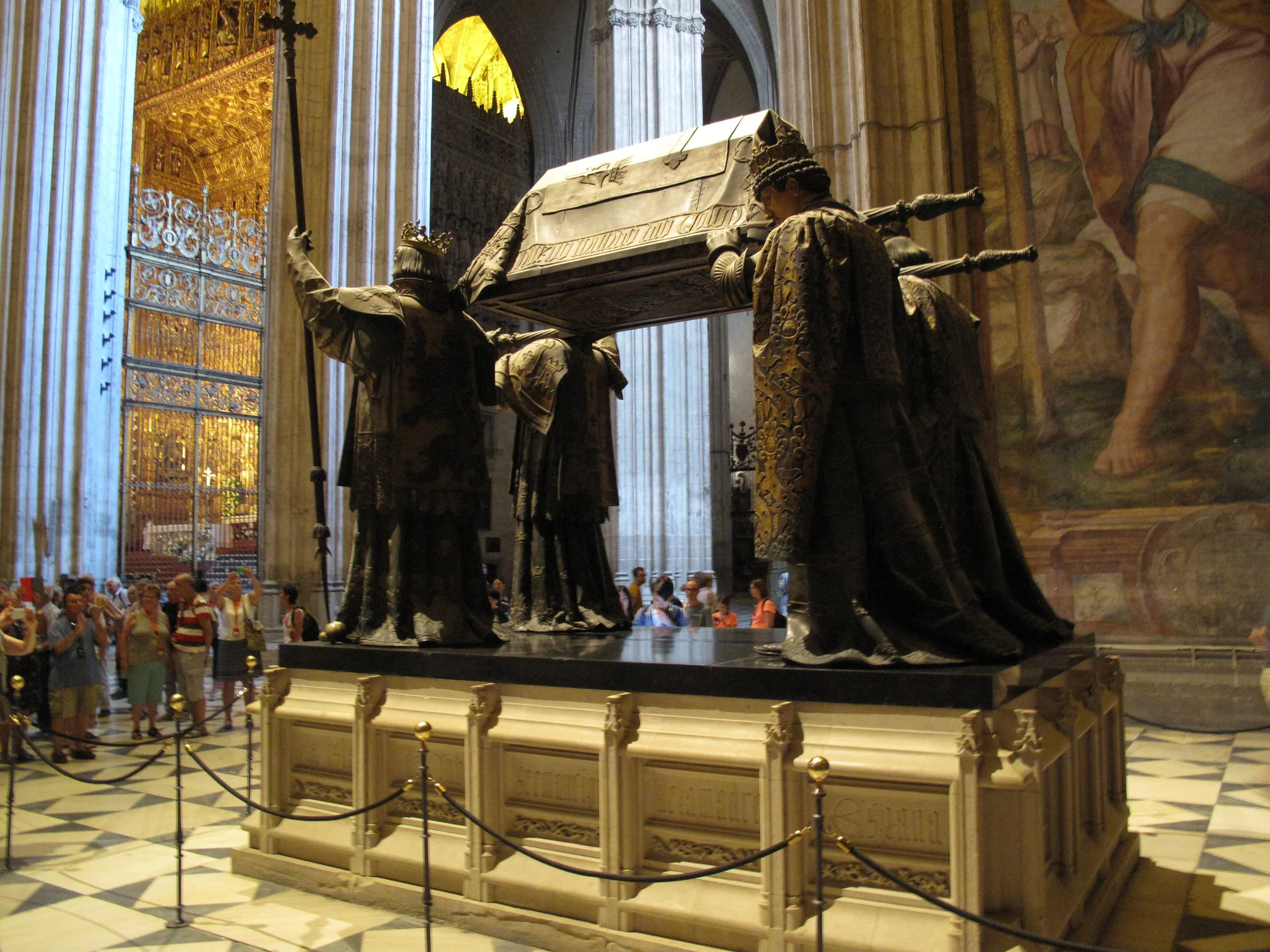
Inside Seville Cathedral is the tomb of Christopher Columbus (1451-1506). First interned on the island of Santa Domingo (now the Dominican Republic), the explorer’s remains were moved to Havana, Cuba and finally, Seville. In 1899, Columbus’s remains were placed in a large tomb inside the cathedral’s entrance. The tomb features four carved figures carrying his coffin with each pallbearer representing the power and authority of one of Spain’s historic kingdoms: Aragon, Castile, León, and Navarre.
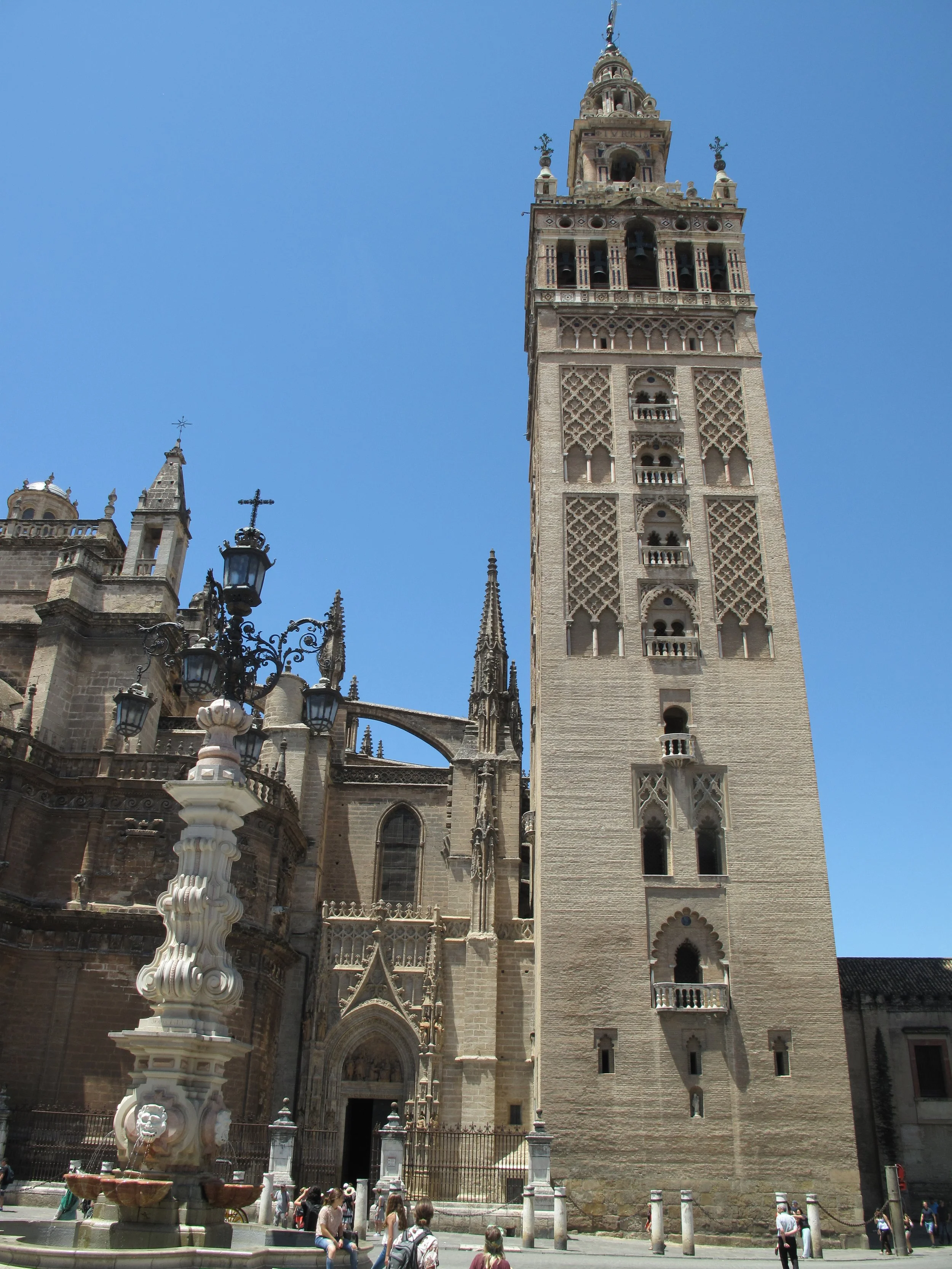
Another stop was Virgen los Reyes Square. While he was governor of Spain, Julius Caesar built a wall along the edge of the square and during the Middle Ages, the courtyard, called Corral de los Olmos (Courtyard of Elms), served as a popular place to discuss religious affairs and politics. On its north side is Archbishop Palace which remains in use by Catholic clergy. Designed with a Baroque façade, Napoleon’s troops occupied the building in 1810.
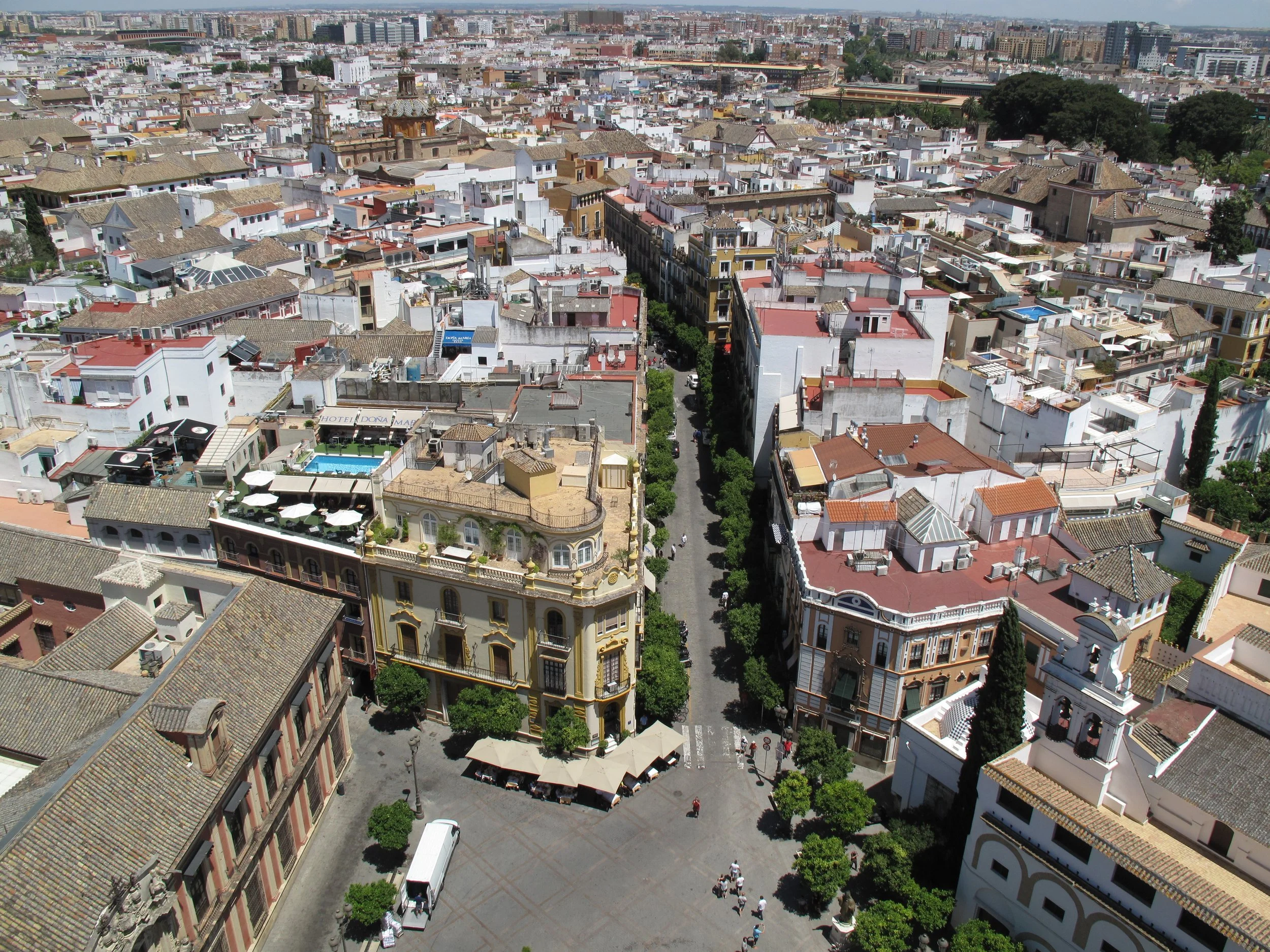
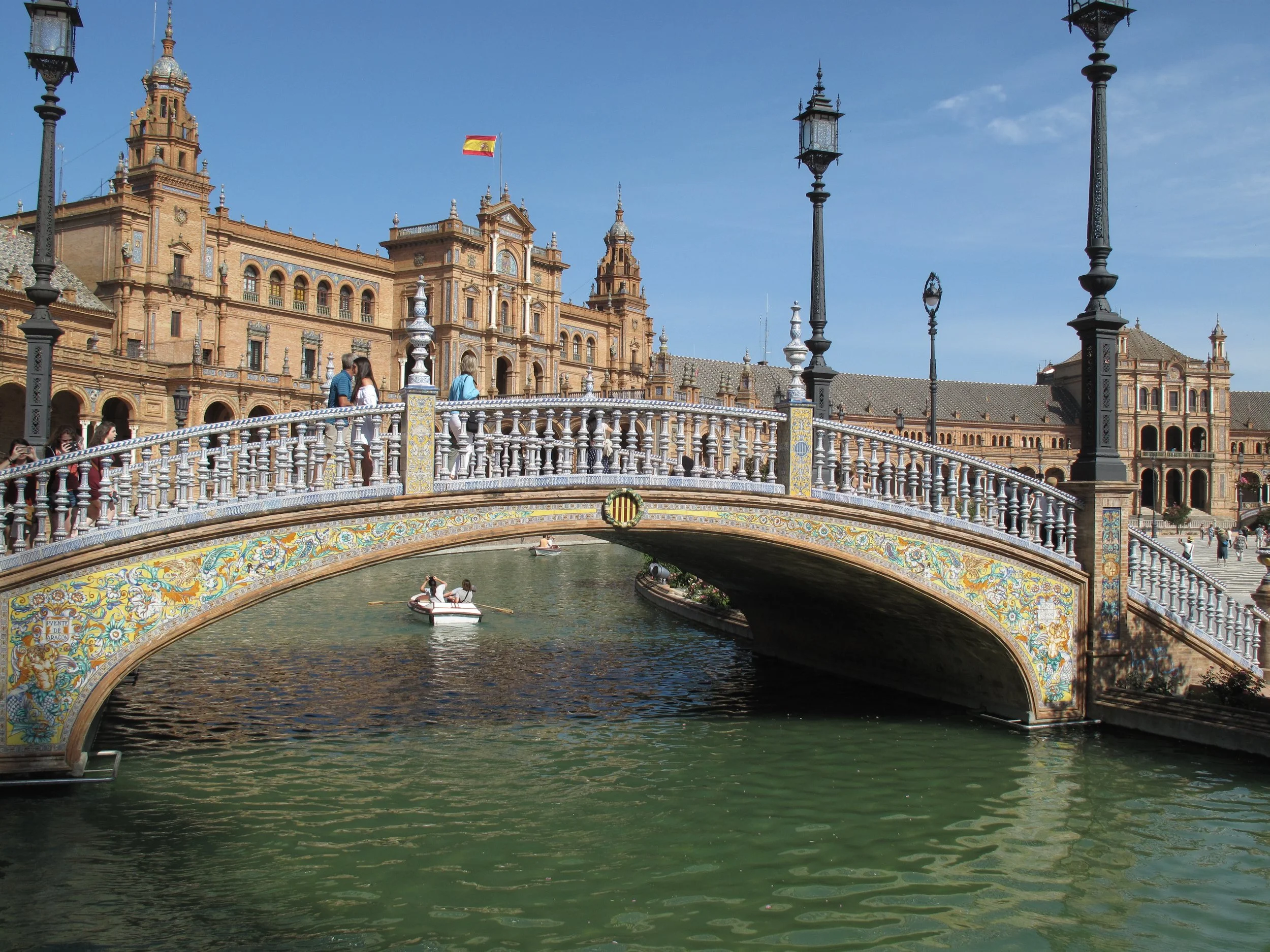
Our final stop in Seville was Plaza de España, a complex constructed for the 1929 Ibero-American Exposition. The plaza’s unique design blends Renaissance, Baroque, and Moorish architectural elements with grounds that include pavilions, tiled fountains, ponds, pools, benches, and rows of Mediterranean pines and palms. During the exposition, exhibits in the central building showcased Spain’s industry and technology. The building complex is arranged in a semicircle with four bridges extending over canals. More recently, Plaza de España has been used as a backdrop for movies including Lawrence of Arabia (1962), Star Wars: Episode II – Attack of the Clones (2002), and The Dictator (2012). Today, its buildings are used as offices for government agencies.
Córdoba is located about 130 kilometers northeast of Seville. Positioned along the Guadalquivir River in the Province of Andalusia, the city began as a Roman settlement before it was taken over by Visigoths in the 5th century. Islamic forces took the city during the 8th century conquest of Iberia and soon after Córdoba became capital of the Caliphate of Córdoba and part of the Muslim Umayyad Dynasty. We stopped for a few minutes above the main bridge over the Guadalquivir River. Constructed using wood, the first bridge on this site was built by the Romans in the 1st century BC. It was connected to the Via Augusta, a road linking Cádiz and Rome. Since that time the bridge has been reconstructed several times. Built using bricks, the 247-meter-long by nine-meter-wide Moorish bridge that now spans the river has sixteen arches (aka arcades). In 1140, Arab geographer Al-Idrisi described it as surpassing “…all other bridges in beauty and solidity.” The bridge’s south end has a fortified tower constructed in the 12th century. In the 14th century the bridge was instrumental in stopping attacks by enemies including Spain’s Peter the Cruel (1334-1369) and in the 16th century, Puerta del Puente (Gate Bridge) was added to the bridge’s north end. Used in the TV miniseries, Game of Thrones, the bridge was called “Long Bridge of Volantis.”
