Hawaii. Legacy of a Pineapple Empire
For many, the pineapple is a symbol of Hawaii. During the 20th century, industrialist James Dole initiated an advertising campaign that helped make the fruit an icon of Hawaiian hospitality. Although grown for decades, the pineapple is not native to the Hawaiian Islands. The fruit originated in South America’s Paraná-Paraguay River Basin in southern Brazil and Paraguay. Introduced to the Hawaiian Islands by the Spanish, the pineapple became a major export product in the early 20th century under Dole’s leadership and by the late 1950s, the Hawaiian Islands produced nearly 80% of the world’s canned pineapple and pineapple juice, amounting to more than five million cans per day.
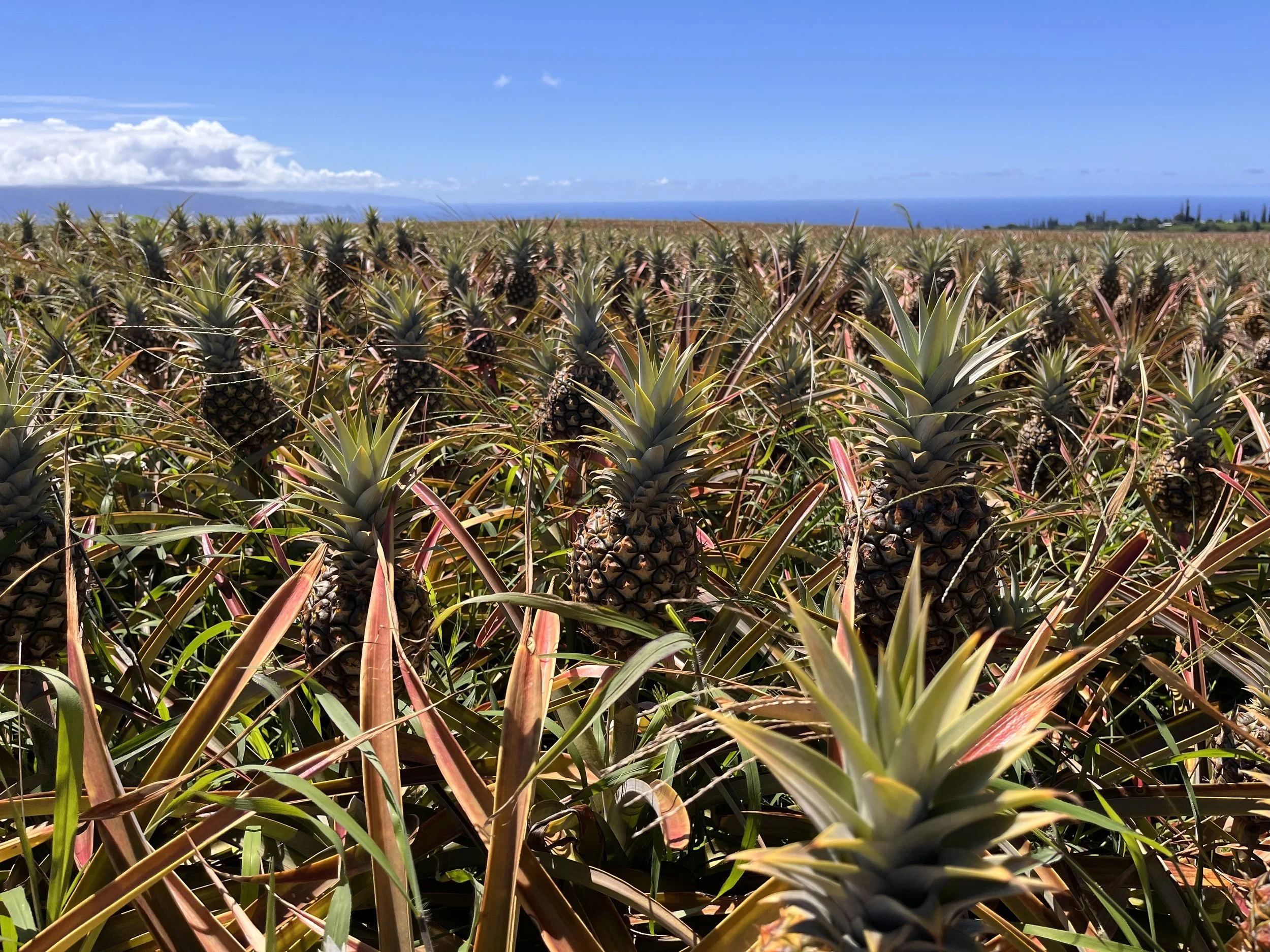
With a short, stocky stem and waxy leaves, the pineapple is an herbaceous perennial shrub that grows to heights of one to 1.5 meters. Pineapples were consumed by early peoples including the Guarani Indians of South America who called them “nana” meaning “excellent fruit.” Popular among the Mayans and Aztecs, the fruit was brought to Spain by Columbus in 1496. Because it had the appearance of a pine cone, Columbus called them “piña de indes” meaning “pine of the indians.” Considered a luxury item, the pineapple became popular in Europe during the 17th century. Hawaii’s first pineapple plantation was established by Dole in 1900 and by the mid-1950s, more than 31,000 hectares of land in the islands were in production under eight major plantation companies. However, with cheap labor costs in countries such as the Philippines and Costa Rica, Hawaiian pineapple production began to fall in the 1960s. By 2013, the islands’ share of world pineapple exports was just 0.1%.
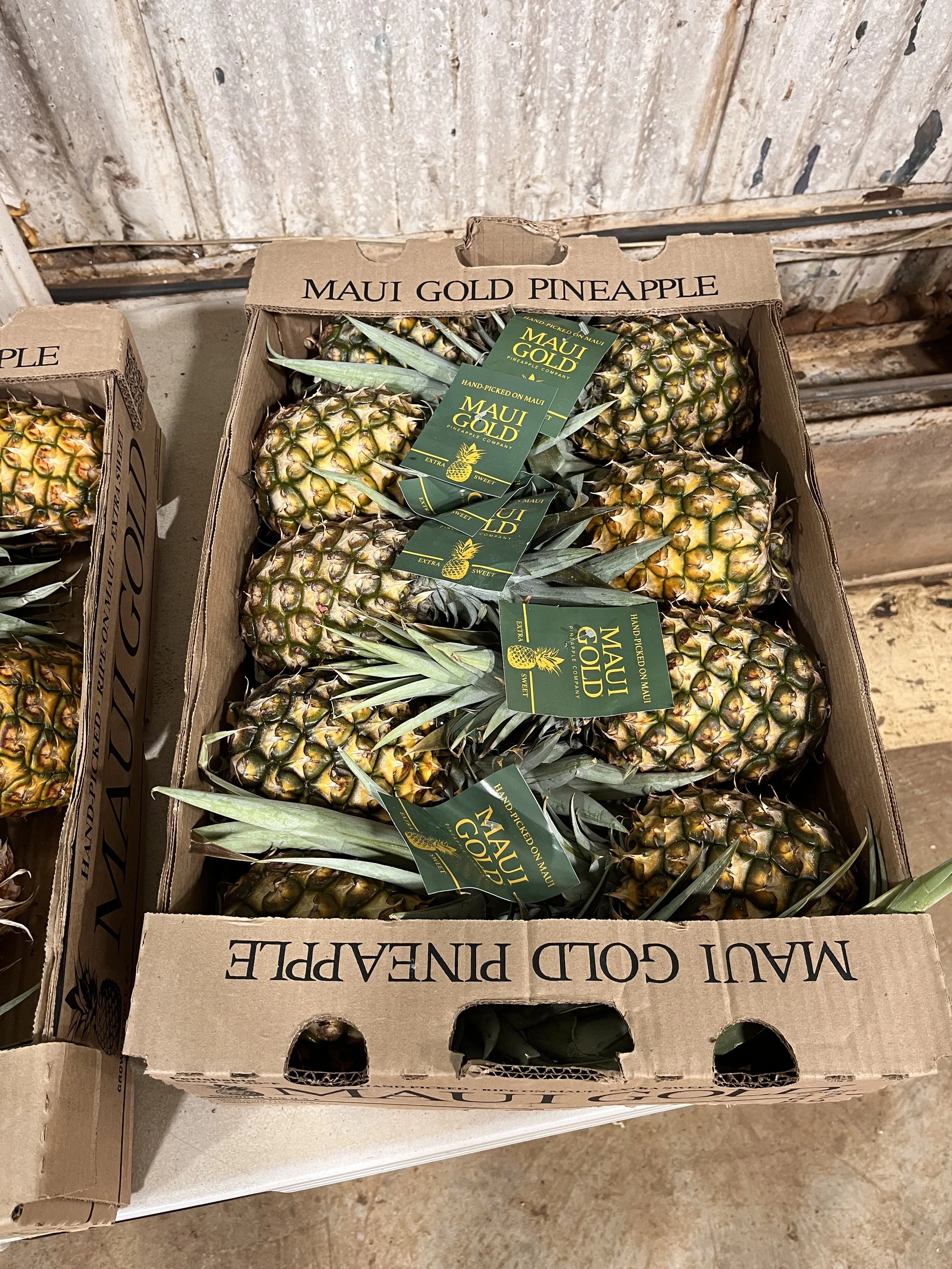
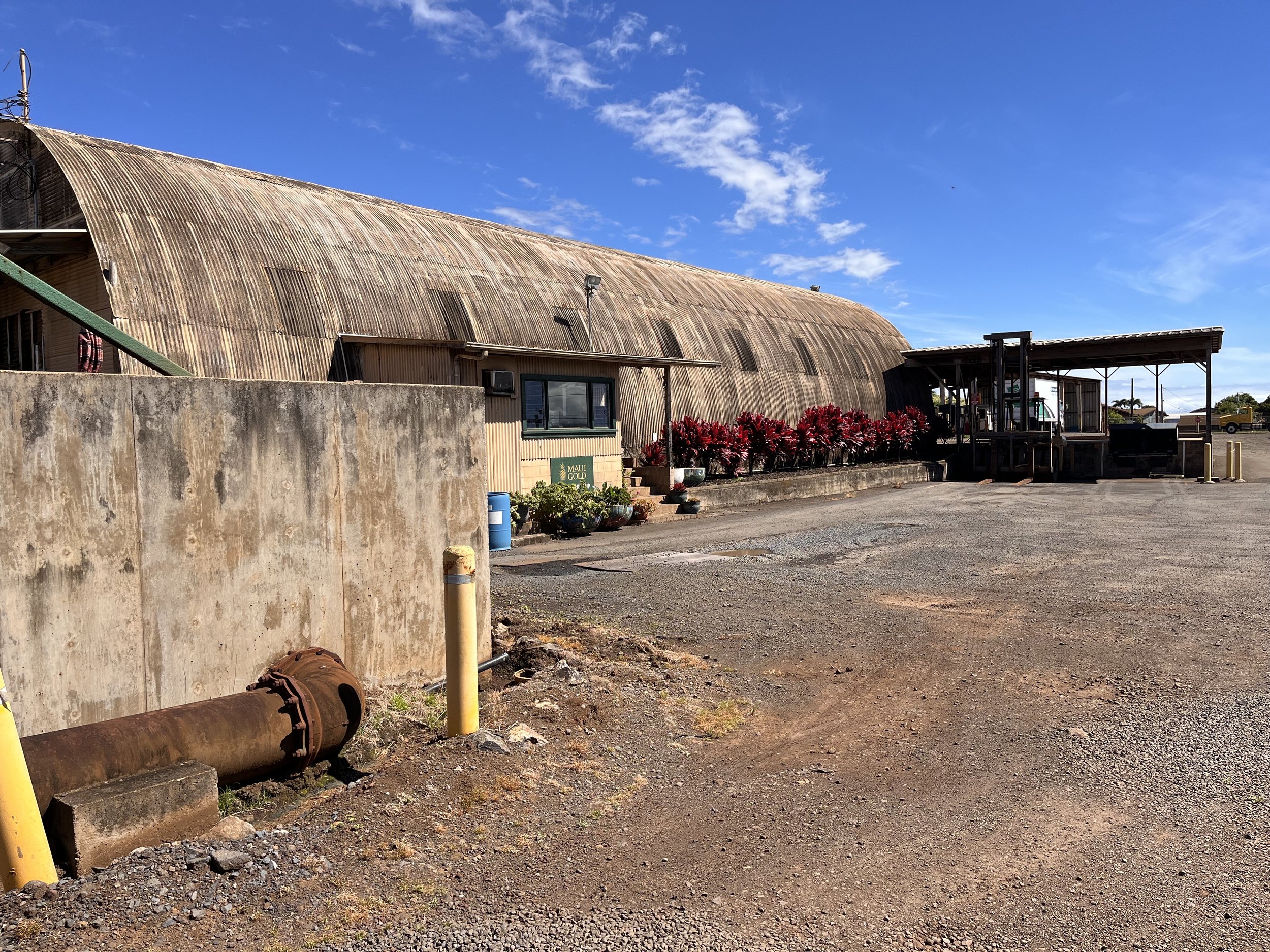
Pineapples are roughly 86% water by volume. After cleaning, they are packed in crates or sliced and canned in a sugar syrup that acts as a preservative. After pineapples are harvested their leafy crown can be replanted. Today, pineapples are served in salads, as a garnish on hams, added to yogurt or ice cream, or used in making fruit beverages and cocktails. Accompanied by two friends, my wife and I made arrangements to tour one of two remaining commercial pineapple plantations on the islands (one is on the Big Island and the other on Maui). The first pineapples planted above Maui’s Honolua Bay were part of an experiment. In 1912 the Maui Pineapple Company began a plantation on the site. Baldwin Packers came in 1920 and by 1924 production reached 4,500 cases per day. In 2009 the company closed its doors after 97 years in operation. The following year a group of former company executives and local residents organized the Hali’imaile Pineapple Company. Among other products, Hali’imaile produces Maui Gold, a hybrid sweet variety of pineapple that is low in acid.
Our tour began at a shop located adjacent to the plantation’s fruit processing and packing facility. A guide explained that the company has 80 full-time employees. After boarding a bus, we were told that pineapples are intolerant of dry conditions or excessively wet or flooded soil and grow best in direct sunlight when planted 21 to 91 centimeters apart. After planting, the fruit’s stalk rises above its leaves. It was noted that, while some insecticides are used, the company emphasizes sustainable farming practices. Under natural conditions, pineapples are most often pollinated by hummingbirds. However, unpollinated plants are preferred since they produce seedless fruit. For this reason, the introduction of hummingbirds to the Hawaiian Islands is prohibited by law. Several months after planting, the rows of fruit are sprayed with ethylene, a gas that stimulates flowering and causes the fruit to swell in size. It takes 18-24 months for a plant to mature and flower and six more months for it to ripen.
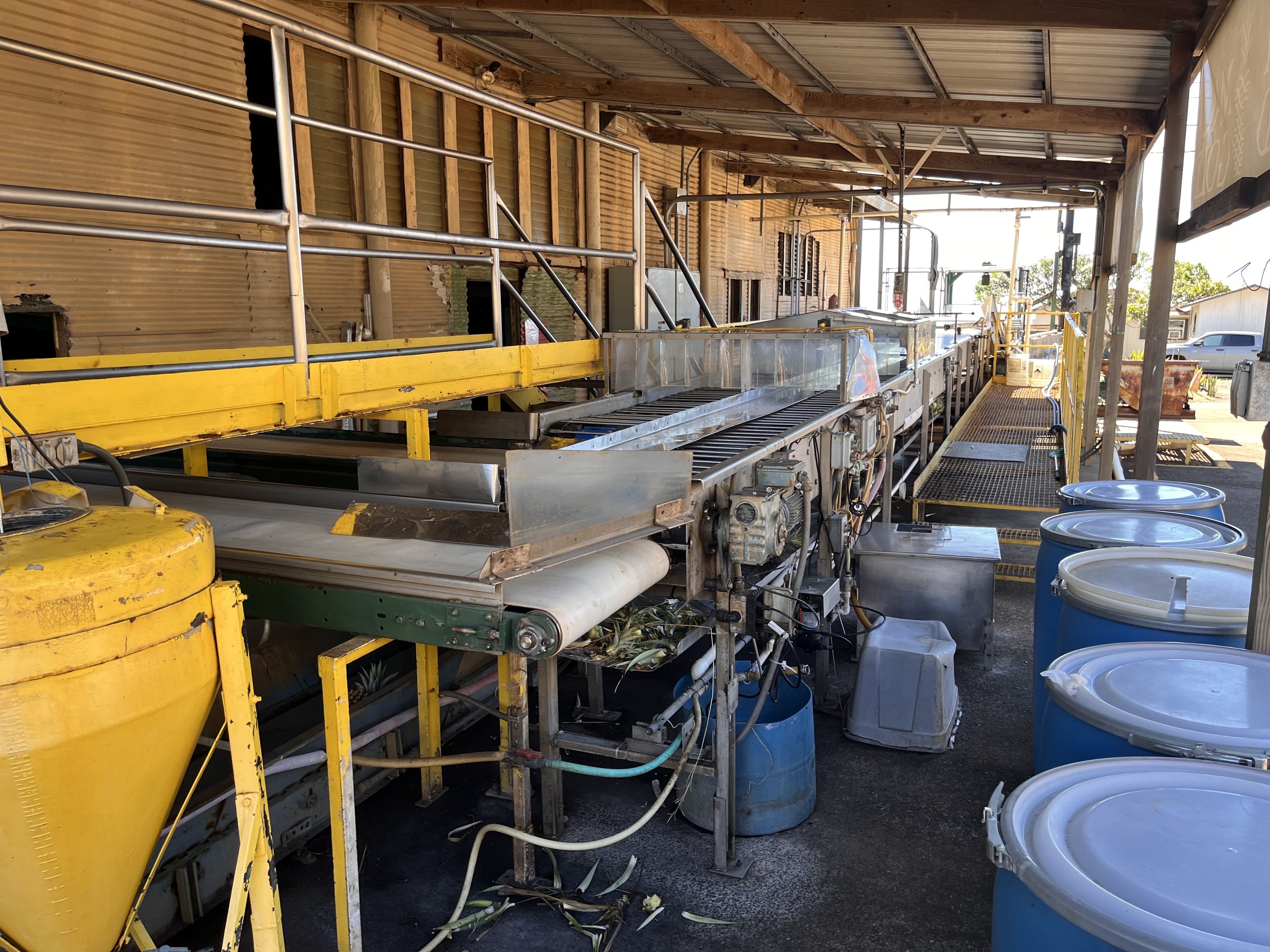
An indicator that a pineapple is ready to be harvested is when its skin changes from dark green to golden yellow and the fruit gives off a sweet aroma. Farmers can also use a refractometer to assess sugar content and evaluate pulp quality. When they are ready to be picked the fruit weigh about two kilograms and are 30 centimeters in length. Harvesting is done by hand because the fruit are easily damaged. Groups of workers wearing headcovers and clothing for protection against dust, bugs, and sharp leaves walk through rows of fruit, tossing mature pineapples onto a 19-meter-long conveyor belt. The process of picking and packaging is relatively fast. Fruit picked on Tuesday is packed for shipping on Wednesday.
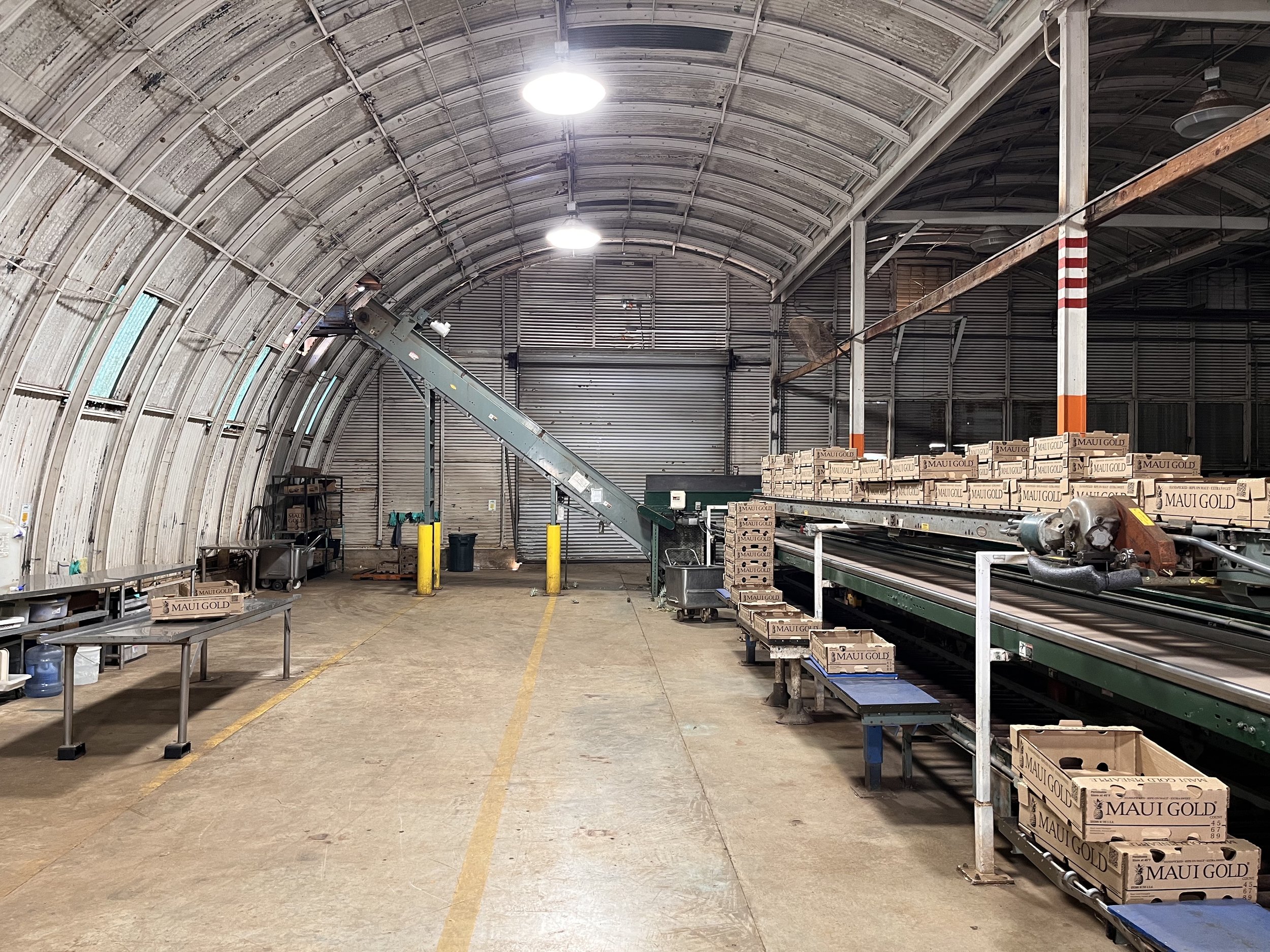
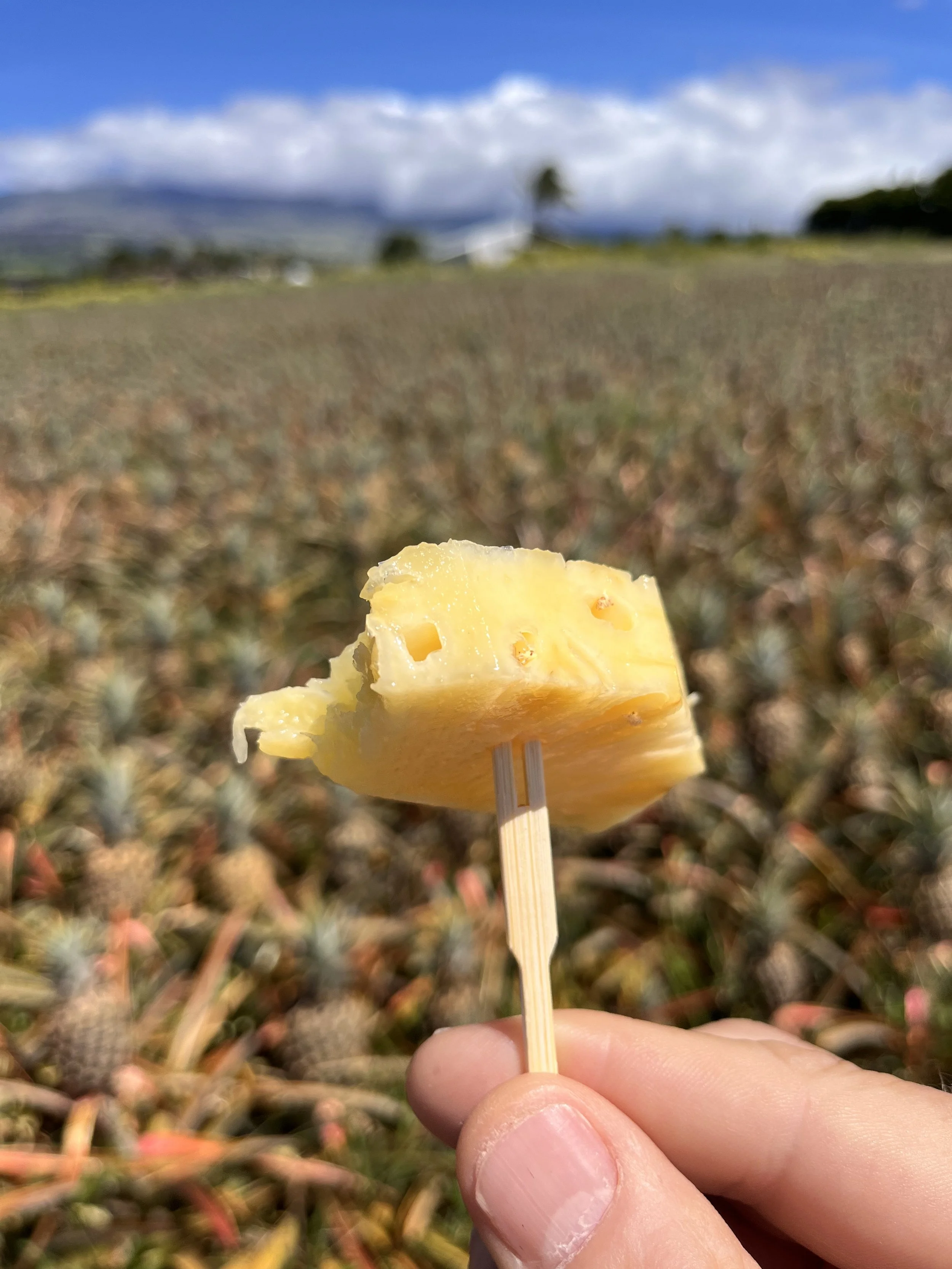
After sampling a few pineapples in the field, we returned to the processing facility where the fruit are sorted and pass through a disinfectant wash to remove dirt, residual pesticides, and insects. The most attractive fruit are sold whole while others are used to make juice. Today, Hali’imaile’s plantation produces between 2.5 and 3.7 million pineapples each year with U.S. mainland orders accounting for 20% of sales. The fruit are shipped via FedEx to ensure freshness. Some fruit grown on the plantation goes to the company’s partner, the Maui Winery at Ulupalakua Ranch, to be made into pineapple wine while another portion is made into a smoky flavored pineapple jam. At the conclusion of our tour each of us was given a cardboard box containing two Maui Gold pineapples.