Australia. A King Tide at Queensland’s Great Barrier Reef
Although I’ve visited Australia’s Great Barrier Reef (GBR), I can’t say that I’ve seen much of it. Forming the largest reef system in the world, the GBR encompasses more than 344,000 square kilometers, an area almost as large as Montana. Extending along the northeastern coastline of Queensland, the 2,300-kilometer-long reef includes 2,900 individual reefs and 900 islands. While scientists characterize it as the planet’s largest structure of living organisms, tourist publications list it as one of the Seven Wonders of the Natural World. Today, the GBR receives about two million visits each year.
The GBR was well known to aboriginal people. British Captain James Cook and his crew were the first Europeans to explore the reef while traveling on the HMS Endeavor. Mapping the east coast of Australia in 1770, the Endeavor ran aground on a reef near present-day Cooktown. Navigation around the reef remained challenging with twenty ships lost between 1791 and 1850.
Coral that makes up the reef are marine invertebrates living in colonies of identical polyps. The sac like animals excrete calcium carbonate that forms a hard skeleton. Living coral grows on the skeletons of generations of dead coral with the bottom-most layer attached to bedrock. The smallest coral polyps are about the size of a fingernail. Forming on a substrate of coastal plain, the reef grows horizontally at a rate of 1.18 centimeters a year and cannot expand into water deeper than 150 meters because of the absence of sunlight needed by algae, a food source for zooplankton that are consumed by coral. Temperature is another critical factor. Coral survives in reef waters between 21°C and 38°C. It is believed that reefs have been present within the area since the Miocene epoch (12 million to 5.3 million years ago). However, the present reef is estimated to be 6,000 to 8,000 years old. The GBR has more than 1,500 fish species including 17 species of sea snakes, 125 types of stingrays, sharks and skates, and 5,000 varieties of mollusks including giant clams. Common fish are damselfish, angelfish, trigger fish, and several types of sharks. There are also sponges, worms, prawns, crabs, and anemones and 400 species of hard and soft coral. More than 2,100 species of plants and 215 species of birds occupy the reef’s islands, coral cays, and mangrove forests. One especially troublesome underwater resident is the crown of thorns starfish that damages the reef by feeding on coral polyps.
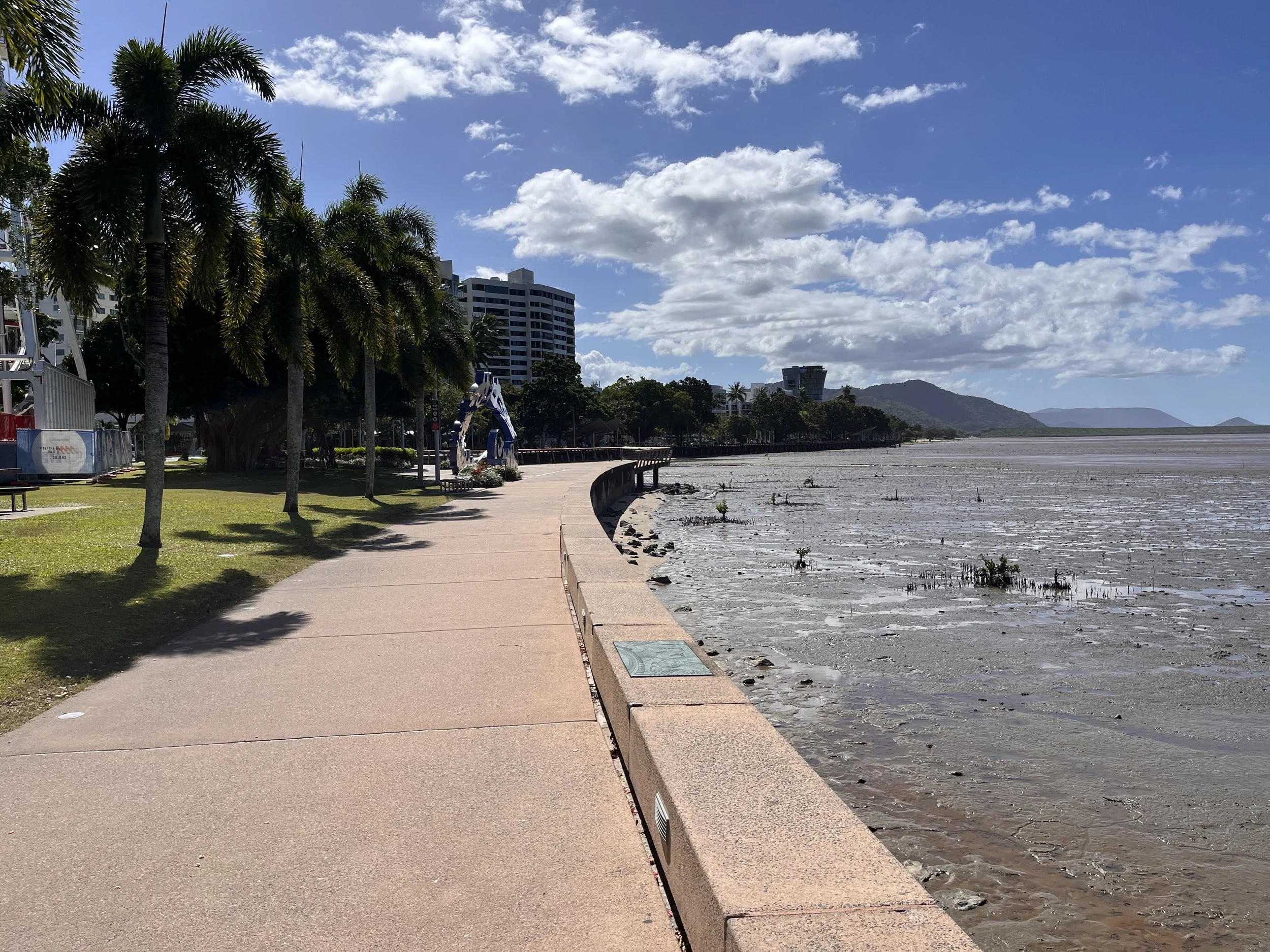
Our plane arrived at the airport in Cairns (pronounced “cans”). Located on the Cape York Peninsula along Trinity Bay, the city was named in honor of William Cairns who served as governor of Queensland from 1875 to 1877. Today the city’s central business district has a population of about 3,600 people and its larger metro area, about 160,000. After leaving our bags at our Airbnb we explored the town center which surrounds Esplanade Lagoon, a large saltwater pool complex open to the public.
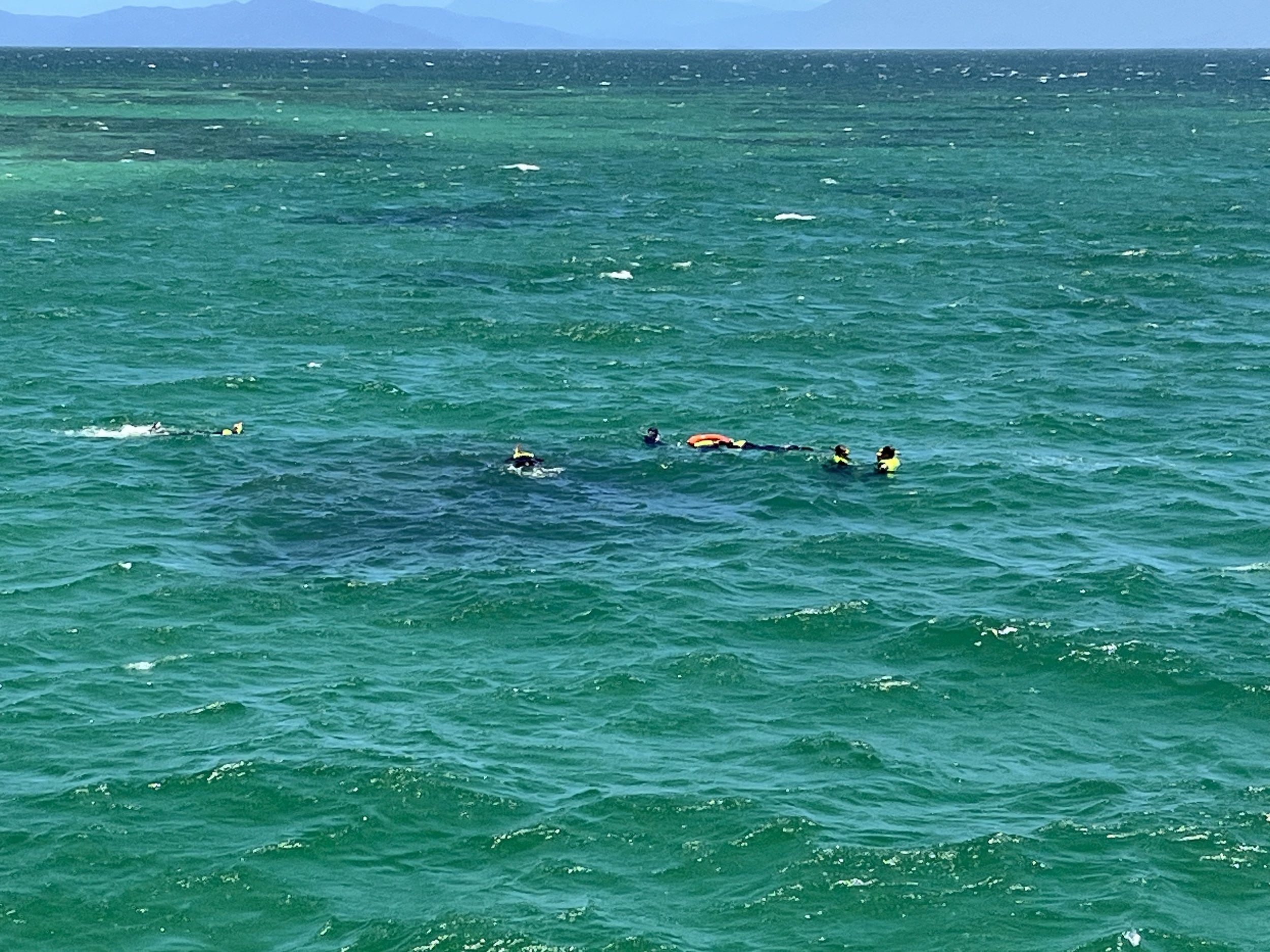
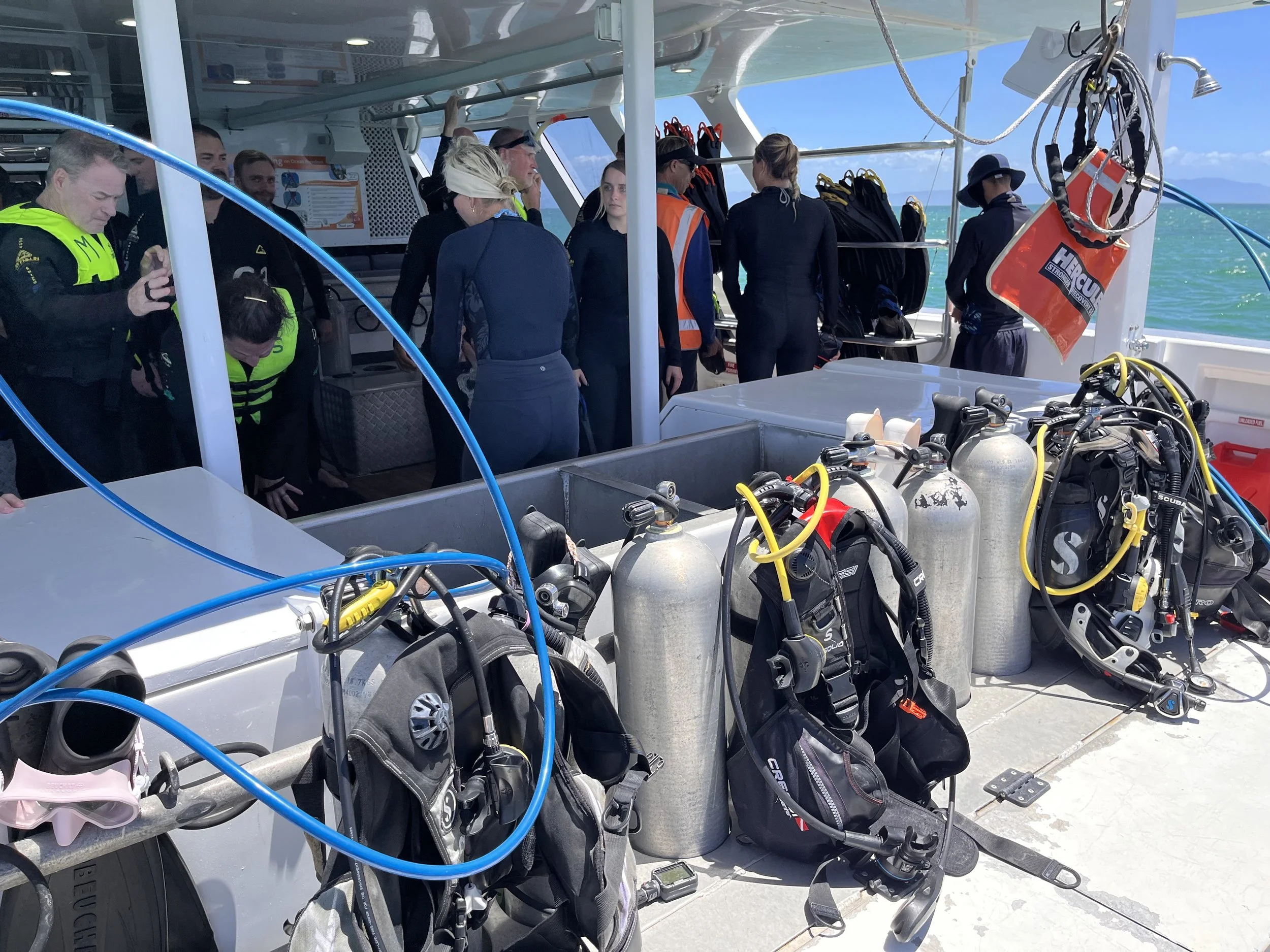
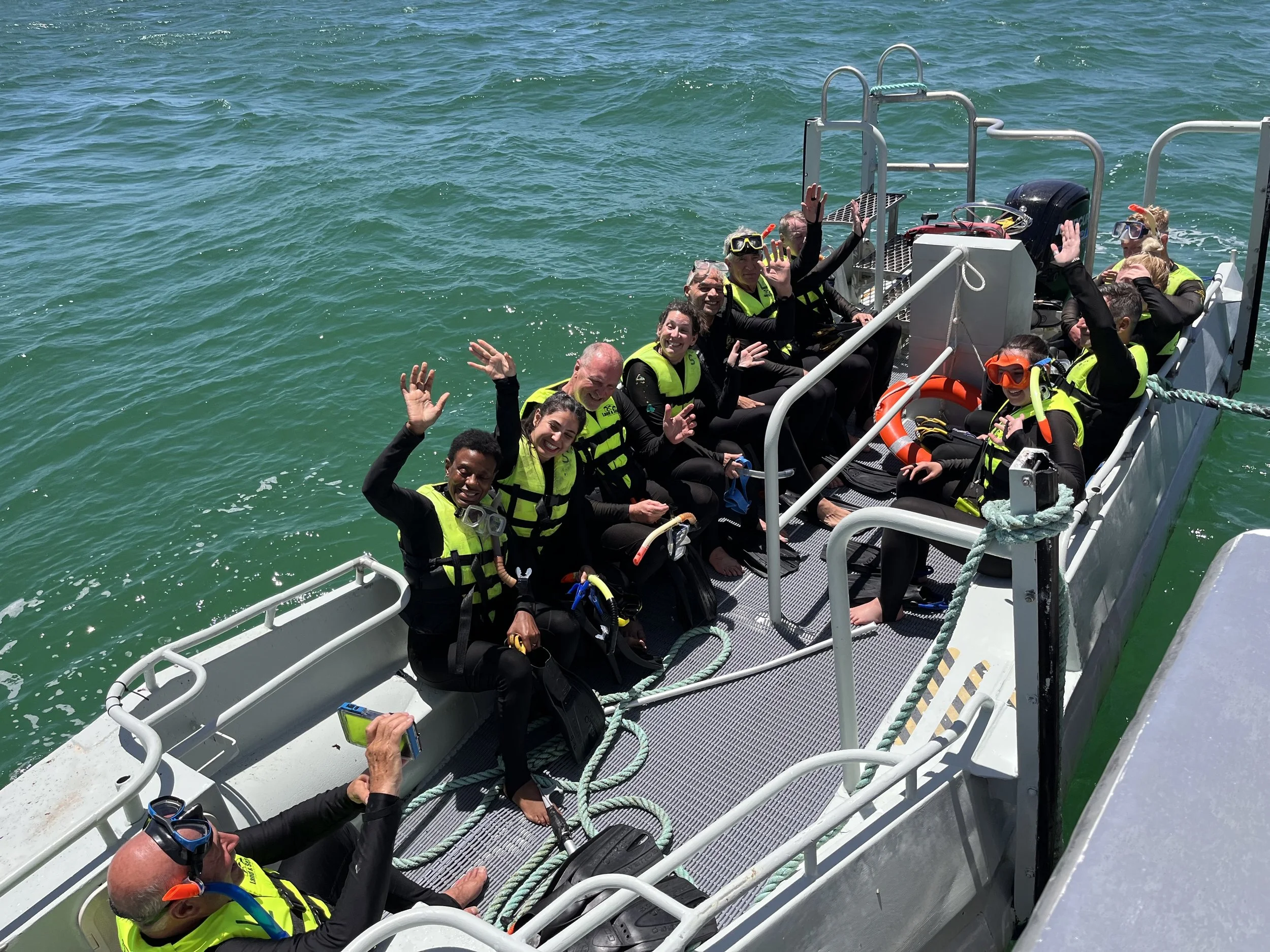
The next morning my companions and I walked to the Reef Fleet Terminal at the city’s waterfront and boarded a 35-meter catamaran for the 90-minute (55 kilometer) trip to Saxon Reef. During our outbound journey we were fitted with stinger suits. The full-body black neoprene wetsuits offer protection from dangerous box and Australian jellyfish. On arrival at Saxon Reef, we boarded a smaller boat in groups of ten for the short ride to the reef. After putting on our masks, snorkels, and fins, we explored reef waters in groups of two. Below and around us were colorful coral formations and hundreds of fish, among them black, white, and orange clownfish. The clownfish has a symbiotic relationship with anemones. Hiding within the anemone’s tentacles, the clownfish lures prey to the anemone while receiving protection from predators. A protective layer of mucus prevents the clownfish from being harmed by stings from the anemone. Regrettably, our reef visit coincided with a “King Tide” that raised the ocean level well above coral formations. King Tides coincide with the perihelion, a date when the earth is closest to the sun and at the perigee, when the Earth and moon are closest together.
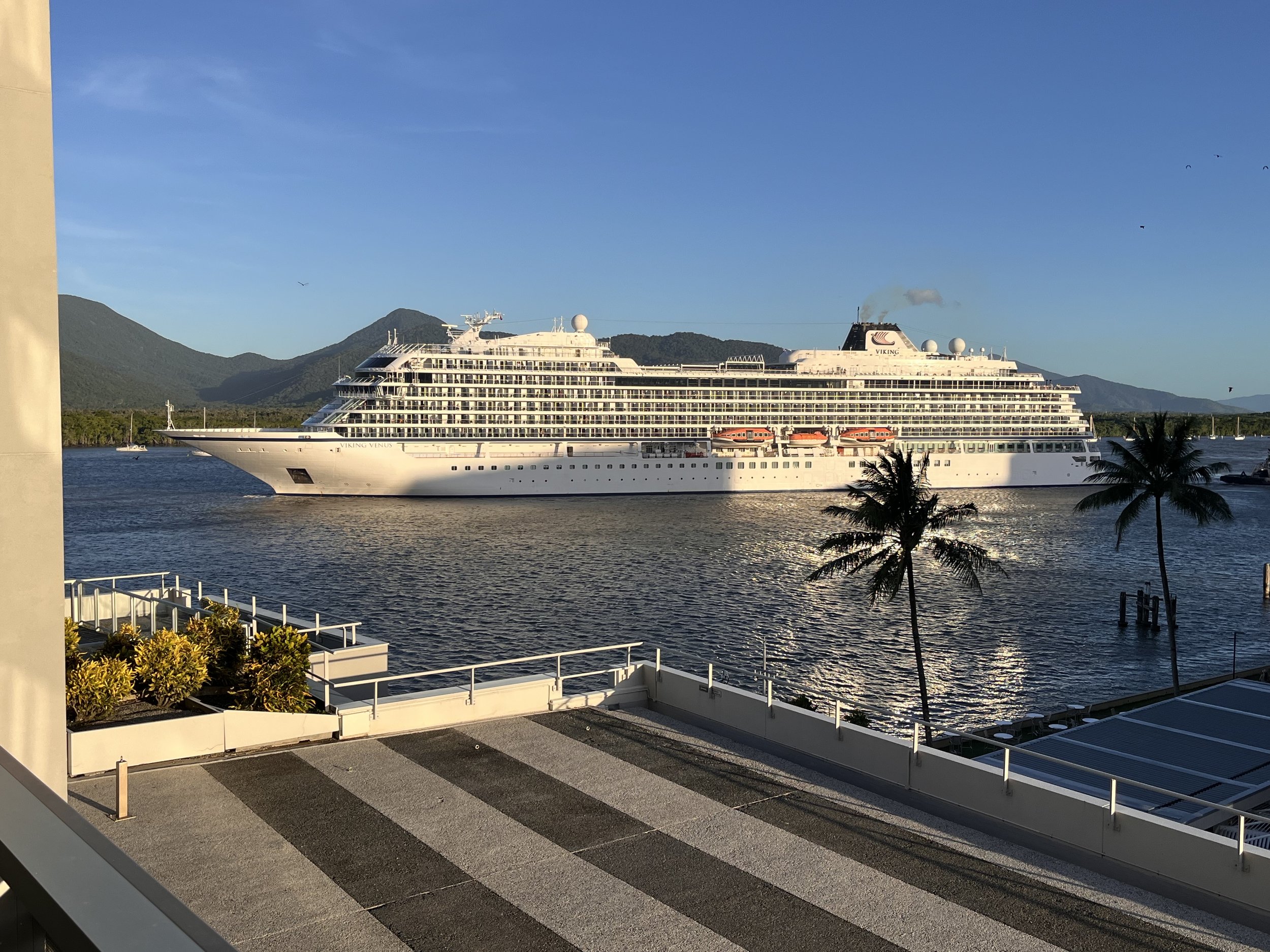
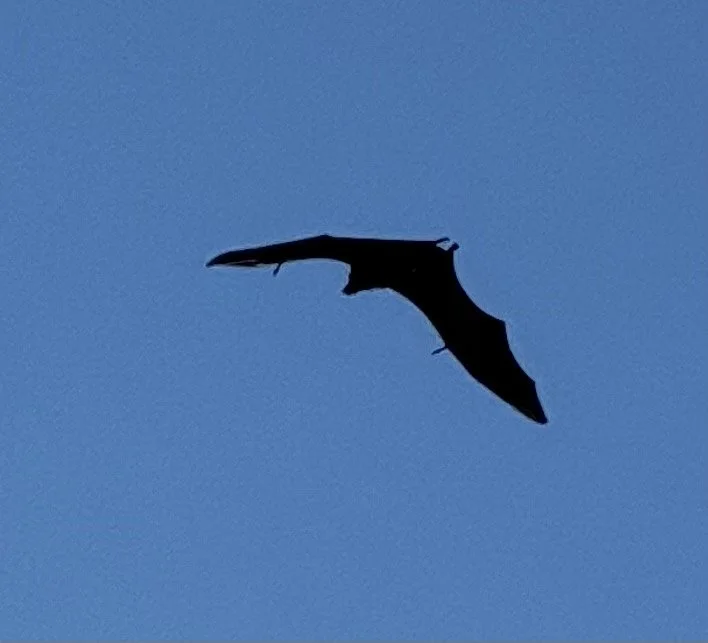
Returning to Cairns we took time off to relax on the balcony of our Airbnb. Above us, a succession of large birds passed overhead. When one came closer, we realized that the flying creatures were enormous bats, later confirmed to be a species known as the spectacled flying fox. With a 1.2-meter wingspan, they looked like grotesque flying monkeys appearing in the 1939 movie, The Wizard of Oz. Spectacled flying foxes live in forests and mangrove swamps and eat rainforest fruits and flowers. Nocturnal and social, they roost in “camps” that can include ten thousand or more individuals.