Japan. Temples and Shrines of the Thousand Year Capital
Featuring more than 2,000 Buddhist temples and Shinto shrines, the imperial city of Kyōto is a place every visitor to Japan should see and experience. The city of 1.5 million is located on Honshu, Japan’s largest island and about 50 kilometers northeast of the industrial city of Osaka. Spared from bombing during WWII, Kyōto is a city of palaces, shrines, temples, and gardens. I was fortunate to visit the historic city on a tour of southeast Asia in 1979.
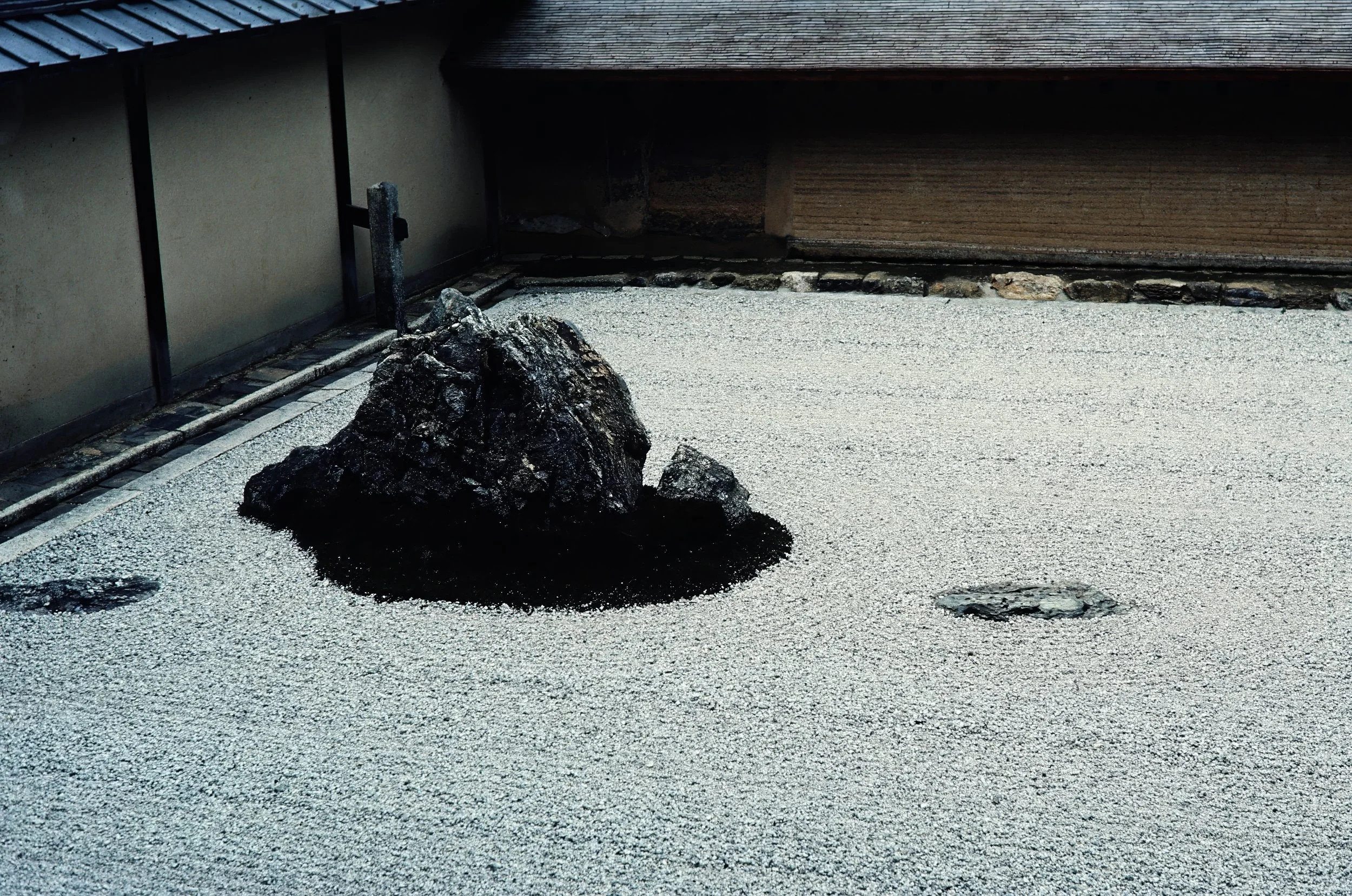
Archaeological evidence demonstrates that the site of modern Kyōto has been occupied since the Stone Age. In 794 a city was established on the site by Emperor Kammu. Arranged as a rectangular grid, its layout was designed to mirror the Chinese city of Chang’an (modern Xi’an), capital of the Tang dynasty. Kyōto’s imperial palace was built in the north-central section of the city and positioned so that it would be protected from evil spirits by Mount Atago (924m) located to the northwest, and Mount Hiei (848m), positioned to the northeast. Initially known as Kyō, the city was later called Heian-Kyō before being named Kyōto which means “capital city.” More recently, the city has been referred to as the “Thousand-Year Capital.” Kyōto was damaged during the Ōnin war (1467-1477), a conflict between groups of samurai. As a result of numerous earthquakes, few of the city’s structures predate the 17th century. A succession of emperors ruled Japan from Kyōto until 1869 when Tokyo became the royal seat of power. Today, nearly all persons of Japanese ancestry try to visit the city at least once during their lives. Policies limit the height of modern buildings within the old city to preserve the area’s historic appearance. Our group visited Ryōan-ji, a temple in the northwest part of Kyōto that belongs to a branch of Zen Buddhism. Inside is a Zen temple-garden with a scattering of large rocks surrounded by small white pebbles that are carefully raked to form linear patterns. The temple was originally built as a home for an aristocrat lord named Tokudaiji and his family. In 1450, Tokudaiji gave the property to Hosokawa Katsumoto, a deputy to the shogun (emperor) who transformed the buildings into a temple. The rock garden was created in the early 16th century by a Zen monk named Tokuho Zenketsu. The garden is 250 square meters and contains 15 large stones of various sizes that are believed to represent islands within an ocean. The stones are arranged so that one rock is always hidden no matter where a viewer is standing. Today, the garden is considered an outstanding example of a kare-sansui (dry landscape).
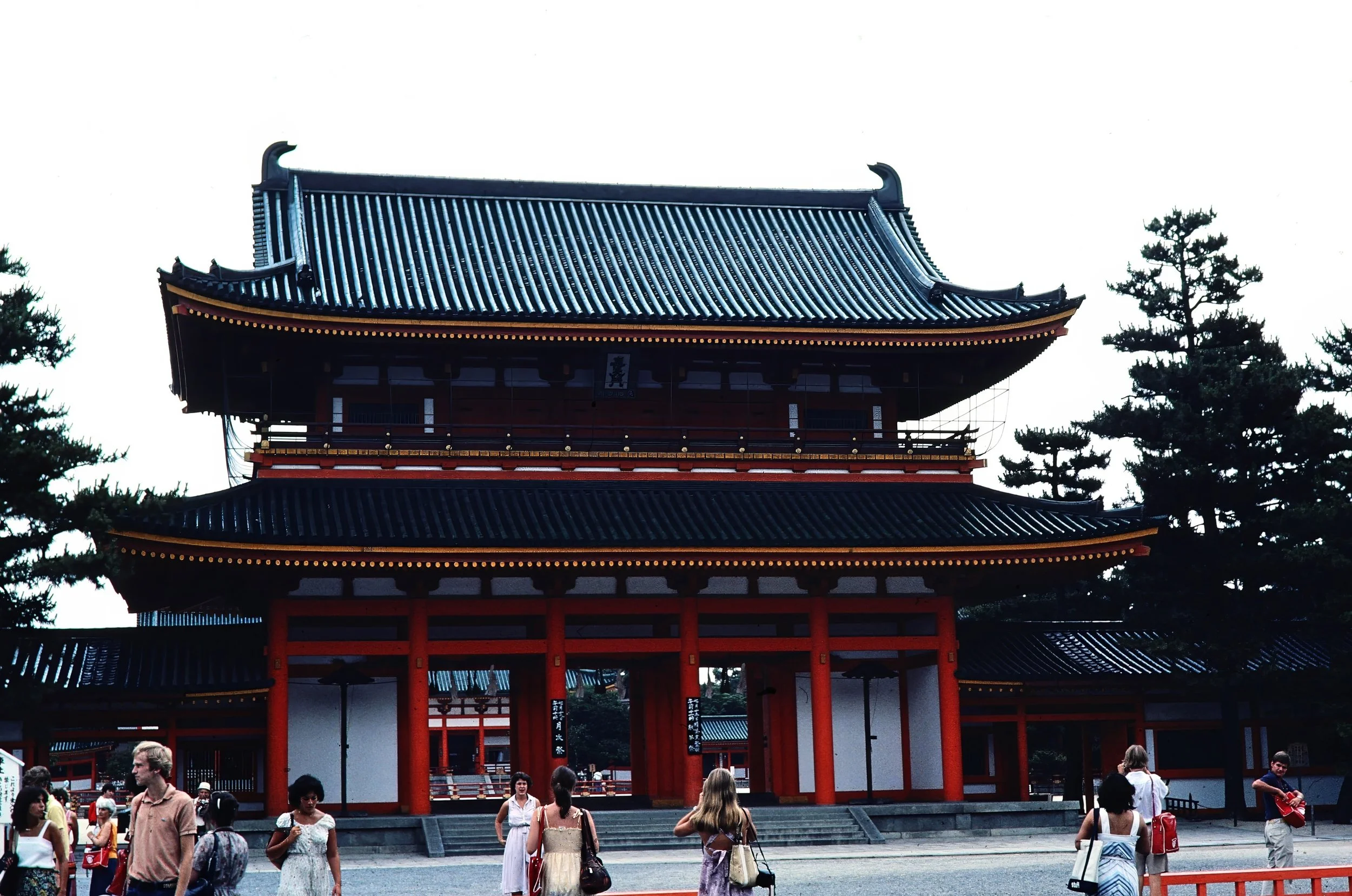
Another stop was Heian, a Shinto complex located in an area of Kyōto called Sakyō-ku. Built in 1895 to celebrate the 1,100th anniversary of Kyōto’s founding, the buildings are partial reconstructions of Kyōto’s first imperial palace. Following the anniversary exhibit, the complex became a shrine to Emperor Kammu. The shrine is a popular venue for concerts and weddings and was featured in the 2003 movie, Lost in Translation. We entered the complex through the Ōtemon, the palace’s main gate.
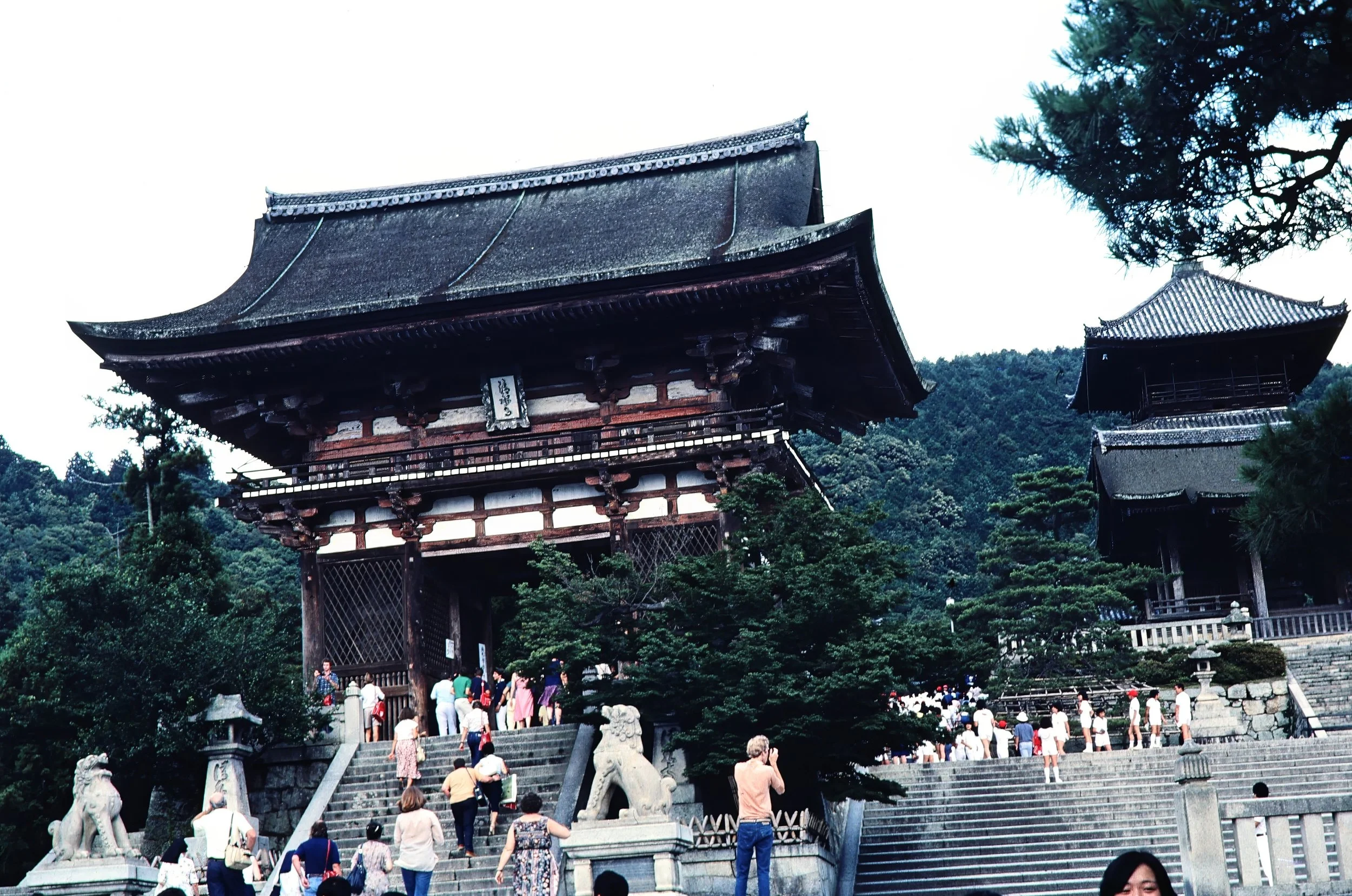
Located in the eastern part of the city is the Buddhist Temple of Kiyomizu-dera. Founded in 778, the structure is among a handful of buildings that predate the city’s founding. One of the Historic Monuments of Ancient Kyōto, the temple is dedicated to the worship of Kannon, a male Buddha associated with compassion. Supported by 13-meter-high wooden columns, the main structure is positioned on the side of a mountain. Some visitors come to collect water that is believed to improve health, longevity, and academic success.
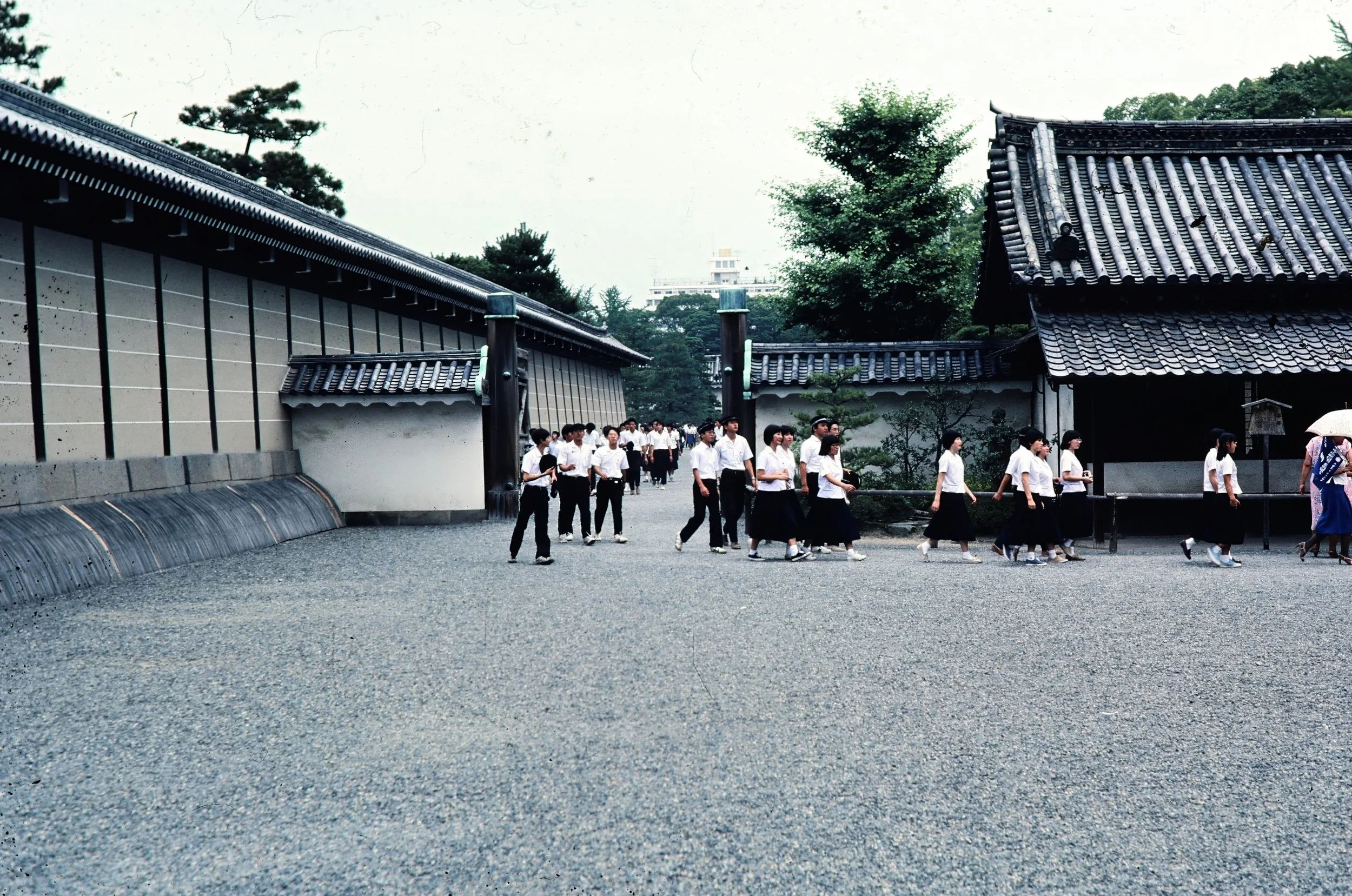
Our route passed an elementary school. In Japan, children must participate in nine years of compulsory education including six years of elementary and three years of junior high school. Students attend Monday through Friday beginning in April with breaks during the summer and for the New Year holiday. The curriculum includes math, social studies, Japanese, and moral education. About 99% of junior high students continue on to high school. As in the U.S. and Europe, some private schools require students to wear uniforms.
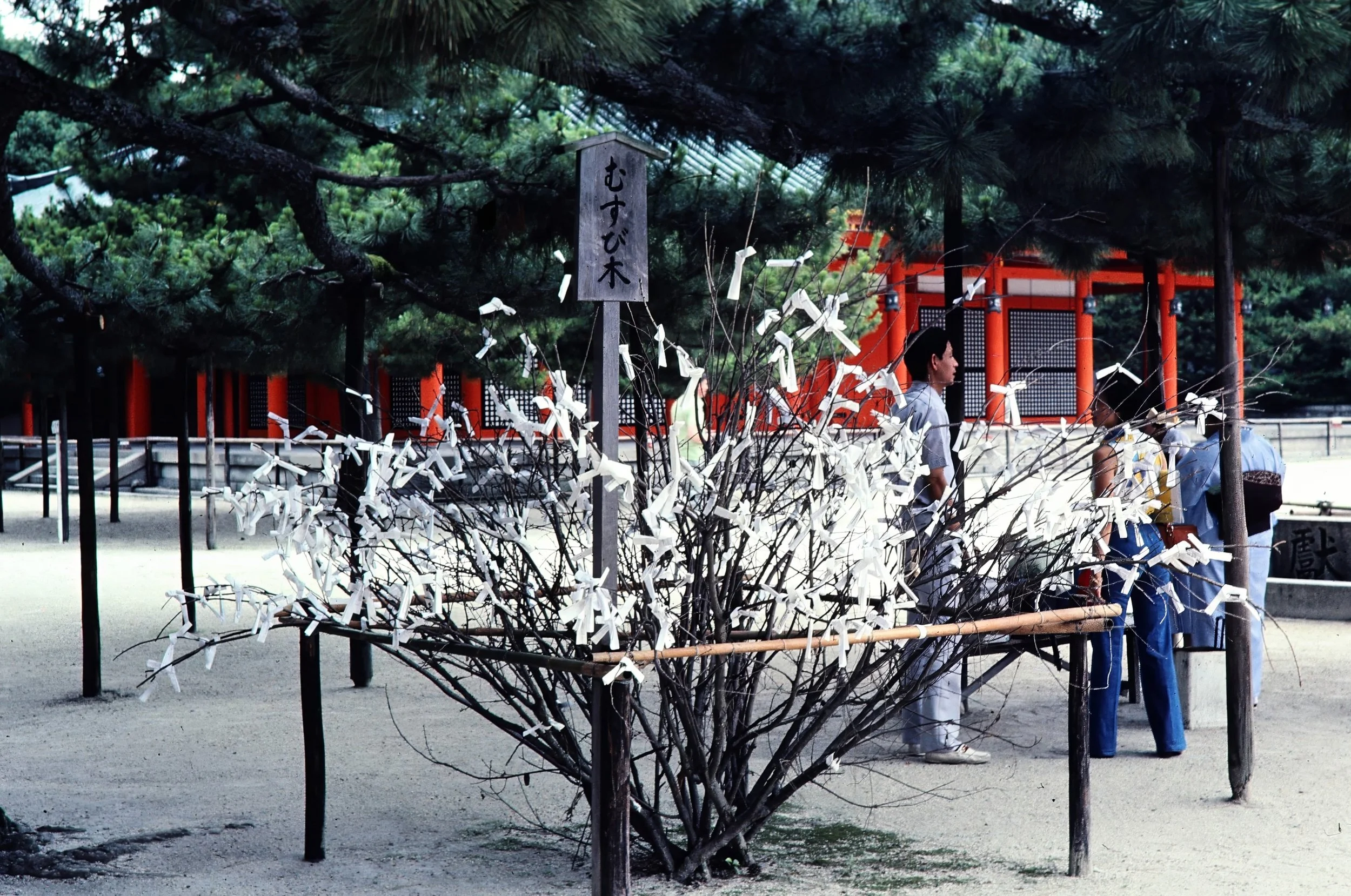
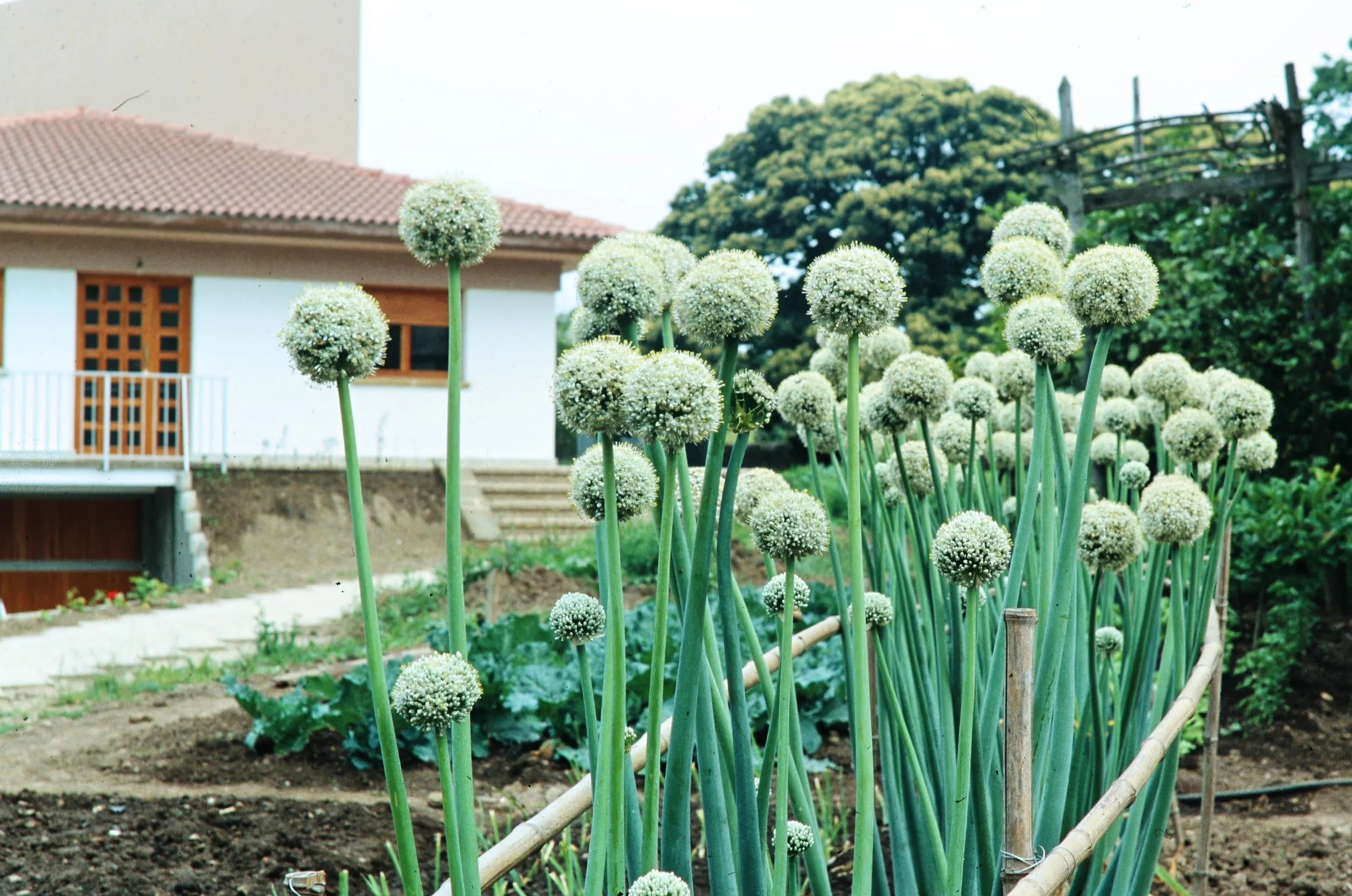
Attaching prayer notes to tree branches or designated wire racks is a common practice for connecting with the divine at Kyōto’s temples and shrines. Called omikuji (fortunes), the white strips of paper contain advice about business, love, travel, or health. Visitors obtain their omikuji from a metal cylinder or coin operated machine. The levels of a fortune are organized along a continuum from “great blessing” to “great curse.” It is customary to keep good fortunes and to tie bad ones to a tree or wire with the hope that a deity will take them away. We passed a few traditional Japanese homes including one with a small garden that featured Japanese bunching onions. A type of perennial non-bulb onion, bunching onions are grown as an ornamental and added to foods such as Miso soup and negimaki (a thinly sliced meat dish).