China. City of Skyscrapers and Squatters
With a large natural harbor, crowded skyline, and fast-paced lifestyle, Hong Kong is positioned at a confluence of Chinese and western influences. Considered a Special Administrative Area, the city maintains a measure of economic and political autonomy from the People’s Republic of China. Among its distinctions, Hong Kong is the third most important financial center in the world after London and New York and possesses the world’s largest number of skyscrapers. It is also among Asia’s most densely populated and expensive cities. When I visited in 1979, Hong Kong was still a territory of the United Kingdom.
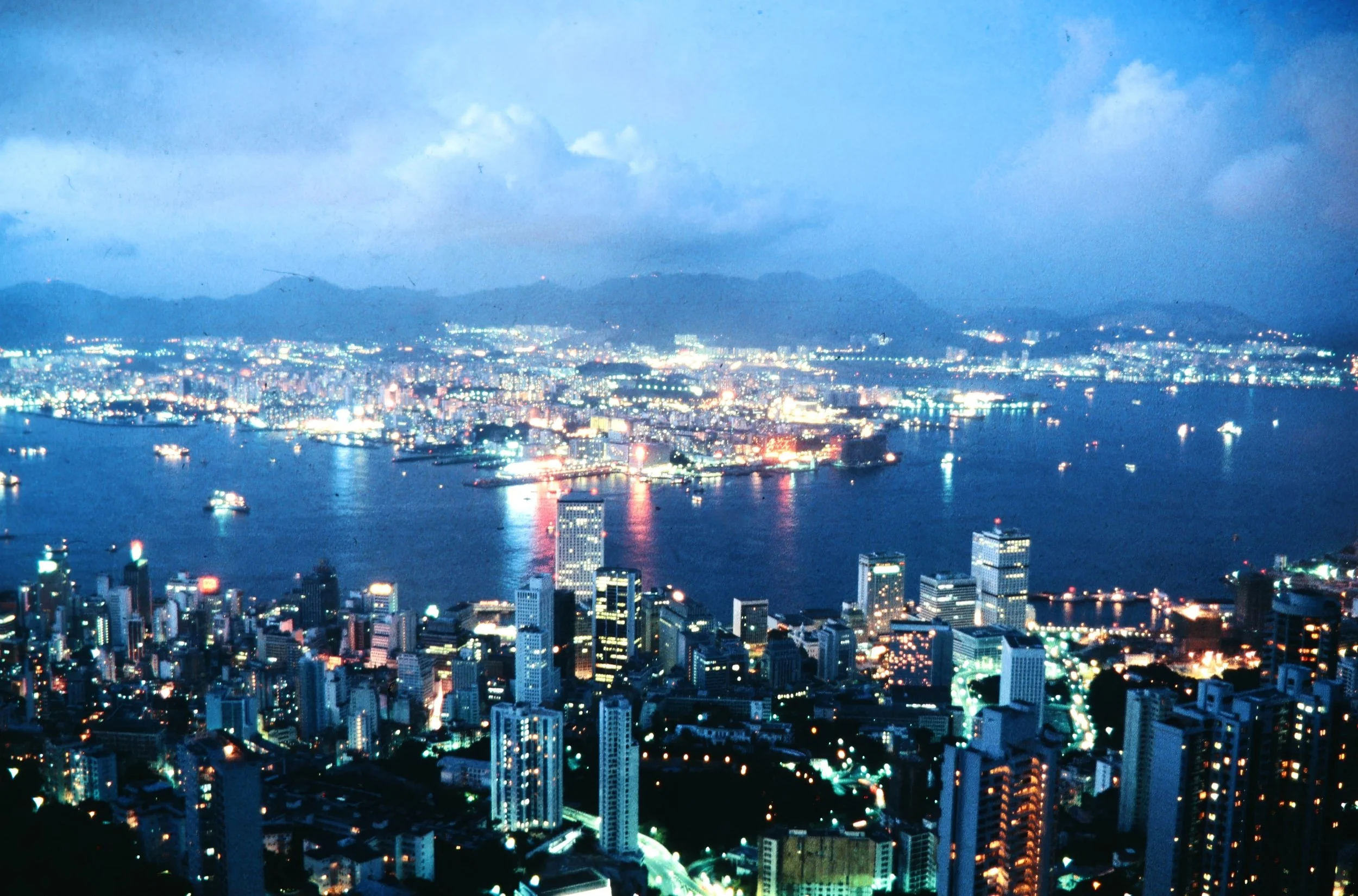
The site of present-day Hong Kong has a long record of settlement with archaeological evidence pointing to a human presence more than 6,000 years ago. In 214 BC the city became part of the Qin dynasty. The first European to visit was Portuguese explorer Jorge Álvares in 1513. Following the Daoguang Emperor’s decision to destroy the drug trade and seize opium held by British merchants, the British intervened, leading to the First Opium War (1839-1842). Granted a 99-year lease for the territory in 1898, the government of the United Kingdom returned Hong Kong to Chinese control in 1997. Covering an area of 1,114 square kilometers, Hong Kong is located east of the Pearl River estuary and on the south coast of China’s Guangdong Province. The former British territory is made up of three parts: Hong Kong Island, Kowloon, and the New Territories. While Cantonese is spoken by about 94% of the population, about 60% speak English and half are fluent in Mandarin. Although most residents are not religious, about 30% consider themselves Buddhist/Taoist with smaller numbers identifying as Protestants, Catholics, Hindus, and Muslims.

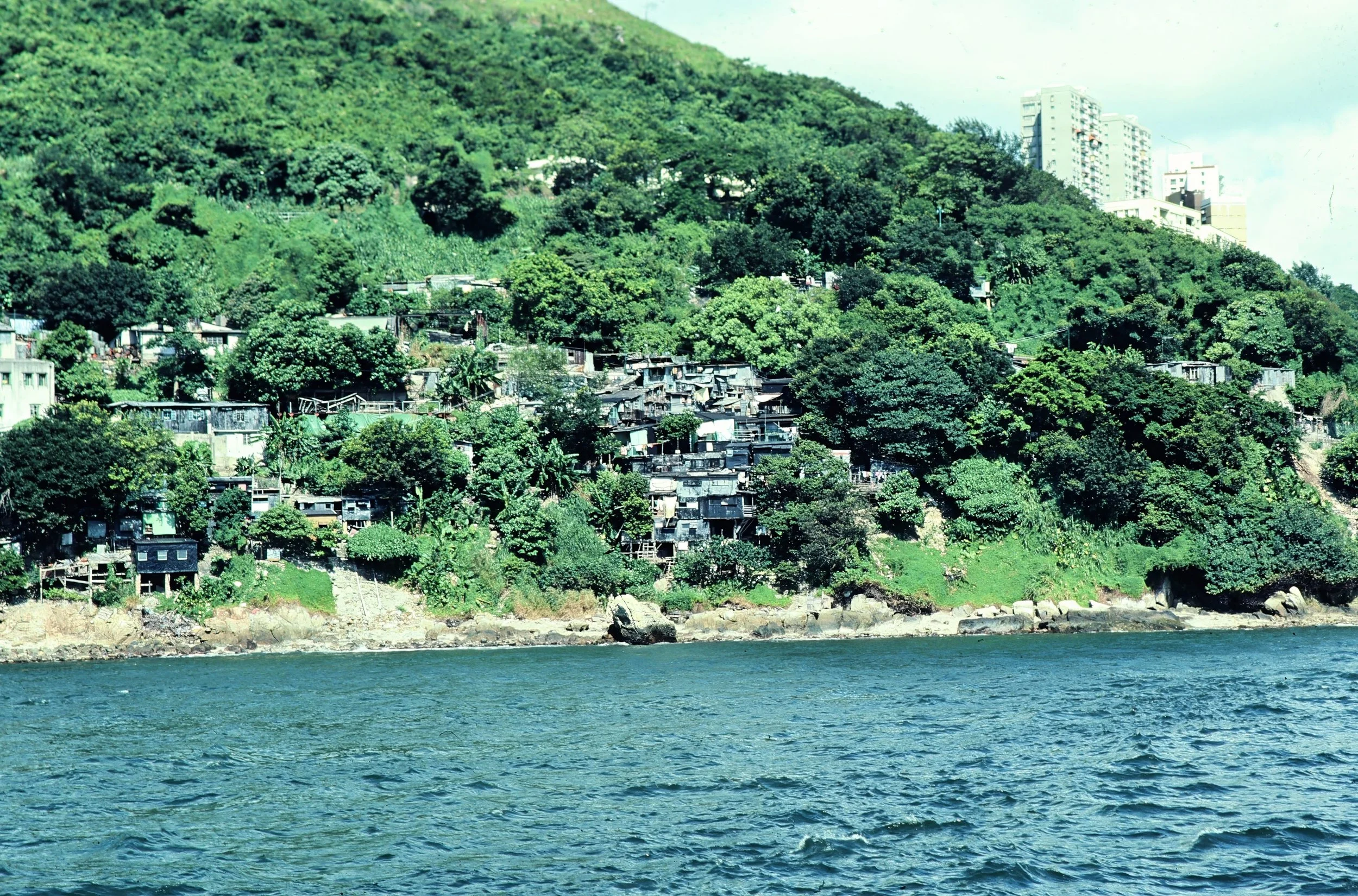
Our exploration of the city took us past old tenements known as tong lau. Built as low-rise (3-4 story) residential buildings in the 1950s, many tong lau are in a poor state of repair. With the ground floor housing shops, upper floors are used as apartments. Since space is at a premium, balconies are often enclosed to provide an additional living area. The poorest residents of Hong Kong live in makeshift homes that together form squatter communities. Often positioned on marginal land such as hillsides, the flimsy structures are constructed out of available materials including discarded wood and scrap metal. Squatter “shanty towns” are without basic services such as sewage, water, and electricity and are susceptible to hazards posed by fires, landslides, and storms. The 1953 Shek Kip Mei fire destroyed the homes of more than 53,000 squatters. Although programs have been in place to find public housing for the homeless, more than 200,000 Hong Kong residents continue to live in squatter houses, the majority in the New Territories.
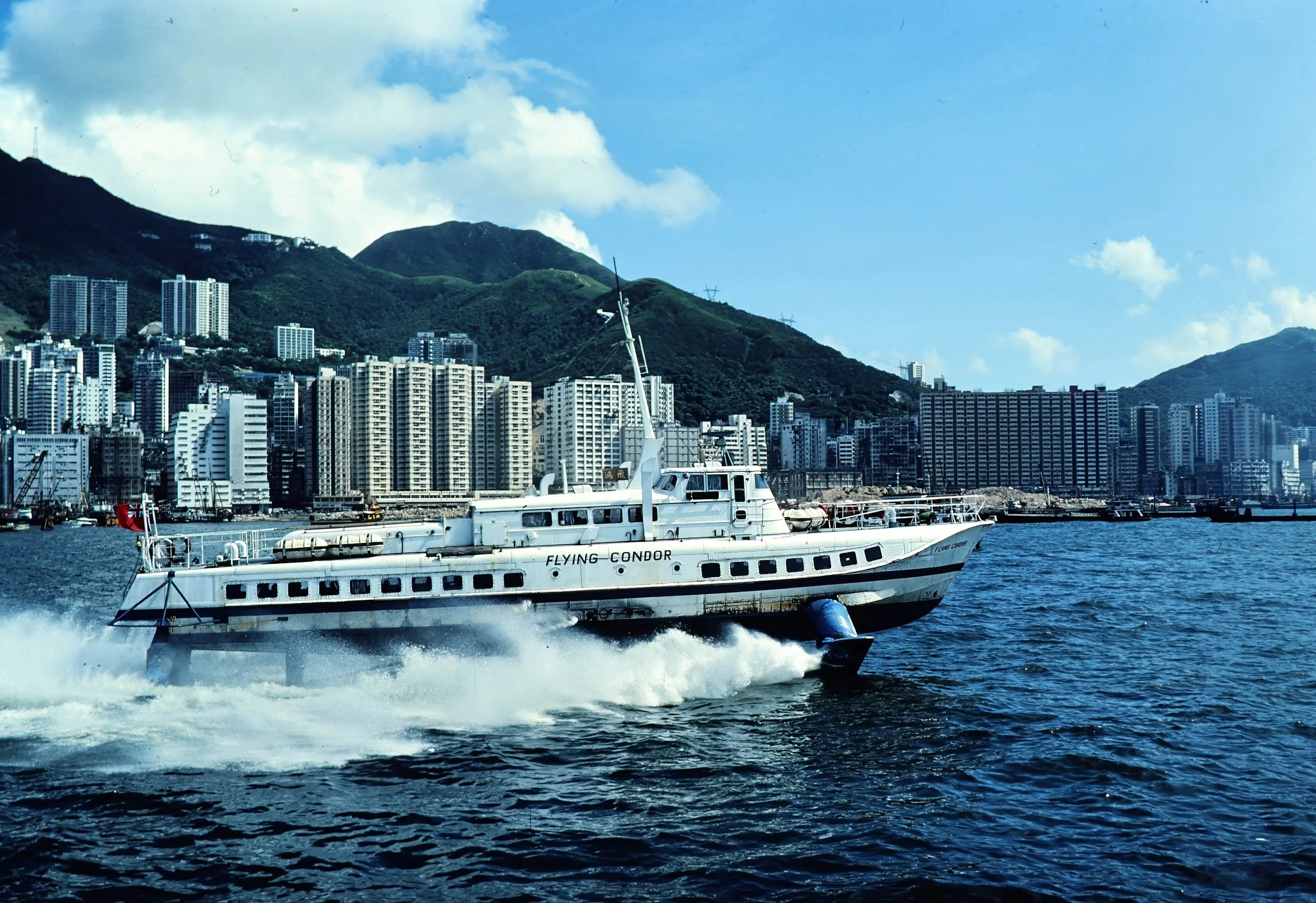
Our harbor tour boat was passed by a fast-moving jetfoil (aka hydrofoil) carrying passengers from Hong Kong to the nearby gambling colony of Macau. At the time of my visit Macau was still a Portuguese territory. Returned to the Chinese in December 1999, the colony is now a Special Administrative Area like Hong Kong. Known as “airplanes of the sea,” jetfoils move at speeds up to 83 kilometers per hour. They are propelled by a stream of high-pressure water that lifts the boat above the water’s surface on four underwater wings.
Returning to the harbor, we passed Jumbo Floating Restaurant (aka “Jumbo Garden”), a 76-meter-long barge designed with a Chinese imperial-style exterior. The restaurant was completed in 1976 at a cost of HK$30 million. With seating for 2,300, patrons dined on lobster, crab, suckling pig, and other gourmet dishes. Over its years of operation more than 30 million people dined there including British Queen Elizabeth II and U.S. President Jimmy Carter. Having struggled financially for many years, Jumbo Floating Restaurant closed during the Covid-19 pandemic and in June 2022, the vessel sank while being towed to Cambodia.

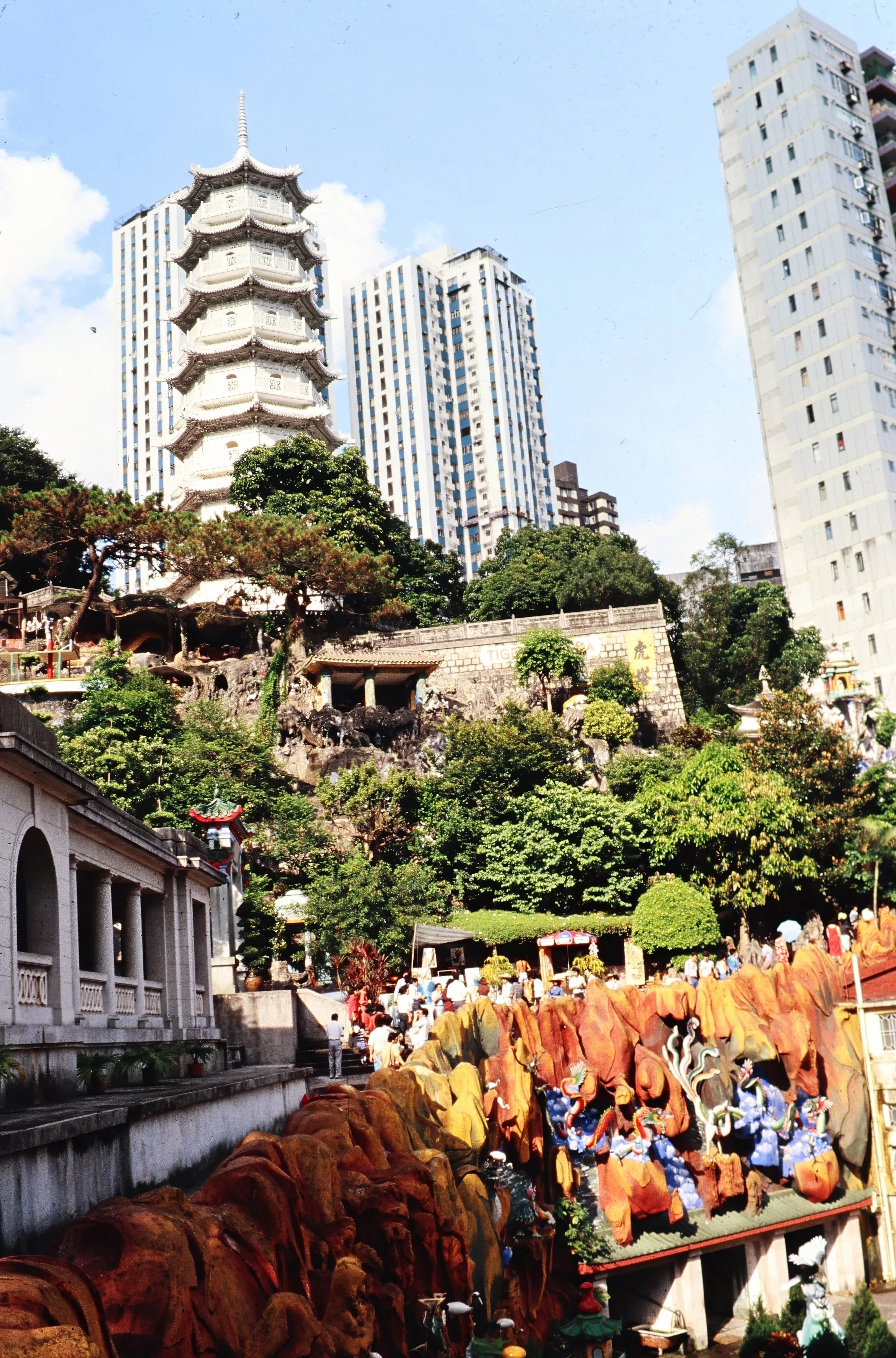
Returning to land, we made a stop near Tiger Balm Garden and the Haw Par Mansion. Located in the northern part of Hong Kong Island, the garden and mansion were built in 1935 by Aw Boon-Haw, a wealthy Chinese-Burmese investor. At Mr. Boon-Haw’s direction, the park’s design emphasized Taoist, Buddhist, and Confucian morality. About five years after my visit the garden and mansion were purchased and converted into Hong Kong’s first amusement park. Among other attractions, the complex featured Tiger Pagoda, the territory’s first Chinese pagoda. Visitors included musicians John Lennon and David Bowie. In 2004 the amusement park was torn down to make room for a residential area with only the Haw Par mansion surviving.