Philippines. Spanish Colonial Manila and a Journey Up the Pagsanjan River
Located at the mouth of the Pasig River, Manila is a unique city with architecture that blends Colonial-era Spanish and indigenous cultures. It is positioned in the south-central part of Luzon, the nation’s largest island. At various times the city has fallen under the control of Spain, Great Britain, Japan, and the U.S. Today, it is the nation’s capital and second most populous city (2 million). I was fortunate to visit in 1979 as part of a month-long tour of southeast Asia.
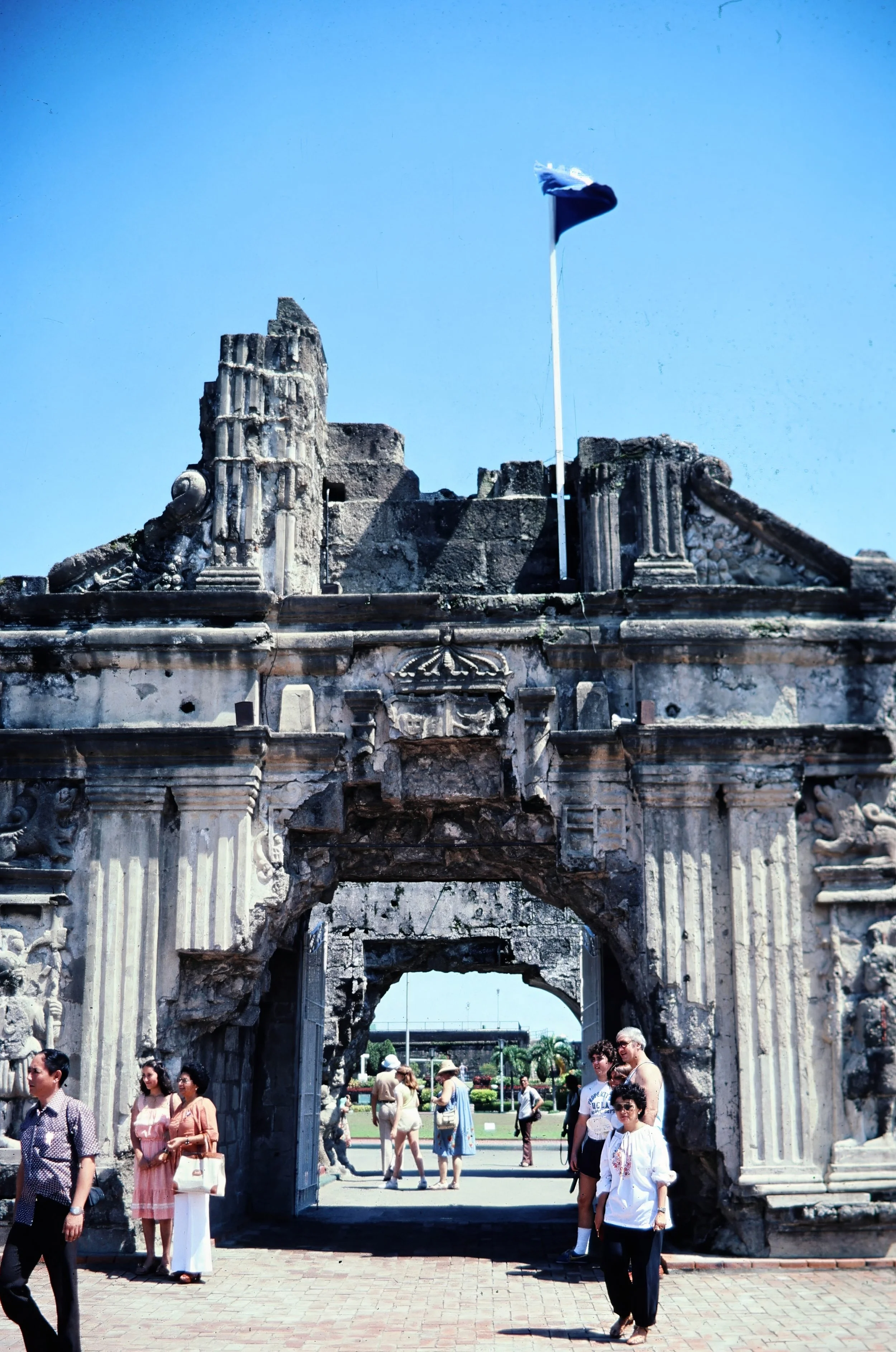
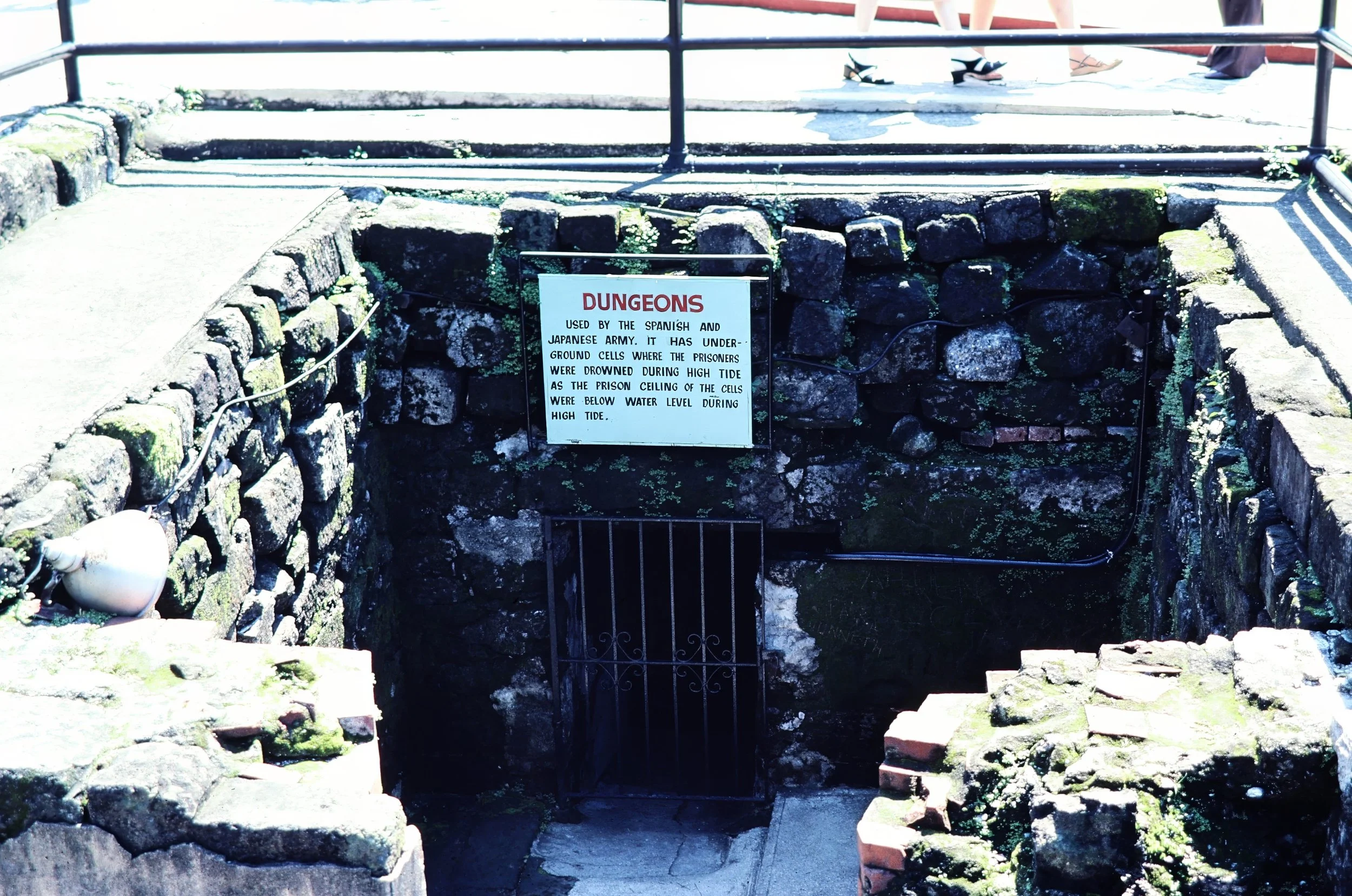
The site of Manila has been occupied for more than 5,000 years. During the 13th century native Maynila and Tondo peoples traded with the Chinese and in 1571, Luzon and other islands were claimed for the Spanish Crown by conquistador Miguel López de Legazpi. Soon after arriving, the Spanish constructed a fortress on the site of an earlier earth and palm log stronghold built by the Muslim, Rájah Matandā. Fort Santiago featured a 0.67 square kilometer walled area called the Intramuros. For many years Manila was part of a Spanish trade network known as the Manila Galleon (1565-1815) which extended across the Pacific Ocean from the Philippines to Mexico. Occupied by the British between 1762 and 1764, Manila was ceded to the U.S. after a Spanish defeat in the Battle of Manila (1898). The Japanese occupied the city in 1941 following a withdrawal by American forces. In 1945 the city was bombed by the Americans before being recaptured by a combined Filipino and American force. We visited Fort Santiago which served as headquarters for the American Army until 1941 and then as a Japanese prison for the remainder of WWII. Approximately 600 captured American and Filipino prisoners interned there died during the war, most from mistreatment. In 1946 the Philippines became an independent nation.
A short walk from Fort Santiago is Rizal Park and a shrine honoring Dr. José Rizal, a physician, poet, novelist, and national hero of the Philippines. Designed by Richard Kissling and dedicated in 1931, the monument helps interpret the cruelty and injustice of Spanish rule. It is located near the place where Rizal was imprisoned and later executed. The 58-hectare park extends northeast from San Lorenzo Ruiz Plaza to the statue of the Sentinel of Freedom which is flanked by the country’s national museums of anthropology and natural history.

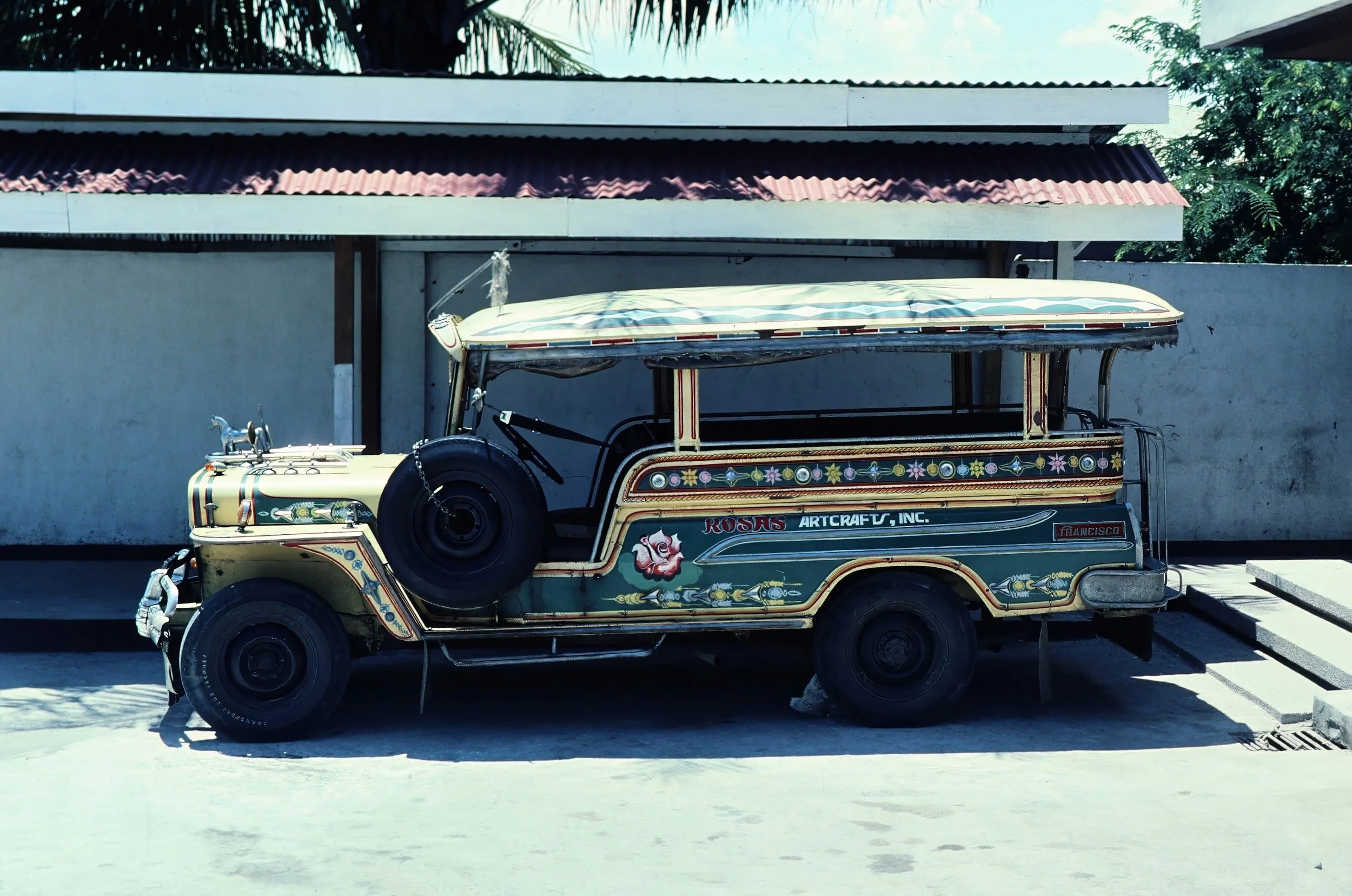
The ubiquitous “Jeepney” forms the backbone of urban transportation in Manila today, as it did when I visited in 1979. The term “jeepney” blends “jeep” and “jitney” (a shared car or bus). Having the appearance of a stretched-out jeep, the vehicles follow prearranged routes with “hop-on, hop off” service to most destinations in Manila for a few hundred pesos (usually less than US$2). Jeepneys came into use when American-made cars used as shared taxis were destroyed during WWII. Surplus military jeeps were put into service as replacements and soon the vehicles were modified to carry additional people on parallel bench seats with metal roofs added for protection against the sun and rain. Jeepney owners often decorate their vehicles with horns, roof racks, special lighting, chrome-plated hoods, and colorful paint schemes. Payments for rides are passed forward to the front of the vehicle while a request to stop is made by yelling “para po” (please stop).
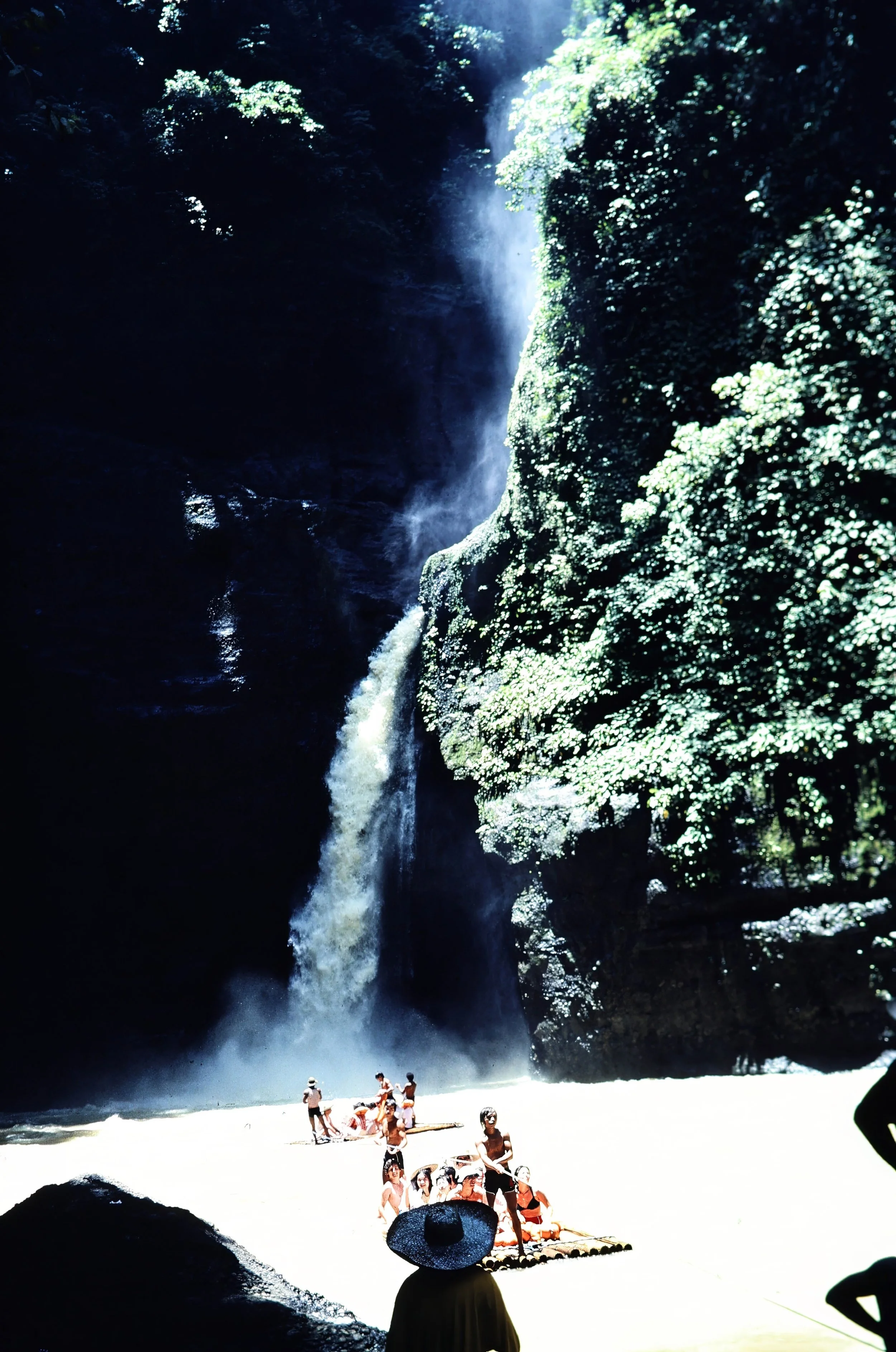
The highlight of our time in the Philippines was a day-long excursion to the Pagsanjan River (aka the Bumbungan River), located an hour and a half southeast of Manila. Originating in the Sierra Madre Mountains, the Pagsanjan flows 35 kilometers before emptying into Laguna de Bay, a freshwater lake located southeast of Manila. On arriving at the town of Pagsanjan, we boarded narrow bancas (dugout canoes) for the 5.1-kilometer paddle upriver to Magdapio Falls. Passing boulders and small waterfalls, the route cut through the tree-lined Pagsanjan Gorge.
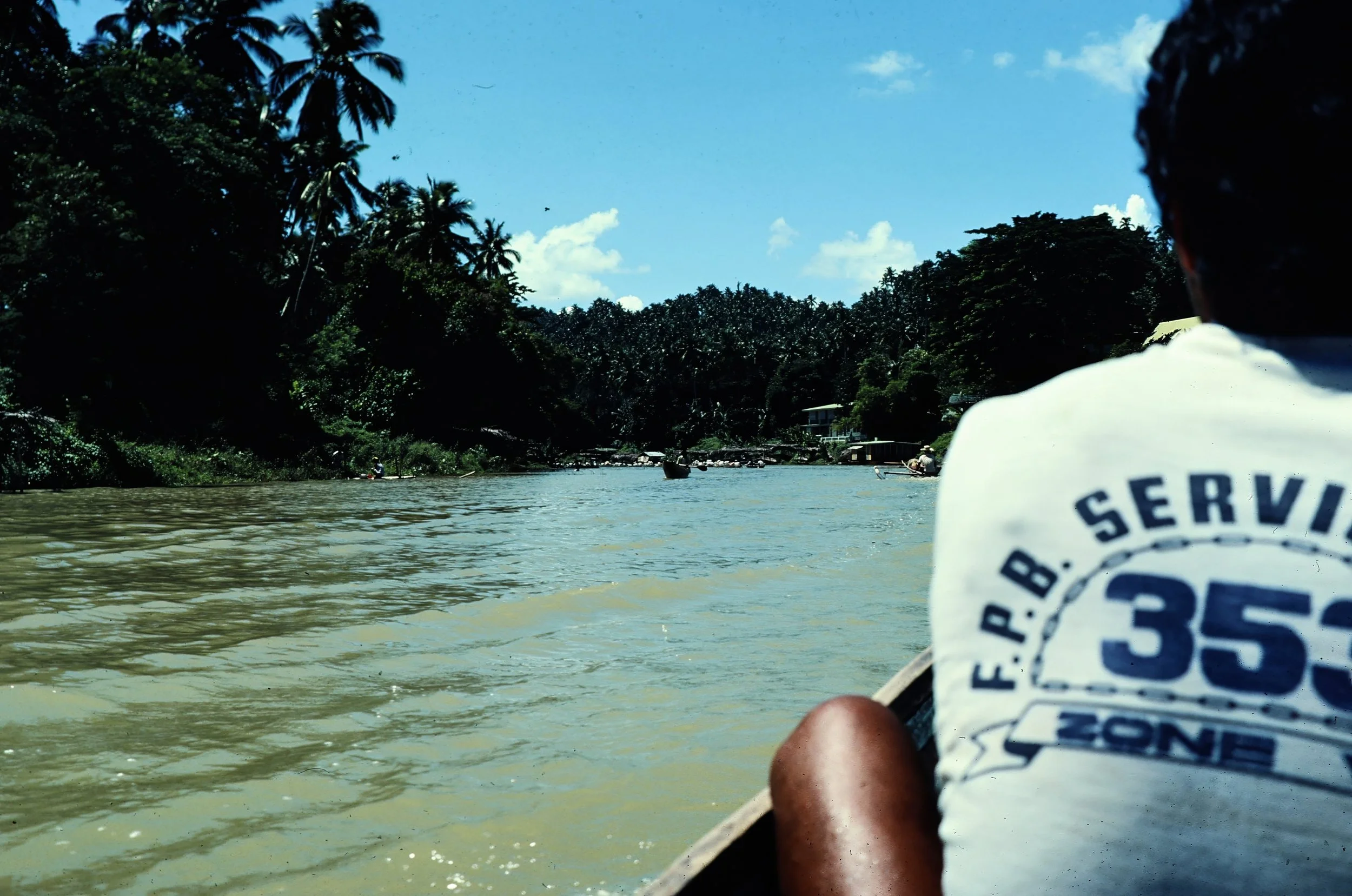
We stopped briefly at the falls so a few people in our group could board rafts that were maneuvered into an opening behind the falls called Devil’s Cave. The Pagsanjan River has been featured in films including Apocalypse Now (1979), the story of a U.S. Army captain sent to track down a group of American soldiers led by a rogue colonel. The story is set on the Mekong Delta during the Vietnam War. Among others, the producers hired indigenous Ifugao as extras.