China. The Pearl River and City of Five Rams
Arriving from Hong Kong on a Russian-built airliner, my group disembarked at Guangzhou’s international airport. It was 1979 and China was a relatively new destination for American tourists. I recall someone collecting everyone’s passport before we boarded a bus. The industrial city of Guangzhou is located along the Pearl River and about 120 kilometers northwest of Hong Kong. It is part of a larger region that has been occupied by humans for over 3000 years. Known as Panyu, the city and its port were a terminus along the maritime silk road and among the first places in China regularly visited by European traders who called the city “Canton.” Canton was captured during the first Opium War (1839-1842) and occupied by French and British forces between 1856 and 1861. The city was a maze of narrow roads until modernization programs in the 1920s and 1930s brought improvements such as wider streets and a sewer system. Canton was bombed and then occupied (1938-1945) by the Japanese during World War II.
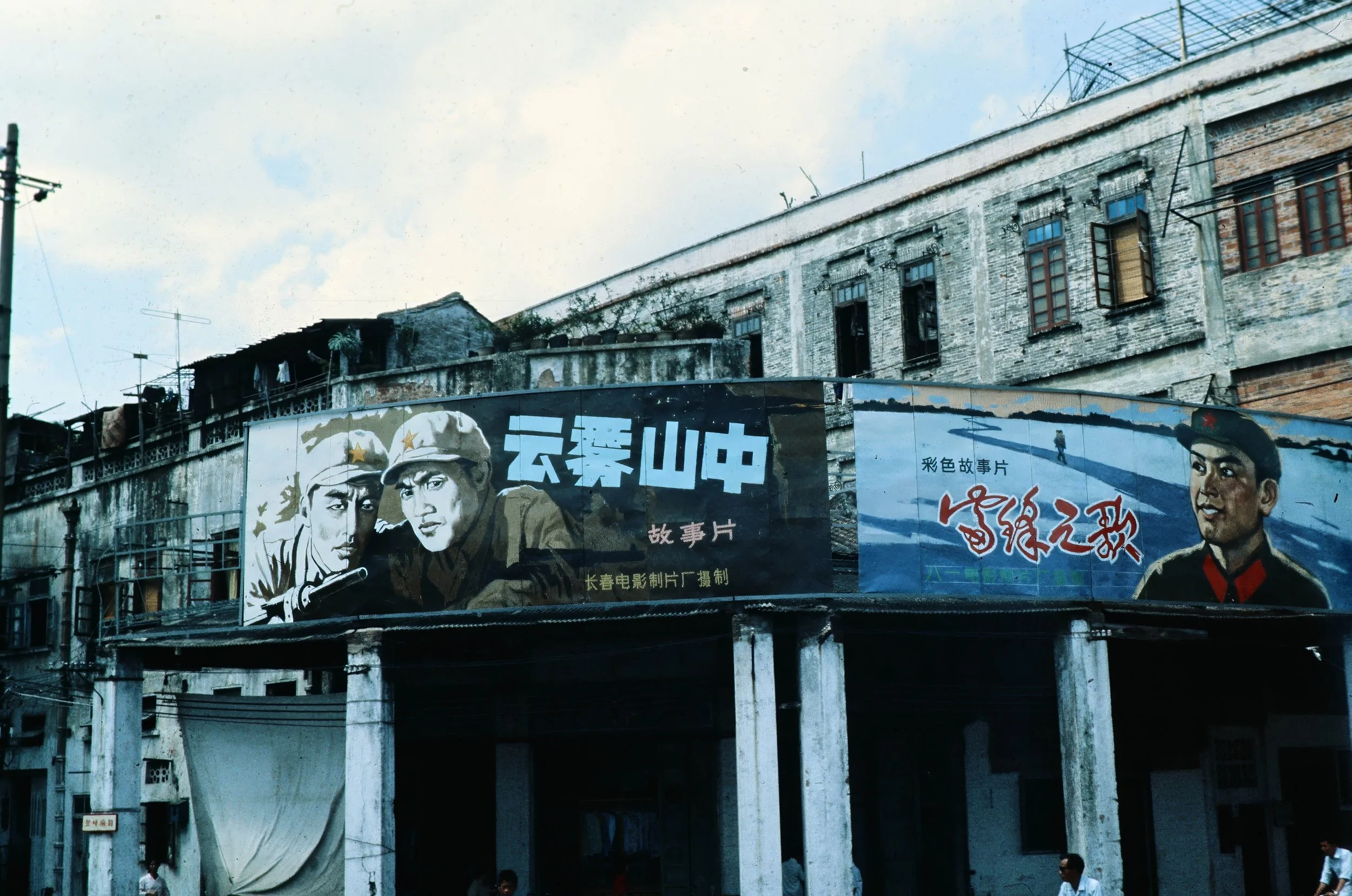
Renamed Guangzhou in 1964, the city has the fifth largest number of skyscrapers in the world and is home to top institutions of higher education including Sun Yat-sen University. It is positioned at the center of the Guangdong-Hong Kong-Macau Greater Bay Area, the most populous metropolitan region in the world with more than 70 million residents. Guangzhou has been called the City of Five Rams because of a legend that five immortal beings entered the city on rams to bring its residents prosperity.
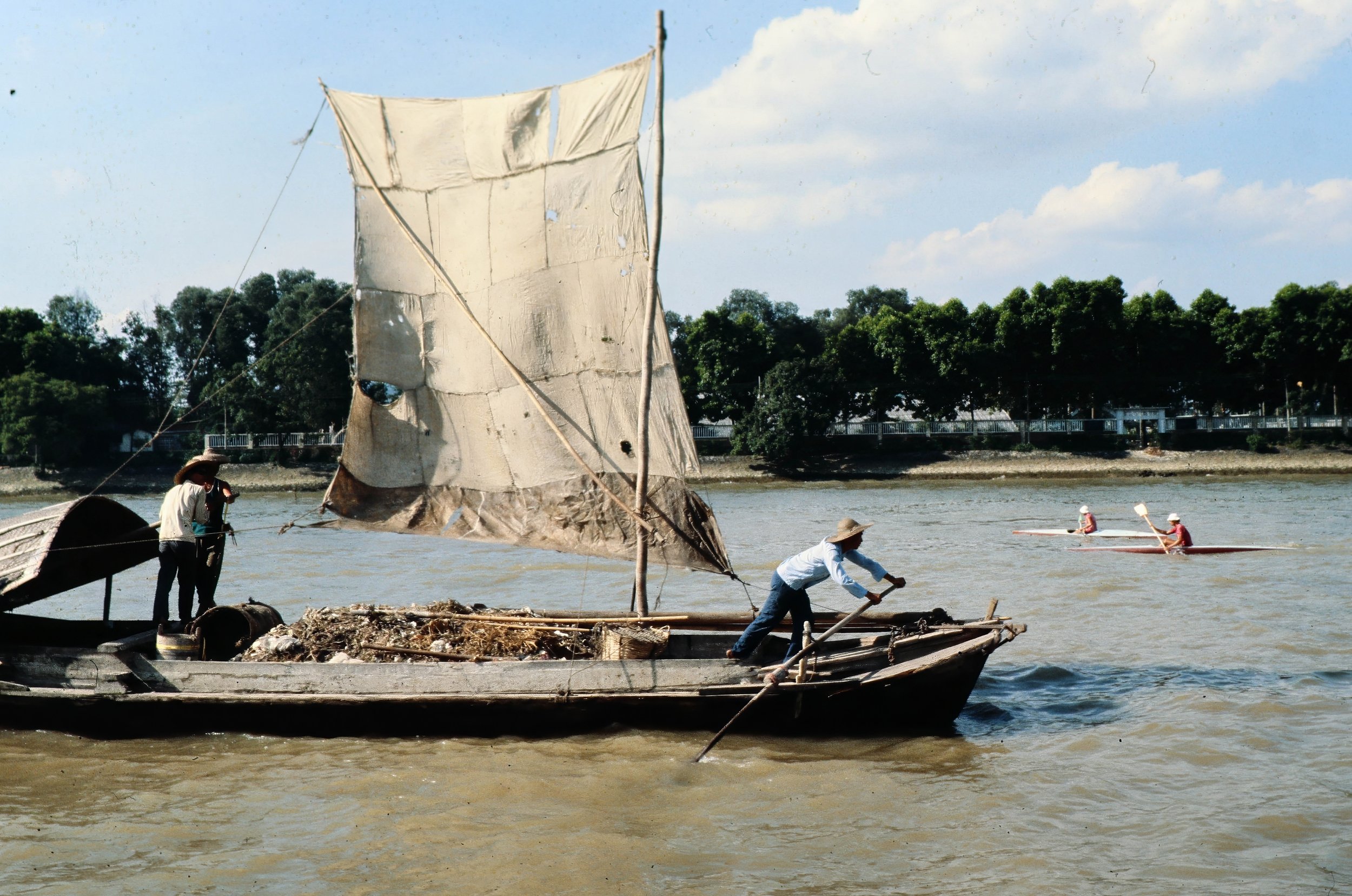
Our city tour took us to a waterfront area along the Pearl River. Bisecting Guangzhou, the Pearl is the third longest (2,400km) river in China after the Yangtze (6,000km) and Yellow (5,464km). After flowing through the city, the river enters the Pearl River Estuary and then the South China Sea. In terms of industrial output, Guangzhou has experienced considerable growth with a gross domestic product (GDP) that increased from 298 million yen in 1949 to 2.28 trillion in 2018. Because of its industrial output, the larger region that includes Guangzhou has been called “Factory of the World.” We boarded a large passenger boat for a river tour. Standing at a railing, I sipped from a bottle of Pearl River Orange as we motored past shallow-draft sampans.

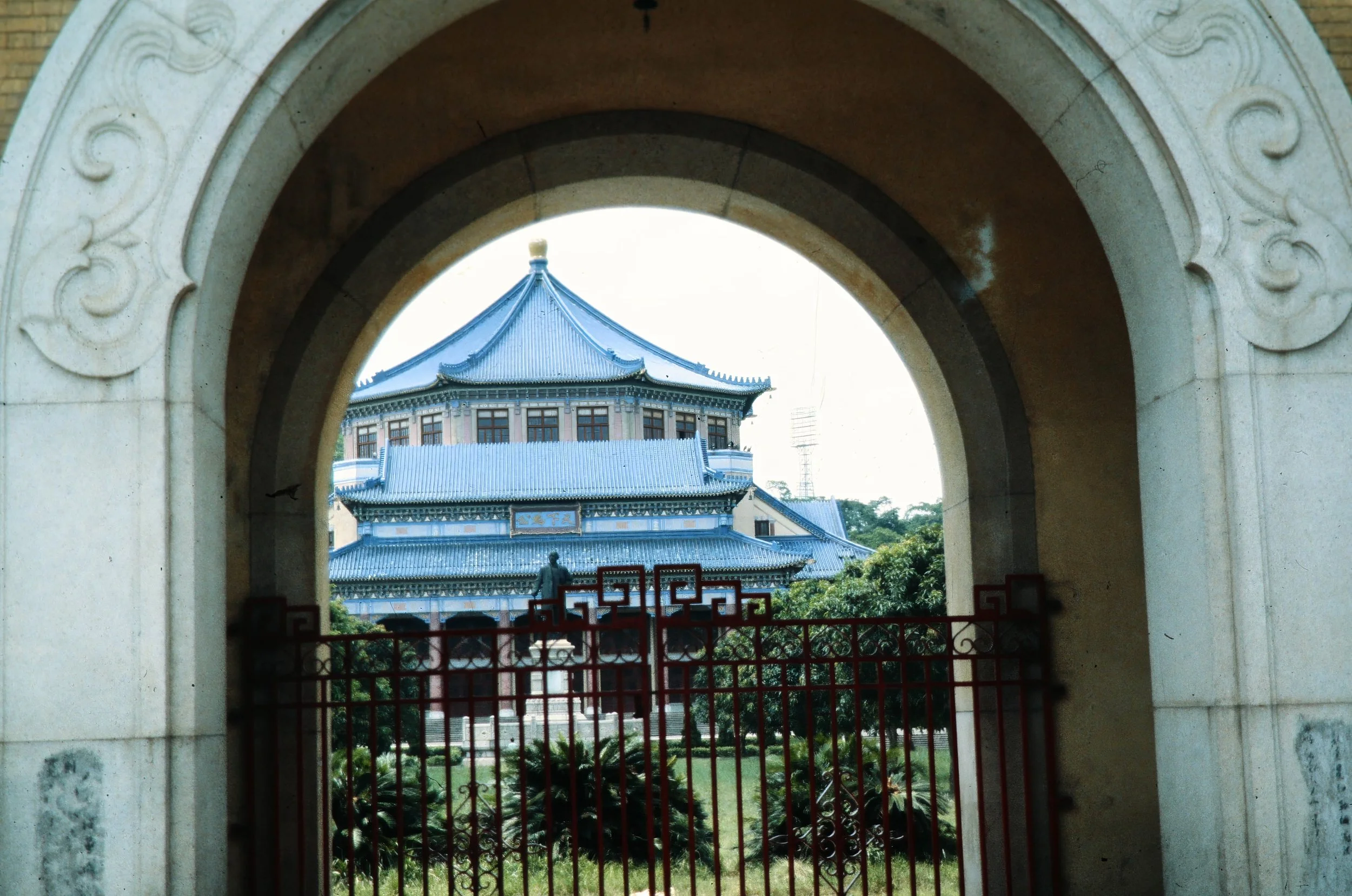
A few months before I visited Guangzhou, the U.S. government formally recognized the communist People’s Republic of China as the nation’s sole government. Although I enjoyed our time in the city, the tour felt managed. Unable to walk the streets unescorted, our only meaningful conversations were with our designated guide. We passed a government building with a sign in Chinese that proclaimed, “Long live the great unity of the peoples of the world.” The bus stopped briefly at a gate leading into the Sun Yat-sen Memorial. Born near Guangzhou, Sun was a hero to both communist and nationalist governments. A physician, statesman, and philosopher, Sun helped organize the Chinese Nationalist Party and later served as President of the Republic of China (1911-1912) and as the country’s de facto ruler between 1923 and 1925. A statue of the leader is visible inside the gate.
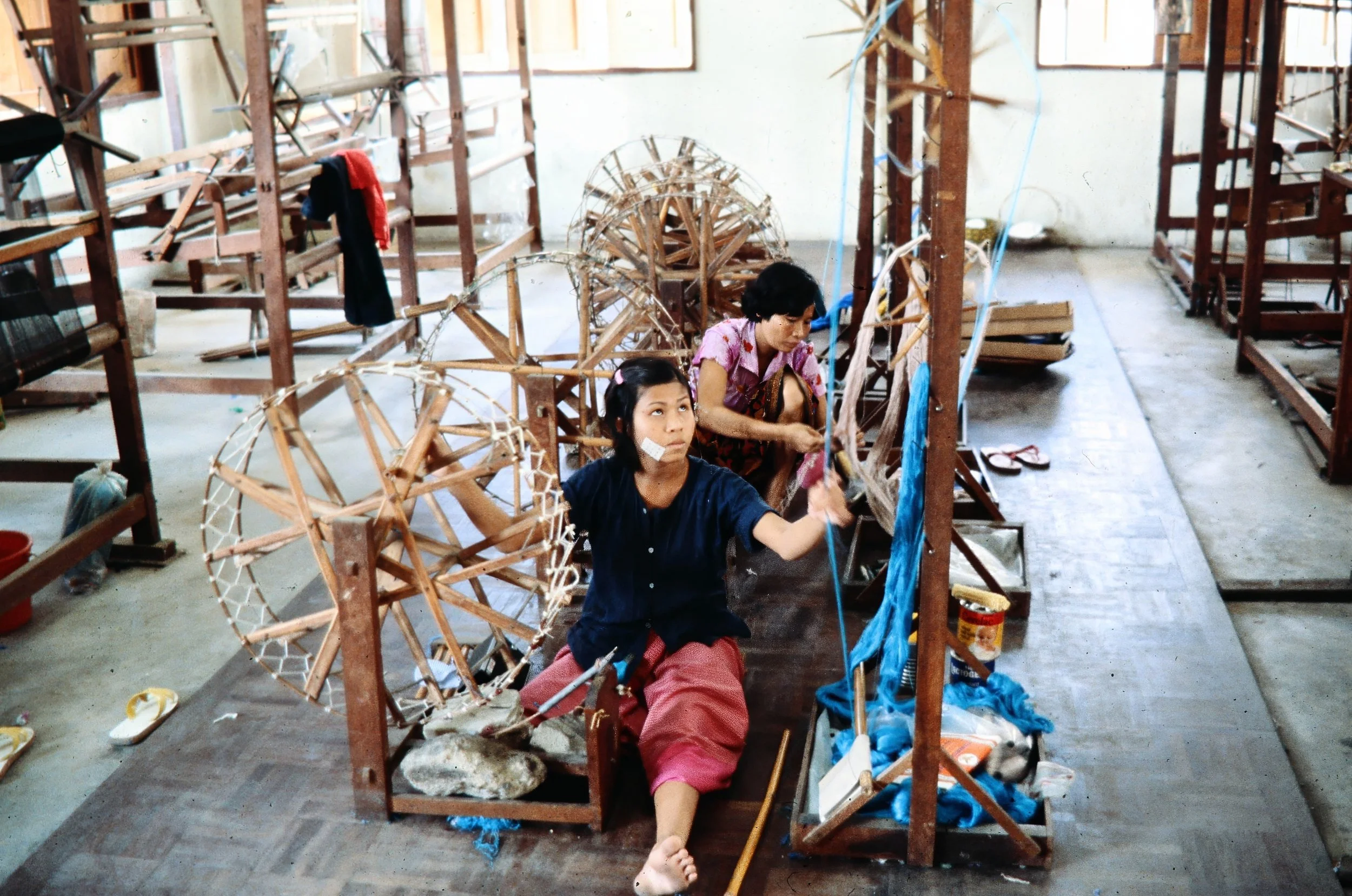
Our tour included a stop to see a traditional textile factory. Weaving has a long history in China with looms dating to more than 7,000 years ago. Chinese silk garments were well known in Europe for their quality and traded on the silk roads. Traditional weaving begins with spinning. Individual fibers are pulled from larger masses and twisted for strength before they are stretched into lengthwise warps. Subsequently, women insert wefts of yard between the warps. Today, most textiles are created using high speed weaving machines.
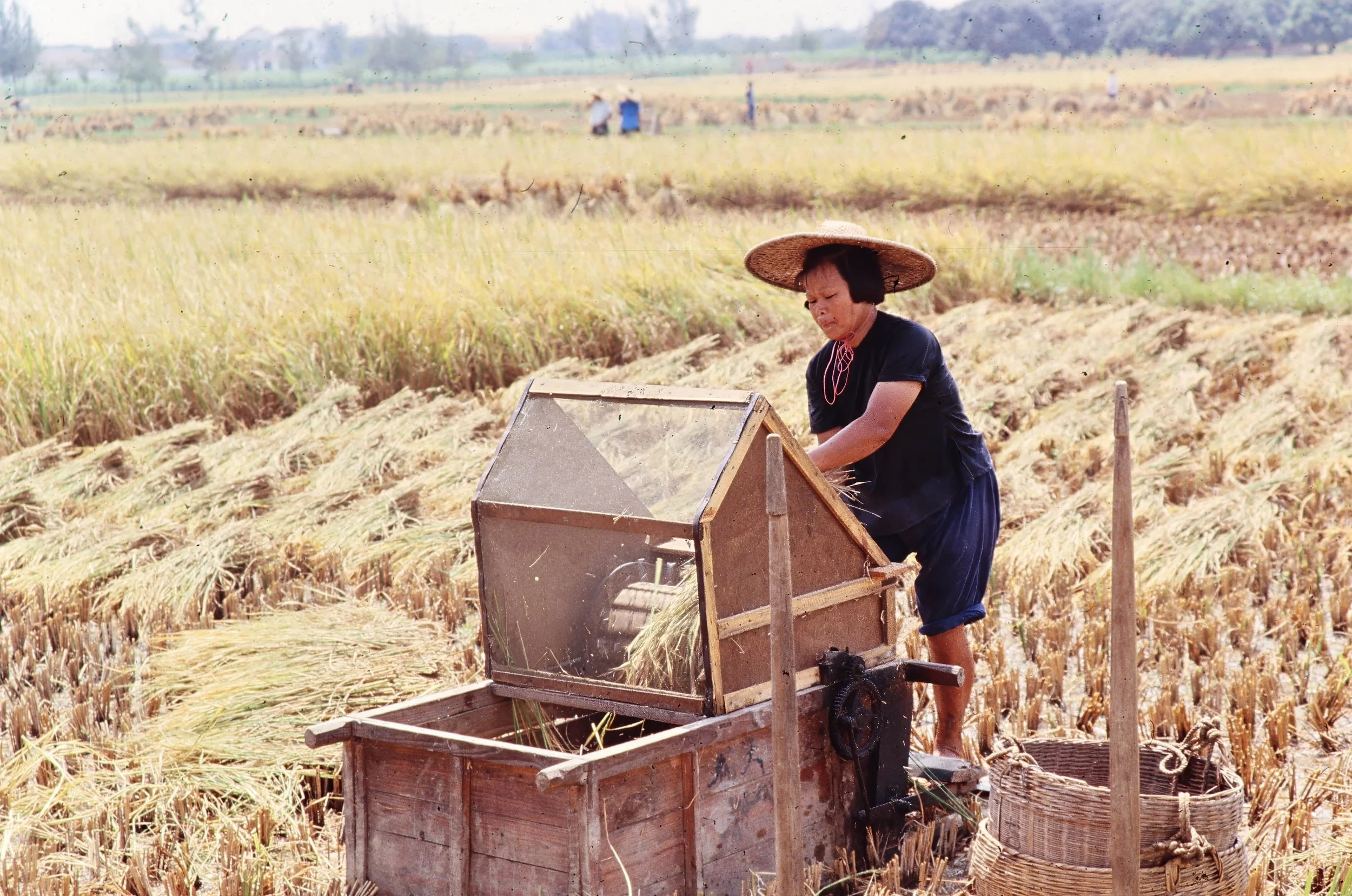
Departing the city, we made a stop at a rural commune where we passed a woman operating a threshing machine in a rice field. Rice has been harvested in China for more than 10,000 years. At 146 million metric tons per year, China is presently the world’s second largest rice producer behind India (152 million metric tons per year) with most of the harvest consumed domestically. The most common rice grown in southern China is a long and slender grain called indica. Traditional rice harvesting is labor intensive. Stalks are cut with a bladed tool called a sickle and then dried in the sun for a day to reduce its moisture content. Subsequently the stalks are beaten or fed into a threshing machine to separate grains from waste material.