
Kyrgyzstan. The Heart of Bishkek’s Socialist Utopia
Located in Kyrgyzstan’s Chu River Valley, Bishkek is a city of superlatives. The country’s capital and largest city, Bishkek is positioned between desert to the north and peaks of the Ala-Too Mountain Range to the south. With wide boulevards and brutalist architecture featuring gray and white marble buildings, Bishkek has the most “Soviet-look” of central Asian cities I’ve visited. At the same time the city’s inviting parks have contributed to its moniker as Central Asia’s greenest city.
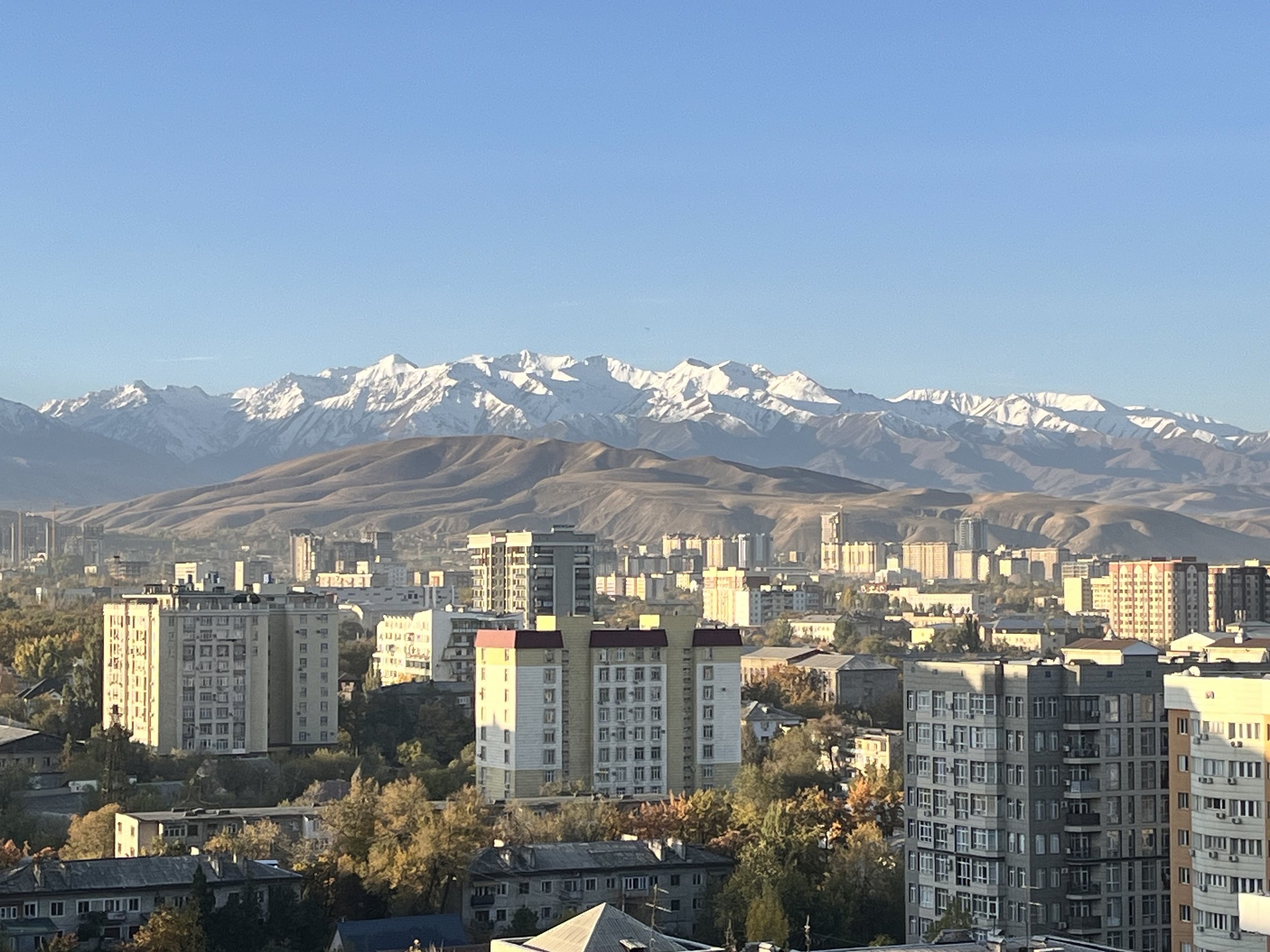
Bishkek began as a caravan rest stop along the silk roads. Known as Pishpek and then Frunze, the city is located at 800 meters above sea level. DNA evidence points to Bishkek as a possible origin of the Black Death (aka the Plague) that ravaged Europe between 1346 and 1353. The Khan of Kokand built a mud fort there in 1825 and in 1860 Imperial Russia annexed the city and subsequently encouraged Russian peasants to settle there. Later, Soviet policies required nomadic Kyrgyz peoples to participate in collectivized agriculture. In 1926 the City of Frunze was designated capital of the Kirghiz Autonomous Socialist Soviet Republic (ASSR). In the 1920s and 30s, Czechoslovak workers were brought in to create a “socialist utopia.” Their efforts can still be seen within Ala-Too Square and many of Bishkek’s Soviet-style buildings. When the Soviet Union broke up in 1991, Bishkek became the capital of newly independent Kyrgyzstan. Today the country is about 78% Kyrgyz, 14% Uzbek, and 4% Russian.
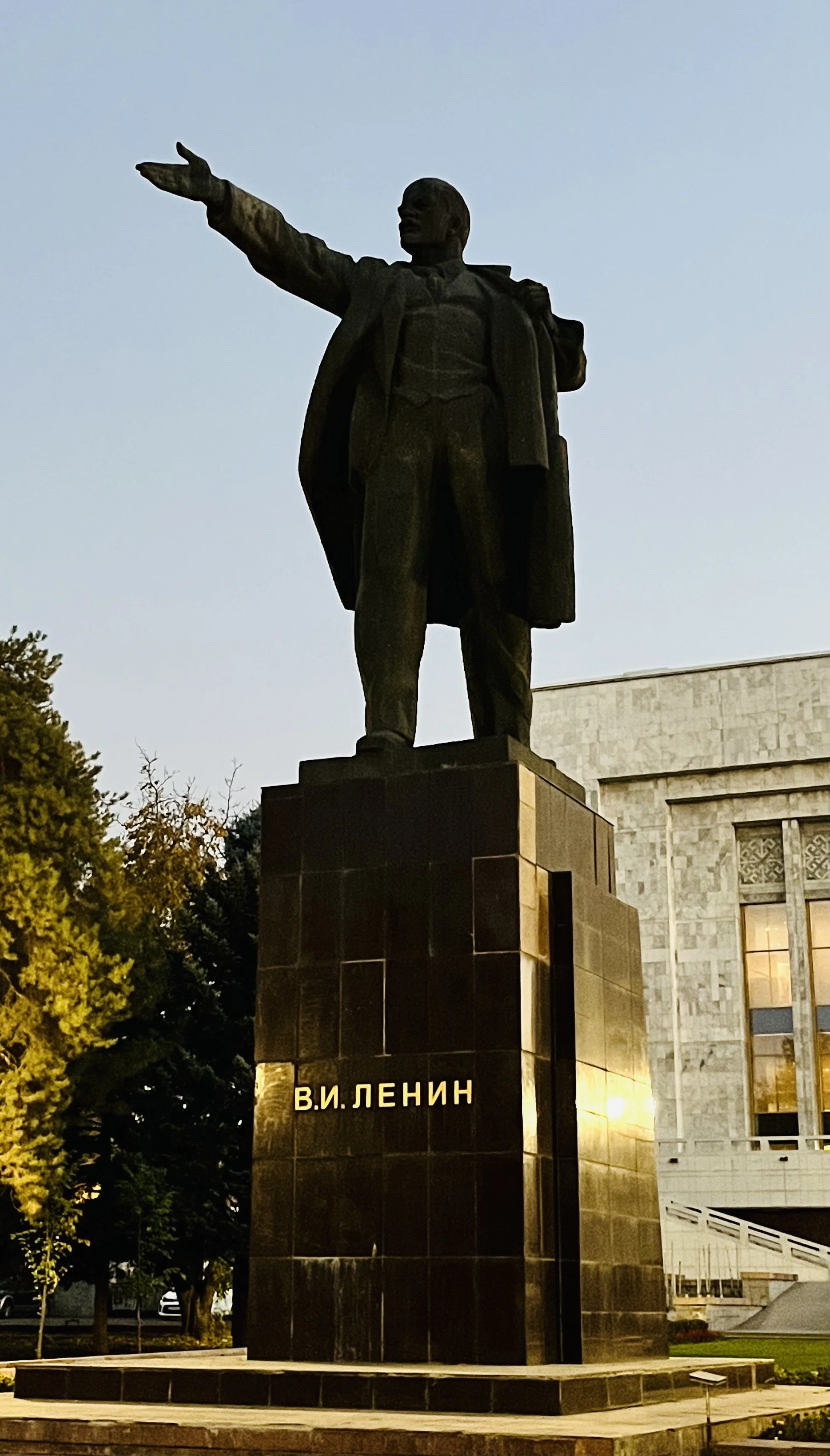
Traveling by bus, we arrived in Bishkek on a late October afternoon. Our first stop was Ala-Too (formally Lenin) Square, built in 1984 to celebrate the 60th anniversary of the founding of the Kirghiz ASSR. The name “Ala-Too” means “great mountain.” Prior to its completion, a large statue of Vladimir Lenin (1870-1924) was placed in the center of the square. The founder of the Russian Communist Party (aka the Bolsheviks) and leader of the Bolshevik Revolution, Lenin is depicted with his right hand outstretched. When the Soviet Union collapsed in 1991 the statue was relocated to a nearby place in Old Square. Standing ten meters high, the statue is estimated to weigh 18,000 kilograms.
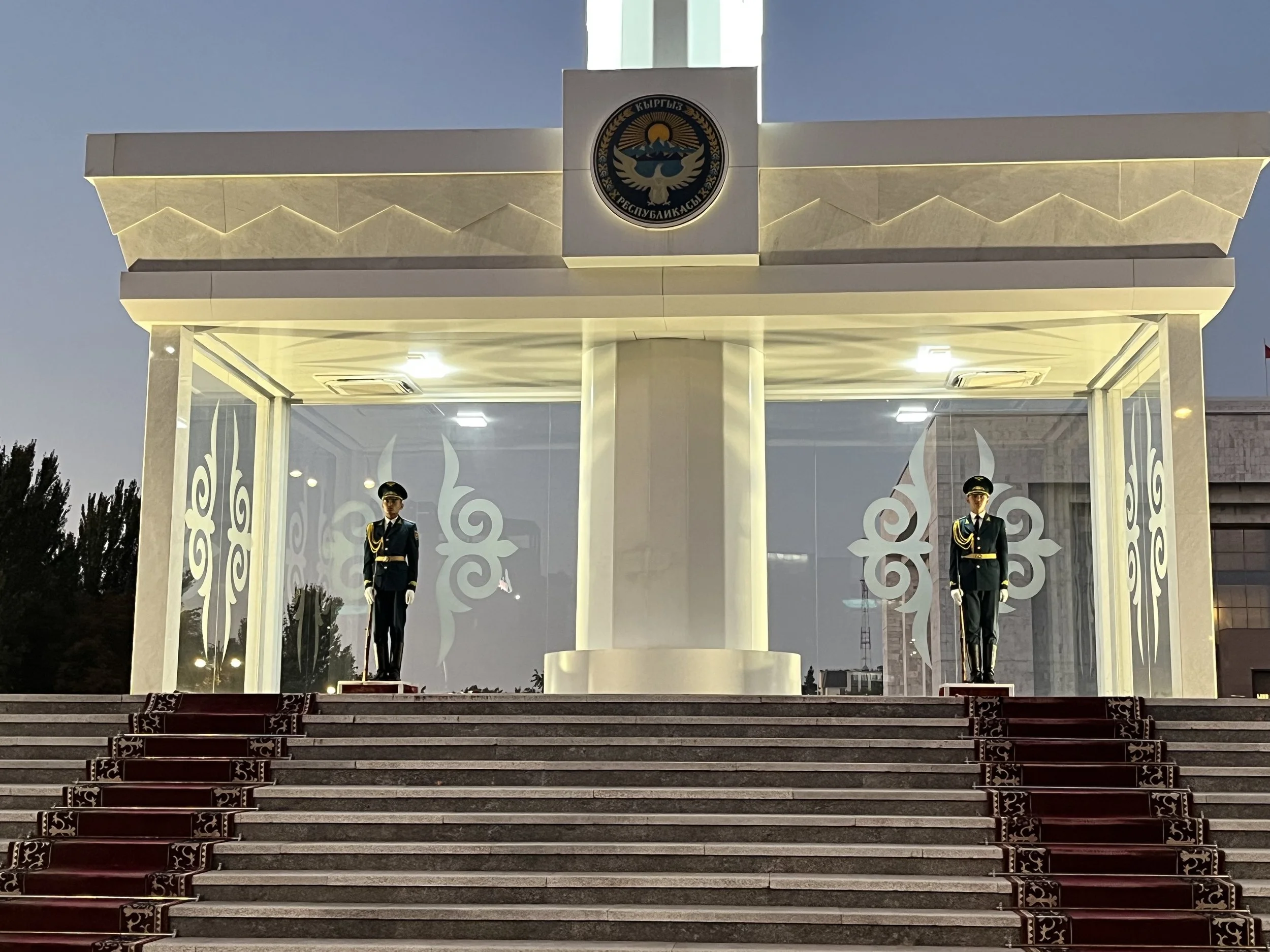
We passed the Historical Museum located just north of Ala-Too Square. In 2005 the square was the site of a large anti-government protest against the outcome of parliamentary elections. Subsequently, protesters stormed the president’s house, causing him to flee and later resign. Rising from the top of a marble building with large glass windows is a 100-meter-tall flagpole that displays the country’s red flag with a sun at its center. Appearing like mannequins were two motionless soldiers standing guard at the base of the flag.
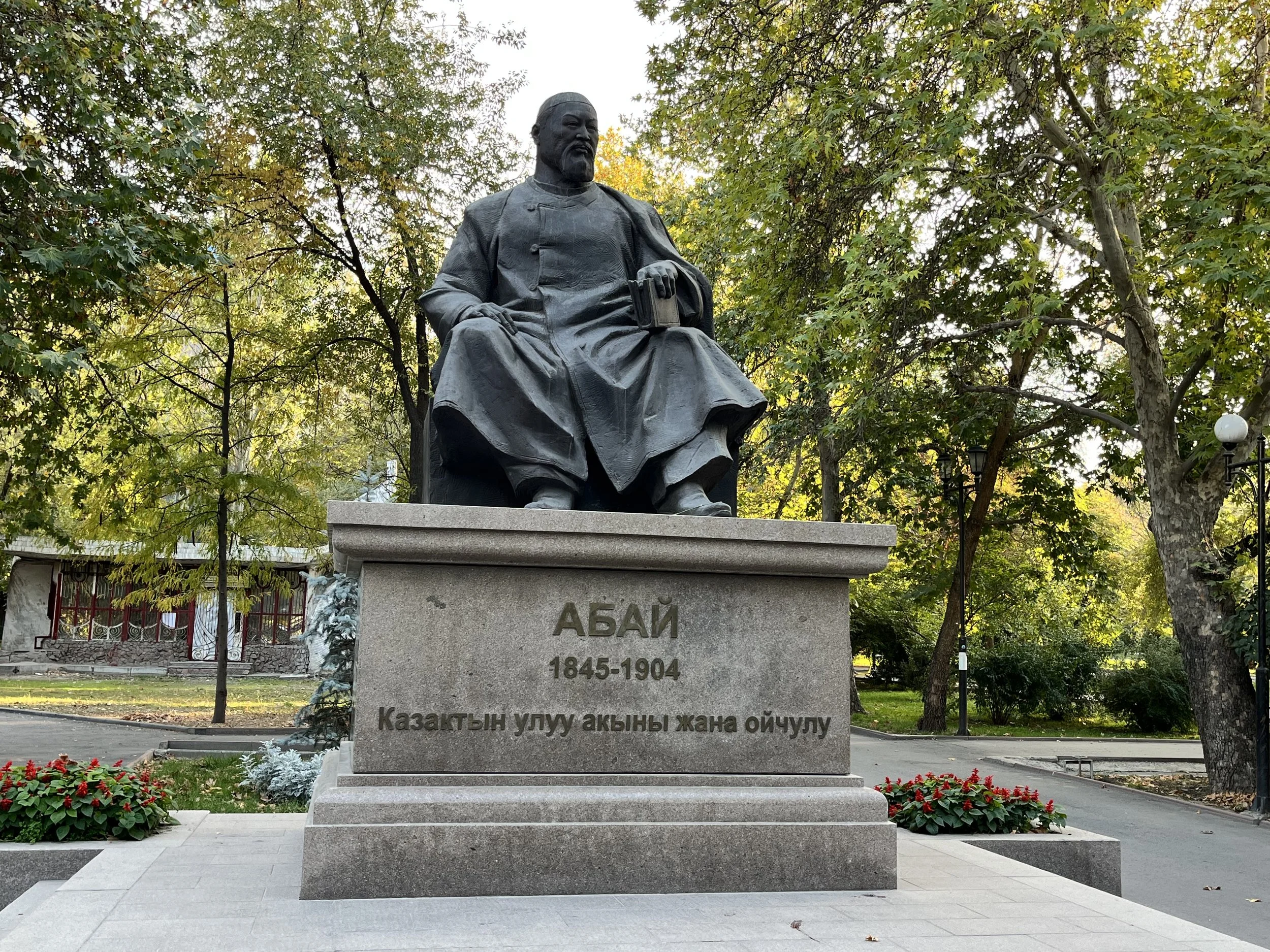
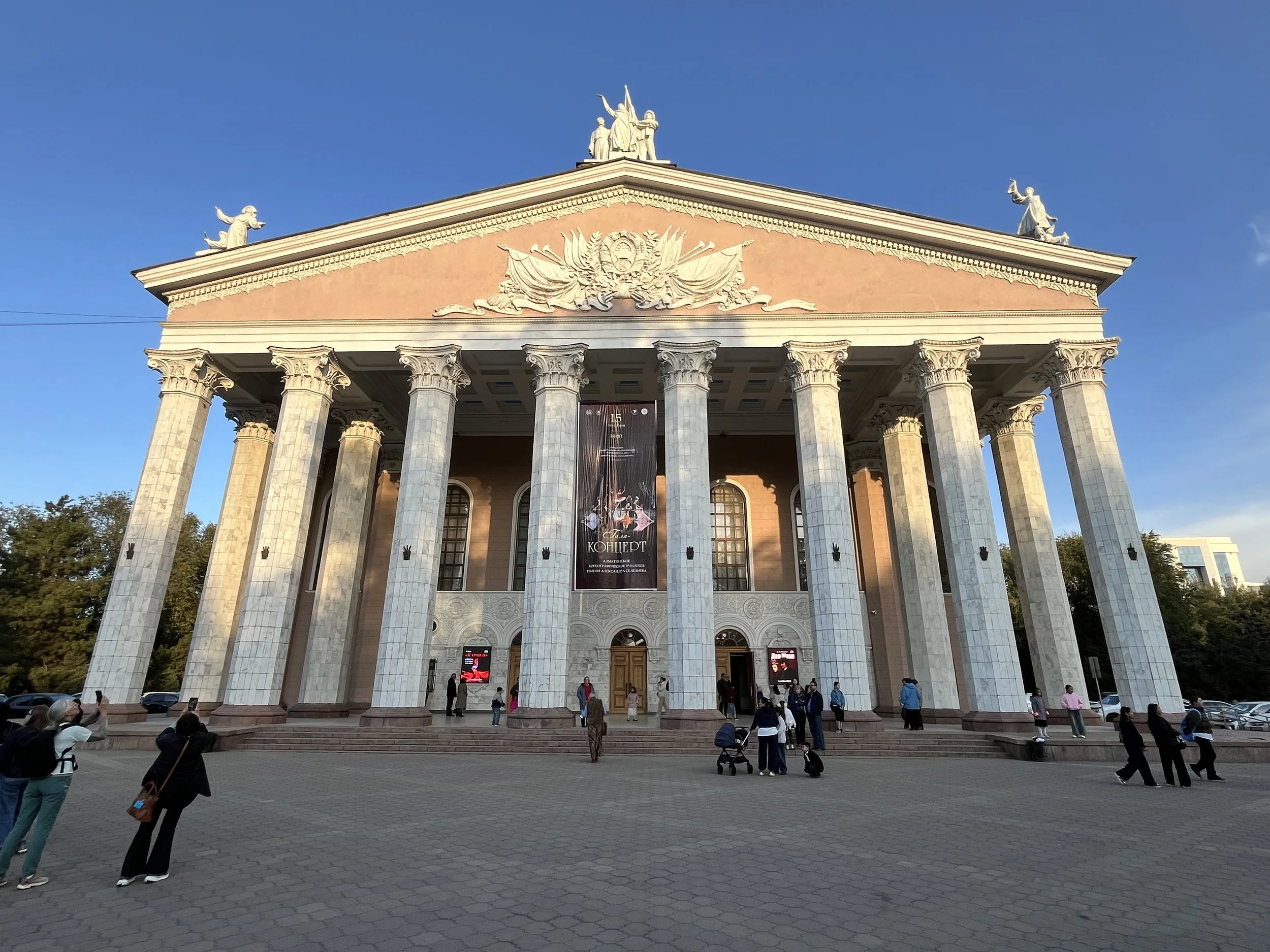
Near Al-Farabi Kazakh University is a statue of Abai Kunanbayev, a poet who is considered one of the founders of modern Kazakh literature. Prior to Kunanbayev’s work, most poetry was remembered through oral traditions. Today, Kunanbayev is revered as a folk hero in Kyrgyzstan. His likeness appears on stamps while schools and universities have been named after him. Founded in 1937, the Kyrgyz National Opera and Ballet Theatre of Abdylas Maldybayev was named after Abdylas Maldybaev, a prominent Kyrgyz singer and composer. Constructed in the neoclassic style, the current building was finished in 1955. Its Greek classical façade is decorated with large columns made from white gypsum that are accented with bas reliefs. Opera and ballet fans can buy tickets for performances of Faust, Bolero, or Aida in either Kyrgyz or Russian.
Another stop on our walking tour was the Memorial to the Red Guards, a granite obelisk erected in 1960 that features the names of 43 soldiers who died defending the Soviet Union and are buried in a common grave. Situated in Dubovny Park, the monument commemorates a 1918 uprising of counterrevolutionaries in the village of Belovodskoye, located about 30 kilometers west of Bishkek. Written in Russian, a message inscribed on the monument says, “Eternal glory to those who fell in the struggle for Soviet power.” Nearby is an “eternal flame” that is no longer burning. For our evening meal we sampled national food staples including beshbarmak (beef with noodles), and samsa (pastries filled with onion and meat). We also enjoyed meat and chicken kabobs and plov (a rice dish served with meat and vegetables). Although a popular dish, we elected not to try horse meat.
