India. Land of 30,000 Temples
Whereas many first-time travelers to India visit well-known places such as the Taj Mahal in Agra or Delhi’s Red Fort, southern India receives comparably fewer international tourists. Arriving in Chennai on the country’s eastern coast, my travel companion and I began the seven-hour drive to the Mayiladuthurai District, located on the eastern side of the Indian state of Tamil Nadu. There is no shortage of temples and other religious sites in India. In southern India alone, there are an estimated 30,000 temples and shrines. In contrast to other religions where attendance is expected, visiting a temple isn’t obligatory for practicing Hindus. Temples are places of worship but also venues for community events, social gatherings, and educational opportunities. Each temple also serves as a place for the devotional worship of a Hindu deity.
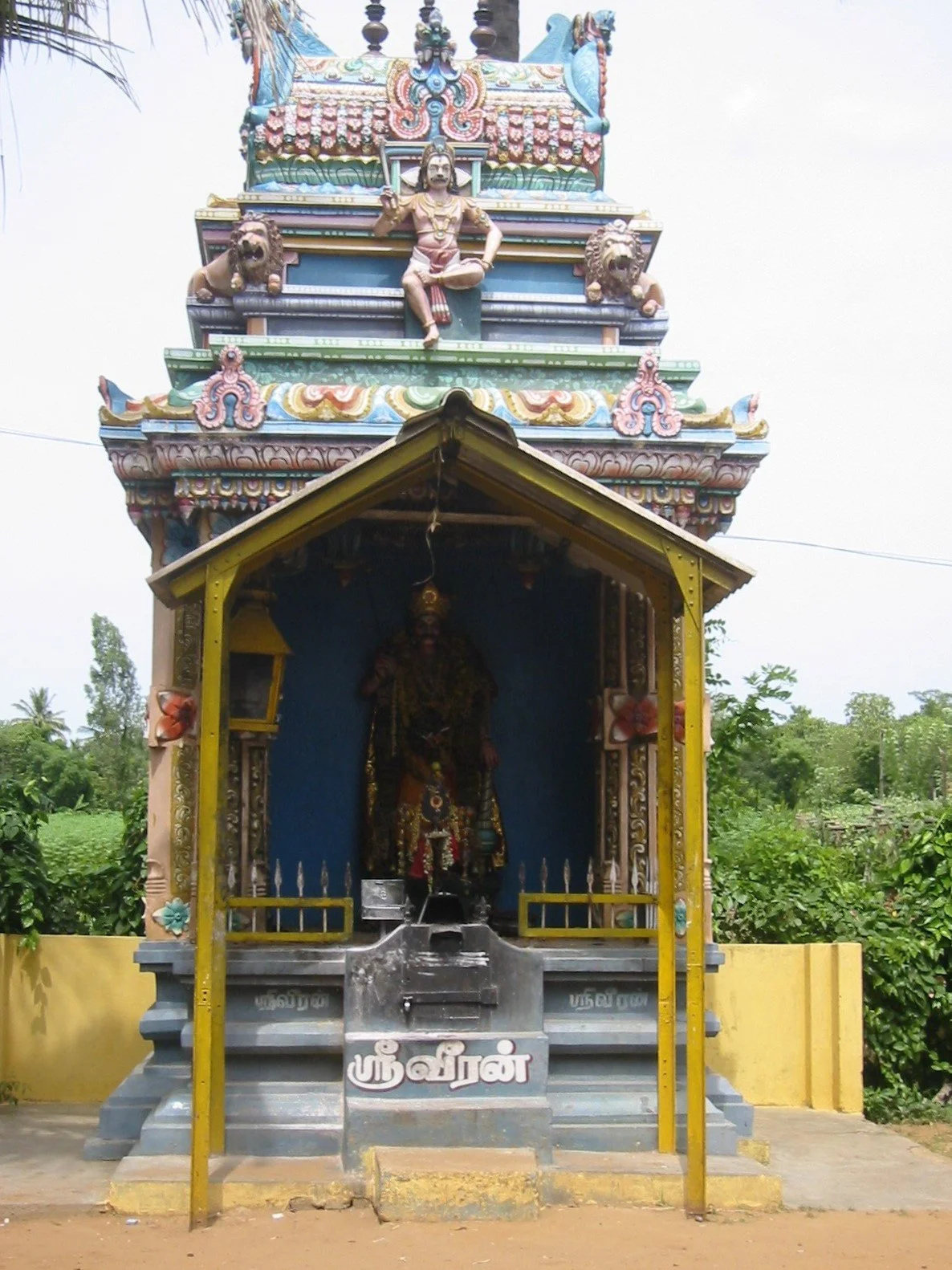
Traveling southward, we stopped at several small temples including Sri Veeran (aka Madurai Veeran), built for a folk deity and guardian god. Holding a sword and shield, Madurai Veeran is depicted as having a thick mustache. A legend says that he was born to wealthy parents and then abandoned. Later, while serving as a guard, he fell in love with King Bommanna Nayakan’s daughter. The lovers fled and were pursued by the King’s army which Madurai Veeran defeated in battle.
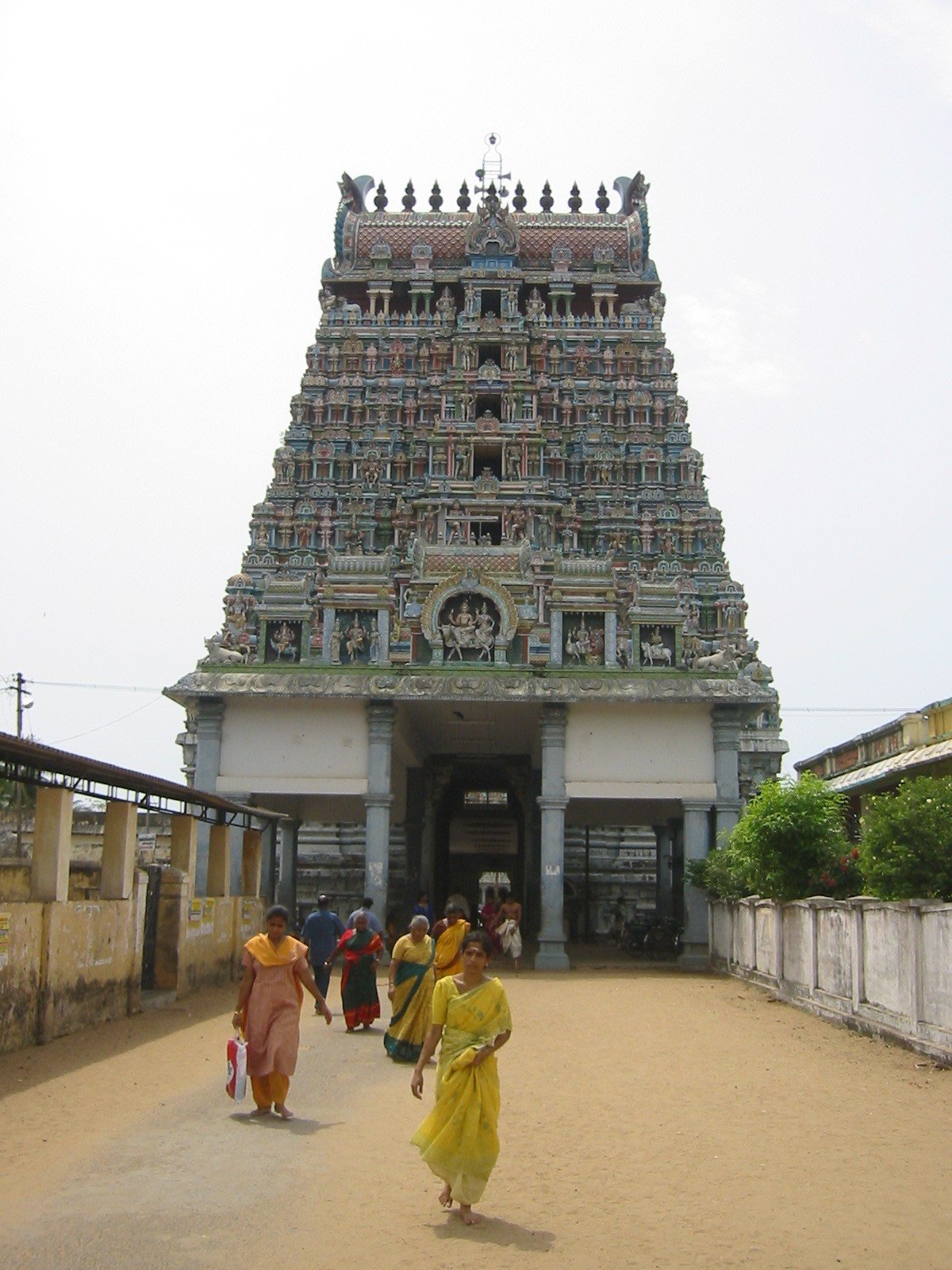
The temples of Tamil Nadu are famous for pyramidal towers known as gopurams that are arranged as a series of gradually smaller platforms, each telling a story through miniature figures. At the top of a gopuram is a barrel-vault roof and dome-shaped cupola. Located in the Mayiladuthurai District, and about 250 kilometers south of Chennai is Amritaghateswara Abirami, a medium-sized Hindu temple dedicated to Lord Shiva in his manifestation as Kalantaka (conqueror of time and death). The temple’s name means “nectar of immortality.” Amritaghateswara Abirami tells the story of Shiva saving the life of one of his devotees known as Markandeya and the defeat of a demon known as Yama, the god of death. Yama was one of eight demons destroyed by Shiva. Shiva’s victories over the demons are remembered through eight Ashta Veerattana temples. It is believed that Shiva’s deeds in destroying the eight demons protected dharma and helped restore balance within the universe. Amritaghateswara Abirami is also one of 276 Paadal Petra Sthalams (temples mentioned in songs/hymns glorified by Naalvar).

Covering an area of 40,470 square meters, the temple’s Chola and Dravidian style brick buildings were constructed in the 9th century. There are two gateway entrance towers (gopurams), five courtyards, and several mandapas (pavilions). Elements in the design of the complex emphasize symmetry and the sequential revelation of sacred spaces with enclosed courtyards that define zones of increasingly private space.
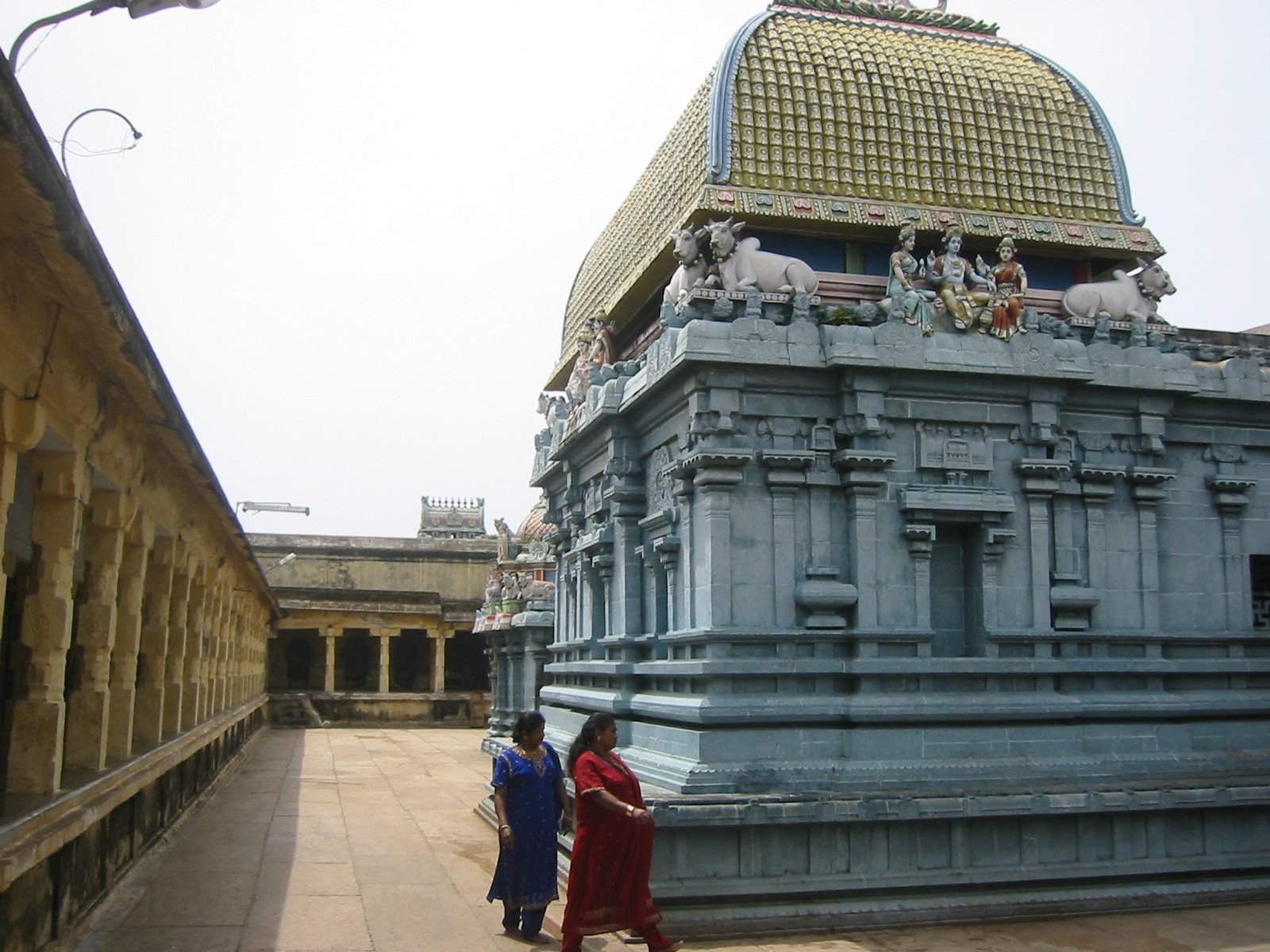
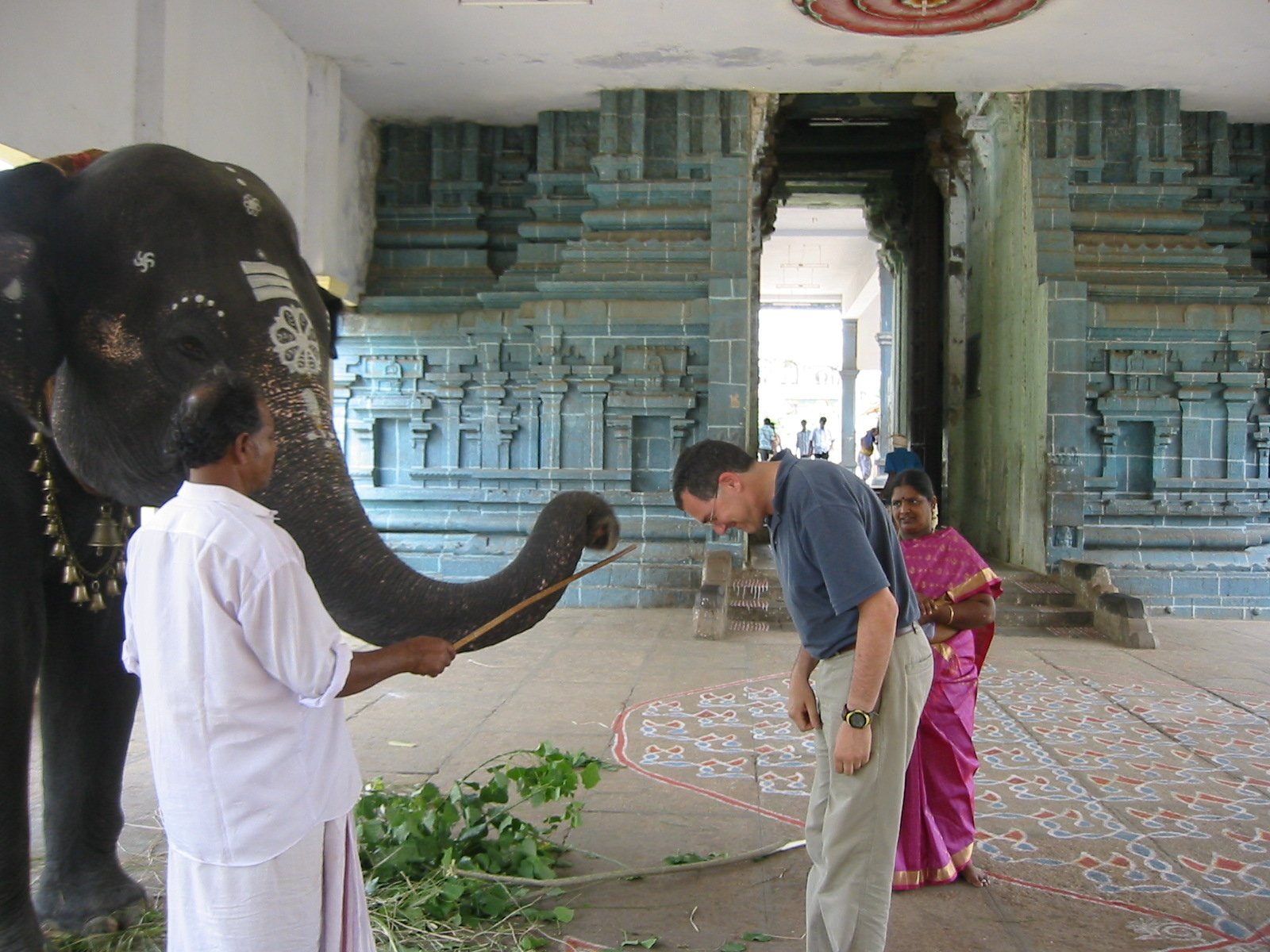
Located in the complex’s center is an inner sanctum called the garbhagriha which houses the temple’s deity. The self-manifested Shiva Lingam of Amritaghateswarar (the deity) is positioned within a square chamber on the top of an elevated pedestal. Damaged by flooding in the 11th century, the temple is administered and maintained by Dharmapuram Aadhenam, a Saivite monastic institution based in Mayiladuthurai. Rituals are held at the temple each day with the first beginning at 5:30am and the last ending at 10:00pm. Amritaghateswara Abirami is famous as a venue for the remarriage of couples 60 years and older. Inside one of the pavilions a temple elephant known as Abirami blesses devotees and visitors. Used to transport water to a temple from a nearby river or well, elephants symbolize good fortune.
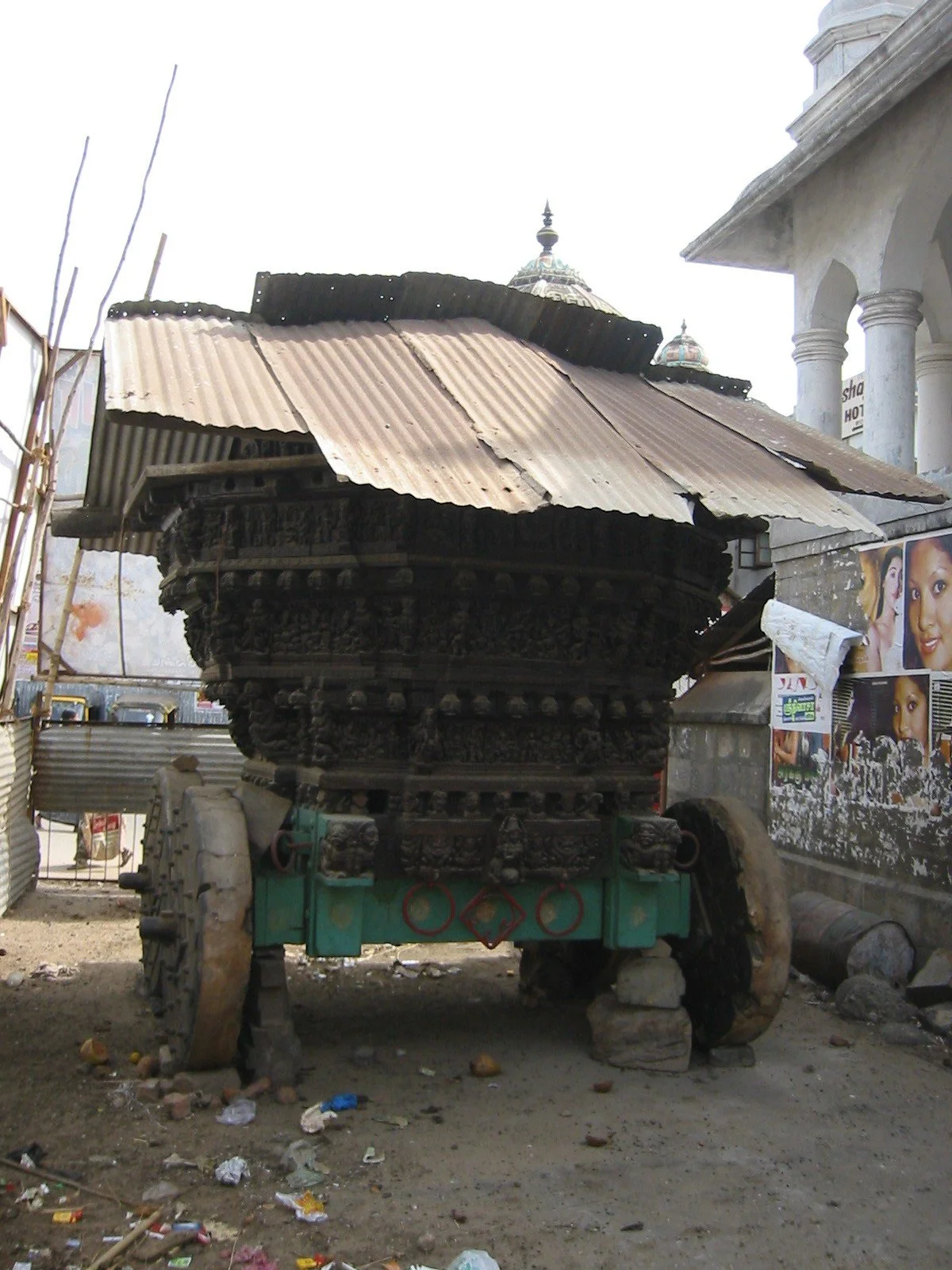
Located in a back-alley, we passed what locals call a “temple on a cart” (aka a temple car, temple chariot, or ratha). Common throughout southern India, temple cars are ornately carved shrines mounted on a wheeled platform designed to transport a deity through village streets during processions or festivals. Made entirely of wood, the cars are pulled by the deity’s followers using ropes. Ratha Yatra is a festival with a procession of temple cars accompanied by people dressed as deities, religious saints, or political leaders. The largest temple cars inspired the English word juggernaut (from jagannath) meaning an unstoppable force.