Turkmenistan. City of White Marble
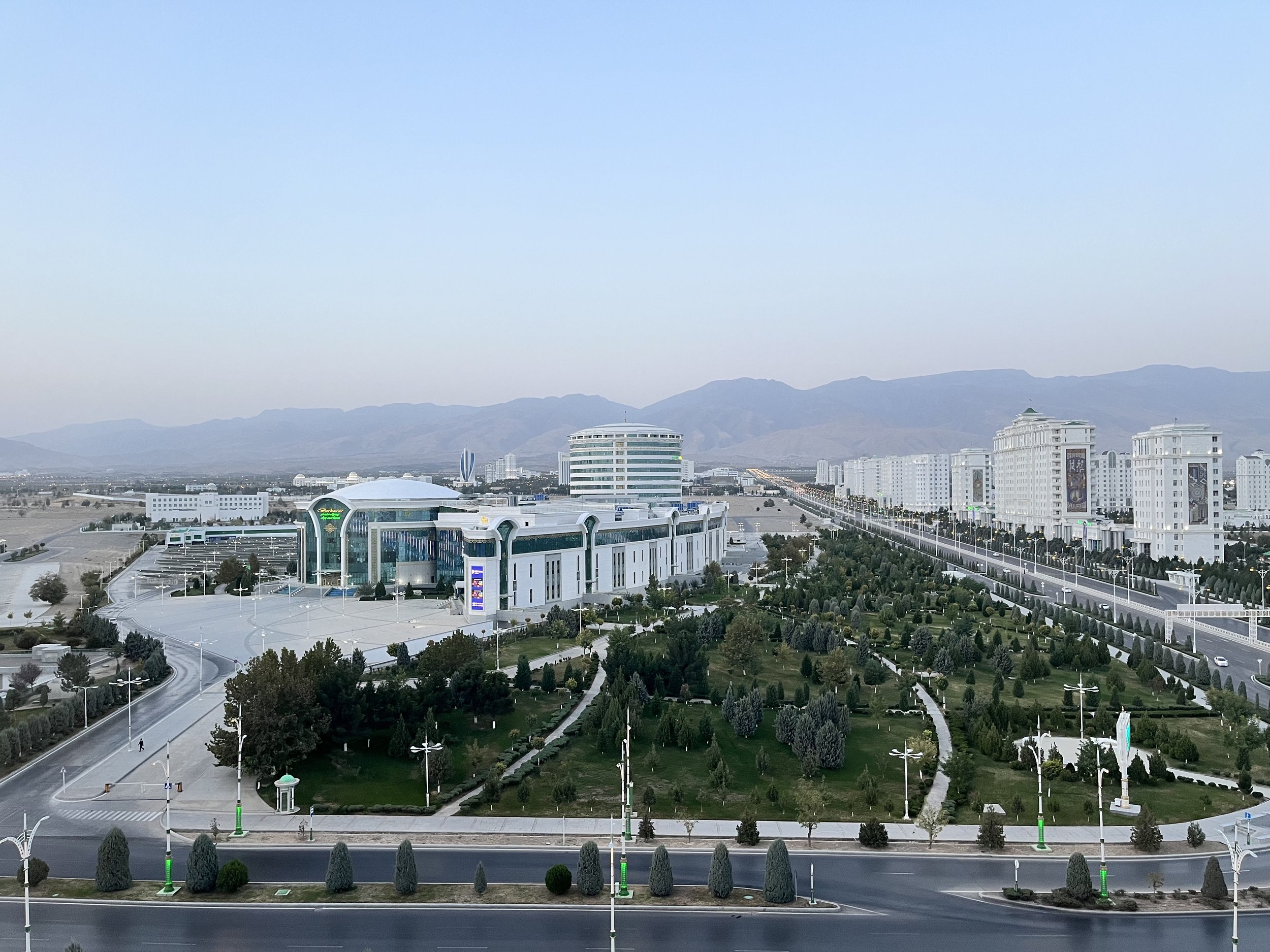
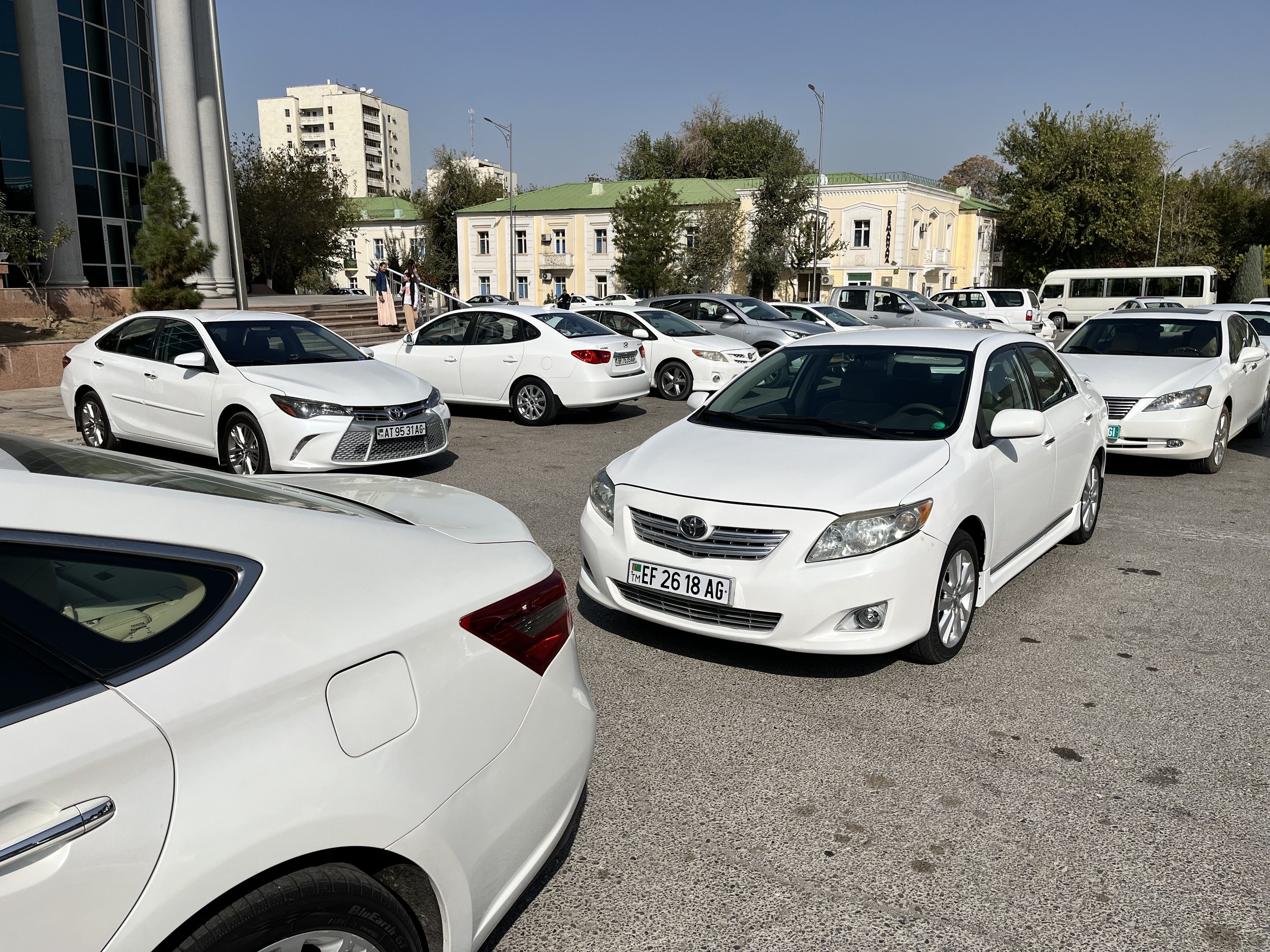
Turkmenistan’s capital and largest city (one million), is a significant departure from other large cities in Central Asia. Ashgabat’s gleaming monuments, white marble buildings, and wide boulevards emulate a fairytale-like sense of grandeur. Its streets are immaculate and its gardens flawlessly manicured. No other city within the former Soviet Union appears as opulent. But something feels off kilter. With seemingly empty apartment complexes and few people seen walking in public areas, the city appears sterile and lifeless. There is also an unseen tension. Indeed, the government enforces a ban on men wearing beards. Opera and dogs are similarly not allowed and cars must be washed frequently or their drivers can receive a citation. In keeping with the city’s focus on cleanliness, car owners in Ashgabat can choose from two colors, white or silver.
Turkmenistan’s population is 86% Turkmen with minorities of Uzbek (9%), and Russian (1.6%). Most speak a variant of Turkish with Russian serving as a second language. While the vast majority of citizens are Muslim (mainly Sunni), there is also a small Russian Orthodox population. It is a young nation with more than half of its citizens under thirty. Turkmenistan’s economy is closely tied to cotton and petroleum. A network of pipelines delivers the country’s natural gas to Pakistan, India, and Afghanistan. Turkmenistan also exports fish, wine, butter, and salt.
It is challenging for a solo traveler to visit Turkmenistan with nearly all tourists seeing the country as part of a group. For this reason, Turkmenistan’s 7,000 visitors a year makes it the 7th least visited country in the world. We disembarked at the city’s airport after a short internal flight from Türkmenabat, located on the country’s east side. Although Ashgabat’s modern terminal has several gates, we saw no planes parked at any of them.
Located where the Karakum Desert meets the Kopet Dag Mountains, Ashgabat is thirty kilometers north of Iran. The city has several informal nicknames including “City of Love” and “White and Gold City.” Known as Konjikala, the first settlement on the site was a wine-producing village that was destroyed by an earthquake in the 1st century BC. Rebuilt, the settlement became a link along the silk roads until being destroyed by Mongols in the 13th century. Ashgabat was founded by the Russians in 1881 as a military garrison to counter British-influenced Persia. Earthquakes remained a major concern and before 1900, few of its buildings were taller than a single story. The city became capital of the Turkmen Soviet Socialist Republic in 1924 and during WWII it was a refuge for Moscow State University and Kiev film productions. In 1948 it was devastated by a magnitude 7.3 earthquake that lasted ten seconds and destroyed nearly all of its brick buildings, killing between 110,000 and 176,000 persons.
The city was rebuilt with most buildings featuring white marble exteriors. A water shortage was alleviated in 1962 with the construction of the Karakum Canal that diverts water from the Amu Darya River that previously flowed into the Aral Sea. The Presidential Palace was completed in 2000 and many residential buildings were added in preparation for the Asian Indoor and Martial Arts Games that were held in 2017. In 2013, Ashgabat was listed in the Guinness Book of World Records for having the greatest concentration of marble buildings in the world. The surface area of marble covering building exteriors was estimated to be an astonishing 4,500 million square meters.
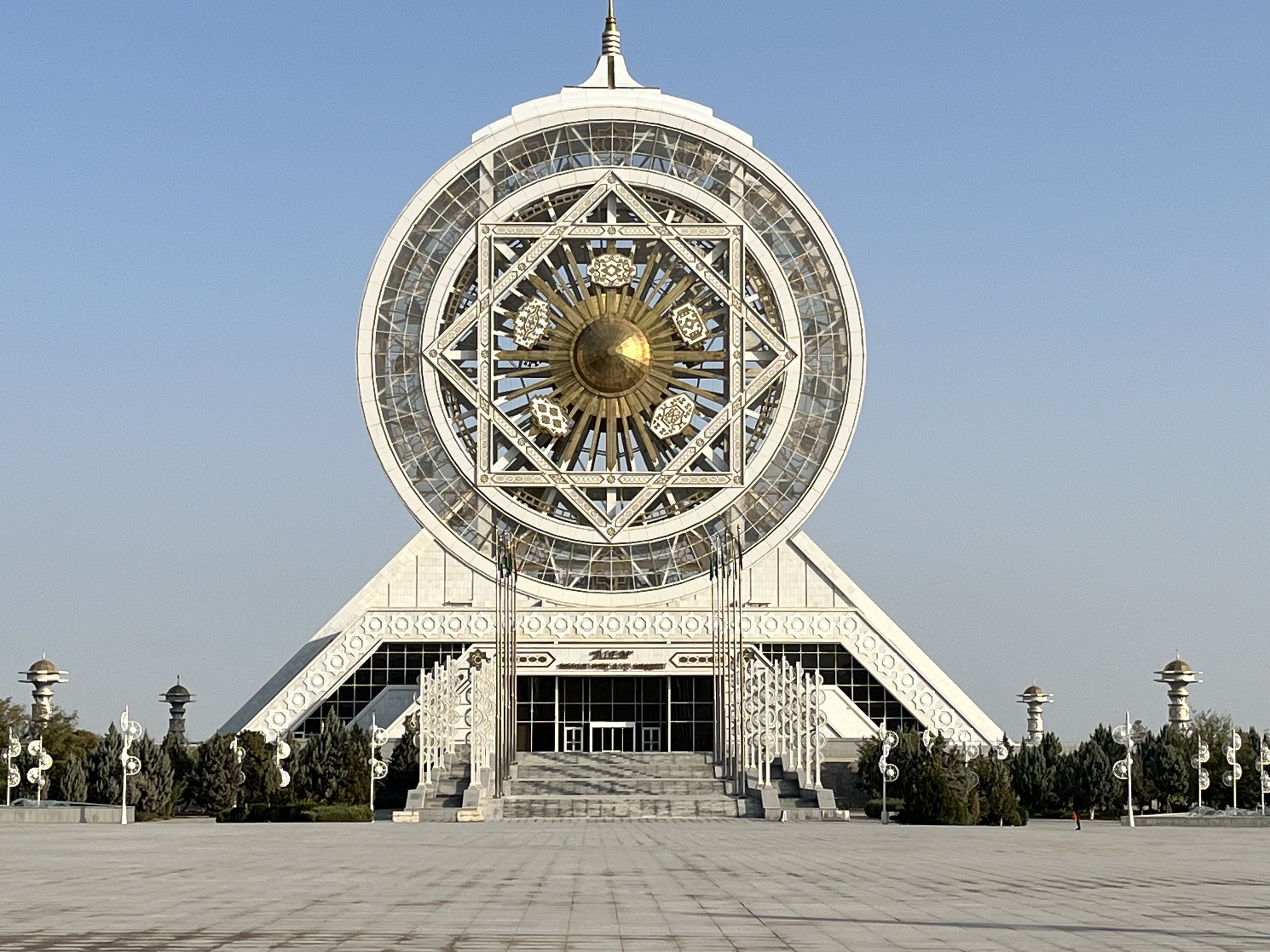
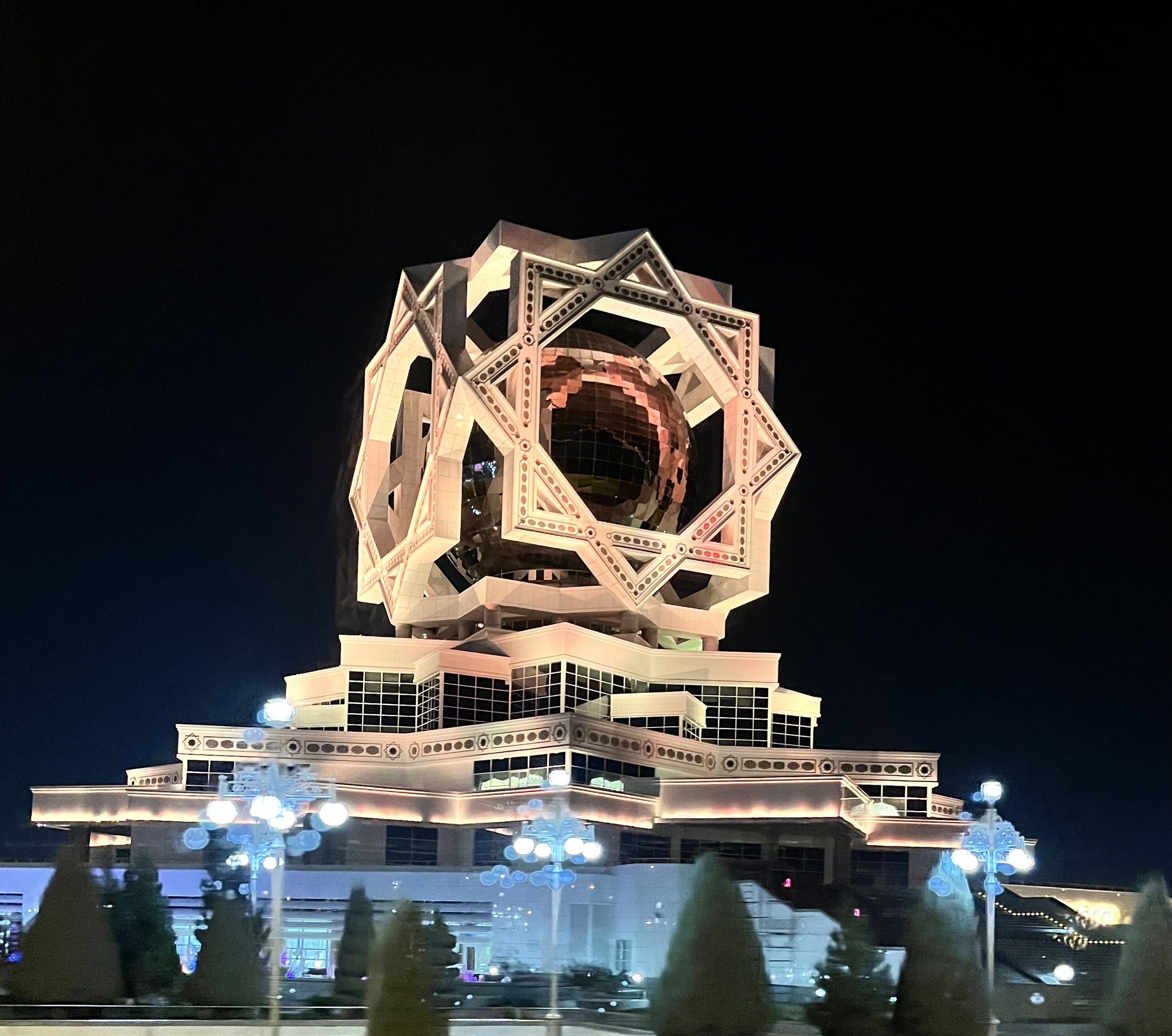
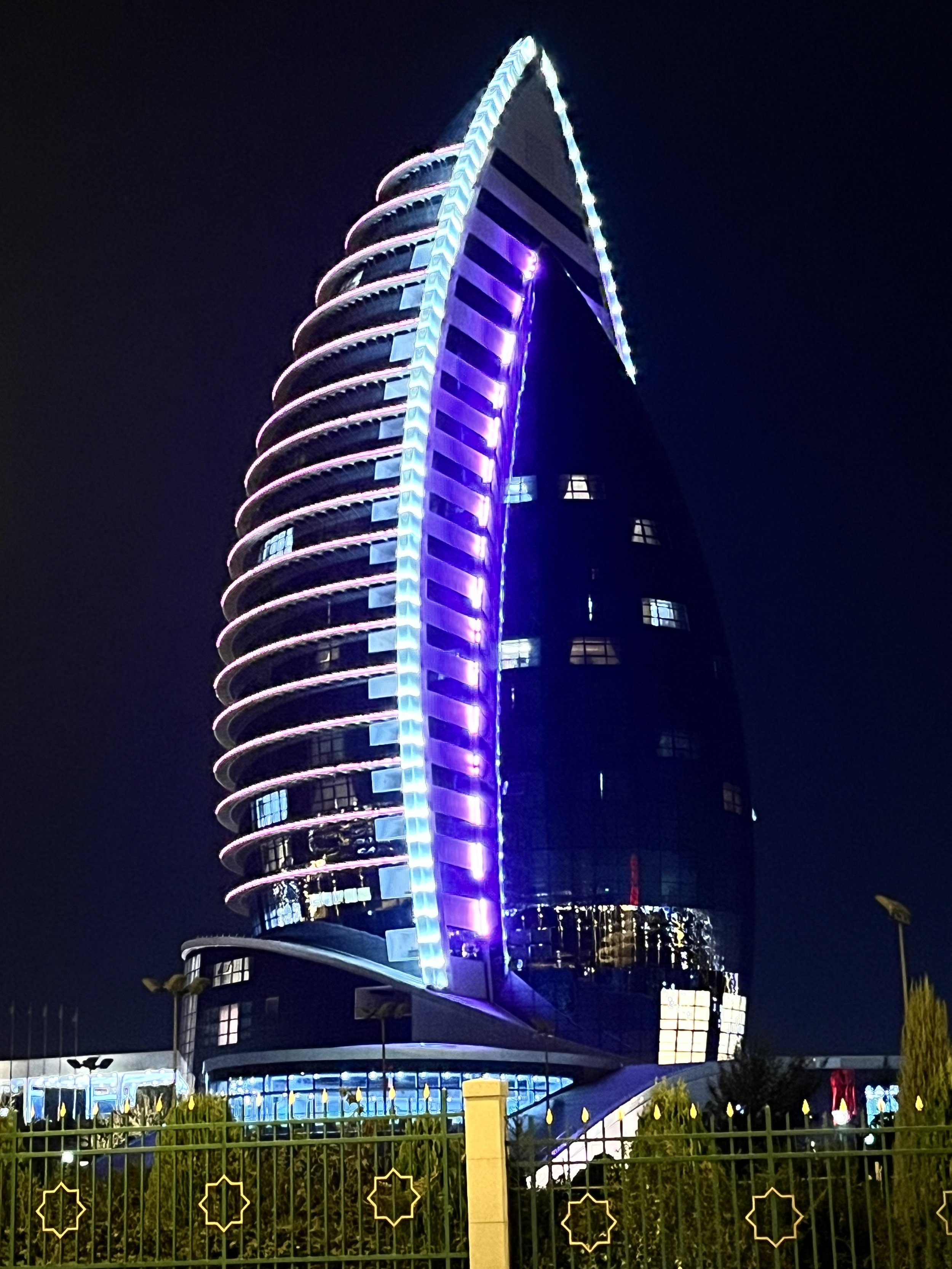
After checking into our hotel, we reboarded our bus for a night tour. Ashgabat after dark doesn’t disappoint. With dozens of buildings and monuments illuminated by colorful lights, the city’s nickname is “Ash-Vegas.” We passed an eleven-story building decorated with an eight-pointed star. Inside are rooms for couples to file paperwork necessary to get married. There are also large wedding halls, two that hold 500 guests and one with a capacity of 1,000. Another imposing structure is a 21-meter-high statue of Gurbanguly Berdymukhamedov, the country’s former president. Our guide reminded us not to photograph government buildings or the presidential palace. We paused to view the city’s enclosed Ferris wheel. Called the Alem (meaning “The Universe”), it measures 47.6 meters across, making it the world’s largest enclosed Ferris wheel. Inside are 24 gondolas, each capable of carrying six passengers and on the wheel’s exterior, is the eight-sided star of Oguz Khan. The Alem Cultural and Entertainment Center also features a movie theater, bowling alley, restaurant, and planetarium. We passed the Ministry of Foreign Affairs building which is topped by a giant globe. Another over-the-top sight was the pyramid-shaped Yyldyz Hotel. The five-star hotel’s design and vibrant nighttime colors set it apart from other structures. Our guide pointed out the fifth tallest (133m) flagpole in the world. The wind doesn’t always blow so the pole is equipped with a small jet engine to make the country’s national flag more visible on windless days. In the words of the Lonely Planet guidebook, Ashgabat can be described as “Vegas meeting Pyongyang.”