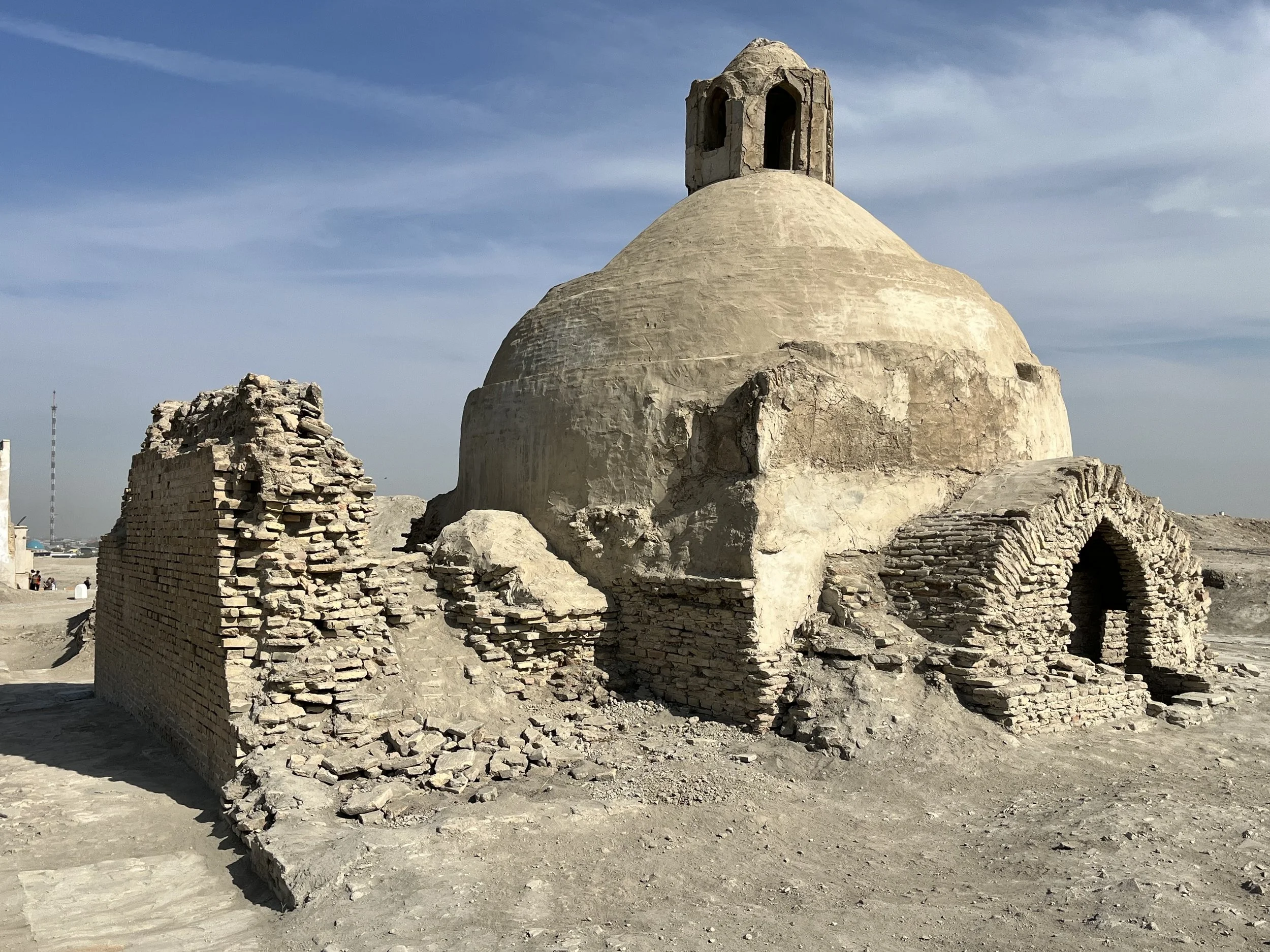
Uzbekistan. A Persian Prince and the Ark of Bukhara
Located in southeastern Uzbekistan, the site of the present-day city of Bukhara has been occupied since at least the 1st century BC. Beginning as a modest oasis settlement, Bukhara grew into a focal point of Persian culture in Central Asia and an important trading center along the silk roads. Near the city center is a massive fortress called the Ark of Bukhara. Dating to the 5th century, it is believed that the Ark was built over the ruins of earlier structures. The term “ark” comes from the Persian word “arg” meaning castle or citadel. A legend about the Ark’s origin tells of a Prince named Siyâvash who traveled to the desert oasis and fell in love with the king’s daughter. The king agreed to give up his daughter, but only if Siyâvash could complete a seemingly impossible task. The king instructed him to build a palace that would fit inside a bull’s hide. In response, the prince cut the bull hide into thin strips that he connected to form a circle large enough to accommodate the Ark.
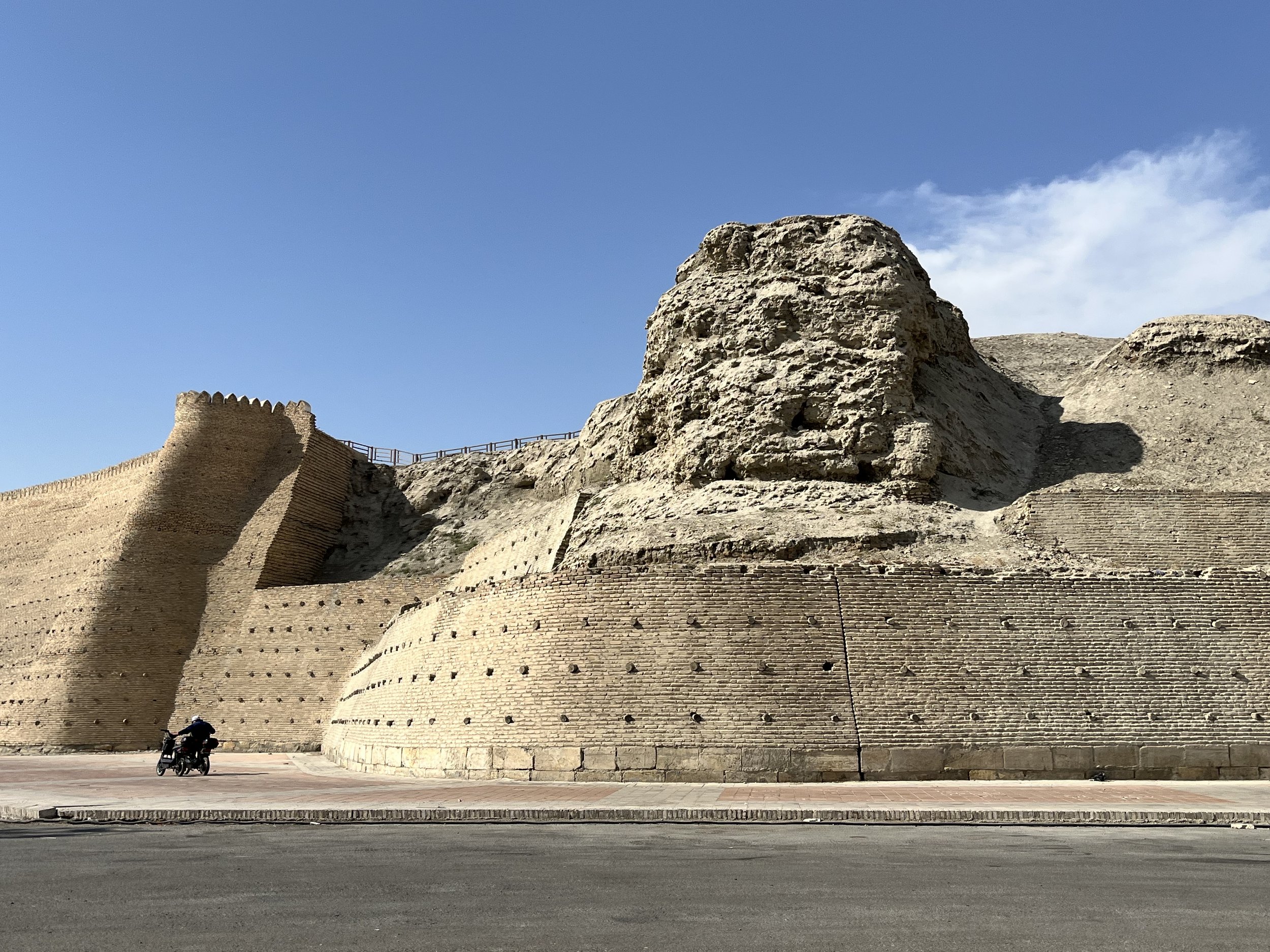
Today, the Ark makes a strong visual impression on visitors. From a distance, it appears as a massive earthen mound surrounded by five bastions that project outward from tapered, mud brick walls. The wall’s upper section was crenellated to provide firing points for defenders. Another legend associated with the Ark is that a ruler named Bidun Bukhara Khudah, who reigned before the Muslim conquest, attempted to rebuild the citadel several times but each time the structure collapsed. Requesting assistance from his advisors, he was told to place stones in an arrangement that would resemble the constellation Ursa Major (aka The Great Bear). Soon after placing the stones, workers were successful in rebuilding the Ark. For hundreds of years the ark operated as “a city within a city” and served as a symbol of strength, power, and tyranny. In 713 the city of Bukhara was captured by Qutayba ibn Muslim (who fought for the Umayyad Caliphate) and soon after a mosque was built over ruins of the Ark’s Zoroastrian temple.
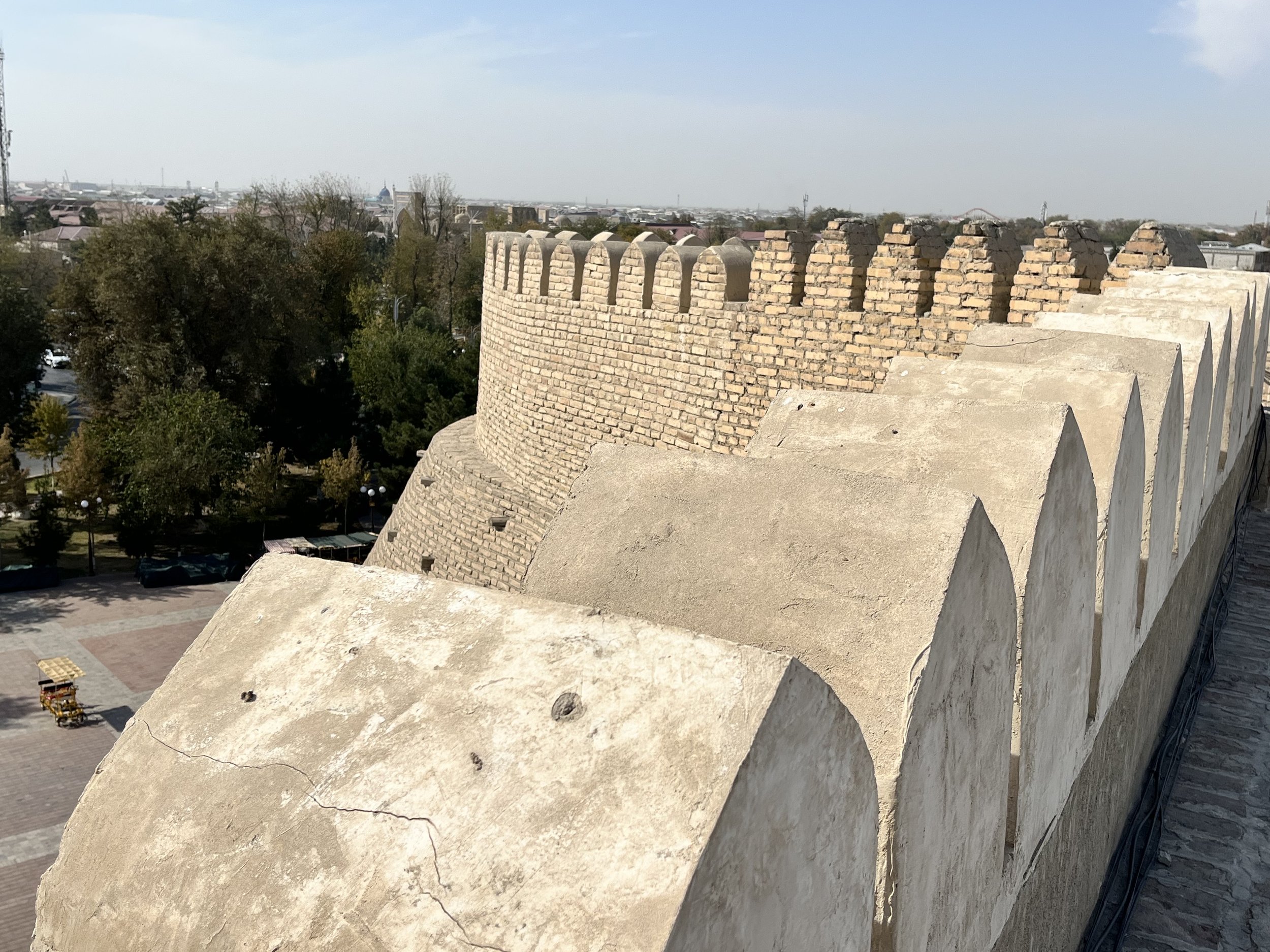
The Ark was damaged in 1220 when it was besieged by Mongol forces commanded by Genghis Khan. Its most recent renovation took place in the 16th century under the Shaybanid Uzbek Dynasty. The last royal coronation to take place inside was in 1910 when Alimkhan assumed power. The Ark was attacked again by Red Army forces during the Battle of Bukhara and after 1920 the building no longer served as the residence for Bukharan emirs.
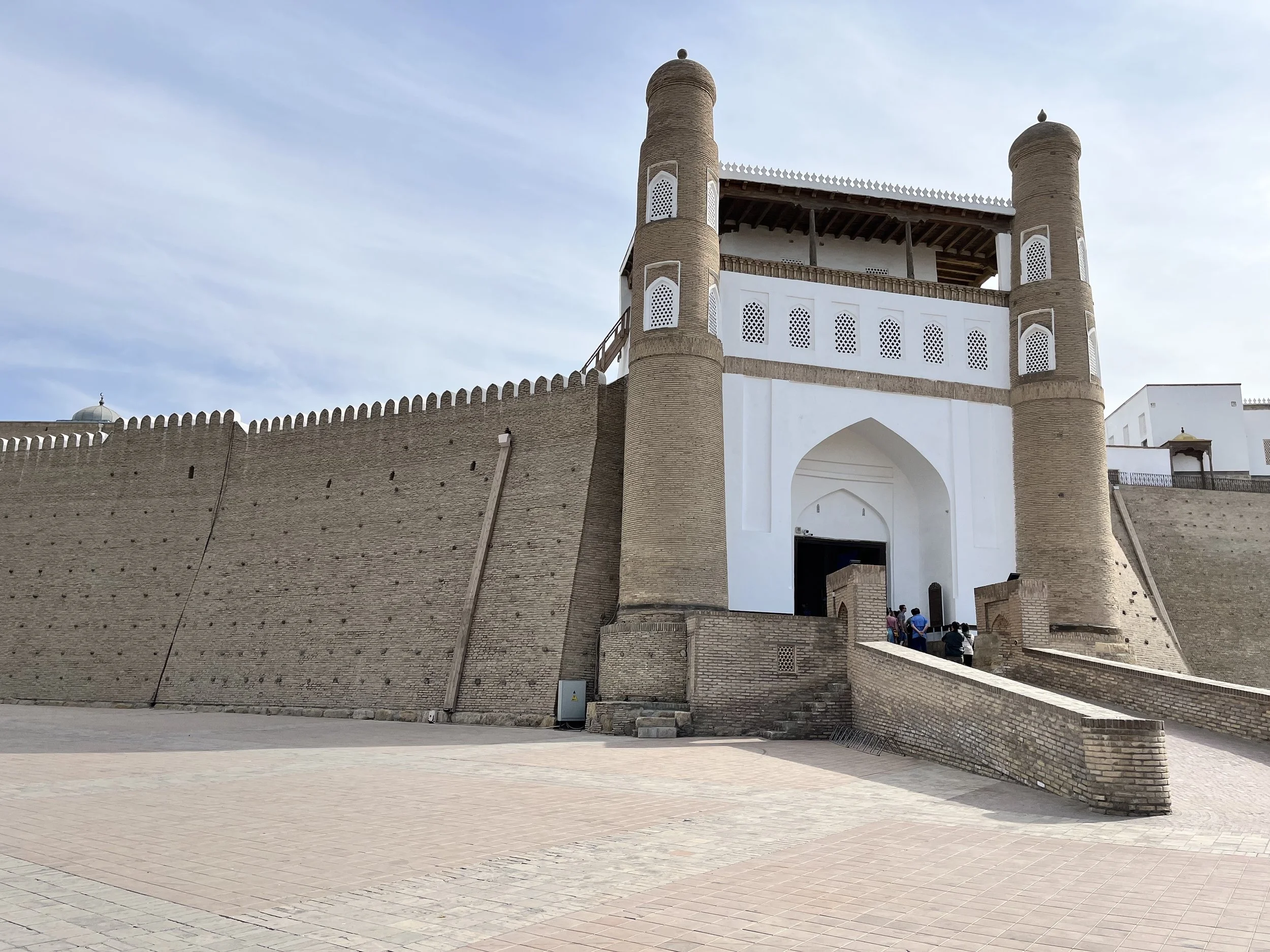
The Ark is arranged as a rectangle with a 789-meter perimeter wall sixteen to twenty meters in height, that encloses four hectares. We approached from Registan Square, located on the Ark’s western side. This open area served as a medina (market) and was surrounded by residences. The square has a dark past. For many years it was a gathering point for the slave market and a venue for public executions.
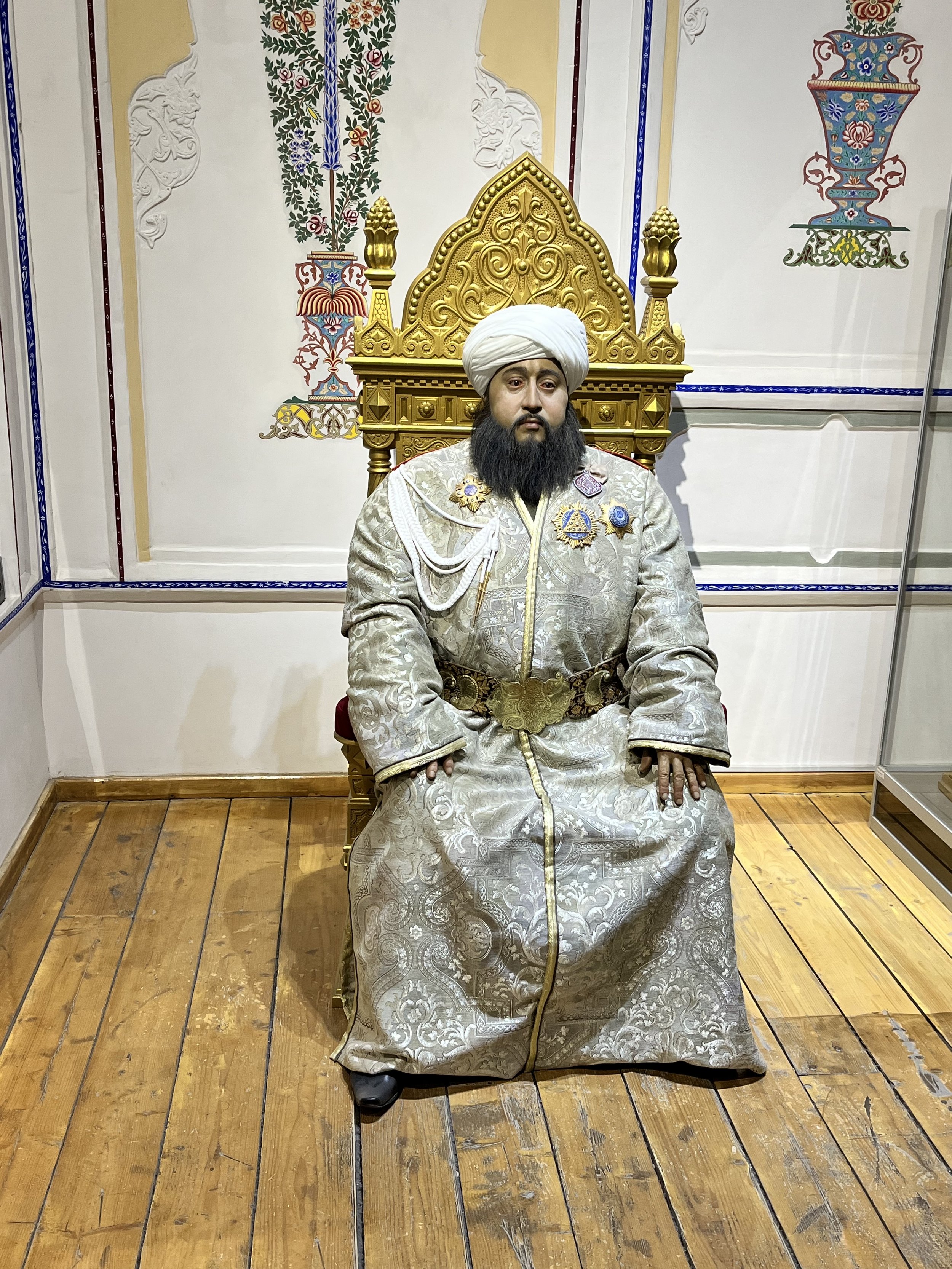
The Ark’s ceremonial entrance is flanked by towers added in the 18th century and linked by a balcony with six porticoed windows. A 20-meter-long stone ramp led us upward through a narrow passage. Inside the Ark were government offices, prison cells, bedrooms, reception halls, and stables for 15 to 20 horses. Before reaching the 17th century Juma (Friday) Mosque we passed a booth used by the fort’s commander to receive reports from spies. The Juma Mosque features exquisitely carved columns. Nearby are the former living quarters of the emir’s kushbegi (prime minister) where foreign dignitaries were received.
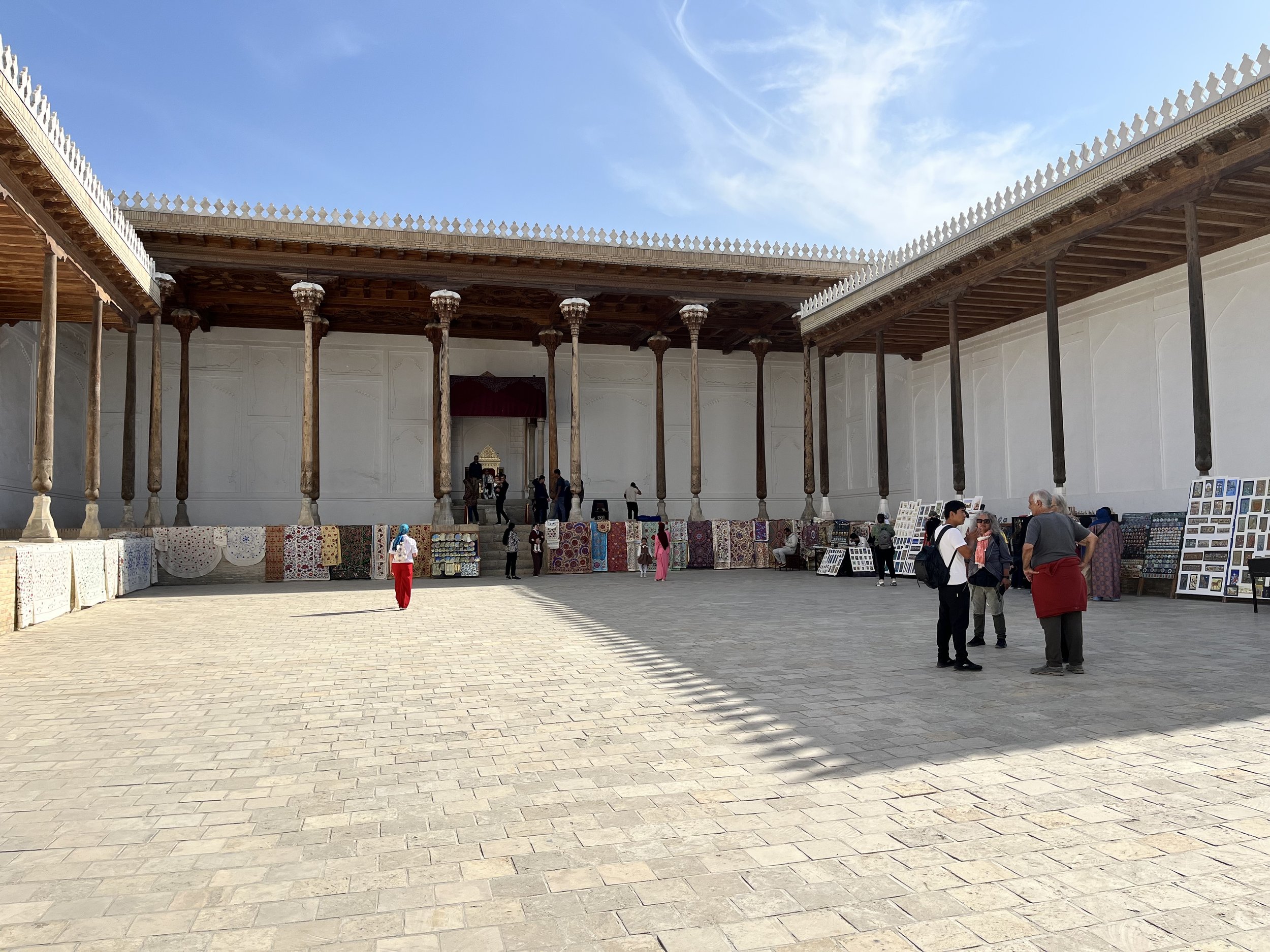
Behind the main courtyard were bedrooms used by the emir for visits from members of his harem. Significant efforts were implemented to protect the emir’s safety. Food and water were carefully scrutinized and tasted to minimize the chance of the emir being poisoned. We visited other rooms including the reception and coronation hall, the court mosque, and the throne room. Breaking away from my companions, I followed a corridor leading to the Ark’s roof where I walked among the ruins of several mudbrick structures.