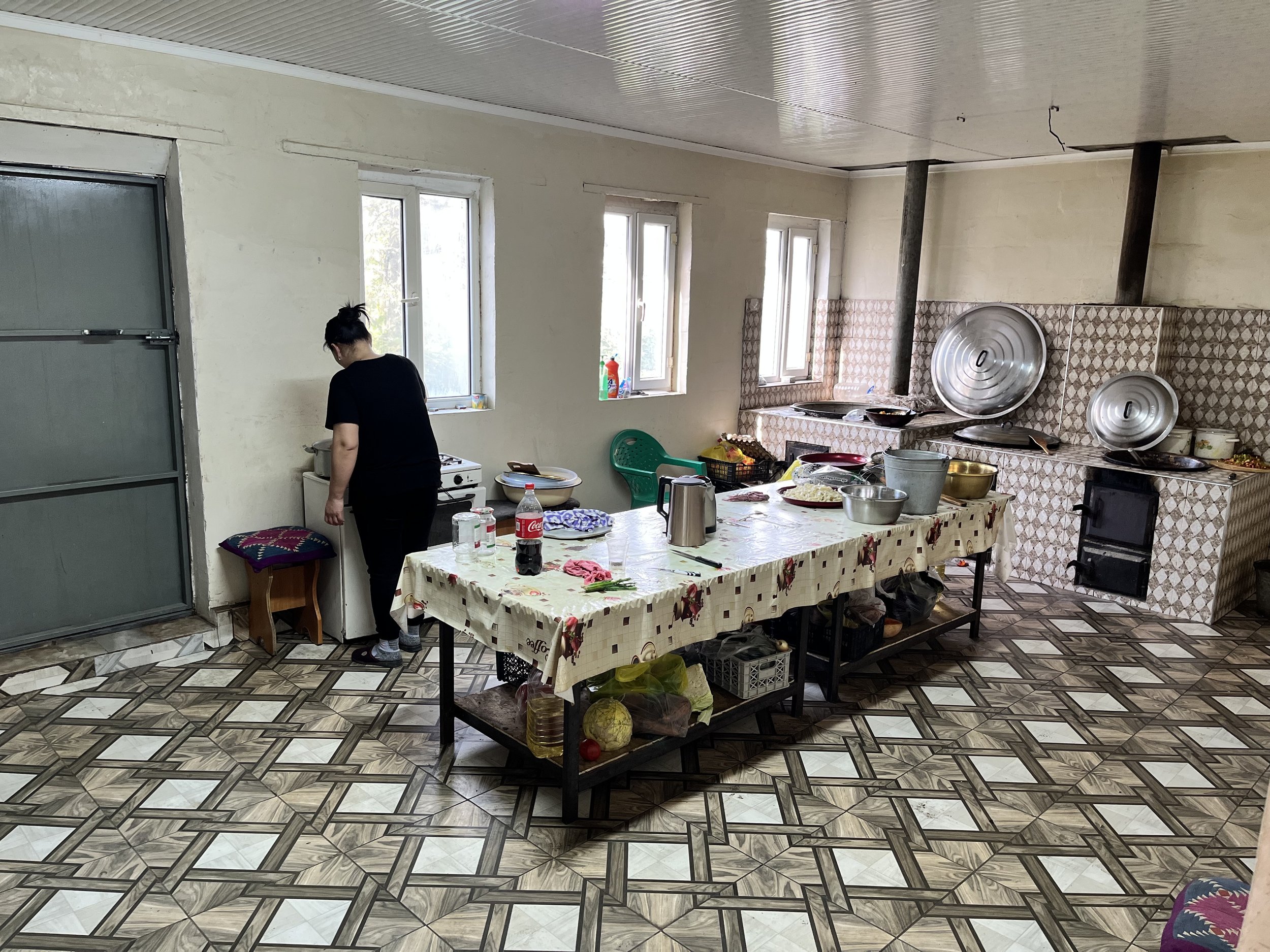
Kyrgyzstan. Stone Faces of Ancient Balasagun
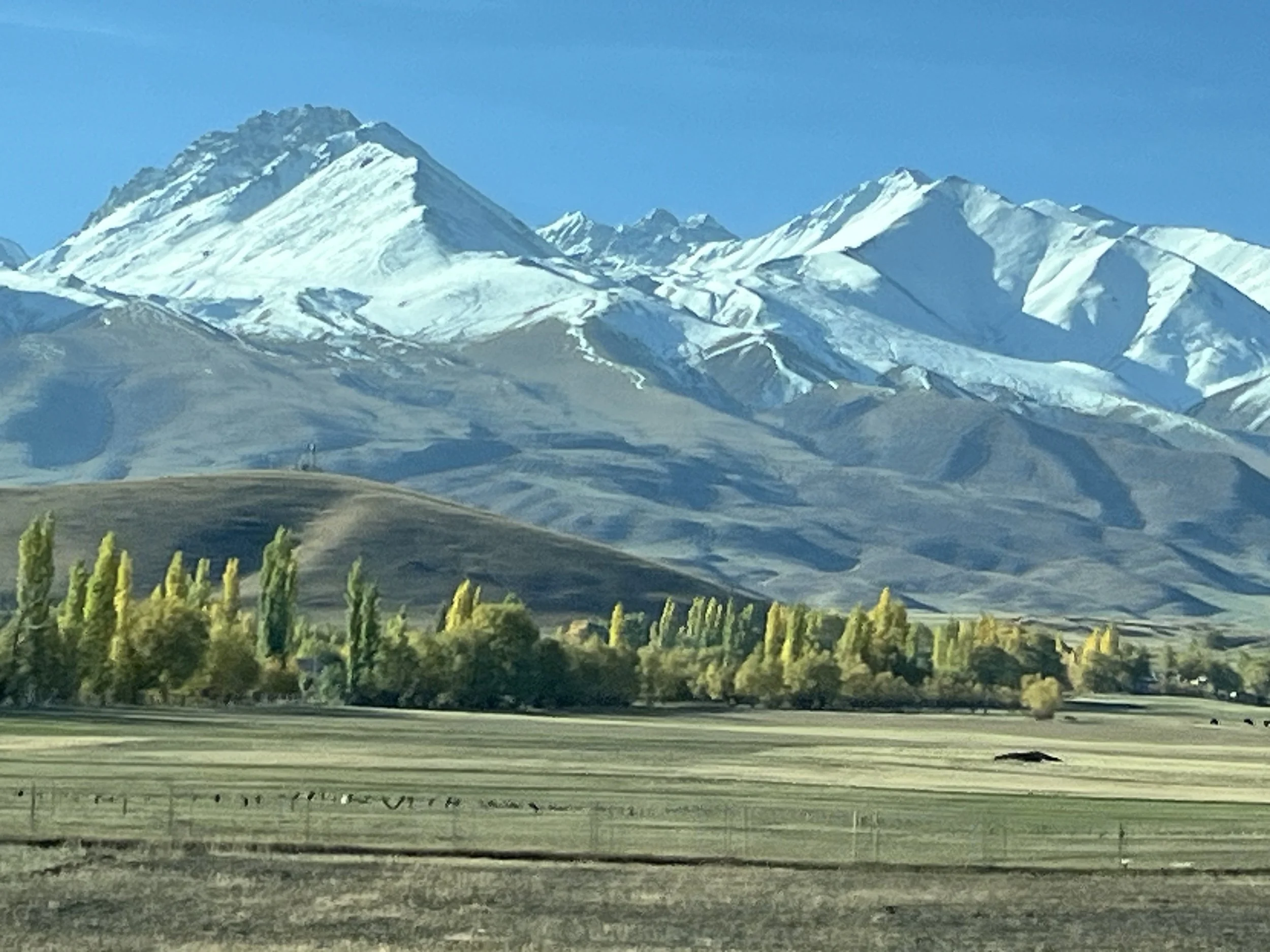
Rugged Kyrgyzstan is bordered by China and Tajikistan to the south, Kazakhstan to the north, and Uzbekistan to the north. Departing Bishkek, Kyrgyzstan’s capital city, we drove 80 kilometers east through the Chüy Valley and along the southern edge of the Tian Shan Mountains. The Tian Shan (aka “celestial”) Mountains extend along an arc 1,200 kilometers long and 300 kilometers deep. The range was mentioned in the writings of Marco Polo and Buddhist explorer Hsuan Tsang and many of its hundred plus peaks of over 5,000 meters have yet to be climbed. Covered by forests, turquoise-colored lakes, and glaciers, the Tian Shan contains some of the most inaccessible places on earth. Located near the town of Tokmok, Burana Tower is the most visible remanent of ancient Balasagun. Built by the Sogdians (a Persian people), the city of Balasagun was part of the Karakhanid Empire (840-1212) which extended from the Aral Sea to China. Balasagun was an advanced city for its time with roads and an aqueduct extending more than twenty kilometers to the Tian Shan’s foothills. With 16,000 residents, the city was an important node on the silk roads. Its people welcomed caravans packed with jewelry, coins, ceramics and other items and at its height, Balasagun was among Central Asia’s richest cities. The city is also known for being the birthplace of the famous poet, Yūsuf Balasaguni (1019-1077), who wrote “Blessed Knowledge,” an early Turkish literary work. The city’s decline began in 1218 when it was overrun by Mongol troops who called the settlement Gobalik (meaning “pretty city”) and by the end of the 14th century, most of Balasagun’s buildings had fallen into disrepair.
The word “Burana” comes from the Arabic word “monar,” meaning minaret. According to a legend, Burana Tower was built by a khan (king) to protect his beautiful daughter Monora, after he was told she would die from a spider bite at the age of 18. Living alone in the top of the tower, Monora received food and water that was hoisted upwards by servants. One day a poisonous spider hiding in a food basket bit her, fulfilling the prophecy.
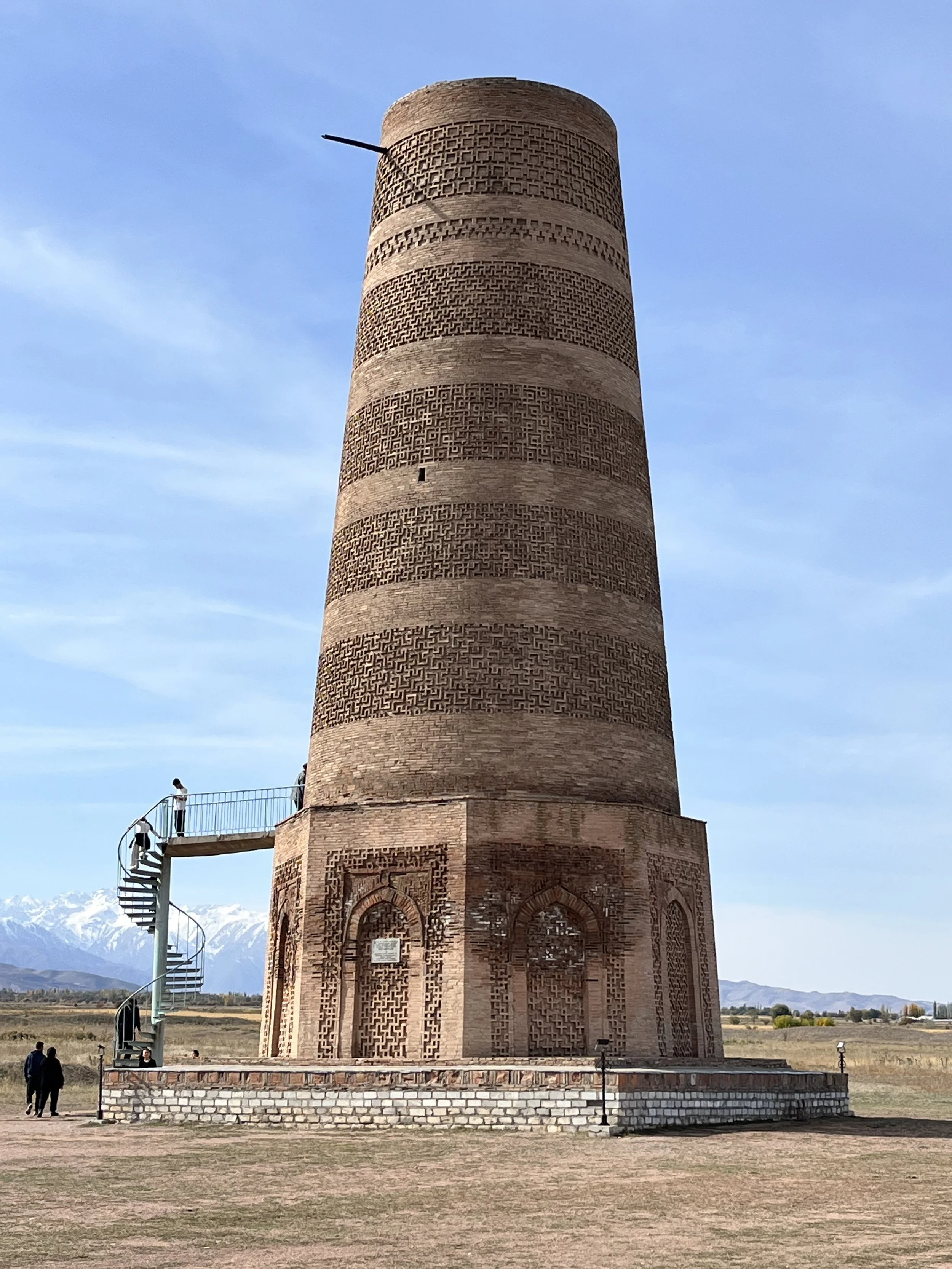
The pathway leading towards the tower and adjacent city ruins was lined with flowers. In lieu of being painted, the tower’s exterior brickwork is arranged in geometric patterns. Used as a model for other minarets, the structure has four small windows, each facing a cardinal direction, and eight faux doorways. Originally forty-five meters tall, the tower’s top half collapsed during a 15th century earthquake. Its foundation is buried six meters deep and is partially lined with marble. Recent excavations reveal crypts and foundations from adjacent structures. I took a photograph of the tower with the Tian Shan Mountains in the background. Added in recent years, a metal staircase provides access to a narrow stairwell inside the tower. Now a UNESCO World Heritage Site, the tower complex includes earthworks, the remnants of a castle, and several mausoleums.
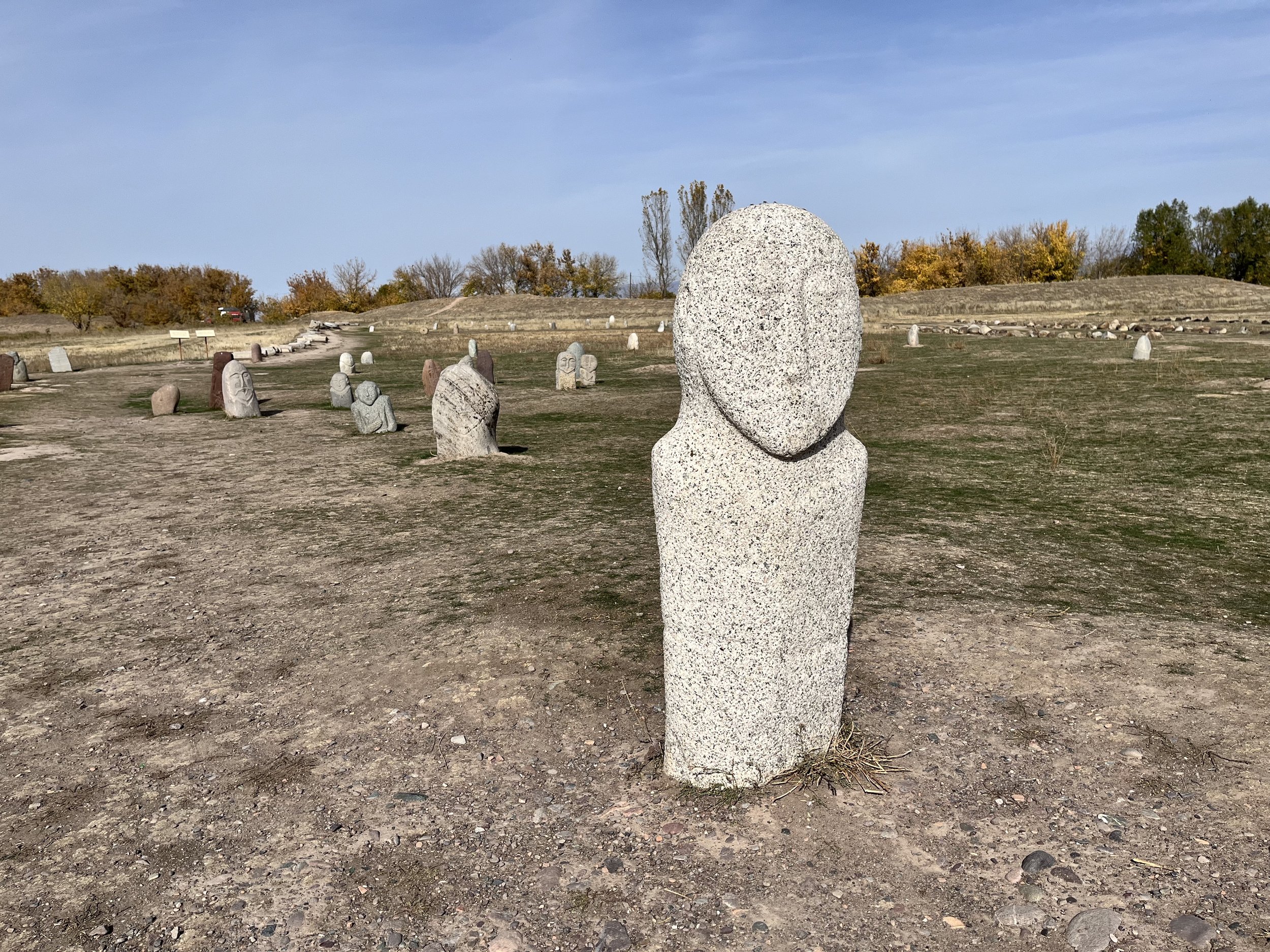
Less than fifty meters from the tower is an area with several dozen monuments called balbals. The name “balbal” is Turkic for “ancestor” or “father.” Carved from limestone or granite, balbals were placed near the grave of an influential leader. Each depicts a warrior or other notable figure with a human face and distinctive hat or helmet. The majority have a Mongoloid appearance, and many have beards. A few other balbals have only geometric shapes and no faces. Adjacent to the tower and field of balbals is a small museum containing artifacts such as clay water pipes and petroglyphs dating to the 1st century BC.
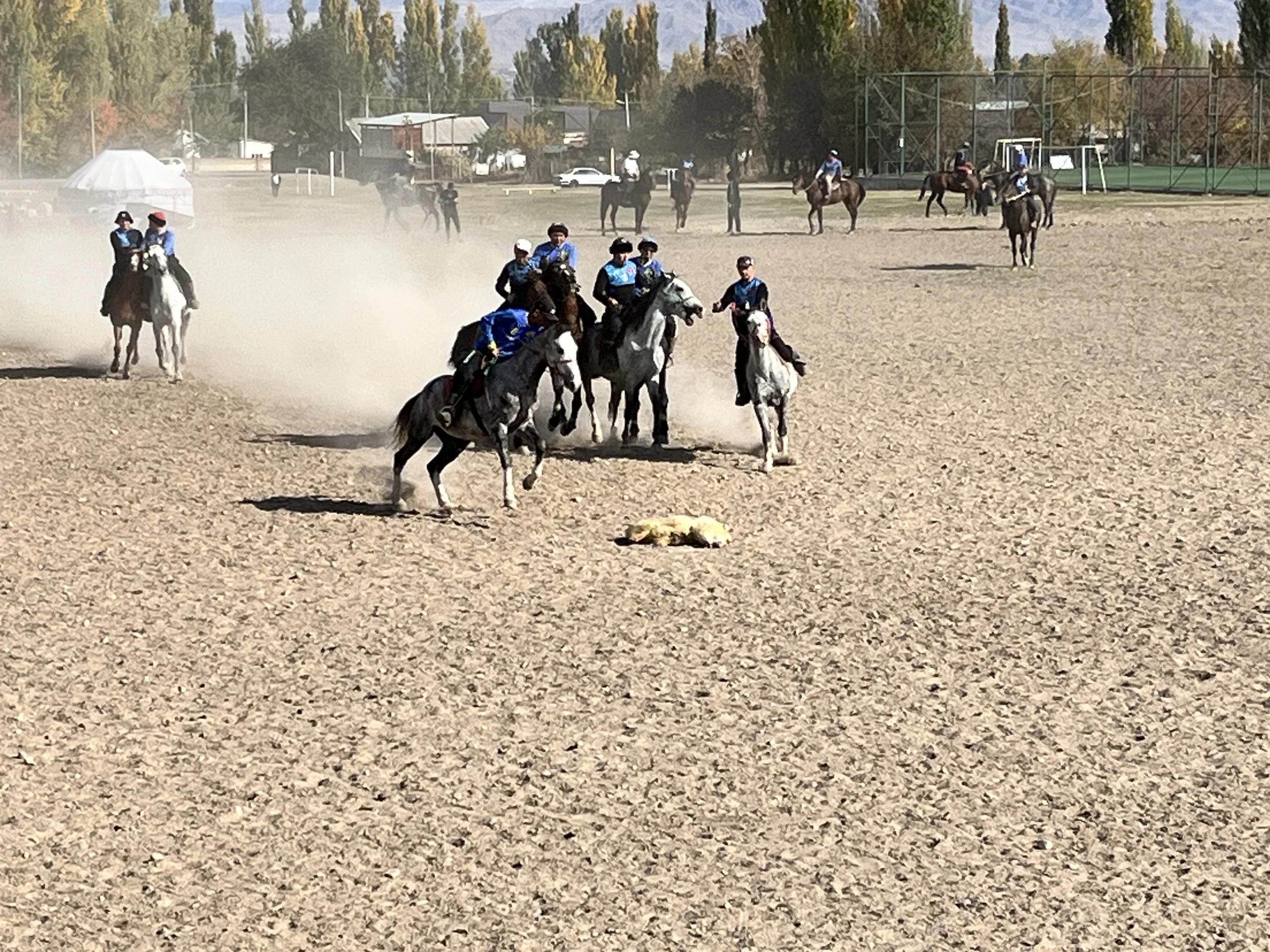
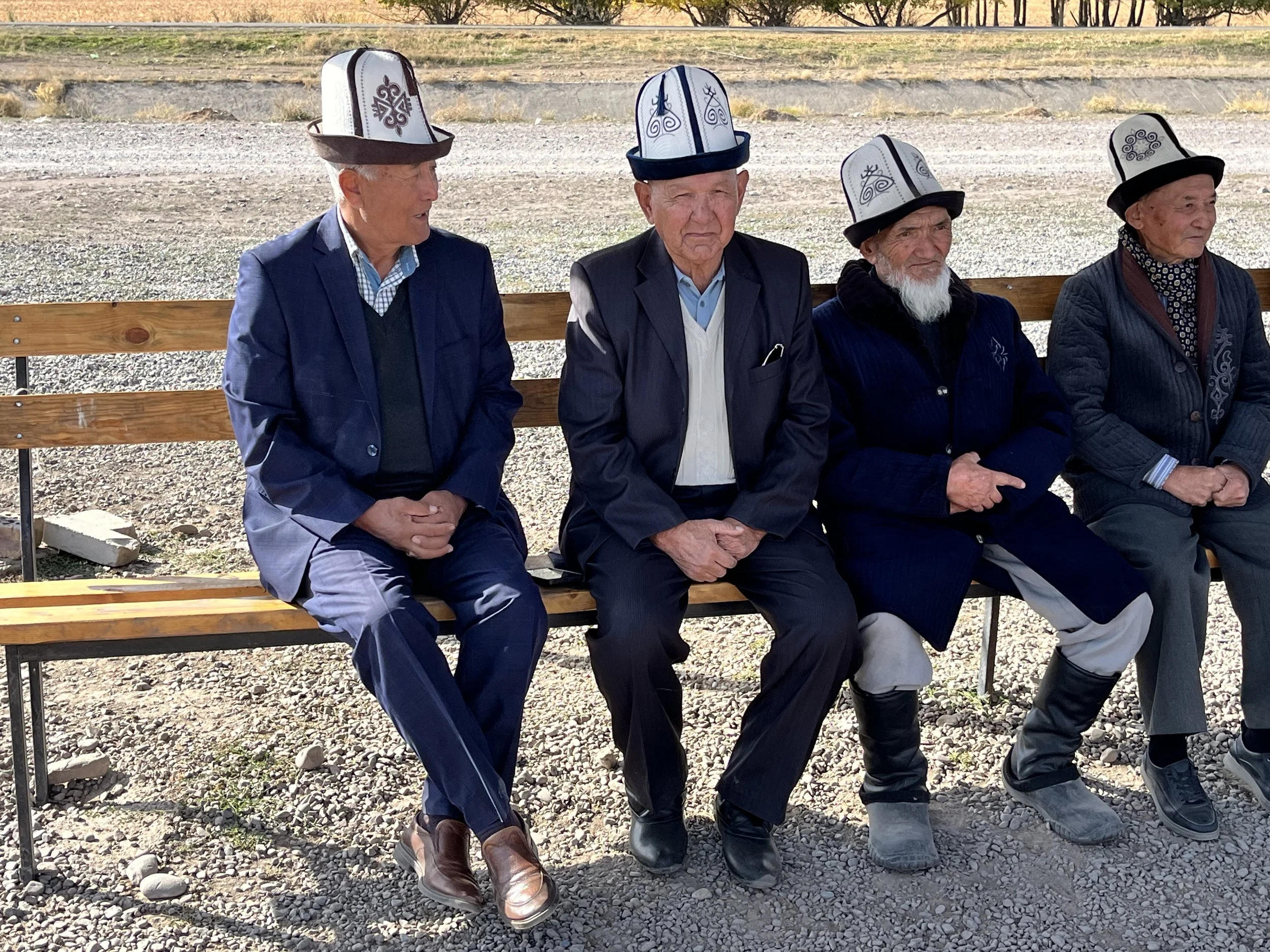
Horses are important cultural symbols in Kyrgyzstan. During nomadic times, horses helped people move around, defend themselves, and hunt. A wealthy nomad would often possess a herd of eighty or more horses. Today, horses continue to be a central part of life within Kyrgyzstan’s rural areas with most children learning to ride at a young age. Along with their economic role, horses serve as a source of entertainment. Horse events and competitions that began in nomadic camps contribute to Kyrgyzstan being known as the “land of horse games.” We drove a few miles to an open field where riders were preparing to play Tiyin Enmei. Taking turns, each rider reaches down from a galloping horse to pick up several small objects. In another game called Oodarysh, two riders wrestle on horseback with the loser being the first to fall. Kok Boru is the national sport of Kyrgyzstan and involves two teams (with five riders per team) attempting to put a goat or calf carcass in the opposing team’s goal. We mingled with about a half dozen village elders who arrived after the competition began.
Following the horse events, we were served lunch in the home of a local family. Our delightful host covered the table with an assortment of fresh fruits and steamed vegetables. Among dishes we sampled were beshbarmak (a boiled meat dish served with noodles), plov (a rice dish), and samsa (a baked meat pie). There was also a healthy quantity of naan (bread) that we dipped in creamy butter.