Kazakhstan. Almaty: Emerging from its Soviet Yesterday
We arrived at Almaty International Airport on a red-eye flight from Doha, Qatar. After a brief van ride, we checked into the Kazzhol Park Hotel that once served as office space for the Soviet KGB. Although no longer the capital, Almaty has retained its status as the country’s largest city (2 million) and center for culture and commerce. Established as a Russian military fortification in 1854, it was known as Verny until being renamed Alma-Ata in 1921 (the Turkic word for “apple”). Following Kazakhstan’s independence in 1991, the city’s name was changed to the Kazakh spelling. Almaty lies in an area of seismic activity responsible for numerous earthquakes and devastating landslides and mudslides. During WWII the city became a focus of light manufacturing with the arrival of equipment evacuated as invading German armies moved east. Today, the city has a majority of Kazakhs with minority ethnic groups that included Uyghurs, Ukrainians, and Tatars.
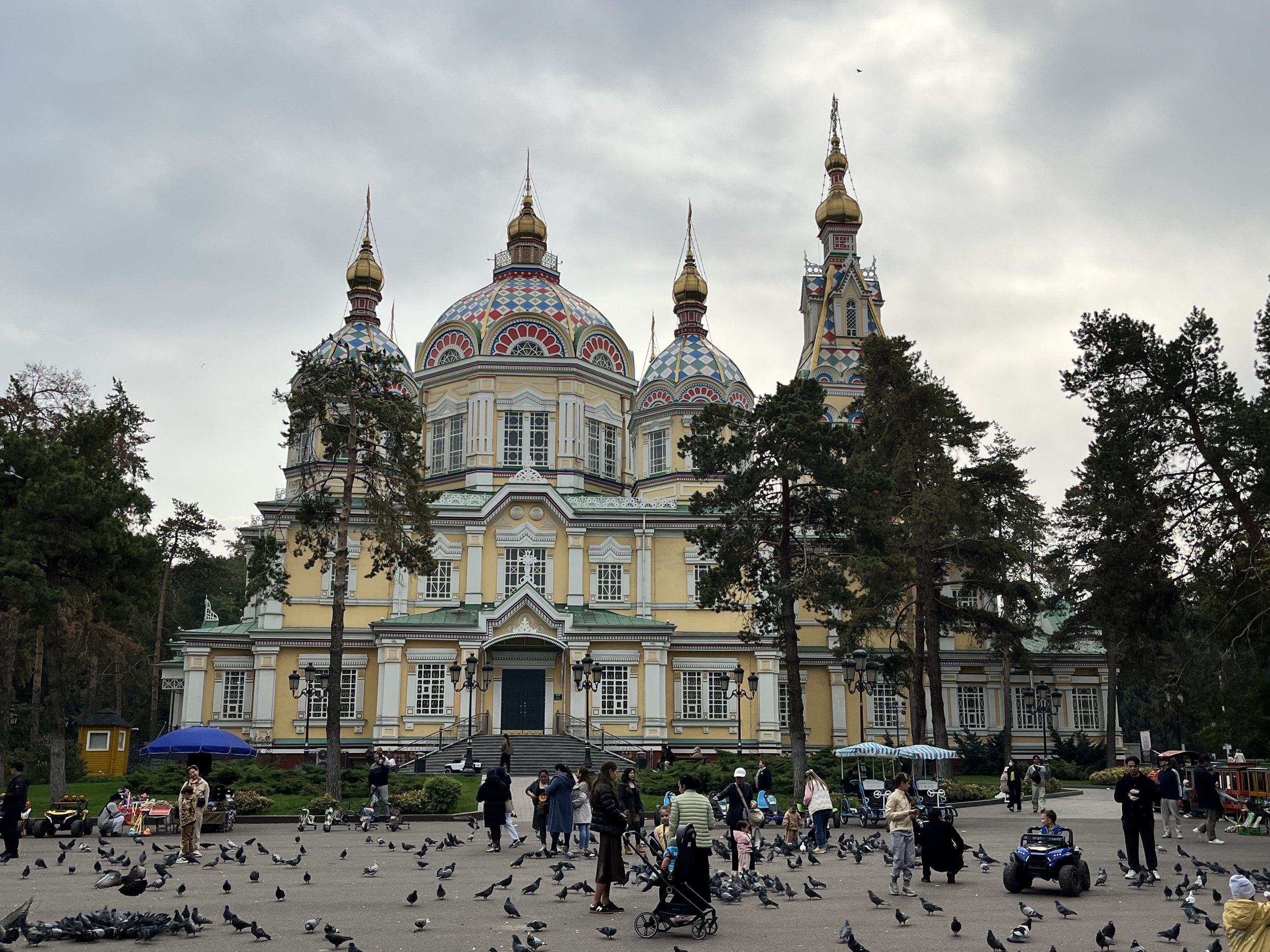
After breakfast we explored Almaty’s wide, tree-lined streets and inviting parks. Ascension Cathedral is located within Panfilov Park. The cathedral is a Russian Orthodox church completed in 1907 during a time when Russia was projecting its power and influence within Central Asia. Featuring a colorful exterior and five onion shaped domes, the structure is held together with interlocking wooded joints. At fifty-six meters, it is the second tallest wooden building in the world. Following the Russian Revolution, the cathedral housed the Central State Museum and in 1995, the building was returned to the Russian Orthodox Church. Walking up a short flight of stairs, we entered the cathedral during a mass celebration. Inside the sanctuary are ornate decorations including gilded wood carvings and a massive chandelier hanging above the altar.
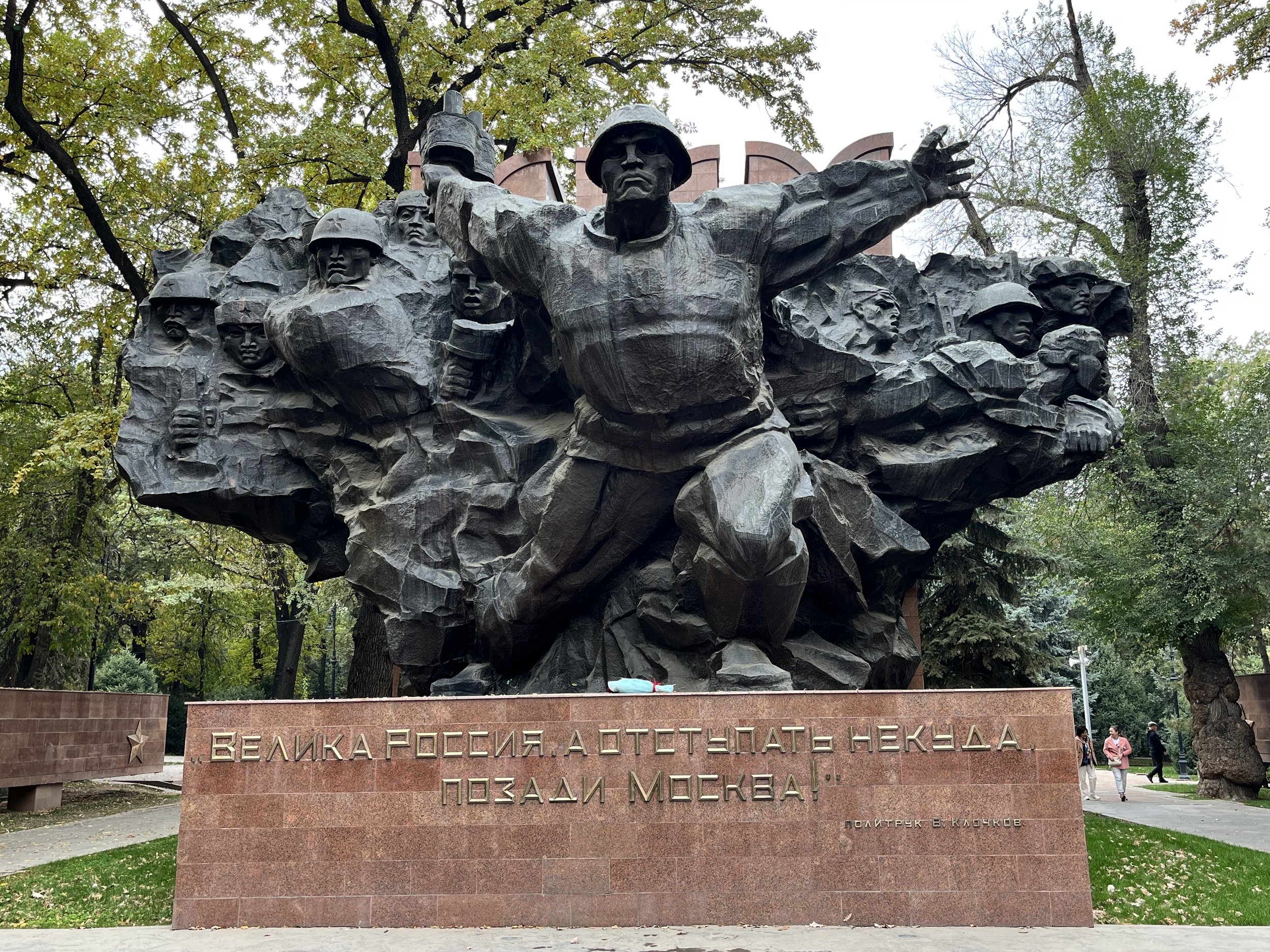
We followed a pathway to the Memorial of Glory (aka “the Feat”), a monument constructed in 1975 to honor twenty-eight Panfilov Guardsmen of the 316th Infantry Division. The group was commanded by Major General I.V. Panfilov during WWII (aka the Great Patriotic War) Battle of Moscow in November 1941. Posthumously recognized as Heros of the Soviet Union, the guardsmen destroyed eighteen German tanks during an enemy attack. A description below the monument says, “Russia is great, but there is nowhere to retreat, Moscow is behind us!” Near the monument is an eternal flame surrounded by black granite. We continued east past a military museum and several WWII and Cold War-era vehicles including a T-34 tank.
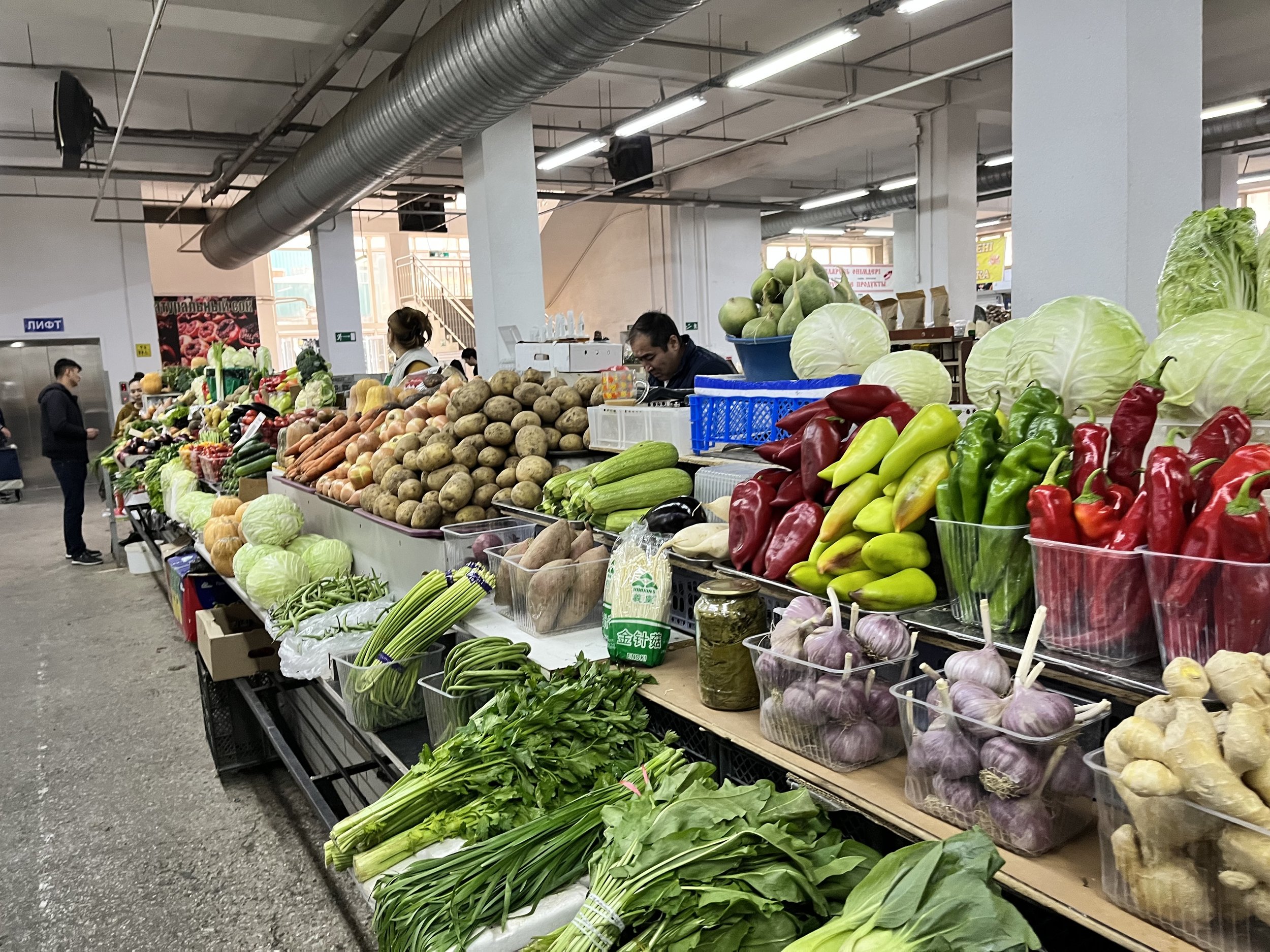
Located on Zhibek Zholy and Zenkov Streets is Almaty’s Green Bazaar, a massive indoor and outdoor market with vendors selling baked goods, spices, clothing, vegetables, meat, milk products, and other items. The main pavilion has space for 800 vendor stalls with an additional 200 that are added in the summer. Built in 1970, the interior area was expanded in 2016. Some items unique to Central Asia that are sold there include kazy (horse meat sausage), kurdyuk (salted or smoked sheep), and shubat (fermented camel milk). Shoppers haggle for the best prices. Just past the bazaar is an area where men buy and sell stolen mobile phones.
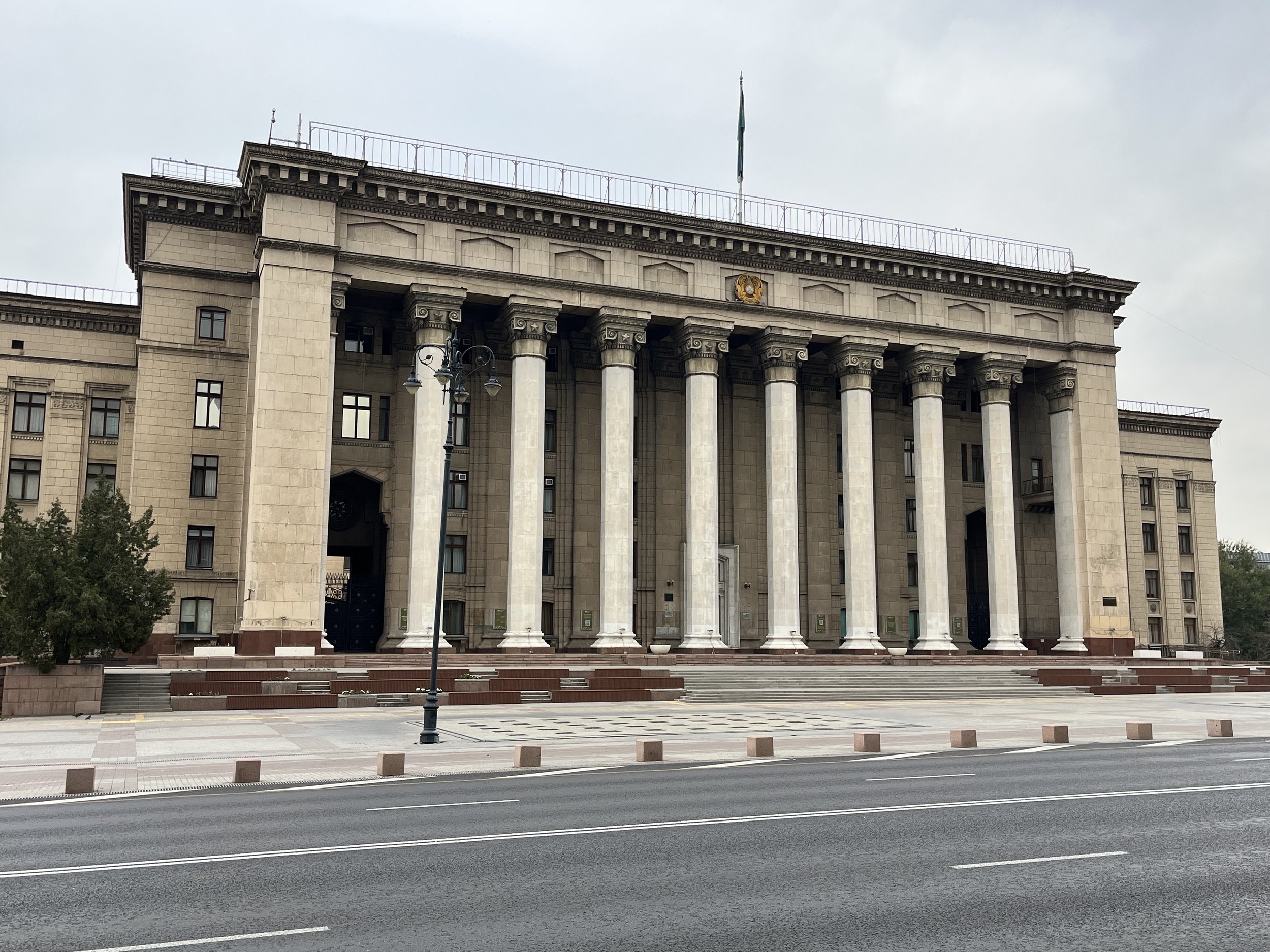
On our return walk to our hotel, we passed the KBTU Building which once housed the country’s Supreme Soviet (lawmaking body). The building is located along one side of Old Square, the site of festivals, concerts, and flash mobs. Begun in 1938, construction was suspended during WWII. It was finally completed in 1957. The building’s impressive exterior façade includes a portico with eight large columns and several fountains. In 1980, all government offices including the Council of Ministers and Central Committee of the Communist Party were moved to another building. The KBTU Building had one other brief period of fame when it was the site of Kazakhstan’s declaration of independence in 1991. Since 2002 the building has been used by the Kazakh-British Technical University. A local legend says that if a bride wearing her wedding dress can run between the fountain’s streams of water without getting soaked, her marriage will be strong, and the couple will forever be faithful.
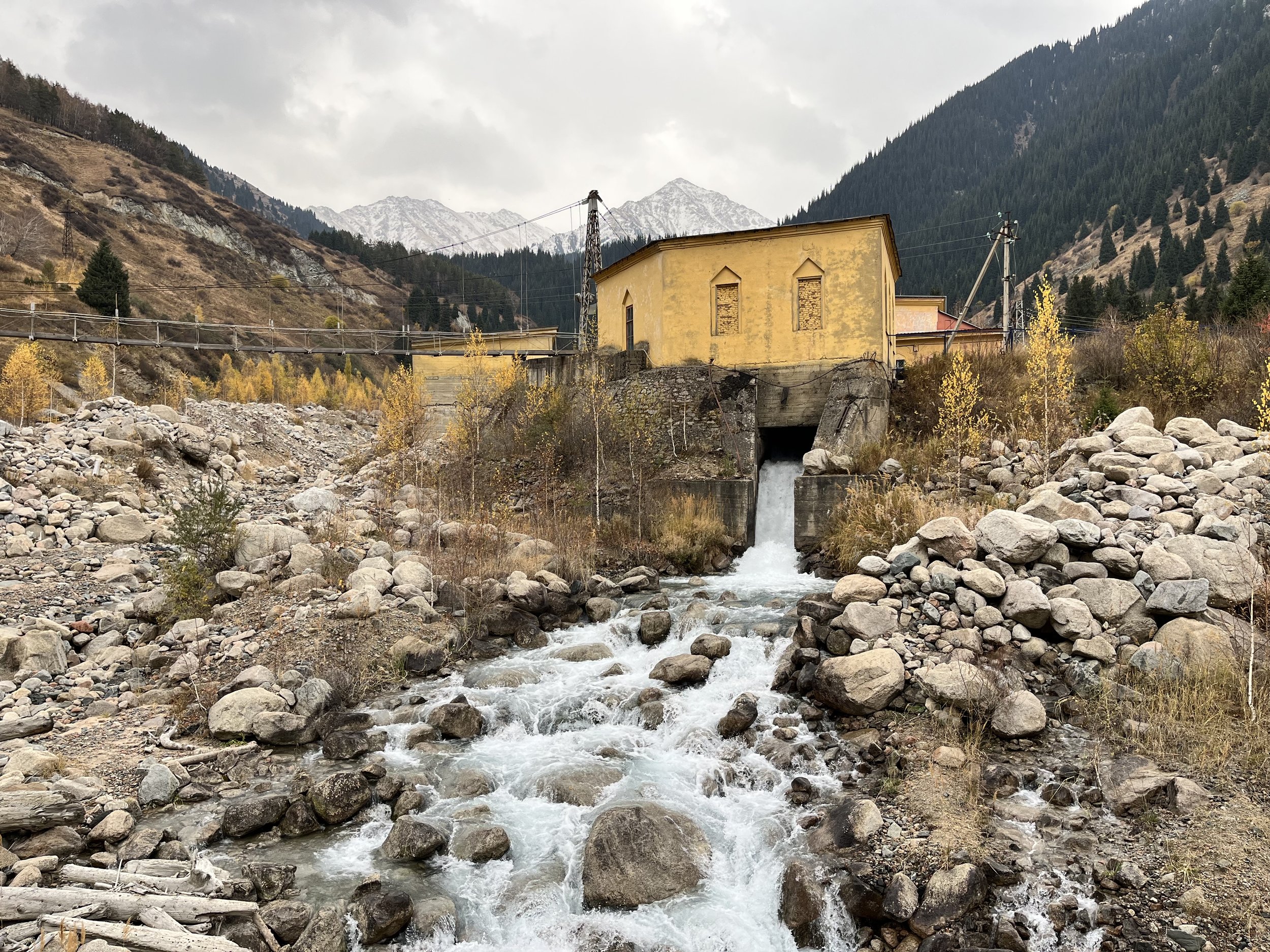
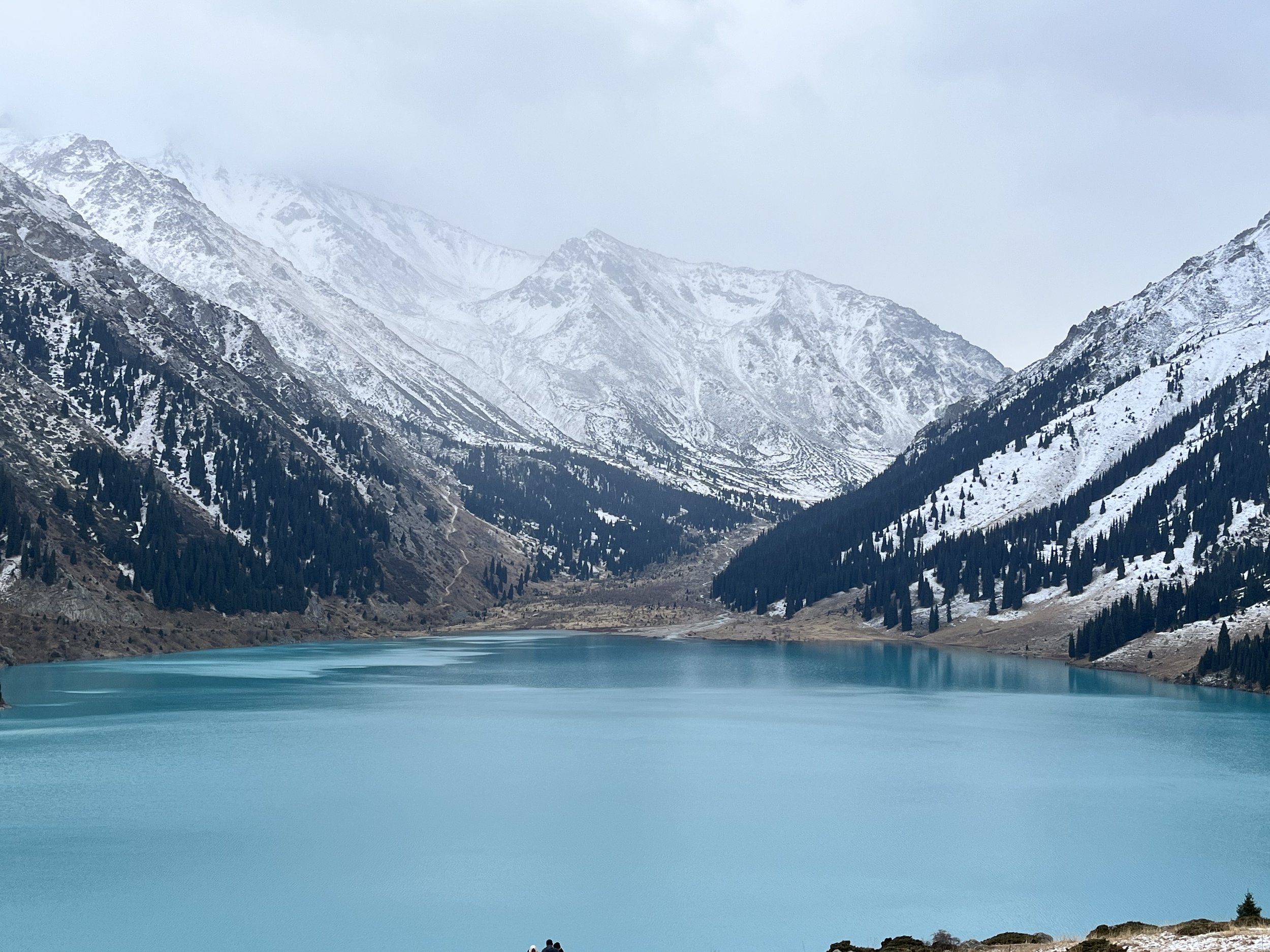
For our second day, my travel companions and I arranged for a car and guide to take us to Ile-Alatau National Park, located southeast of the city. The term “alatau” refers to a mountain area where vegetation is interspersed with snow and rock. Established in 1996 and covering an area of 600,000 hectares, the park protects woodlands, glaciers, lakes, meadows, and forested areas. It is also an important region for preserving biodiversity. There are snow leopards, lynx, martens, bears, eagles, ibexes, and more than 1,000 species of plants. We drove south on a two-lane highway that transitioned into a zigzagging mountain road. Above we could see grassy steppe, alpine forest, and snow-capped mountains. Patrolled by the police and military, we passed a small building that houses military guards. About halfway up the valley we changed vehicles, continuing in a well-used Toyota Land Cruiser driven by a local. The road follows a large pipe that carries water to Almaty. Near the top of a pass, we reached an overlook above Big Almaty Lake. Light blue in color, the lake was created where a glacial moraine blocked part of a wide valley. Later, the lake’s water supply was expanded by adding an earthen dam on top of the moraine. Behind Big Almaty Lake are three peaks, Councils (4,317m), Ozerny (4,110m), and Tourist (3,954m).