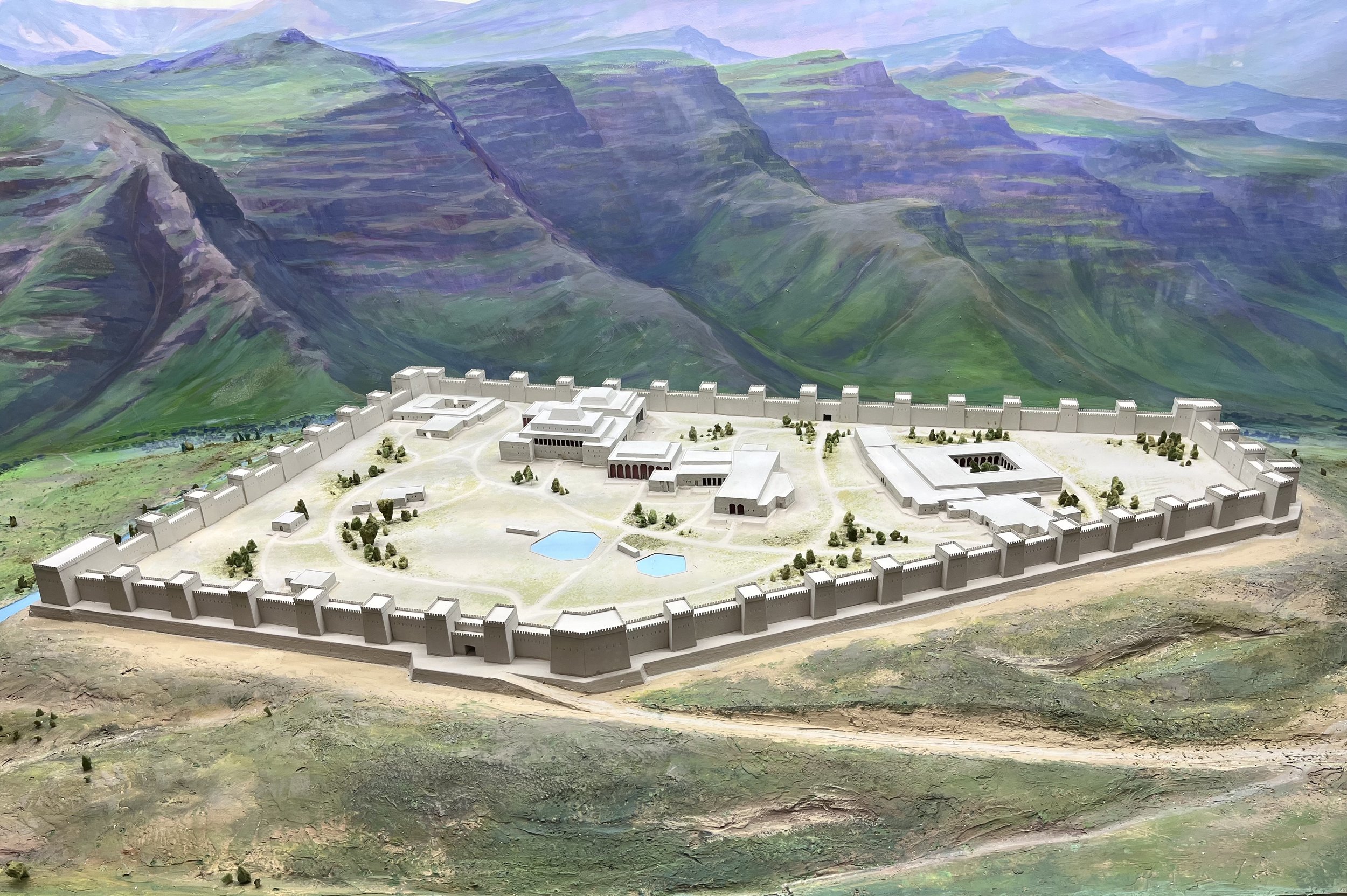
Turkmenistan. Rival to Rome and Capital of the Parthian Empire
Chances are you’ve never heard of the Parthian Empire or Nisa, its first capital. Undiscovered until the 20th century, the ruins of ancient Nisa are in a suburb on the southwestern edge of Ashgabat, the present-day capital of Turkmenistan. Once extending across Iran, Iraq, and parts of Turkey, Afghanistan, and Saudi Arabia, the Parthian Empire (247 BC to 224 AD) isn’t well known compared to its rival, the Roman Empire (27 BC to 476 AD). Before its central role in the Parthian Empire, Nisa was part of the Achaemenian Empire (550 BC to 330 BC) and later, Alexander the Great’s Seleucid Realm.
Parthians were known for military prowess, especially with respect to their outstanding archers and horse calvary. The term “Parthian shot” refers to a military tactic where a fighting force feigning retreat fires backward, surprising a pursuing enemy. Parthians were shrewd traders and diplomats who forged military and trade alliances. The empire’s first ruler was Arsaces I (250 BC to 211 BC). Strategically located between the Mediterranean Sea and Central Asia, the City of Nisa was a melting pot of cultures with artistic and architectural styles that represented an intermingling of Iranian and western influences. Along with becoming a focus of trade, the city became a refuge for artisans and scholars. Nisa had a citadel, several temples and shrines, a treasury, and a royal palace. Built as a fortress-city, it was protected by a wall topped with forty-three watchtowers. Nisa’s demise began when Parthians were defeated by the Sasanian Empire (Persians) in the 3rd century AD. Sacked and burned, the city was lost to history.
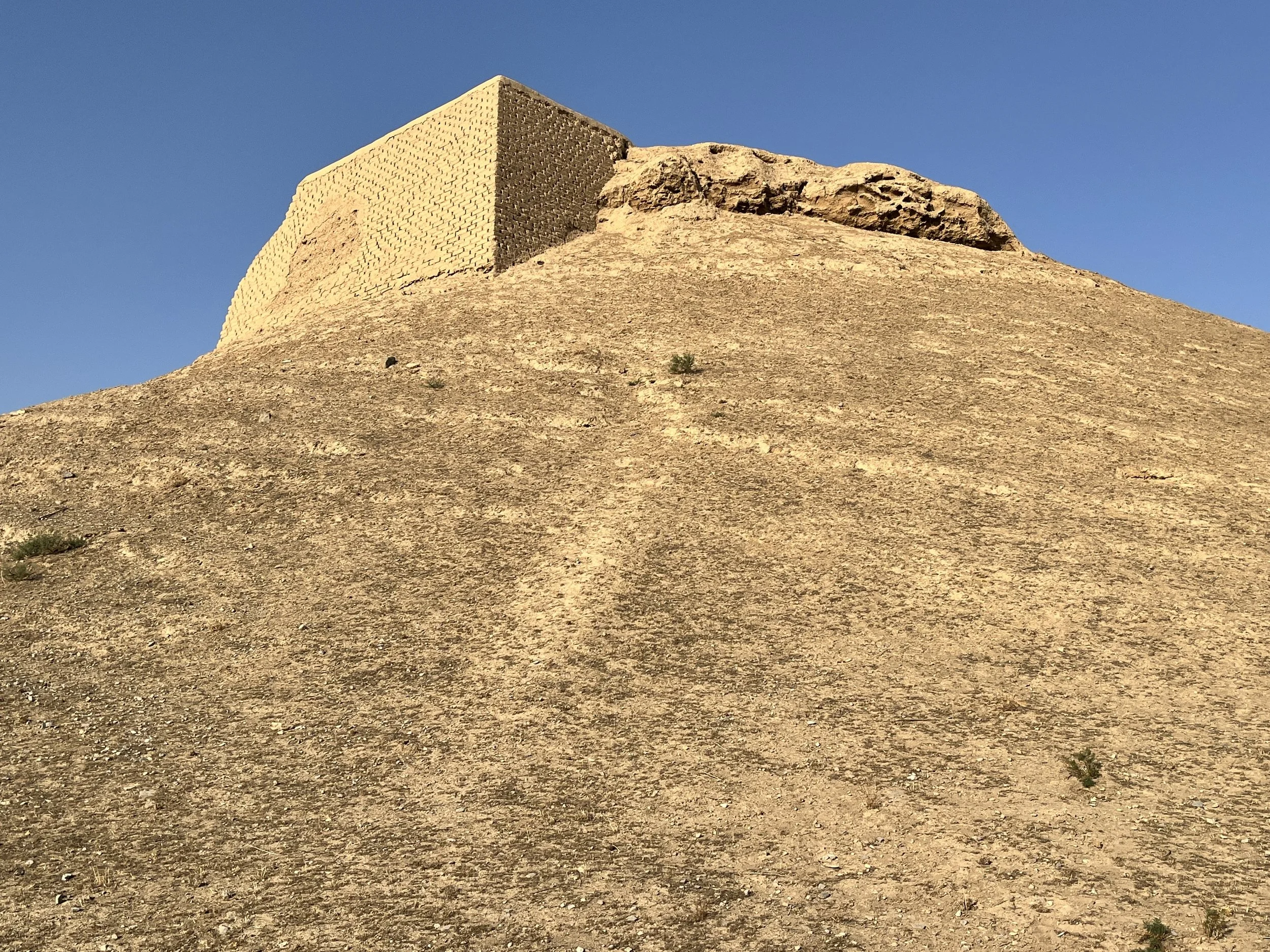
To reach Nisa we drove through Ashgabat’s Bagyr neighborhood. Ancient Nisa has two parts that represent stages in the city’s development. Old Nisa served as an administrative and religious center while New Nisa grew as a gathering point for artisans and traders. Excavation of Old Nisa began in 1947. After parking, we took a stairwell leading to the top of an artificial hill that partly covers the ruins of Old Nisa.
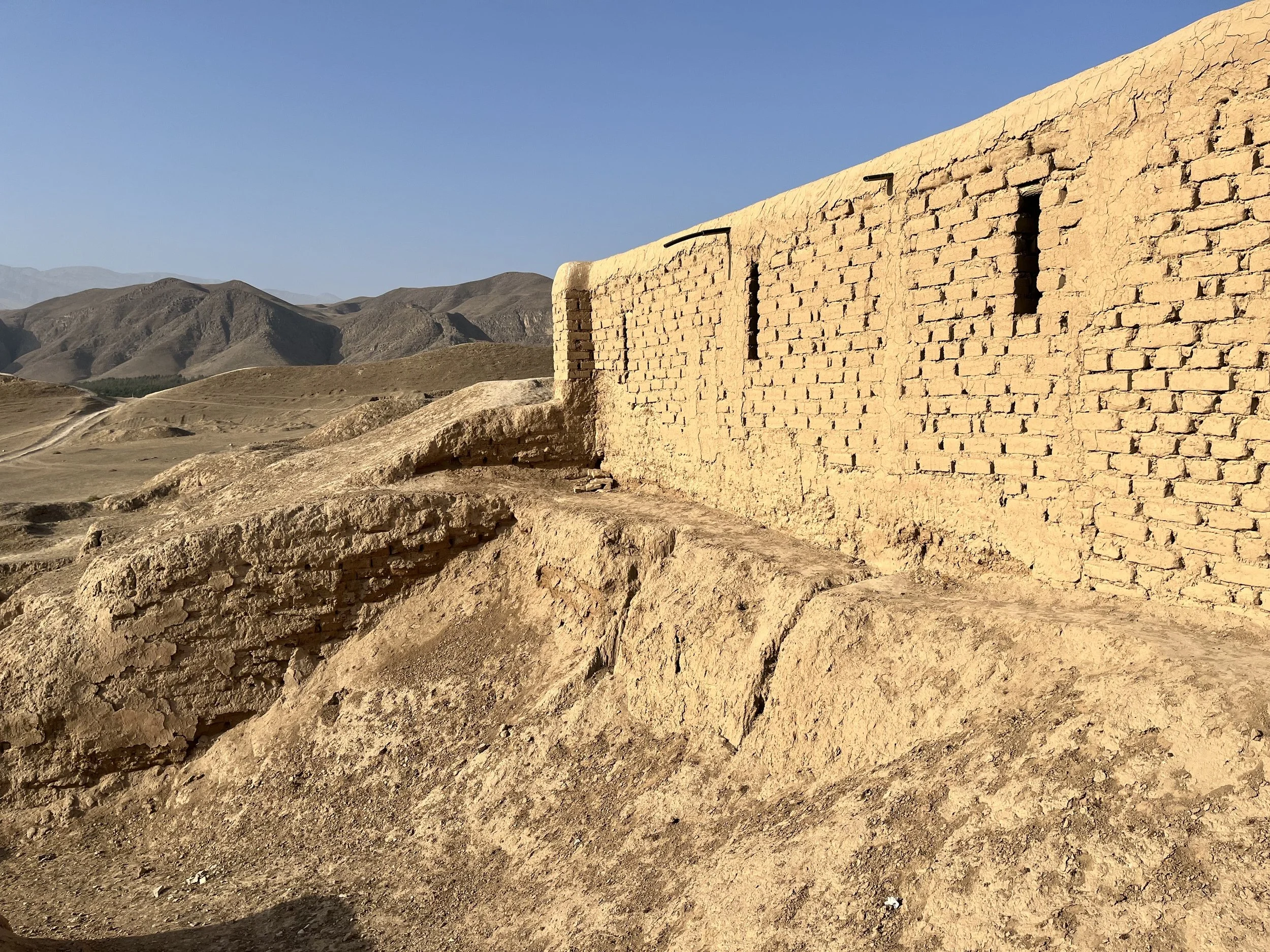
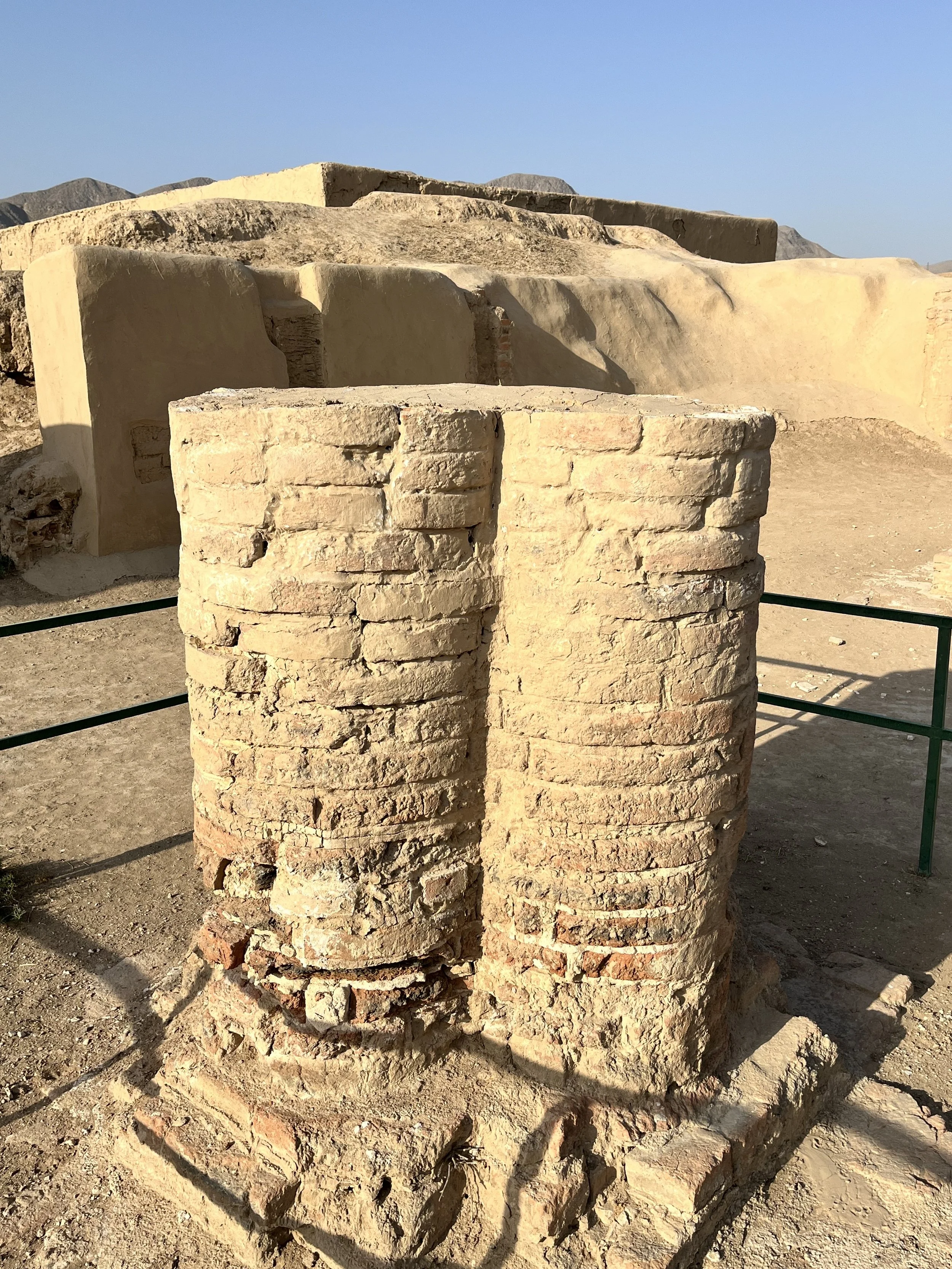
During its period of occupation, the city’s centerpiece was a 15-meter-tall citadel with towers at the northeast and southeast corners. Archaeologists have uncovered colorful frescos depicting battle scenes painted on the building’s mudbrick walls and the remains of two Zoroastrian temples, a kitchen, and a courtyard house with a wine cellar. The Zoroastrian alter featured a sacred fire that would have been kept always burning. A columned atrium and round-shaped hall were positioned near the city’s southeast corner. A guide explained that bricks near the base of the atrium’s columns were original while yellow tinted bricks found above were added as part of a recent reconstruction effort.
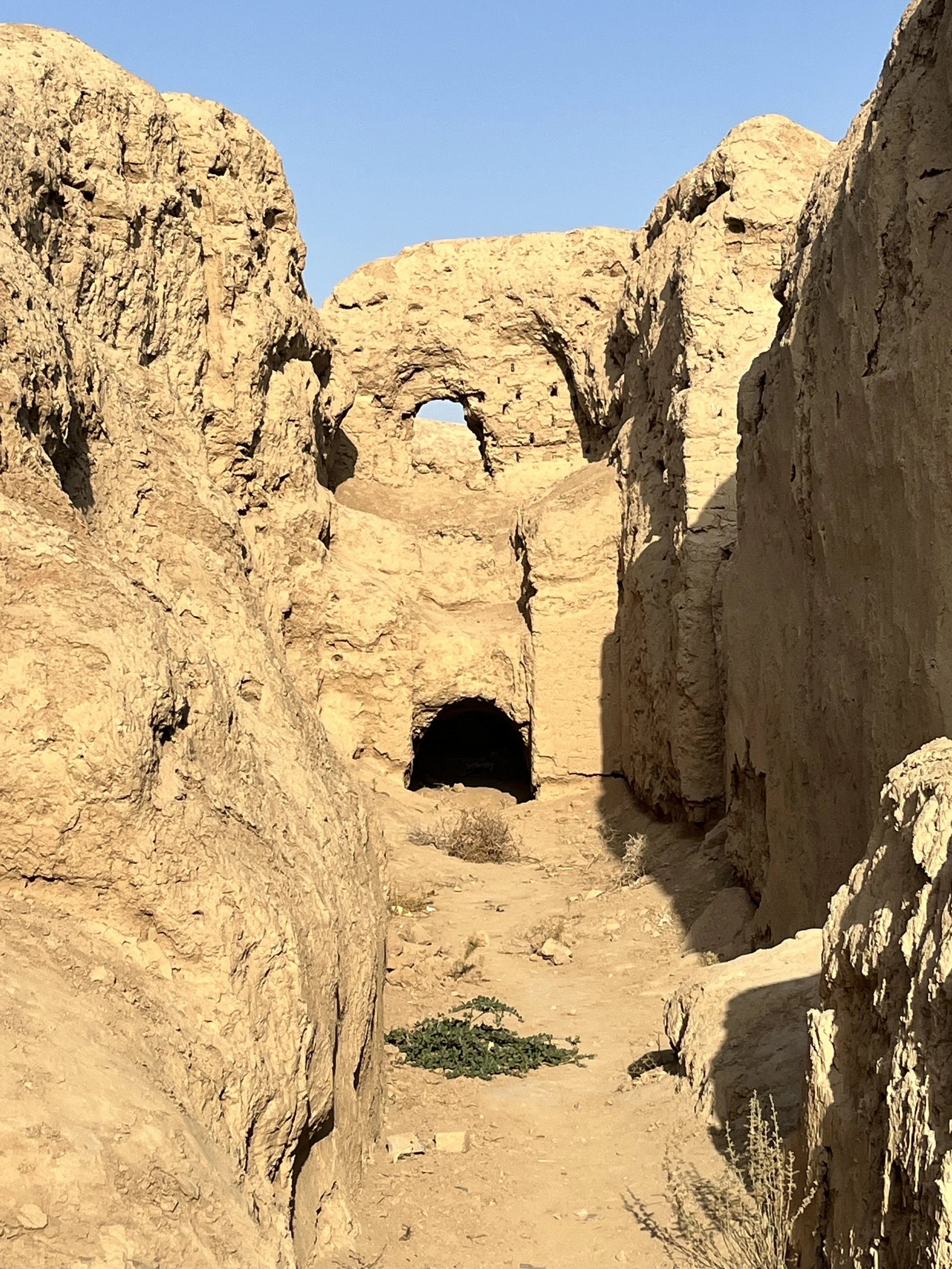
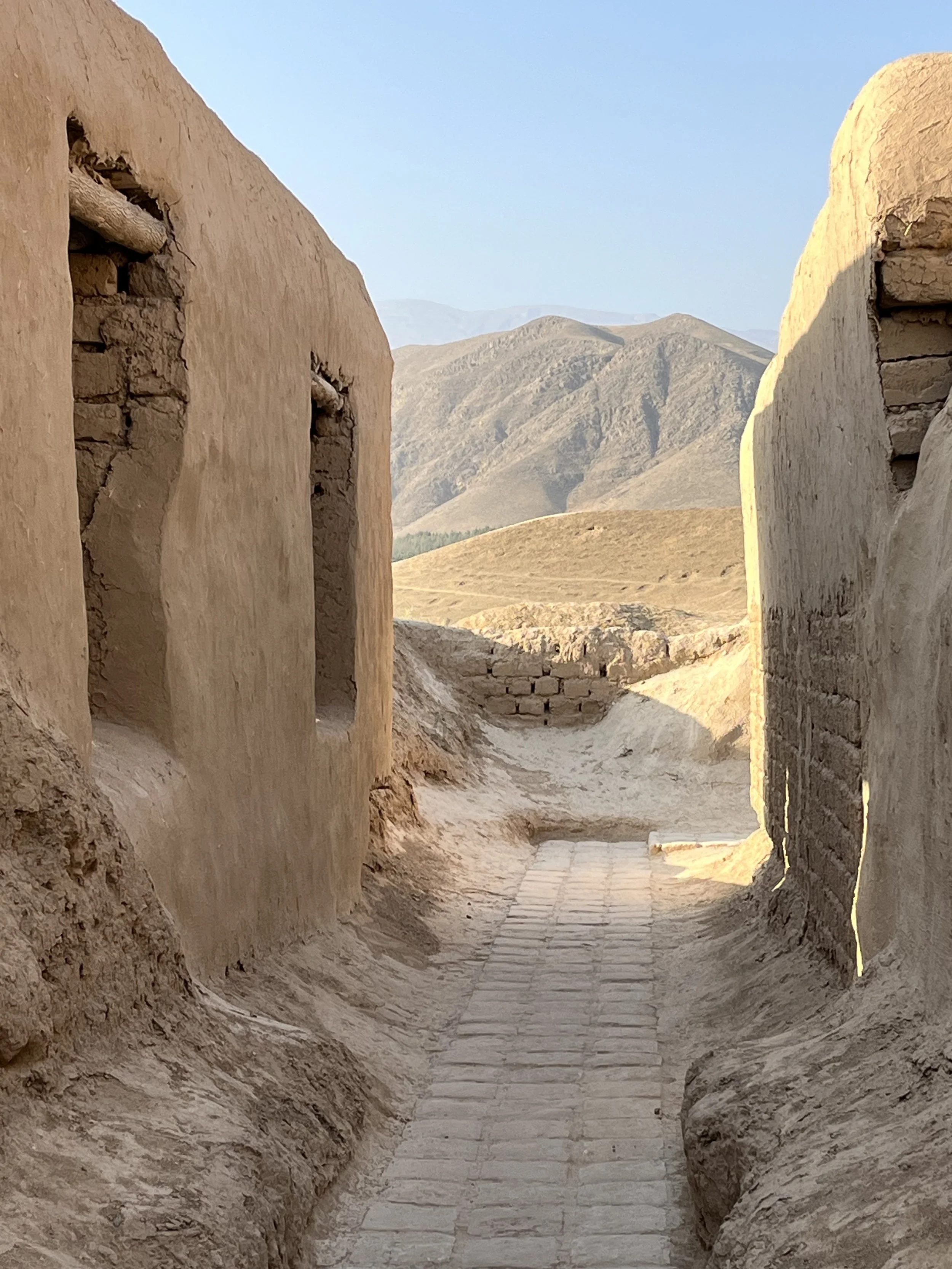
Near the northeast corner are two large courtyards with atriums and covered walkways, an area believed to be part of Nisa’s royal palace. The tour path crossed over narrow passageways that were likely used by servants to attend to the needs of palace residents. From a high point it’s possible to see the location of New Nisa on the far side of a modern housing subdivision. With houses and streets lined with shops, New Nisa had a population that was larger than the old city. In 2007 Nisa became a UNESCO World Heritage Site. Today, work is ongoing to stabilize and excavate the city.
Returning to Ashgabat, we made a stop at Turkmenistan’s National Museum. The circular-shaped museum’s main exhibits are on the second floor. Within glass display cases are clay seals used to authenticate documents, elephant bones, Persian coins, and ivory rhytons used for drinking wine. There is also a diorama that represents the arrangement of Old Nisa’s buildings.