Tajikistan. Ancient Sarazem and the Pamir-Alay’s Seven Lakes
Our 90-kilometer drive from Samarkand, Uzbekistan to Panjakent, Tajikistan took three hours. We could have reached the city sooner if not for the formalities of negotiating an international border crossing. Modern Panjakent is a city of 52,000. In a country that is 90% mountainous, the city is positioned at the meeting point of mountain terrain suitable for pastoralism and a valley region that provides fertile land for agriculture. On the south side of the city vendors were selling fruit and vegetables along the road.
From Panjakent we drove southward in 4WD vehicles towards the Fann Mountains and picturesque Seven Lakes region (aka Marguzor Lakes or the Seven Beauties of Shing). The Fann Mountains are part of the western Pamir-Alay Mountain System and located between two other mountain ranges, the Gissar to the south and the Zarafshan in the north. A local legend tells of a shepherd who had seven daughters. One day a sorcerer in disguise approached the shepherd and asked for the hand of one of his daughters in marriage. When the shepherd rejected the proposal, the sorcerer grew angry and turned the shepherd’s daughters into seven lakes, explaining that men could forever admire the seven, but no man could marry one.
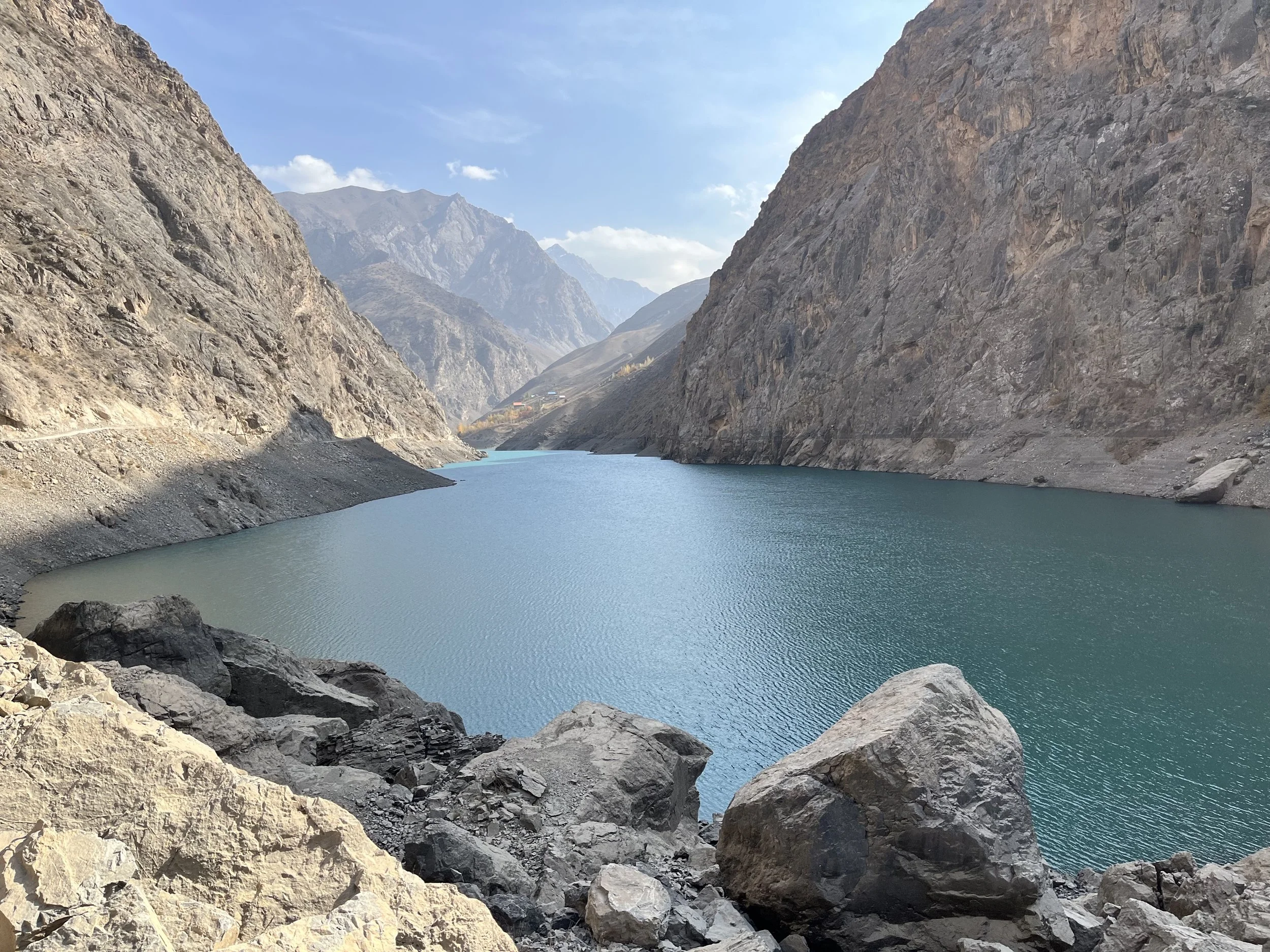
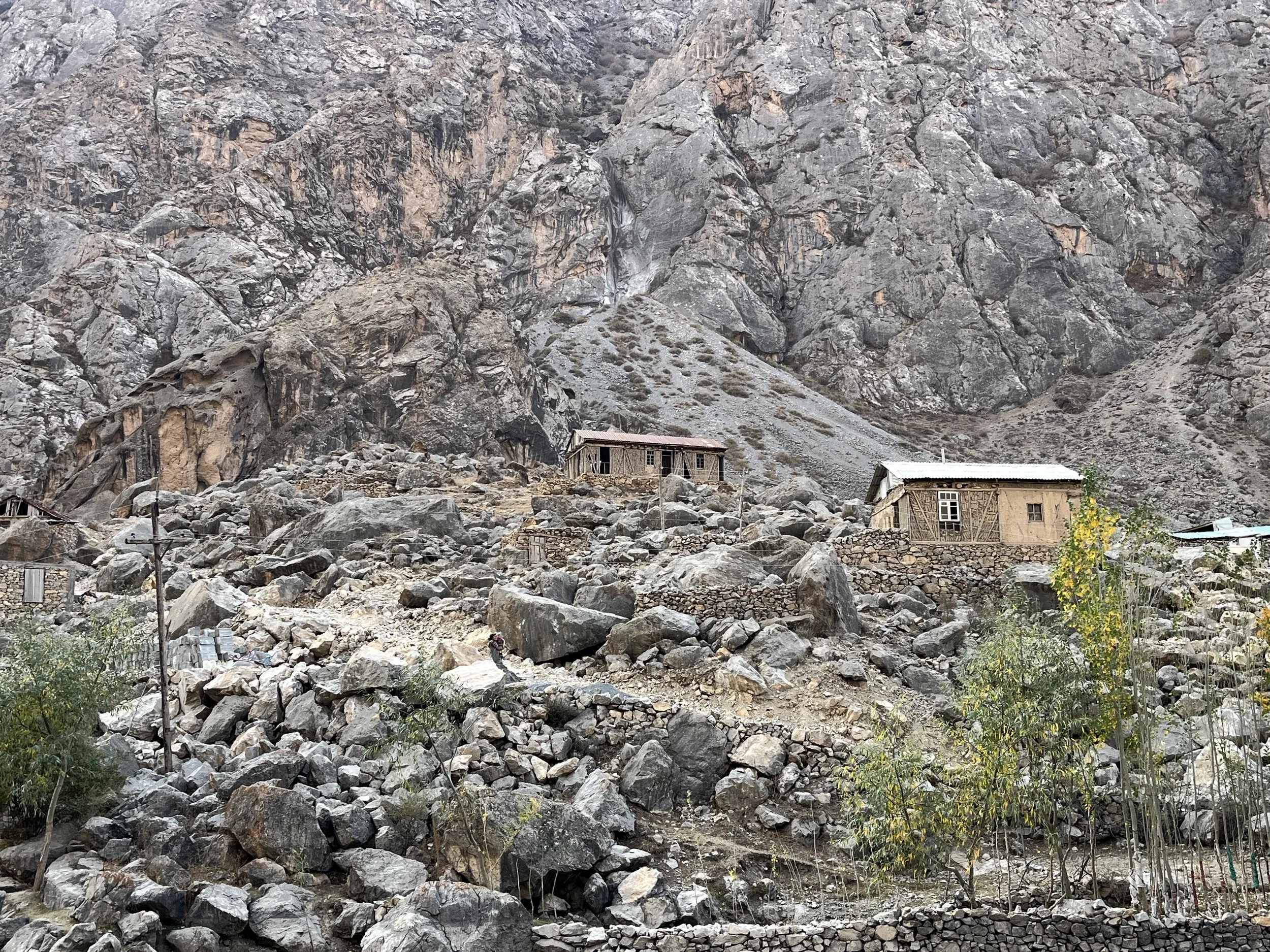
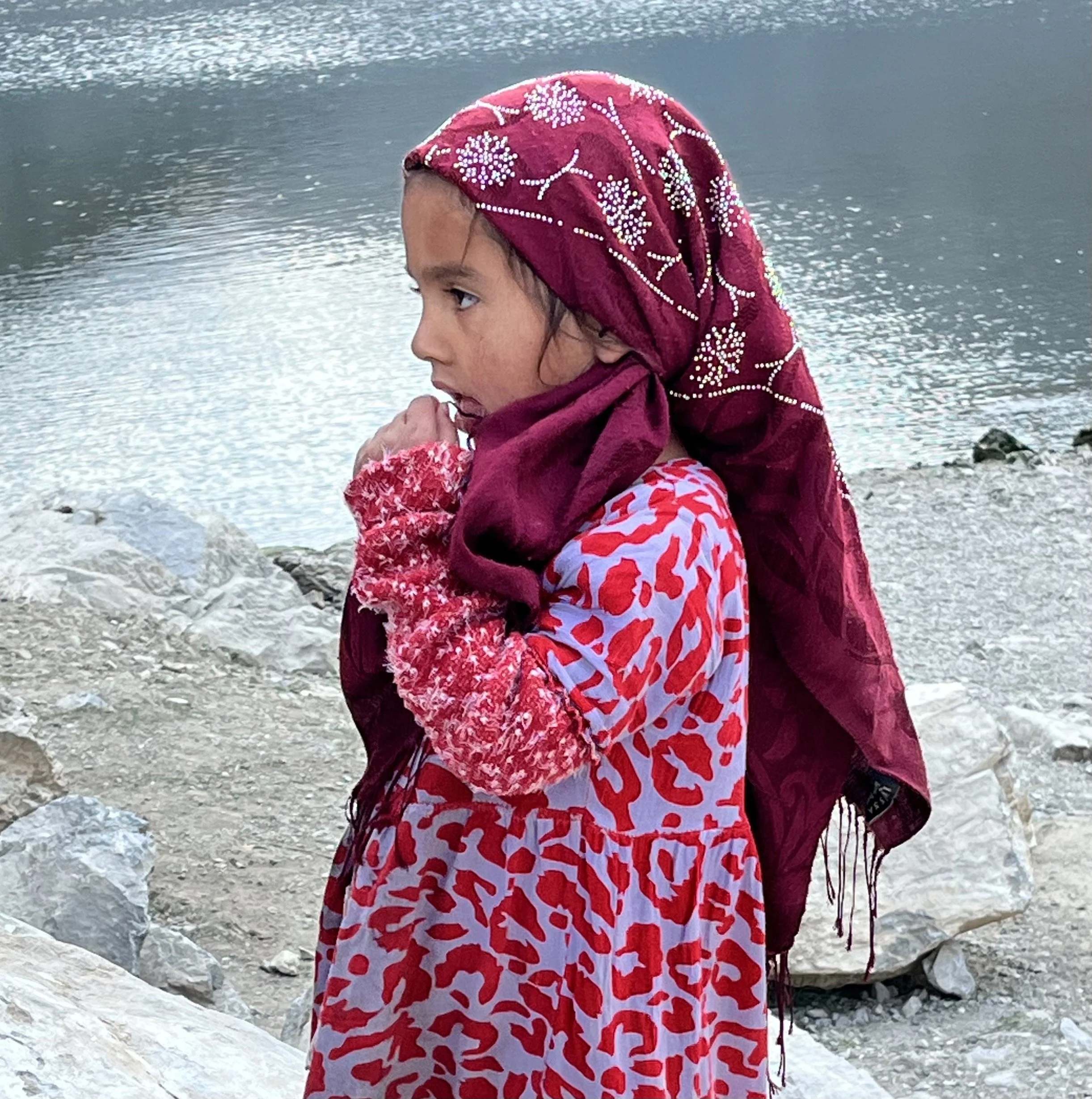
Our route to Seven Lakes took us through the village of Shing. With a population of 1,700, Shing has two mosques, a school, and a hospital. We followed a twisting mountain road uphill to Mižgon, the first of the seven lakes (elevation 1,598 meters). Translated into Tajik, Mižgon means “eye lashes.” Returning to our vehicle, we continued upward. With a purplish tint, the next lake is called Soja, meaning “shadow.” Its color is attributed to minerals but also to the angle at which sunlight strikes the water. The dusty road became more twisty as we passed the third lake, Xušër which translates to “vigilance.” Forming a contrast to the others, Norfin, the fourth lake, has a reddish tint. Adjacent to Churdak, lake number five, is the small village of Padrud (population 500) which means “place along the river.” Most of the houses were of mudbrick construction. Stopping along the road for photos, we were approached by curious children. Just past the village we reached Marğuzar, largest of the seven, where we were served a lunch of bread, plov, and tea. The last lake, Hazārčašma (elevation 2,400 meters), isn’t accessible by car so we parked and followed a trail for the final two kilometers. Hazārčašma is fed by springs and two rivers, the Gissar and the Darachti Surch.
On the outskirts of the modern city are the ruins of Old Panjakent (aka Panchekanth). We parked adjacent to severely eroded earthen walls. Old Panjakent was established in the 6th century along the Zeravshan River. In 1946, Russian archaeologist Boris Marshak began excavations of the site and over a fifty-year period, his team uncovered two Zoroastrian temples, a citadel, a large palace, a necropolis, and many streets and passageways. The settlement was among the easternmost cities of the Sogdiana Empire, an early Iranian civilization. Besieged by Arab Muslims in 722, Panjakent was abandoned sometime in the late 8th century.
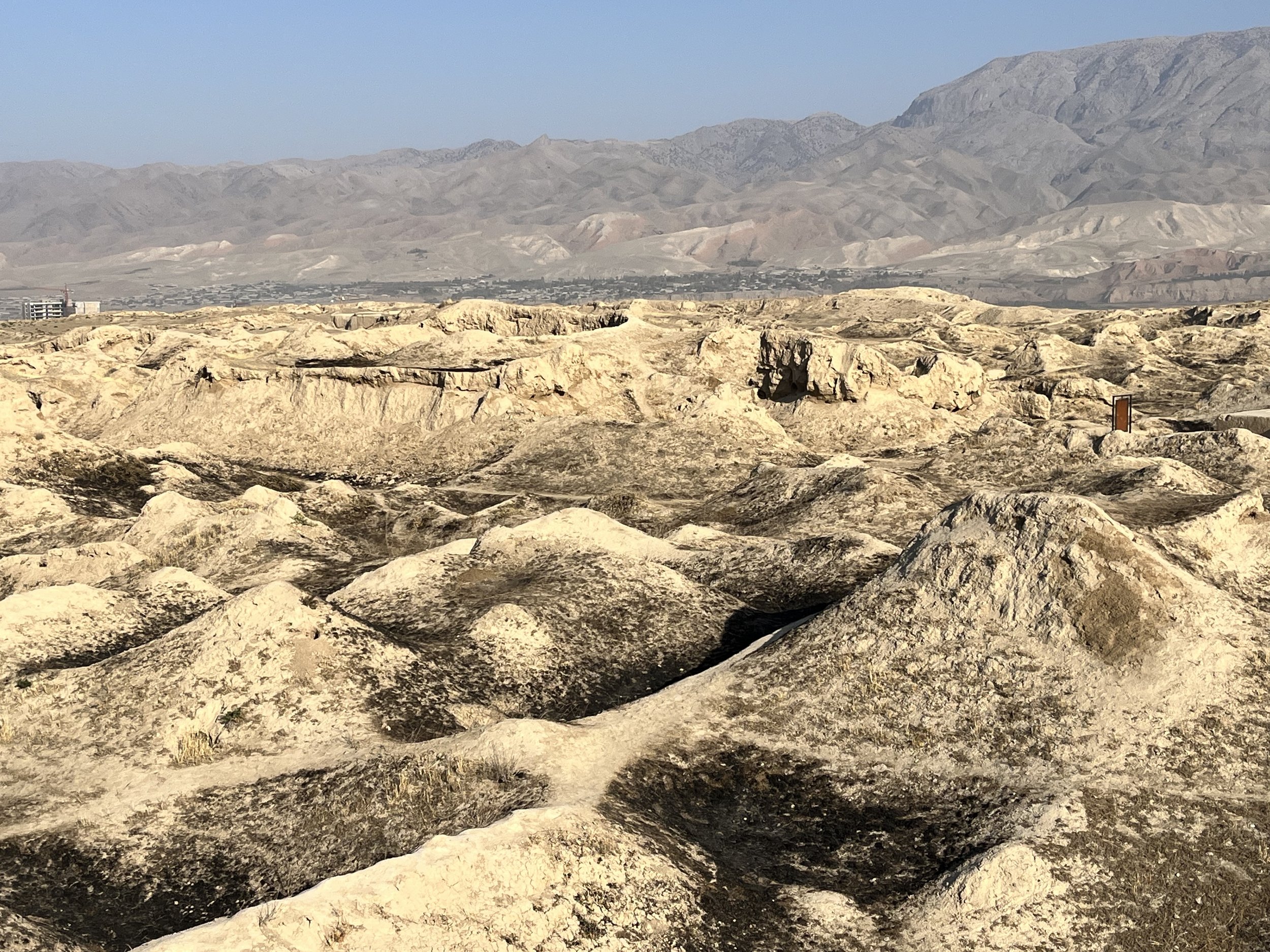
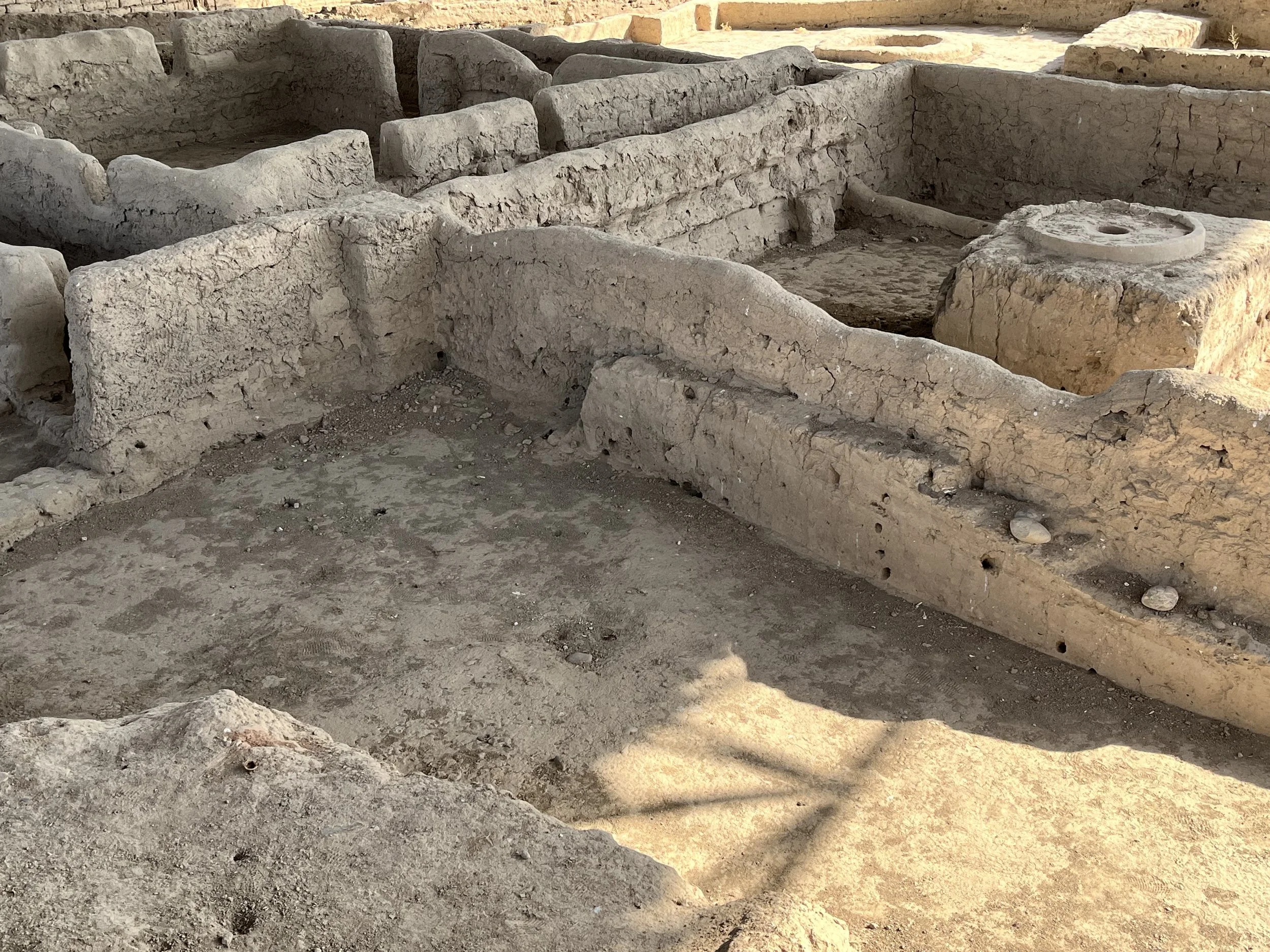
Located about twelve kilometers west of Penjakent and dating to the 4th millennium BC, is the ancient city of Sarazm (meaning “where the land begins”). Discovered by a farmer, Sarazm is the oldest human settlement in Central Asia. Among structures excavated there are multi-room dwellings, granaries, and a palace. Buildings on the site were constructed from raw earth bricks that were molded and allowed to dry in the sun. Today, excavated areas are protected from further erosion by large roof covers. In addition to trade, archaeologists have determined that Sarazm’s population was involved in herding, agriculture, and metallurgy. The city’s residents grew barley, wheat, and millet and tended goats, cattle, and sheep. Fragments of forges and pestles found there were used for casting and shaping metal objects (chisels, axes, daggers, fishhooks, and awls). The site was abandoned sometime between the middle and end of the third millennium BC. Theories to explain the city’s demise include war, an epidemic, and climate change. Sarazm has been a UNESCO World Heritage Site since 2010.
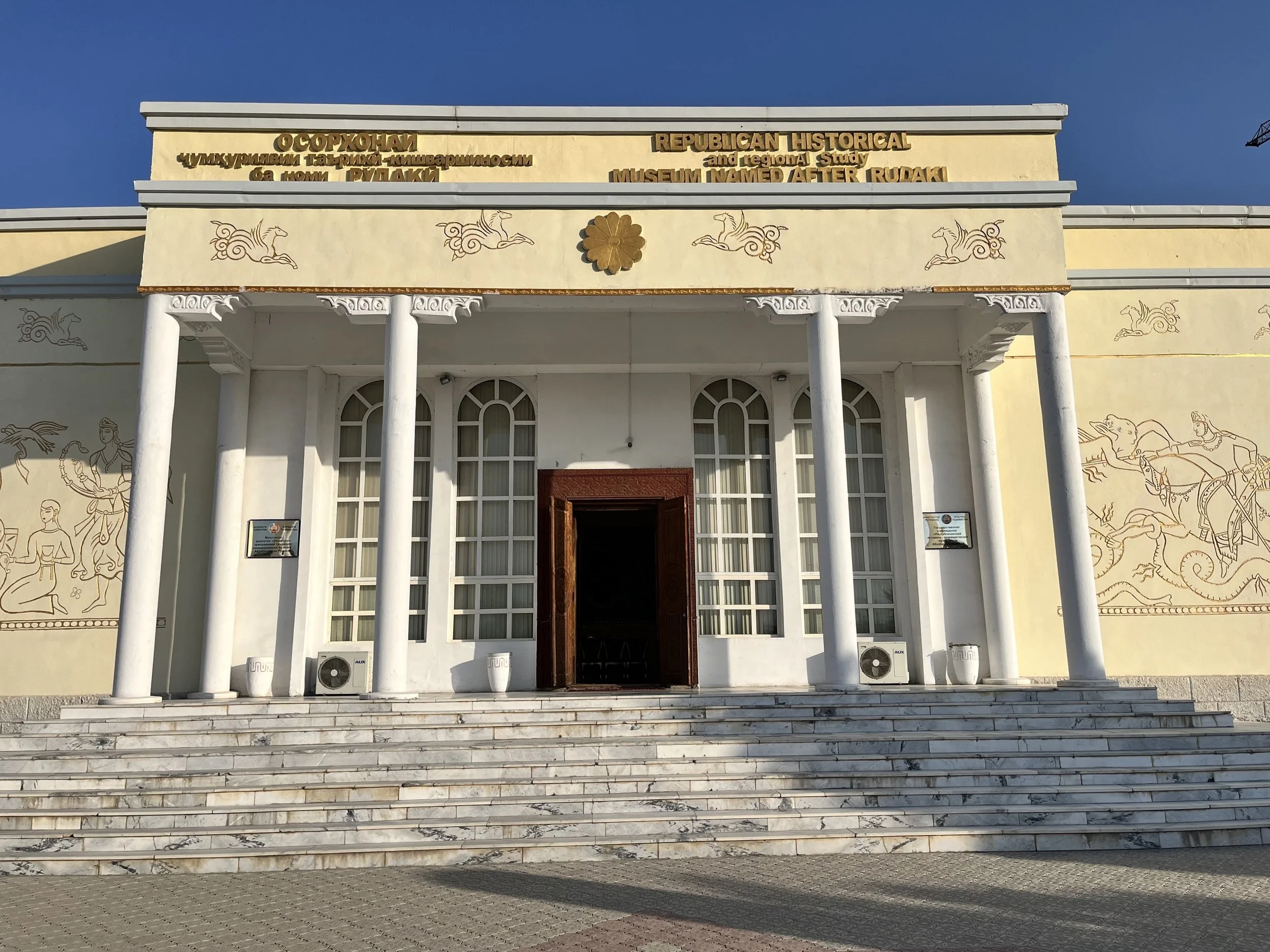
Before crossing back into Uzbekistan, we stopped at Rudaki Museum in Panjakent. Established in 1958, the museum is named after Abu Abdullah Rudaki, a poet, musician, and singer who was born in the city during the late 9th century. A statue of a seated Rudaki is located near the museum’s entrance. Eight exhibit halls feature some of the museum’s 98,000 artifacts that represent life in the Zeravshan Valley including objects discovered during excavations of Old Panjakent and ancient Sarazm.